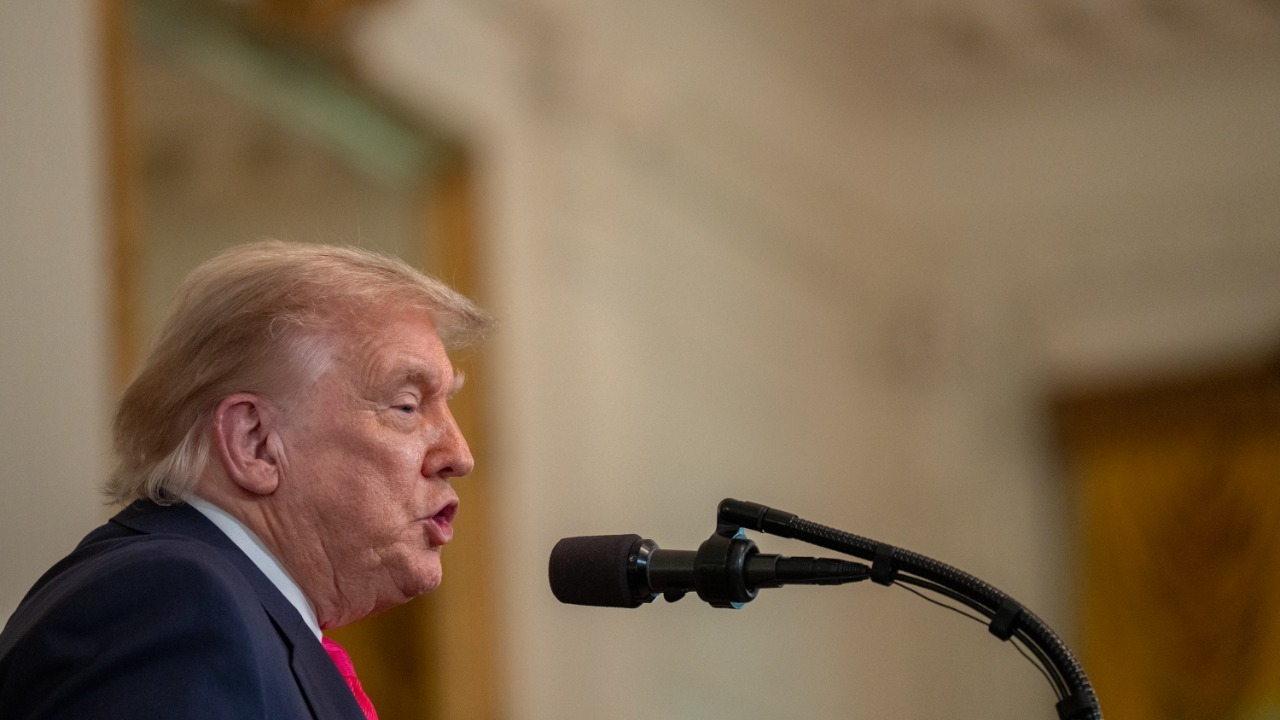
President Trump has put a new kind of “baby bond” at the center of his tax agenda, promising a $1,000 starter stake for millions of children if their families act in time. The money is not a paper promise but a direct federal contribution that lands in a dedicated savings vehicle, branded as a Trump Account, for kids born in specific years. The stakes are high for parents of newborns and toddlers, because eligibility is tightly tied to birth dates and to whether an account is opened correctly.
At its core, the initiative is an attempt to turn tax legislation into a long term wealth building tool for the next generation rather than a one off rebate for adults. The White House is pitching it as a signature investment in children’s futures, but the fine print on who qualifies, how to claim the $1,000, and what families can actually do with the funds will determine whether the promise translates into real money for household budgets.
What Trump Accounts are and how the $1,000 works
The Trump administration has framed Trump Accounts as a hybrid between a savings bond and a tax advantaged investment account, seeded with federal money at birth. A provision of Trump’s tax legislation creates these accounts as a new savings tool, with the federal government depositing $1,000 for each eligible child once parents open an account in the child’s name. The design is meant to give every qualifying newborn a small asset base that can grow over time, rather than leaving families to start from zero.
Officials describe a Trump Account as a dedicated child investment account that sits alongside existing tools like 529 college plans, but with its own rules and branding. The administration has promoted Trump Accounts as part of a broader child investment initiative, with WASHINGTON based briefings highlighting how $1,000 Treasury funded contribution, provided they open the required account. That means babies born before 2025 or after 2028 are outside the current scope, unless Congress or the administration later expands the program.
Separate guidance from The Treasury Department reinforces that timing, specifying that it will contribute $1,000 to each account for children born between Jan. 1, 2025, and Dec. 31, 2028, with the money flowing into qualifying Accounts once they are opened. For parents, that makes the child’s birth certificate as important as a Social Security card when it comes to proving eligibility, because the dates Jan. 1, 2025, and Dec. 31, 2028, are hard cutoffs written into the program’s rules.
How parents actually claim the Trump Account money
While the $1,000 figure has grabbed headlines, the money does not appear automatically in a family’s bank account, and that is where the risk of missing out becomes real. Parents are required to open a Trump Account in order to unlock the federal contribution, with officials stressing that Trump Accounts are meant to give $1,000 to every newborn only if parents take the step of setting up the account in the child’s name. Reporting on Trump Accounts underscores that the program is opt in, not automatic, which means inaction can leave eligible families with nothing.
The Internal Revenue Service is central to that process, and the paperwork is more specific than a standard tax return. Parents with a child who was born in 2025 or a child coming in 2026 are instructed to use IRS Form 4547 if they want to establish the savings plan, with the form serving as the official request to create the account and trigger the deposit. Guidance aimed at Parents makes clear that IRS involvement is not optional, and that Form 4547 is the gateway to the Trump Account rather than an afterthought.
What families can do with Trump Accounts once they are funded
Once the account is open and the federal contribution lands, the Trump Account functions as a long term savings and investment vehicle with guardrails. Program descriptions emphasize that Trump Accounts are a new savings tool where funds can be invested for a child’s future, with the structure designed to encourage growth over time rather than quick withdrawals. Explanations of What a Trump Account is note that contributions from family members do not count toward certain annual limits, which could make it easier for grandparents or relatives to add money without running into tax complications.
The administration has pitched these accounts as a way to build “real assets” for children, with President Trump arguing that his administration is the first to invest in children in this particular way. In remarks highlighted when the White House unveiled the savings program for children, President Trump framed the accounts as a shift from short term benefits to long term capital, signaling that the policy goal is to have the $1,000 grow into something more substantial by the time a child reaches adulthood. That rhetoric sets expectations for families that these accounts are meant for milestones like college, a first home, or starting a business, not for covering immediate bills.
The politics and potential reach of the $1,000 promise
Politically, the Trump Account initiative allows the White House to claim it is delivering tangible money to families while also talking about long term opportunity. The administration has promoted the idea that millions could receive $1,000 this year under the Trump plan, but with a crucial caveat that families need an account in place to see any benefit. Coverage that asks Who is eligible stresses that the OBBBA framework is designed to give children a head start, not just a savings account, but it also highlights that the promise is conditional on parents navigating the system.
The White House has wrapped the rollout in high profile messaging, with events where President Trump and senior officials describe the program as a historic first. When the administration formally unveiled the Trump Accounts savings program for children, coverage noted that By Jon Decker the president claimed his team was the first to invest in children in this way, underscoring how central the initiative has become to his economic narrative. At the same time, the technical details circulating through IRS instructions and Treasury guidance, including references to Form 4547 and the precise Jan and Dec birth date cutoffs, show that the real test will be whether parents can translate the political promise into a funded account for their child.
More From TheDailyOverview
*This article was researched with the help of AI, with human editors creating the final content.

Cole Whitaker focuses on the fundamentals of money management, helping readers make smarter decisions around income, spending, saving, and long-term financial stability. His writing emphasizes clarity, discipline, and practical systems that work in real life. At The Daily Overview, Cole breaks down personal finance topics into straightforward guidance readers can apply immediately.

