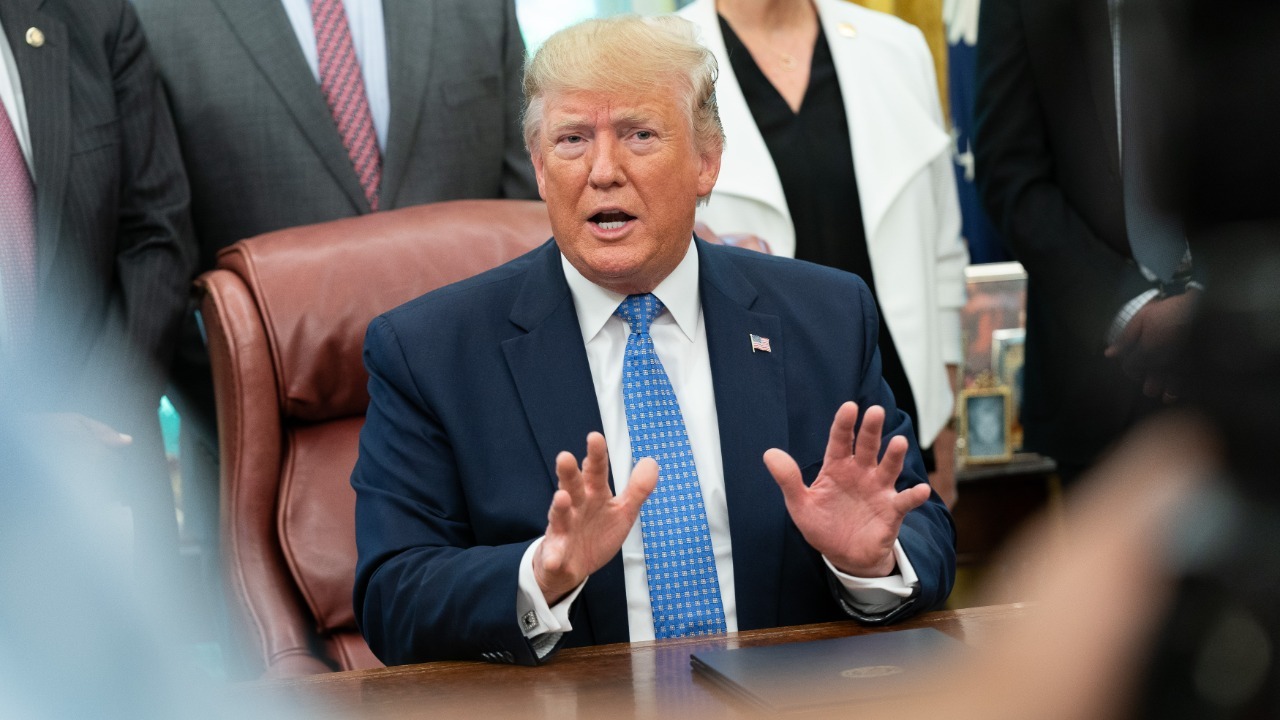
President Donald Trump is not just tolerating high housing costs, he is embracing them as a policy goal. In recent remarks, he has said plainly that he wants home values to rise, even as millions of would-be buyers are locked out of the market. The comments crystallize a housing strategy that prioritizes existing owners’ wealth and cheaper borrowing over any broad push to bring prices down.
At a moment when affordability is already stretched, Trump’s stance is more than a rhetorical flourish. It aligns with a series of budget proposals, executive actions, and regulatory ideas that seek to boost demand and protect asset values while only selectively tackling the supply and power imbalances that helped create the crisis.
Trump’s explicit bet on higher home prices
Trump has stripped away any ambiguity about his intentions for the housing market. In a recent exchange, Trump, who is 79, said, “I don’t want to drive housing prices down. I want to drive housing prices up,” arguing that current homeowners should not see their equity eroded so that new buyers can get a discount. That remark, reported as part of his latest comments on affordability, underscored how firmly he is siding with those who already own property rather than those still trying to get in, according to Trump.
He has repeated the point in other settings, making clear that his administration’s goal is to keep housing values elevated while easing the monthly cost of borrowing. In one account of his recent remarks, President Donald Trump said his team wants to maintain high prices even as it works to lower interest costs for buyers, a balancing act that would preserve existing owners’ gains while trying to make payments more manageable for newcomers, as described in a detailed political report.
Affordability crisis meets a “prices up” doctrine
The backdrop to Trump’s comments is a market where the typical home is already out of reach for many households. One recent analysis put the median home price nationally at a record $433,000, a level that has far outpaced income growth and left first-time buyers scrambling for smaller properties, longer commutes, or help from family. That same reporting noted that firms such as $433,000 forecasters like Zillow expect prices to keep climbing, even if the pace moderates.
Trump’s answer is not to push those values down but to make it cheaper to finance them. His advisers have floated ideas to reduce mortgage rates and expand access to credit so buyers can stretch further without forcing sellers to accept lower offers. In coverage of his latest housing remarks, Trump has been described as seeking to lower borrowing costs while explicitly rejecting any policy that would significantly dent home values, a stance that has been highlighted in recent analysis.
Lower rates, not cheaper houses
Trump’s economic team has framed the strategy as a way to square the circle between affordability and asset protection. In one policy-focused breakdown, the “Key Takeaways” section notes that President Donald Trump has said he wants to make housing more affordable without causing significant declines in home prices, favoring lower mortgage rates and easier financing over any direct pressure on valuations. That summary describes a White House that is more comfortable tweaking the cost of money than confronting the structural shortage of homes, as laid out in Key Takeaways.
Trump has also signaled that he is willing to use federal balance sheets to pursue that goal. In one account of his remarks, President Trump has been described as open to having federal entities buy mortgage-backed securities to help pull down interest rates, a move that would echo past interventions in credit markets. That idea surfaced in coverage of his pledge to “drive housing prices up, not down” while still promising relief on monthly payments, as detailed in a follow-up report.
Cracking down on Wall Street buyers, on his terms
Where Trump has been more aggressive is in targeting large investors that compete with families for single-family homes. Earlier this year, President Donald Trump proposed a ban on corporate home purchases and ordered Fannie and Freddie to buy more mortgage securities, a pair of moves that were described as major housing-related mandates. The initiative was framed as a way to tilt the market back toward individual buyers and away from institutional landlords, according to a Key summary that also noted the impact on rates.
The White House has since followed up with a formal policy move. In a fact sheet labeled “STOPPING WALL STREET FROM COMPETING WITH MAIN STREET HOMEBUYERS,” The White House said President Donald J. Trump was acting to limit large financial firms from buying or holding single-family homes, casting the step as a defense of ordinary families. The document describes how the administration wants to curb institutional ownership in this segment of the market, as detailed in the STOPPING initiative and reinforced in a companion explanation from The White House on how big investors would be restricted from acquiring or holding single-family homes.
Executive orders and “aggressive” reforms
Trump has paired his rhetoric with a series of executive and budgetary moves that sketch out a broader housing agenda. One legal briefing notes that President Trump Issues Executive Order on Institutional Investment in Single Family Homes, describing “In Short” how the order seeks to rein in large-scale investor activity in that part of the market. The document outlines new limits on how institutional capital can participate in single-family housing, signaling that the administration sees investor demand as a key driver of scarcity and higher prices, according to the President Trump Issues summary on Institutional Investment in Single Family Homes and its “In Short” section.
At the same time, Trump has promised what one policy breakdown calls “aggressive” housing reforms in 2026. The Key Takeaways in that analysis say President Trump is considering steps such as declaring a national housing emergency and reshaping federal support programs, a sign that the White House wants to be seen as tackling the crisis head-on even while it resists policies that would materially lower prices. Those potential moves are sketched out in a broader overview of his agenda in Key Takeaways on his promised reforms.
More From TheDailyOverview
This article was researched with the help of AI, with editors refining and creating the final content.

Elias Broderick specializes in residential and commercial real estate, with a focus on market cycles, property fundamentals, and investment strategy. His writing translates complex housing and development trends into clear insights for both new and experienced investors. At The Daily Overview, Elias explores how real estate fits into long-term wealth planning.

