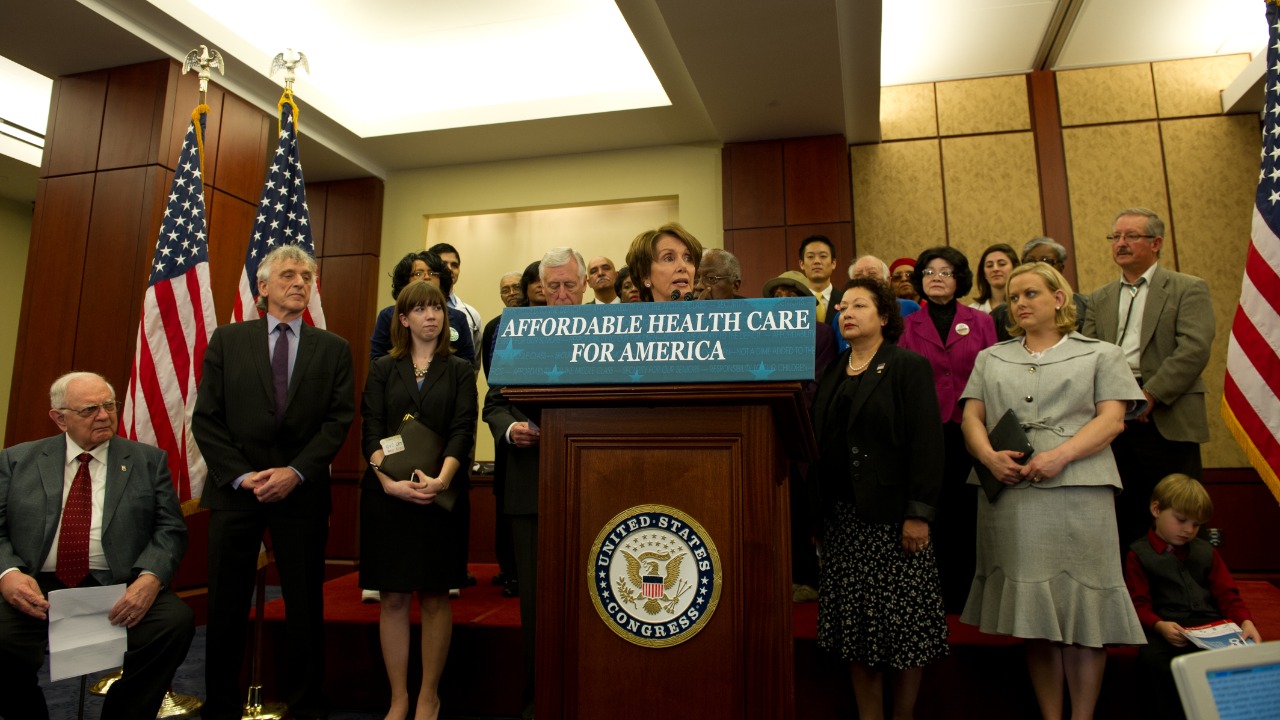
President Donald Trump is preparing to back a two-year extension of Affordable Care Act premium tax credits, a move that would temporarily shore up the law’s core subsidies even as his administration continues to criticize “Obamacare.” The plan would keep financial help flowing to millions of people who buy coverage on the individual market, while leaving open a broader fight over what comes next for the ACA.
The proposal lands at a moment when rising premiums and political brinkmanship have raised real fears of an ACA market unraveling, and it reflects a White House calculation that abruptly cutting off aid would be politically and economically risky. Instead, Trump is signaling that he is willing to stabilize the system for now, while reserving the option to revisit the structure of the law later.
The two-year extension Trump is weighing
The core of the emerging plan is straightforward: President Donald Trump would support keeping ACA premium tax credits in place for an additional two years, rather than allowing them to lapse as some conservatives have urged. Reporting from Nov 23, 2025 indicates that the White House may extend ACA (Obamacare) subsidies for two years, with Trump navigating a political balancing act between critics of the law and voters who rely on it for affordable coverage, as the White House may keep those subsidies in place while a longer term strategy is debated.
Inside the administration, the extension is being framed as a bridge rather than a destination, a way to avoid immediate disruption while Trump continues to promise a different health care “fix.” A White House official said on Nov 23, 2025 that President Donald Trump will outline his approach as concerns grow that the ACA marketplace could collapse if tax credits vanish, with some analyses warning that the loss of subsidies could raise average premiums by $1,016 per person, according to figures cited in a report on how the ACA collapse nears if support is withdrawn.
Why the White House is shifting on ACA subsidies
The decision to pursue a limited extension reflects a notable shift in tone from earlier rhetoric that cast the ACA as irredeemable. The fact that President Trump is looking at an extension of ACA premium tax credits in some form shows that the White House is now weighing the political cost of letting subsidies expire against the backlash that could follow a spike in premiums and coverage losses, a calculation underscored by commentary noting that the President Trump ACA move signals a more pragmatic posture even as officials stress they are still working out the details of what they propose.
There is also a clear timing pressure at work, with open enrollment deadlines approaching and insurers warning that uncertainty over federal policy can quickly translate into higher prices. As ACA collapse nears, announcement of Trump plan postponed was how one account described the internal debate on Nov 23, 2025, with a White House official acknowledging that President Donald Trump is trying to avoid a scenario in which the tax credits and related cost-sharing reductions vanish abruptly, a step that analysts say could drive premiums sharply higher and destabilize markets, a risk highlighted in the same analysis of how the As ACA safety net is tested.
What the draft plan would change for consumers
For people actually buying coverage, the most concrete details so far come from a draft circulating inside the administration that would broaden who can tap into federal help. The draft of the White House plan would allow those in lower-tier plans, such as the bronze-level or catastrophic plans that typically carry lower premiums but higher deductibles, to qualify for enhanced subsidies aimed at offsetting the rising cost of living, a shift described in a report on how the White House circulates a plan to extend Obamacare subsidies as Trump pledges a health care fix.
In practical terms, that kind of change would matter for younger and lower income enrollees who often gravitate toward bronze or catastrophic coverage because of the lower monthly bill, even if it means more out-of-pocket risk when they actually need care. By extending ACA premium tax credits for two years and potentially widening eligibility to these lower-tier plans, the administration would be signaling that it recognizes how inflation and medical costs are squeezing households, even as it continues to argue that the underlying law needs to be replaced or overhauled, a tension that runs through the emerging ACA strategy.
Political stakes for Trump and his critics
Politically, the two-year extension is as much about buying time as it is about policy design. Trump reportedly seeks to extend ACA subsidies as affordability push finds common ground with Mamdani, Centene, Oscar and other players who have a direct stake in the individual market, with one account noting that shares of Centene and Oscar Health soared 24% as investors digested the signal that the administration would not abruptly pull the plug on ACA subsidies, a reaction captured in coverage of how Trump is tying the ACA to a broader affordability crisis.
At the same time, Trump has been careful to frame any extension as temporary and conditional, a way to stabilize the system while he continues to promise a different long term approach. Earlier in the debate, on Nov 17, 2025, he drew a line in the sand on extending ACA credits, saying, “I think it is a longer-term plan that we could maybe do,” but adding that it would not be feasible in the next phase of negotiations, a stance described in a report on how in Nov he was still signaling skepticism about locking in subsidies beyond a limited window.
Uncertain rollout and the risk of delay
Even as the broad contours of the extension come into focus, the rollout has been anything but smooth. As ACA collapse nears, announcement of Trump plan postponed was how one account described the internal back and forth on Nov 23, 2025, with a White House official acknowledging that President Donald Trump and his advisers were still debating how aggressively to promote the two-year extension and how to frame it for a base that has been told for years that Obamacare must be dismantled, a tension that has already delayed the moment when the White House would formally unveil the plan.
The communications challenge is evident in coverage that has tried to pin down when Trump will speak publicly about the extension and what exactly he will promise. One account by Joe Sommerlad noted on Nov 23, 2025 that Trump was expected to announce an extension of ACA tax credits for two years, with a story time stamped Mon, November 24, 2025 at 9:09 AM PST describing how the president was preparing to outline the plan even as a media player returned an Error message, a small but telling detail in a report on how Joe Sommerlad chronicled the shifting rollout.
More From TheDailyOverview
- Dave Ramsey says these two simple questions show whether you’re rich or poor
- Retired But Want To Work? Try These 18 Jobs for Seniors That Pay Weekly
- IRS raises capital gains thresholds for 2026 and what’s new
- 12 ways to make $5,000 fast that actually work

Julian Harrow specializes in taxation, IRS rules, and compliance strategy. His work helps readers navigate complex tax codes, deadlines, and reporting requirements while identifying opportunities for efficiency and risk reduction. At The Daily Overview, Julian breaks down tax-related topics with precision and clarity, making a traditionally dense subject easier to understand.

