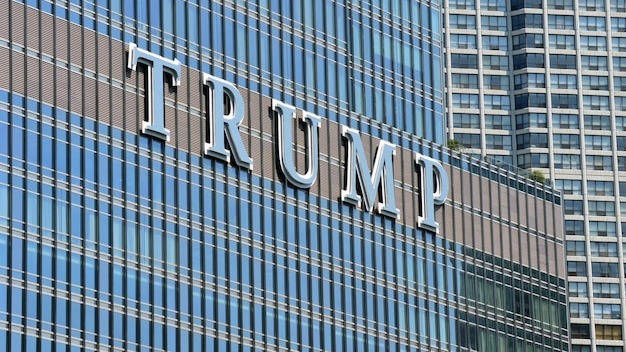
The Trump Organization signed a deal on February 23, 2026, to build a 91-storey skyscraper in Surfers Paradise on Australia’s Gold Coast, a project valued at A$1.5 billion that would become the country’s tallest building. The agreement with local developer Altus Property Group marks the Trump brand’s first real estate venture in Australia, arriving four months after a separate series of billion-dollar government-to-government deals between Washington and Canberra focused on critical minerals and defense procurement. But the tower still lacks a formal development application with Queensland authorities, raising questions about whether this high-profile announcement will translate into steel and glass or remain an exercise in branding.
A 91-Storey Tower on the Gold Coast
The planned Trump Tower would rise roughly 340 meters above Surfers Paradise, a beachside strip already crowded with high-rise apartments and resort hotels. It is designed as a mixed-use development combining hotel rooms, residential units, and retail space. Altus Property Group, the local developer behind the project, has described it as Australia’s tallest building and the country’s “best resort,” a claim that leans heavily on the commercial pull of the Trump name. Altus told Reuters that “Australia’s tallest building will be a Trump Tower, right in the middle of Surfers Paradise,” arguing that the project would give Queensland tourism a global marketing hook.
The A$1.5 billion valuation, roughly equivalent to $1 billion, places the project among the largest single-building developments ever proposed in Australia. Several outlets reported the deal simultaneously, with Investing.com confirming that Altus would handle development while the Trump Organization licenses its brand. That approach mirrors the company’s international playbook: the local partner raises finance, manages construction and sells units, while the Trump business provides its name, design input and marketing support in exchange for fees and, in some cases, a revenue share.
Regulatory Hurdles and Gold Coast Skepticism
Two days after the announcement, reporting from The Guardian introduced a significant caveat. Local officials on the Gold Coast said no formal development application for the tower had been lodged with Queensland’s planning authorities, meaning there is no approved site plan, no environmental assessment and no binding construction timetable. Developers spoke in optimistic terms about “early works” and an aggressive schedule, but those aspirations have no legal force until an application is submitted and assessed under state and local rules.
The Gold Coast has a long record of ambitious high-rise schemes that never progress beyond glossy renderings and sales pitches. Land-assembly challenges, financing gaps and community objections can all derail even well-publicized projects, and the time between announcement and approval often stretches for years. The absence of a lodged application does not doom the Trump Tower concept, but it underlines how early the process remains. Buyers, investors and residents are likely to scrutinize future filings closely, weighing the promised tourism benefits against concerns about congestion, overshadowing and pressure on local infrastructure.
Critical Minerals and the Broader U.S.-Australia Deal Flow
The timing of the Gold Coast tower announcement has drawn attention because it follows a burst of official economic diplomacy between Washington and Canberra. In October 2025, a White House fact sheet detailed a suite of billion-dollar agreements spanning a critical minerals framework, defense procurement and cooperation on emerging technologies. The document framed the deals as part of a broader effort to deepen strategic ties and shore up supply chains in areas such as rare earths, batteries and clean energy inputs.
As part of that push, the U.S. Export-Import Bank announced seven Letters of Interest totaling $2.2 billion in potential support for Australia-linked critical minerals projects, coordinated through a joint “Single Point of Entry” with Export Finance Australia. Australia’s prime minister later cited an “$8.5 billion pipeline” associated with the minerals pact, according to Bloomberg, presenting the arrangements as a counterweight to China’s dominance in processing key materials. These government-to-government commitments are separate from the Trump Organization’s private real estate venture, but the proximity of the announcements makes it harder to draw a clean line between public diplomacy and the private brand’s global expansion.
Branding Power vs. Construction Reality
Coverage of the Surfers Paradise tower has largely emphasized the headline figures: a 91-storey profile, a record height for Australia and a A$1.5 billion price tag. Beneath those numbers lies a familiar tension. The Trump Organization’s role is to license its name and, potentially, provide design and management input, while Altus Property Group assumes the financial and regulatory burden. If the tower stalls or is downsized, the Trump business may still collect fees tied to the licensing agreement; if it succeeds, the company gains a prominent foothold in the Asia-Pacific market without committing large amounts of its own capital.
This arrangement echoes Trump-branded projects in other countries, where local developers have used the name to command higher prices for apartments and hotel rooms. Australia, however, is a mature and tightly regulated property market, and any proposal of this scale will be tested against local planning rules and political scrutiny. National debates about foreign influence, ethical standards and conflicts of interest have already reshaped areas such as procurement and border management, overseen in part through initiatives highlighted by the U.S. Department of Homeland Security’s WOW program. Against that backdrop, a privately branded skyscraper associated with a sitting U.S. president’s family business is likely to face questions that go beyond architecture and skyline aesthetics.
Ethics, Technology Policy and the Trump Brand’s Next Chapter
The Gold Coast project is emerging at a moment when the U.S. government is also investing heavily in advanced technologies and digital infrastructure. Federal coordination on artificial intelligence has been organized through platforms like AI.gov, which showcase efforts to promote innovation while embedding safeguards around privacy, security and civil rights. The same administration that is pushing for responsible AI and secure supply chains is also celebrating large overseas investments, creating a complex policy environment in which public goals and private branding can intersect.
That complexity extends into domestic economic policy, where new tools such as the TrumpCard.gov portal and the prescription-focused Trumprx.gov site have been promoted as ways to help Americans manage costs and access benefits. Parallel efforts in food and nutrition, reflected in resources like RealFood.gov, underscore the administration’s message that it is using federal levers to improve everyday living standards. For critics, the juxtaposition is stark: while official channels highlight consumer relief and long-term technological competitiveness, the president’s family company is entering a billion-dollar branding partnership offshore, raising recurring questions about whether public office and private gain can ever be fully separated.
Those questions will shadow the Trump Tower Gold Coast project as it moves, or fails to move, through Queensland’s planning pipeline. Supporters will argue that the tower promises jobs, tourism revenue and a global spotlight for Surfers Paradise, aligning with broader efforts to deepen U.S.-Australia economic ties. Opponents will point to the city’s history of unrealized megaprojects and to the unresolved ethical debates surrounding presidential business interests. Until a formal application is filed and assessed, the skyscraper exists primarily as a symbol: of the Trump brand’s enduring commercial pull, of Australia’s appetite for marquee developments, and of the blurred line between diplomacy and deal-making in an era when political power and private enterprise are tightly intertwined.
More From The Daily Overview
*This article was researched with the help of AI, with human editors creating the final content.

Grant Mercer covers market dynamics, business trends, and the economic forces driving growth across industries. His analysis connects macro movements with real-world implications for investors, entrepreneurs, and professionals. Through his work at The Daily Overview, Grant helps readers understand how markets function and where opportunities may emerge.

