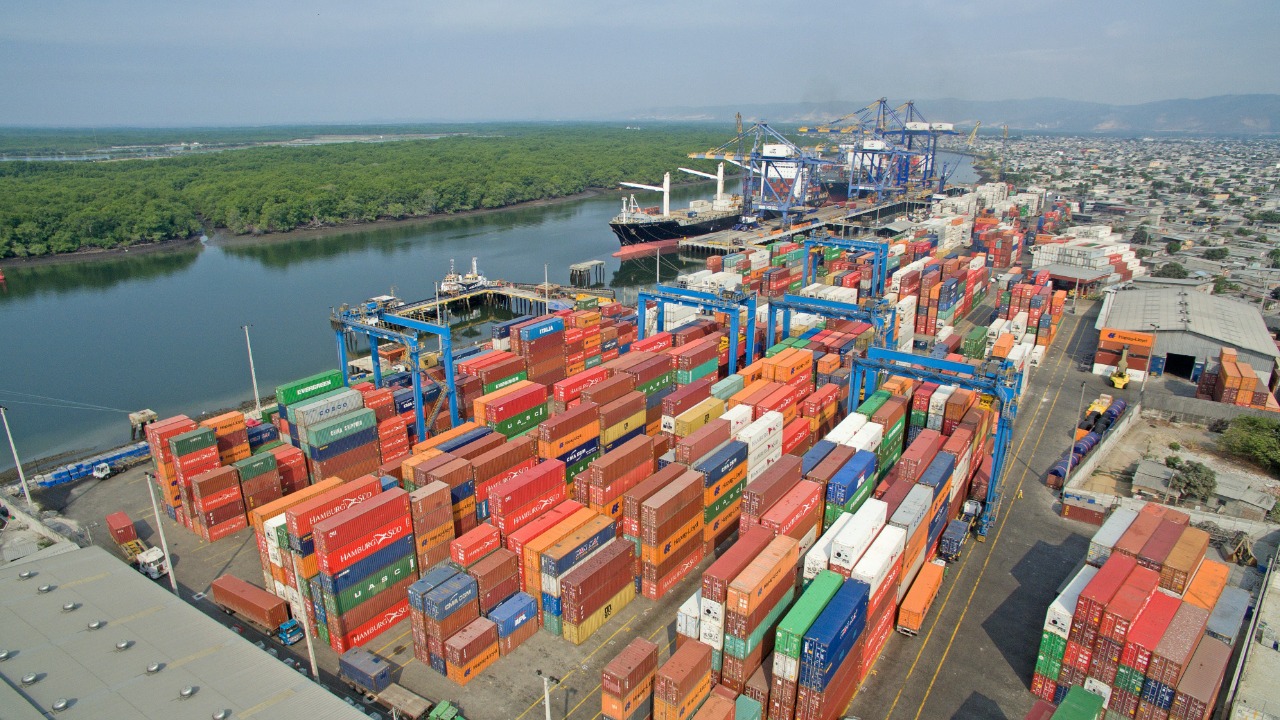
President Donald Trump’s sweeping tariffs are no longer a distant policy debate, they are reshaping trade flows, rattling boardrooms and straining household budgets from Baltimore to Bangladesh. What began as a bid to reset the terms of global commerce has hardened into a system of higher barriers, retaliatory measures and legal uncertainty that is now weighing on growth and investment worldwide. As the costs mount, the question is less whether these tariffs matter and more how deeply they are rewiring the global economy.
I see three fault lines emerging. At home, the United States is absorbing slower trade, higher prices and the risk of massive refund liabilities. Abroad, trading partners are confronting weaker demand, disrupted supply chains and a new era of industrial policy built around tariffs. And for the poorest countries, the current regime is not just an inconvenience, it is a direct hit to fragile export industries and development prospects.
The domestic shock: slower trade, higher prices and legal risks
Inside the United States, the scale of the tariff shock is now quantifiable. The Budget Lab, often referred to as TBL, estimates that all 2025 US tariffs and foreign retaliation combined have pushed import prices up sharply while cutting into trade volumes, with imports lower and exports 16% lower than they would otherwise be according to its latest Key Takeaways. That kind of contraction is not an abstract spreadsheet issue, it filters directly into factory orders, port traffic and hiring decisions in export heavy regions from the Pacific Northwest to the Gulf Coast. When I talk to manufacturers, they describe a world where every shipment is a bet on what the tariff schedule will look like by the time goods clear customs.
The legal overhang is just as significant as the trade slowdown. Businesses that paid duties under Trump’s earlier rounds of levies are now watching a pivotal case at the Supreme Court, where a ruling against the administration’s approach could leave the U.S. government on the hook for as much as $168 billion in refunds. That $168 billion figure is not just a budget line, it represents years of cash that companies have already treated as sunk costs, and a reversal would scramble balance sheets and fiscal planning alike. The prospect of retroactive refunds also underscores how aggressively President Trump has leaned on trade law, including the International Emergency Economic Powers Act, or IEEPA, to impose duties on trading partners, a strategy that Key Findings suggest has raised revenue in the short term while eroding long term growth.
Consumers feel the pinch as tariffs filter into everyday prices
For households, the impact of Trump’s tariffs shows up less in trade statistics and more in the price tags on everyday goods. Retailers and importers have been clear that higher duties on key categories are feeding directly into inflation, particularly in sectors where alternatives are limited. Economists tracking the fallout point to Product categories such as furniture, car parts and electronics as seeing some of the biggest price hikes, a pattern that hits renters furnishing apartments, drivers keeping older vehicles on the road and families upgrading laptops or game consoles. When tariffs are layered on top of already tight supply chains, the result is a squeeze that shows up in monthly inflation reports and in the quiet decisions consumers make to delay or downsize purchases.
The pain is not limited to big ticket items. A growing list of everyday goods is now flagged as likely to cost more as new rounds of duties take effect, from basic appliances to certain food products that rely on imported inputs. Analysts warn that the president’s latest measures will raise prices of some goods more than others, with retailers already warning shoppers that these are products that could spike in price amid tariffs. I hear this most clearly from small businesses, from auto repair shops that cannot easily swap out foreign made components to independent electronics stores that operate on thin margins and have little room to absorb higher landed costs.
Global growth under pressure and a new era of trade uncertainty
Outside U.S. borders, the ripple effects are now large enough to show up in global forecasts. The World Trade Organization has sharply lowered its projection for 2026 trade growth to just 0.5%, a figure its leadership has linked directly to the delayed impact of Trump’s tariffs and the retaliation they have triggered across major economies. In a recent warning, the head of the World Trade Organization stressed that a 0.5% outlook is far below historical norms and reflects a world where companies are rethinking cross border investment and inventory strategies. When trade volumes flatten like that, export dependent economies from Germany to South Korea feel the chill in industrial production and employment.
Financial analysts are reaching similar conclusions about the macroeconomic drag. Research from major banks suggests that the current tariff regime, even with some rollbacks, could shave roughly 1% off global GDP as companies reprice risk and shift supply chains, a view summarized in recent work on how Tariffs could reduce global GDP by 1%. Despite the political appeal of tough trade measures, the message from these models is blunt, Despite the rhetoric about reshoring and leverage, the aggregate effect is slower growth and higher costs. When I speak with executives in export heavy sectors, they describe a world where every capital spending decision now includes a tariff scenario analysis, a layer of uncertainty that did not exist a decade ago.
Supply chains, sectors and the new industrial map
Trump’s tariffs are not hitting all industries equally, they are redrawing the map of winners and losers across sectors and regions. In manufacturing, agriculture and technology, higher duties are driving up input costs, squeezing margins and prompting some firms to relocate production or sourcing. Analysts tracking sector performance note that U.S. trade policy shifts, including tariffs, are driving up costs in manufacturing, agriculture and tech, sparking global retaliation and economic uncertainty. That uncertainty is visible in everything from delayed factory expansions in the Midwest to cautious hiring plans in Asian semiconductor hubs that depend on predictable access to the U.S. market.
At the same time, the United States of America is leaning into tariffs as a core tool of its reindustrialization agenda, particularly in strategic sectors. Policy documents and investor briefings now routinely describe how the United States of America is using tariff policies as a cornerstone of efforts to bolster semiconductors, electric vehicles, pharmaceuticals, steel and shipbuilding, a trend highlighted in analysis of China and the tariff truce. I hear a similar story from auto executives weighing where to build the next generation of electric SUVs and from pharmaceutical firms deciding whether to expand plants in North Carolina or Singapore. Tariffs are no longer a background factor, they are a central variable in long term industrial strategy.
The harshest blow lands on the poorest countries
The most striking, and often overlooked, consequence of Trump’s tariff strategy is how hard it is hitting the world’s poorest countries. While wealthy economies have the fiscal space and institutional capacity to cushion the blow, low income exporters are far more exposed when access to the U.S. market tightens. Analysts tracking trade flows point out that Donald Trump‘s latest tariffs are hitting the poorest countries far harder than their wealthier counterparts, with particular pressure on exporters in Laos, Myanmar, Bangladesh and other third world countries. For garment factories in Dhaka or small electronics assemblers in Yangon, a few percentage points of extra duty can be the difference between survival and closure.
Policy tweaks that might sound technical in Washington can be existential in these markets. One example is the suspension of the de minimis exemption, a change that effectively removes duty free treatment for low value shipments that had been a lifeline for small exporters selling directly to U.S. consumers. Under the latest rules, the de minimis exemption suspended (effective Aug. 29, 2025) now applies broadly, with the exception of shipments sent by mail, and no clear guidance on when a permanent change will be finalized, according to a detailed Country specific tariff tracker. With the loss of that threshold, With the smallest firms in places like Laos and Bangladesh now face the same complex paperwork and duty burden as large multinationals, a shift that risks pushing them out of global e commerce altogether.
From short term leverage to long term realignment
What ties these threads together is the way Trump’s tariffs have moved from being a tactical bargaining chip to a structural feature of the global economy. In the short term, they have delivered leverage in negotiations and a visible assertion of economic nationalism that plays well in certain political constituencies. But the longer they stay in place, the more they encourage companies and countries to build around them, locking in new patterns of production and trade that will be hard to unwind even if future administrations seek a different course. I see this in the way supply chain managers now talk about “tariff proofing” their networks, a phrase that barely existed a few years ago.
The costs of that realignment are already visible in slower trade growth, higher consumer prices and mounting legal and fiscal risks at home, as well as in the strain on poorer exporting nations that lack the buffers of richer peers. As global institutions warn about a 0.5% trade growth outlook and bank analysts flag a potential 1% hit to global GDP, the evidence is piling up that the current tariff regime is not a temporary storm but a new climate. The debate now is not whether to use tariffs at all, but how to balance their political and strategic appeal against the very real economic damage they are inflicting across continents.
More From TheDailyOverview

Grant Mercer covers market dynamics, business trends, and the economic forces driving growth across industries. His analysis connects macro movements with real-world implications for investors, entrepreneurs, and professionals. Through his work at The Daily Overview, Grant helps readers understand how markets function and where opportunities may emerge.

