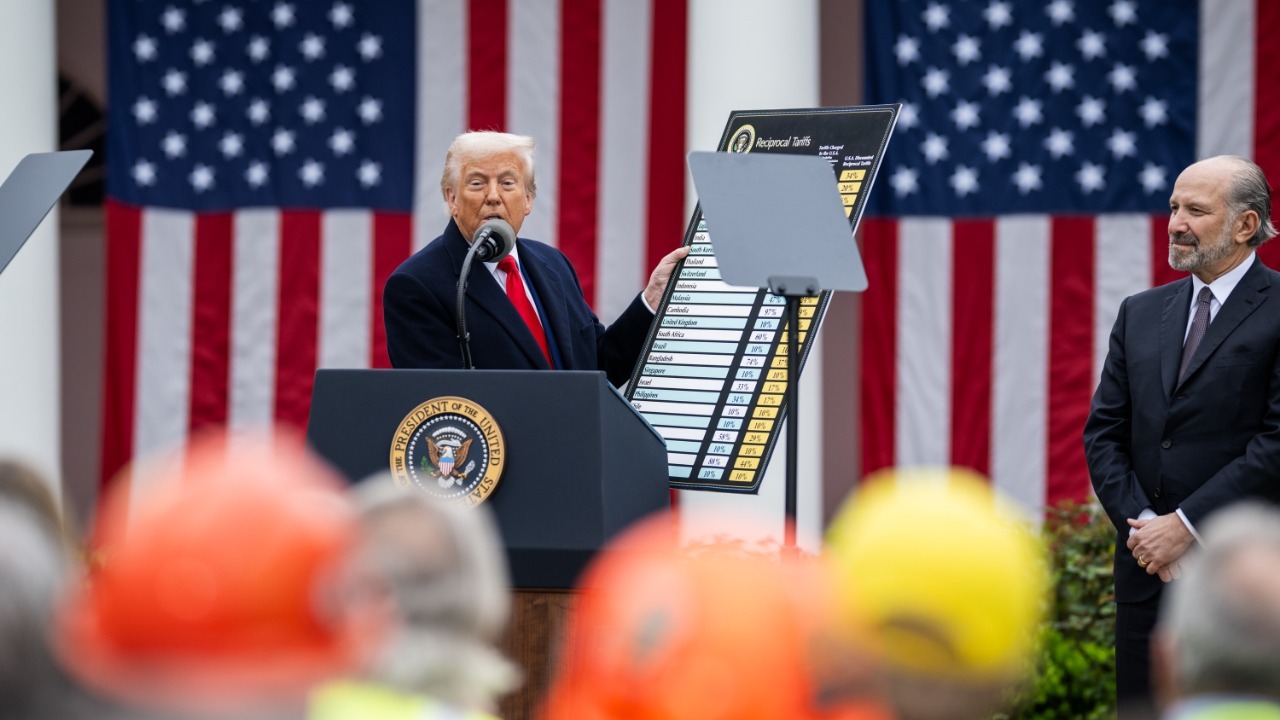
Tariffs are usually framed as a blunt weapon that raises prices and rattles allies, but in the pharmaceutical and manufacturing sectors they have also become a lever for redirecting investment. When President Donald Trump tied trade penalties to where critical drugs and components are made, two global firms responded by steering multibillion dollar projects into the United States. Their decisions offer a rare, concrete look at how tariff threats can move boardrooms, not just markets.
I see those investments as a test case for a harder edged industrial policy that uses border taxes to force choices about supply chains, research hubs, and factory locations. The numbers involved, including a headline commitment of $50, are large enough to matter for regional economies and for the broader debate over whether aggressive trade tactics actually deliver domestic production rather than just political theater.
Tariffs as a pressure point on global supply chains
For years, multinational drugmakers and advanced manufacturers treated the United States as a crucial sales market but not always as the cheapest place to build plants. Trump tried to flip that calculus by explicitly linking tariff exposure to where companies located their high value work. Instead of focusing only on headline rates, he used the threat of targeted penalties on foreign made drugs and components as a bargaining chip, signaling that firms which kept critical production offshore could face higher costs at the border.
That strategy turned tariffs into a kind of industrial policy by other means. Rather than offering only tax breaks or subsidies, the administration paired those carrots with a visible stick, telling companies that the safest way to protect access to the American market was to expand manufacturing and research inside U.S. borders. The two firms that ultimately committed billions in new spending did so in the shadow of that message, treating tariff risk as a structural factor in their long term planning rather than a passing political skirmish.
Roche’s $50B bet on American labs and factories
The clearest example of this shift came from Roche, the Swiss pharmaceutical giant that trades under the ticker RHHBY. After Trump tied potential penalties to foreign drug production, Roche responded with a sweeping pledge to expand its footprint in the United States, committing $50B to a mix of new and upgraded facilities. That figure, reported in a Nov 22, 2025 Quick Read, reflects not just a single plant but a broad program of investment in manufacturing lines and research hubs that anchor the company more firmly on U.S. soil.
Roche’s decision was not framed as charity or public relations. It was a strategic move to keep core therapies and experimental pipelines close to the world’s most lucrative healthcare market while reducing exposure to future trade shocks. The company’s plan, detailed in coverage of how Trump’s tariff posture reshaped corporate incentives, described a network of American sites dedicated to research, development, and manufacturing, with the Roche investment explicitly tied to that full spectrum of activity.
How Trump’s tariff threats reshaped corporate risk calculations
From a corporate risk perspective, the message was straightforward: keep critical production abroad and face the possibility that a future tariff round will erode margins, or shift more of the value chain into the United States and lock in more predictable access to American buyers. Trump’s approach effectively priced geopolitical and trade uncertainty into every long term capital plan, especially for firms that rely on complex cross border supply chains. For executives, the cost of inaction was no longer limited to occasional headlines, it became a quantifiable risk that could be modeled against the cost of building or expanding U.S. facilities.
Roche’s $50B commitment shows how that calculus played out in practice. By expanding American research and manufacturing, the company not only reduced its vulnerability to future tariffs on foreign drug production, it also positioned itself to benefit from domestic procurement preferences and political goodwill. The reporting on how Trump’s tariff stance nudged Roche and another major firm toward large scale U.S. projects underscores that these were not abstract policy debates but boardroom level decisions shaped by the expectation that tariff pressure would persist rather than fade with the next news cycle.
The second mover: another multinational follows Roche’s lead
Roche was not alone in treating Trump’s tariff posture as a catalyst for reshoring. A second multinational, also facing the prospect of higher costs on goods shipped into the United States, opted to channel billions into new American operations rather than absorb the long term uncertainty of staying offshore. While the details of that firm’s plan differ from Roche’s, the pattern is similar: a large, globally integrated company concluded that the safest way to navigate a more confrontational trade environment was to deepen its U.S. footprint.
Reporting on the two companies’ responses makes clear that the second mover was likewise motivated by the link Trump drew between foreign production and tariff exposure. Instead of treating tariffs as a temporary negotiating tactic, the firm assumed that pressure on overseas plants could become a recurring feature of U.S. policy. That assumption pushed it toward a multibillion dollar investment in American facilities, mirroring Roche’s choice to treat the United States not just as a sales destination but as a central base for high value production and innovation.
What these investments reveal about tariff driven industrial policy
When I look at these two cases together, I see more than isolated corporate announcements. They illustrate how a tariff heavy strategy can function as a de facto industrial policy, steering capital toward domestic projects without the kind of explicit planning associated with traditional economic development programs. By making it more expensive and politically risky to rely on foreign plants for critical goods, Trump created a powerful incentive for firms like Roche and its peer to reweight their portfolios toward U.S. sites.
That does not mean tariffs are a cost free tool. Higher border taxes can still raise prices for consumers and strain relationships with trading partners, and not every company will respond with large domestic investments. Yet the fact that Roche, identified in the Nov 22, 2025 Quick Read as RHHBY, chose to commit $50B to American research, development, and manufacturing, and that another multinational followed with its own multibillion dollar plan, shows that tariff pressure can move real money. The broader coverage of how Trump’s tariffs led these 2 companies to invest billions in the US highlights that, at least in these cases, the threat of trade penalties translated directly into new American labs, factories, and jobs, rather than remaining a purely rhetorical show of toughness at the border.
As debates over reshoring, drug security, and strategic manufacturing continue, those investments will serve as a reference point for policymakers weighing whether to lean again on tariffs or to rely more on subsidies and partnerships. For now, the record is clear that Trump’s approach did not just generate headlines about trade fights, it also helped push at least two major firms to anchor more of their future inside the United States, a shift documented in reporting on how tariffs led 2 companies to pour billions into U.S. projects.
More From TheDailyOverview

Grant Mercer covers market dynamics, business trends, and the economic forces driving growth across industries. His analysis connects macro movements with real-world implications for investors, entrepreneurs, and professionals. Through his work at The Daily Overview, Grant helps readers understand how markets function and where opportunities may emerge.

