Gold is back at the center of global markets as investors react to a weaker dollar and a White House that openly talks down the currency. UBS is warning that President Trump’s rhetoric is feeding a broader story about relative U.S. decline, and that this narrative is now one of the key forces propelling bullion higher. At the same time, the bank is lifting already bullish price targets, arguing that structural demand and geopolitical risk are aligning in a way that could keep the rally running.
In my view, what makes this moment different is the combination of classic macro drivers, such as real yields and fiscal deficits, with an unusually direct political assault on the dollar’s status. That mix is pushing investors from exchange rates and bond screens into hard assets, and it is why UBS now sees gold not just as a hedge, but as a central pillar of portfolio construction.
Trump’s dollar talk and the “relative U.S. decline” story
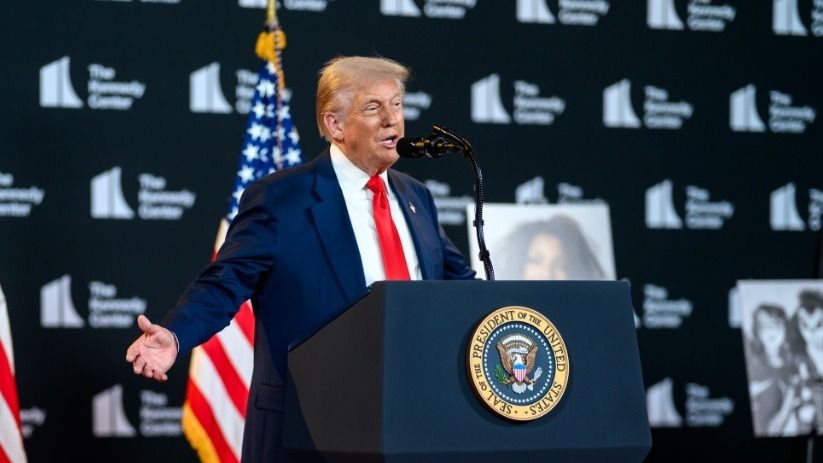
President Trump has never hidden his preference for a weaker greenback, but his latest comments are landing in a market already anxious about debt and inflation. UBS has told clients that Gold is going up because Trump is talking down the dollar and, in doing so, is reinforcing what it calls a “narrative of relative U.S. decline,” a shift that can erode confidence in dollar assets over time. In that framing, the president’s remarks are not just noise, they are a catalyst that pushes global savers to look for alternatives that are less exposed to U.S. policy risk.
That concern is echoed in separate analysis that links Gold, Trump and UBS, arguing that repeated verbal pressure on the currency chips away at the perception of the United States as the unquestioned anchor of the financial system. When a sitting president publicly questions the benefits of a strong dollar, it invites trading partners and reserve managers to imagine a world where they diversify faster into bullion and other stores of value. For a market already primed to see U.S. power as more contested, that is a powerful psychological driver.
A weakening dollar and classic macro tailwinds
The political backdrop is colliding with a real move in foreign exchange markets. The U.S. currency has been sliding again as investors focus on debasement fears, with one recent account describing how the dollar falls as worries about long term value outweigh short term support from prominent investors. That shift reflects unease about swelling federal deficits, the prospect of easier policy, and the sense that Washington is more comfortable than before with a cheaper currency, all of which tend to make non interest bearing assets like gold more attractive.
UBS has been clear that the macro mechanics still matter. Its strategists note that Gold prices typically move inversely to real yields because the metal does not pay interest, so when inflation adjusted rates fall, the opportunity cost of holding bullion drops. In a separate Sep report, the bank highlighted how Gold tends to benefit when central banks keep policy rates elevated while inflation expectations stay sticky, a mix that can compress real yields and support demand for hedges. That is the traditional channel through which a softer dollar and looser policy feed into higher bullion prices.
UBS’s escalating price targets and structural demand
UBS is not just commenting from the sidelines, it is putting aggressive numbers on where it thinks the market is headed. In a Sep note, the bank raised its Gold price target to $3,800 per ounce by the end of 2025 and said, Moreover, our analysis suggests a mid single digit percentage allocation to gold is optimal for diversified portfolios. That analysis rests on stress testing different macro scenarios and finding that a modest but meaningful slice of bullion can improve risk adjusted returns, especially when equity and bond correlations are unstable.
More recently, UBS analysts have gone further, with one Jan update flagging that UBS Analysts See Gold Price Hitting $5,000 as investors respond to both political risk and the possibility of military escalation after President Trump weighed ordering military action on a Wednesday. Separate commentary from Dec argued that Gold prices are likely to remain elevated amid what UBS called strong structural demand, pointing to persistent buying from central banks and steady interest from long term investors who see the metal as a hedge against both inflation and geopolitical shocks. In that view, the current rally is not a speculative blow off, but part of a longer cycle in which Gold has entered a new regime of support.
Geopolitics, silver’s surge and the $5,050 debate
UBS is not alone in seeing room for bullion to climb. Another major bank has warned that mounting geopolitical risks and rising debt could push gold prices as high as $5,050 per ounce, a level that would eclipse even the most bullish UBS projections. In that Jan assessment, analysts argued that a combination of conflict risk, fiscal strain and continued buying by central banks and retail investors could justify Gold trading around $5,050 if stress intensifies. The fact that multiple institutions are now comfortable putting four digit handles that start with a five on their scenarios shows how far sentiment has shifted.
The debate is unfolding against a backdrop of wild moves in related metals. After silver’s massive price rally, some strategists have suggested it may be time to take profits while momentum lasts, even as they reiterate that the same forces driving silver are also supportive for gold. That Kitco analysis, which again referenced the possibility of $5,050 per ounce for bullion, underscored how tightly linked precious metals have become to perceptions of geopolitical risk and sovereign balance sheets. When investors see both war risk and debt trajectories as skewed to the upside, they tend to reach for assets that sit outside the traditional financial system.
Portfolio implications in a politicized currency world
For investors, the question is how to respond to a world where the president’s comments on the dollar can move markets and where major banks openly discuss scenarios like $5,000 or $5,050 per ounce for gold. UBS has argued in multiple notes that Gold prices typically move inversely to real yields and that this relationship, coupled with still elevated central bank demand, supports a strategic allocation to bullion in a portfolio. In its U.S. wealth management guidance, the bank reiterated that Gold can help diversify risk when both stocks and bonds are vulnerable to the same macro shocks, a point that resonates when fiscal and political uncertainty are high.
Short term traders, by contrast, are leaning on tools like Google Finance to track intraday swings in Gold, the dollar and related exchange traded funds, using live prices and charts to calibrate exposure. UBS has also stressed that Political uncertainty should continue to support bullion, even if temporary pullbacks occur, and that investors should see dips as part of an ongoing bull run rather than a definitive top. For those trying to navigate this environment, the message is less about chasing every spike and more about recognizing that a weaker, more politicized dollar and a persistent story of relative U.S. decline have shifted the long term calculus in favor of holding at least some gold.
That does not mean the metal is a one way bet. The same UBS research that highlights upside also notes that if real yields rise sharply or if confidence in U.S. institutions stabilizes, Gold could face headwinds. Yet with President Trump continuing to talk down the dollar and with fresh evidence that the currency falls when debasement fears flare, the balance of risks looks different than in past cycles. In my view, that is why UBS and others are comfortable telling clients that the era of treating gold as a marginal, tactical trade is over, and that in a world of contested U.S. leadership, it has become a core strategic asset.
More From TheDailyOverview
*This article was researched with the help of AI, with human editors creating the final content.

Grant Mercer covers market dynamics, business trends, and the economic forces driving growth across industries. His analysis connects macro movements with real-world implications for investors, entrepreneurs, and professionals. Through his work at The Daily Overview, Grant helps readers understand how markets function and where opportunities may emerge.

