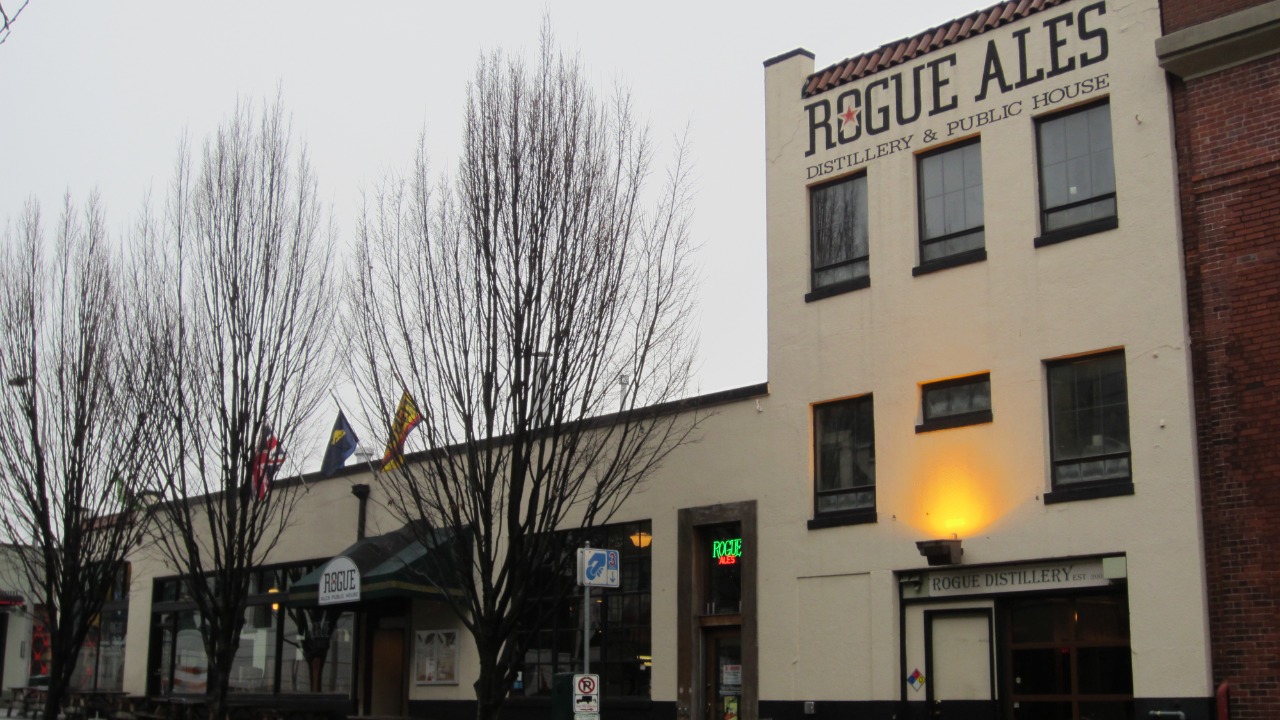
Rogue Ales & Spirits is shutting down after nearly four decades, ending a run that helped define American craft beer and cutting off exports that once reached 50 countries. The closure of the Oregon-based brewery and distillery marks a turning point for an industry that grew up alongside it, as shifting tastes, rising costs, and consolidation reshape what survives on shelves and taps.
I see Rogue’s exit as more than a single business failure; it is a signal that the first generation of craft pioneers is giving way to a harsher, more crowded marketplace where legacy alone no longer guarantees survival. The story of how a brand that shipped beer and spirits around the world wound down its operations helps explain where the wider beer business is heading next.
From coastal upstart to global craft ambassador
Rogue began as a small Oregon brewery and grew into one of the most recognizable names in American craft, building its reputation on bold flavors, irreverent branding, and a willingness to experiment long before that became standard. Over 37 years, it expanded from a local taproom into a vertically integrated operation that brewed beer, distilled spirits, and ran its own pubs, positioning itself as a full lifestyle brand rather than just a producer of bottles and cans. That evolution helped Rogue stand out in the 1990s and 2000s, when the idea of a brewery that also made whiskey or gin still felt novel.
As the company scaled up, it pushed aggressively into international markets, turning its coastal Oregon identity into an exportable story. Rogue’s portfolio eventually reached drinkers in 50 countries, with flagship beers and distinctive packaging acting as calling cards for American craft culture abroad, a role supported by reporting on its global distribution footprint. By pairing that reach with a mix of year-round staples and limited releases, Rogue helped set expectations for what a “serious” craft brewery could look like to distributors and retailers from Europe to Asia.
Why a pioneering brewery could not outrun the new craft reality
The decision to close after nearly four decades reflects how dramatically the economics of craft beer have shifted since Rogue first opened its doors. The early playbook, which relied on steady growth in tap handles, bottle shop placements, and on-site pub traffic, has been undermined by a saturated market where thousands of breweries compete for finite shelf space and bar lines. In that environment, even a well-known name can find its margins squeezed as distributors prioritize faster-moving brands or those backed by larger corporate portfolios, a trend highlighted in coverage of the crowded U.S. brewery landscape.
Rogue also faced the same cost pressures that have hit the broader industry, from higher prices for malt and hops to increased labor and energy expenses. Reports on craft producers describe how rising input costs and post-pandemic shifts in on-premise drinking have eroded profitability for mid-sized players that are too big to be hyper-local yet too small to match the scale efficiencies of global conglomerates, a squeeze that aligns with Rogue’s decision to wind down operations rather than chase increasingly thin returns. Within that context, the closure looks less like an isolated collapse and more like a case study in how the middle tier of craft is being hollowed out.
The end of exports to 50 countries and what it means abroad
Rogue’s exit from international markets will be felt most immediately by importers and specialty retailers that relied on its beers and spirits to anchor American craft sections. When a brand that once shipped to 50 countries disappears, it leaves gaps in portfolios that were built around recognizable labels and consistent supply. Distributors that had positioned Rogue as a flagship offering now have to reconfigure lineups, a disruption that mirrors broader volatility in cross-border beer trade documented in analyses of shifting U.S. beverage exports.
For drinkers abroad, the loss is partly symbolic. Rogue was among the early American names that helped introduce styles like West Coast IPA and barrel-aged strong ales to consumers who previously saw U.S. beer as synonymous with light lagers. Its withdrawal underscores how fragile that international presence can be when domestic headwinds intensify, especially for brands that must juggle currency risk, shipping costs, and complex regulatory regimes in dozens of jurisdictions. Industry observers have noted that smaller and mid-sized exporters are increasingly vulnerable to logistics shocks and cost spikes, a pattern that helps explain why a company with Rogue’s reach might still choose to pull back rather than continue serving far-flung markets at diminished margins.
What Rogue’s closure reveals about the next phase of craft beer
Rogue’s story tracks closely with the arc of American craft beer itself, from scrappy insurgency to mainstream acceptance and now to a period of consolidation and shakeout. The brewery’s rise coincided with the first big wave of consumer enthusiasm for hop-forward, flavor-driven beers, while its decline overlaps with a moment when drinkers are fragmenting across hard seltzers, canned cocktails, non-alcoholic options, and a new generation of hyper-local taprooms. Analysts of the sector have pointed out that growth has slowed sharply in recent years, with the Brewers Association documenting how overall craft volumes have plateaued even as the number of operating breweries remains historically high, a mismatch that sets the stage for more closures and mergers.
In that environment, heritage brands like Rogue face a strategic dilemma: double down on legacy identity, attempt a risky reinvention, or exit before financial pressures become unmanageable. The choice to close after 37 years suggests that even well-established players may see limited upside in chasing incremental gains in a market where consumer loyalty is increasingly fickle and novelty often trumps nostalgia. Commentary on recent brewery shutdowns has emphasized that survival now favors either very small operations that can live off local taproom sales or very large ones that can leverage national distribution and marketing muscle, leaving mid-sized pioneers in a precarious middle ground that Rogue ultimately could not escape.
How drinkers and the industry will feel Rogue’s absence
The disappearance of Rogue’s beers and spirits will register differently depending on where someone sits in the ecosystem. For longtime fans, especially in the Pacific Northwest, it means the end of familiar labels that helped define their early craft experiences, from hop-heavy ales to experimental one-offs that pushed style boundaries. For bar owners and retailers, it removes a dependable name that could bridge the gap between mainstream drinkers and more adventurous offerings, a role that many mid-sized craft brands have played as on-ramps into the category, as described in market research on consumer craft adoption patterns.
On a broader level, I see Rogue’s closure as a reminder that the first generation of craft success stories is not guaranteed a permanent place in the fridge or on the tap list. The brands that follow will operate in a tougher, more data-driven environment where export ambitions, product mix, and scale decisions must be calibrated against thinner margins and more volatile demand. As one of the early exporters of American craft culture steps off the stage, the space it leaves behind will be filled by a mix of local upstarts and global players, each trying to capture a piece of a market that no longer has room for every pioneer that helped build it.
More From TheDailyOverview

Grant Mercer covers market dynamics, business trends, and the economic forces driving growth across industries. His analysis connects macro movements with real-world implications for investors, entrepreneurs, and professionals. Through his work at The Daily Overview, Grant helps readers understand how markets function and where opportunities may emerge.

