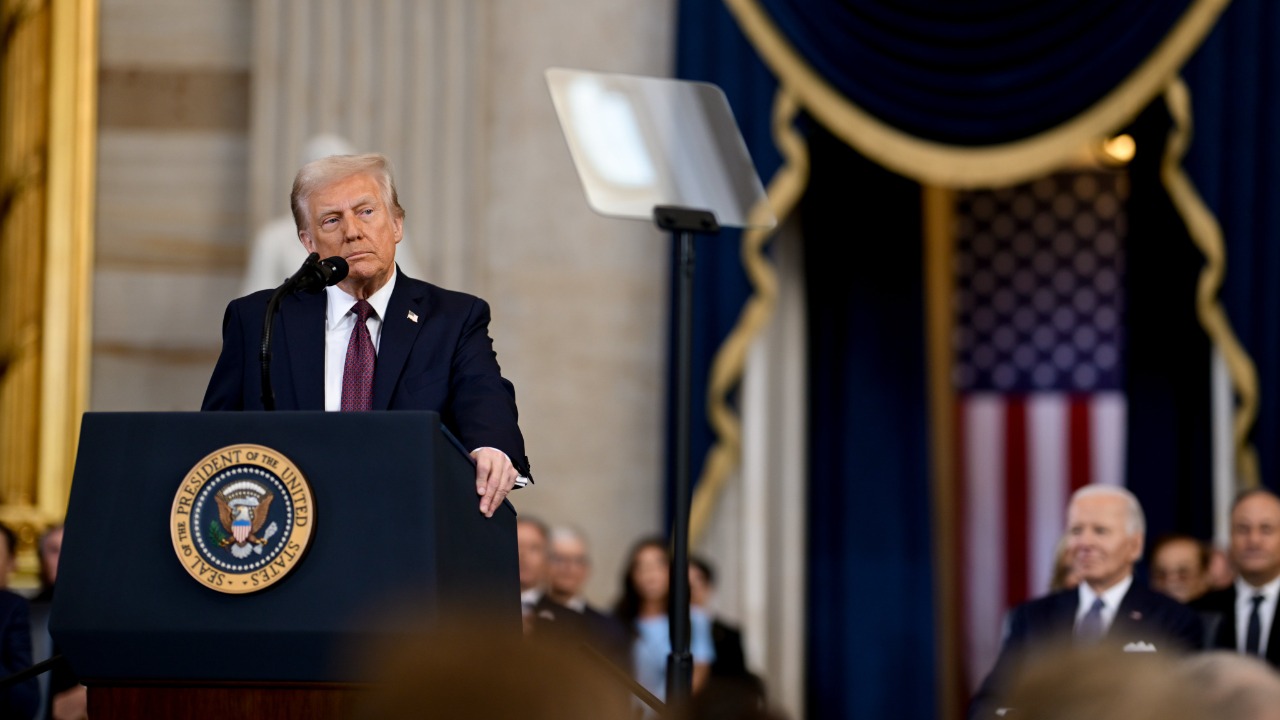
The US government may soon face the daunting task of refunding nearly $90 billion in tariffs collected during Donald Trump’s presidency. This potential outcome hinges on a Supreme Court decision that could declare these tariffs illegal. The case, which challenges the executive’s trade authority, underscores a significant shift in how tariffs are perceived, moving away from the assumption of their permanence. As of November 6, 2025, the implications of a ruling against the government could necessitate swift fiscal adjustments, reshaping the landscape of US trade policy.
Origins of the Tariff Challenges
In 2018, President Donald Trump imposed tariffs on imports such as steel and aluminum, targeting countries like China and the European Union. These tariffs, justified under the guise of national security, generated approximately $90 billion in revenue. However, this revenue is now at risk of being refunded if the Supreme Court rules against the legality of these tariffs. The initial wave of lawsuits challenging these tariffs began soon after their imposition, with businesses and states arguing that the tariffs represented an overreach of executive power under Section 232 of the Trade Expansion Act of 1962.
One of the earliest challenges came from the American Institute for International Steel, which argued that the tariffs exceeded the president’s authority. Although lower courts initially upheld the tariffs, recent appeals have brought the issue to the Supreme Court. The core of the legal argument centers on whether the president’s use of tariff powers infringes upon Congress’s authority under Article I of the Constitution. This escalation to the highest court reflects growing concerns about the separation of powers and the limits of executive authority in trade matters.
Supreme Court Case Dynamics
The Supreme Court case, initiated by importers and trade groups in 2025, questions the constitutionality of the president’s tariff powers under the Trade Expansion Act of 1962. The case has gained significant attention, particularly following recent oral arguments and docket updates on November 6, 2025, which have intensified scrutiny of the tariffs. This marks a departure from previous challenges that were dismissed, increasing the likelihood of a full merits review by the court.
Amicus briefs from influential stakeholders, such as the US Chamber of Commerce, have been filed in support of the plaintiffs. These briefs emphasize the economic harm caused by the tariffs, which were implemented without legislative approval. The $90 billion collected from these tariffs has had widespread economic implications, affecting various sectors and prompting calls for judicial intervention to address the perceived overreach of executive power.
Economic and Fiscal Implications for the Government
If the Supreme Court rules against the tariffs, the US government could be compelled to refund the $90 billion collected, placing significant strain on federal budgets already grappling with deficits. Since 2018, these tariffs have been counted as revenue in Treasury reports, and a refund scenario would necessitate recalculating trade deficits and potentially returning funds with interest to importers. This development could disrupt ongoing budget negotiations, especially given the fiscal year-end pressures in 2025.
The potential retroactive effects of such a ruling could lead to emergency congressional action to address the budgetary shortfall. The need to return such a substantial sum would not only affect current fiscal planning but also alter the broader economic landscape, influencing trade deficit calculations and potentially prompting a reevaluation of trade policies moving forward.
Impacts on Businesses and International Trade
The tariffs have had a profound impact on US manufacturers and consumers, who have absorbed higher costs as a result. For instance, increased steel prices have been passed on to consumers, contributing to the $90 billion in expenses now potentially eligible for refunds. A Supreme Court decision invalidating the tariffs could provide financial relief to these stakeholders, reversing some of the economic burdens imposed since 2018.
Internationally, the tariffs have led to retaliatory measures from trading partners, including China. A ruling against the tariffs could ease some of these global tensions, which have persisted since the Trump era. Additionally, recent filings by agricultural exporters in 2025 seeking compensation highlight the broader supply chain disruptions that have evolved in the post-pandemic recovery period. These developments underscore the interconnectedness of global trade and the potential for significant shifts in international relations if the tariffs are deemed illegal.
Path Forward and Policy Ramifications
The timeline for a Supreme Court decision is projected to extend into mid-2026, building on the momentum from the November 6, 2025, developments. This case differs from previous, slower-paced trade disputes, reflecting the urgency and complexity of the issues at hand. Legislative responses are already being considered, with proposed bills aimed at clarifying tariff authority gaining traction in light of recent court signals suggesting potential illegality.
In the long term, refunding $90 billion could deter future executive actions in trade policy, influencing ongoing negotiations with both allies and adversaries. The case highlights the need for a balanced approach to trade policy, ensuring that executive actions align with constitutional principles and legislative oversight. As the situation unfolds, stakeholders across the spectrum will be closely monitoring the implications for US trade policy and international economic relations.
For more detailed information, refer to the ABC News report.
More From TheDailyOverview
- Dave Ramsey warns to stop 401(k) contributions
- 11 night jobs you can do from home (not exciting but steady)
- Small U.S. cities ready to boom next
- 19 things boomers should never sell no matter what

Julian Harrow specializes in taxation, IRS rules, and compliance strategy. His work helps readers navigate complex tax codes, deadlines, and reporting requirements while identifying opportunities for efficiency and risk reduction. At The Daily Overview, Julian breaks down tax-related topics with precision and clarity, making a traditionally dense subject easier to understand.

