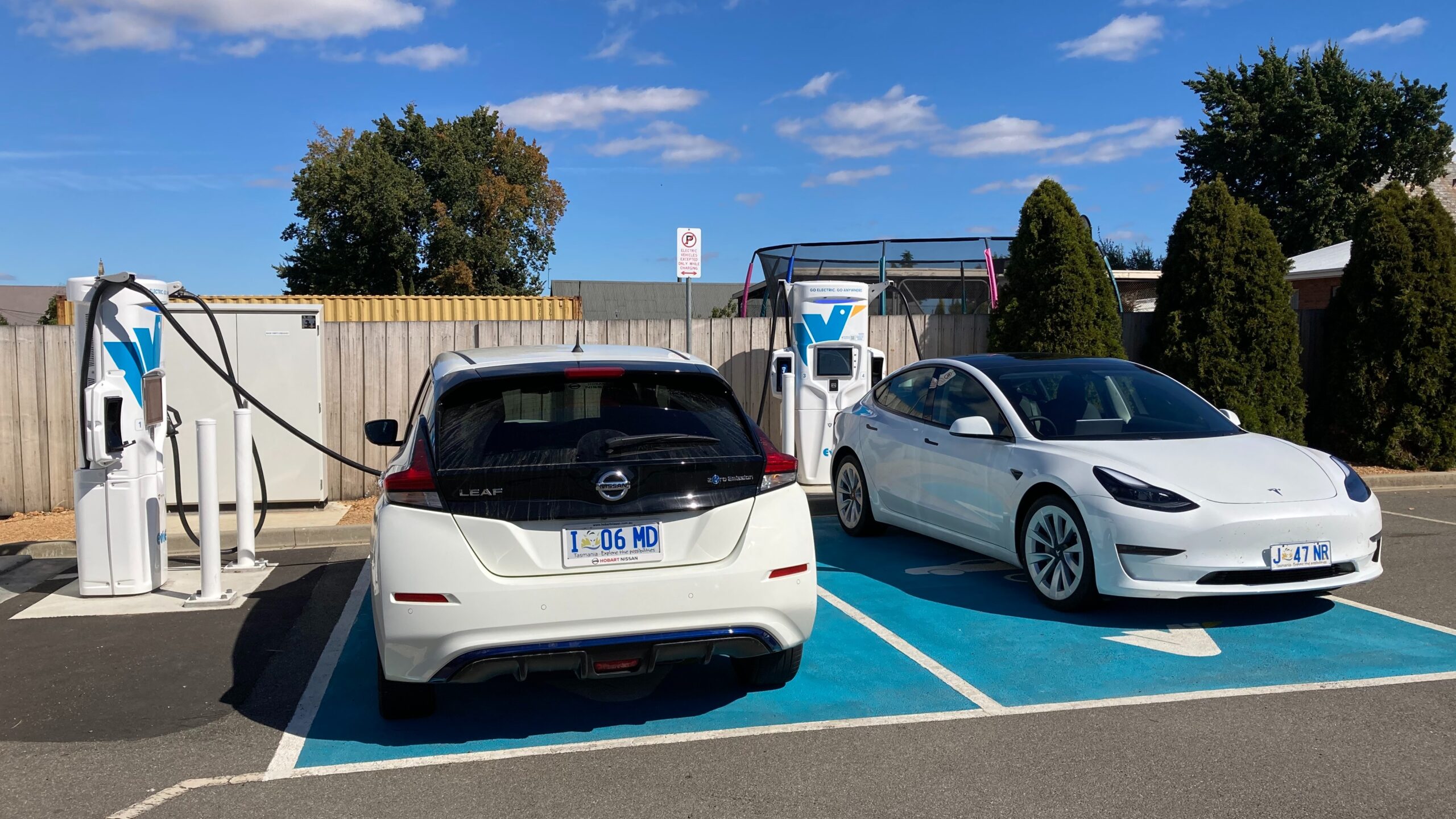
Used electric vehicles priced under $25,000 are stacking up on dealer lots across the United States, creating a buyer’s market that barely existed two years ago. New EV sales fell sharply in late 2025, and the ripple effect has pushed a growing share of secondhand models into a price range that qualifies for a federal tax credit. For budget-conscious drivers who have been priced out of the EV transition, the math is finally starting to work.
New EV Sales Stumble, Used Inventory Swells
The new EV market hit a wall in the final months of 2025. Full-year 2025 sales declined only 2% compared with 2024, but that modest annual figure masks a sharp Q4 drop in U.S. new EV sales that Cox Automotive attributed to policy shifts and expiring incentives. The slowdown accelerated into early 2026: January new EV sales totaled an estimated 66,276 units, down 29.9% from a year earlier, according to the firm’s market monitor. That kind of year-over-year collapse in new registrations sends a clear signal: automakers and dealers are sitting on vehicles that need to move, and trade-in and off-lease stock is piling up on the used side.
The result is a secondhand market where affordable EVs are no longer rare finds buried in classified listings. By June 2025, 43% of used EVs sold were priced under $25,000, a threshold that matters because of its direct link to federal tax incentives and the way shoppers search online. As depreciation hits electric models harder than their gasoline counterparts, more vehicles are sliding into that bracket within three to five years of their original sale. Industry data show EV values falling at a steeper rate than for conventional cars, in part because each model year tends to bring longer range, better software, and more capable charging hardware. Against that backdrop, the average used EV listing price can stay in the low $30,000s while the number of sub-$25,000 choices quietly multiplies underneath.
How the $4,000 Federal Credit Shapes the Market
The $25,000 price point is not arbitrary. Under IRC 25E, the used EV tax credit offers qualifying buyers up to $4,000 on a pre-owned electric or plug-in hybrid model, but only if the sale price is $25,000 or less. That cap has turned into a de facto pricing magnet for dealers, who have a financial reason to list vehicles just below the line. For many shoppers, seeing a car advertised at $24,900 signals not just a discount but also access to federal help that can cover a meaningful chunk of the down payment or reduce the financed amount.
The IRS defines “sale price” as including dealer-imposed fees but excluding taxes and title costs, a distinction that gives sellers room to advertise credit-eligible sticker prices while still tacking on standard closing charges. For a household buying a three-year-old Tesla Model 3 or Chevrolet Bolt at $24,500, the effective out-of-pocket cost can drop to around $20,500 after the credit, assuming the buyer meets income and other eligibility rules. That brings a used EV into the same territory as a mid-trim gasoline sedan, a comparison that was difficult to make even 18 months ago. Buyers can confirm which specific model years qualify through the Department of Energy’s official tax lookup, which lists eligible vehicles alongside their battery capacity and other requirements.
A Wave of Lease Returns Will Add More Pressure
The supply of affordable used EVs is about to get larger. Analysts at J.D. Power project that returning EV lease volumes are on track to spike in 2026, as the first large wave of pandemic-era and early Inflation Reduction Act leases reaches maturity. Many electric models were leased rather than purchased outright during the 2022–2024 boom, partly because leasing allowed customers to capture new-vehicle tax credits that were harder to access through traditional financing. Those cars are now cycling back to dealers, and each one adds to the pool of used inventory competing for attention in a market where new demand has cooled.
Steeper depreciation is a key reason so many of these returning units will land below $25,000. Because EV technology improves rapidly, with longer ranges and faster charging in newer models, older versions lose value faster than comparable gasoline cars when the next generation arrives. That dynamic works against owners who financed at higher prices but benefits anyone entering the market now, especially shoppers who can combine lower sticker prices with the federal credit. The broader used-vehicle price environment, tracked by the Bureau of Transportation Statistics through its transportation price index, shows that overall used-car inflation has been moderate, meaning EV-specific price drops are outpacing the general market rather than simply following it.
Used EVs Are Selling Faster Than Gas Cars, If They’re Priced Right
Even as inventories swell, well-priced used EVs are not necessarily languishing. Dealers report that attractive sub-$25,000 listings often move quickly, especially in metropolitan areas with strong charging networks and higher gasoline prices. According to market coverage in the business press, some retailers are seeing days-to-sale times for competitively priced used electric models that rival or beat comparable gasoline cars. The bottleneck is less about interest and more about matching the right vehicle, range, and price to a still-cautious pool of buyers.
That tension is visible on dealer lots. Higher-priced used EVs (especially early luxury models with shorter range or slower charging) can sit for months, forcing retailers to cut prices in steps until they cross the $25,000 line and trigger a new wave of inquiries. In contrast, mainstream hatchbacks and compact crossovers that qualify for the tax credit, offer at least 200 miles of range, and show clean battery health reports are increasingly treated as value plays. For shoppers, the key is to focus less on the original MSRP and more on current utility: how far the car can go on a charge, what it costs to insure, and how the total monthly payment compares with a similarly equipped gasoline vehicle.
What Budget Shoppers Should Watch in 2026
For households considering a first EV in 2026, the emerging buyer’s market creates both opportunity and complexity. The most attractive deals are likely to come from three- to five-year-old models coming off lease, where the original owner absorbed the steepest depreciation. Many of these vehicles will have mileage comparable to used gasoline cars of the same age but will benefit from lower routine maintenance costs, since EVs lack oil changes and have fewer moving parts. Buyers who can be flexible about brand and color but firm about price and range are in the best position to capitalize on the shifting landscape.
At the same time, shoppers should be realistic about infrastructure and usage patterns. Home charging access remains a major dividing line: drivers who can plug in overnight will capture most of the fuel savings that make a used EV compelling, while those relying solely on public fast chargers may see thinner economic benefits. Prospective buyers should also factor in local incentives, which can stack on top of the federal credit in some states, and be prepared to move quickly when a suitable vehicle appears below the $25,000 threshold. With new EV sales slowing, lease returns swelling, and federal policy steering discounts toward the used market, 2026 is shaping up as a pivotal year for drivers who have been waiting for electric transportation to finally fit their budgets.
More From The Daily Overview
*This article was researched with the help of AI, with human editors creating the final content.

Elias Broderick specializes in residential and commercial real estate, with a focus on market cycles, property fundamentals, and investment strategy. His writing translates complex housing and development trends into clear insights for both new and experienced investors. At The Daily Overview, Elias explores how real estate fits into long-term wealth planning.

