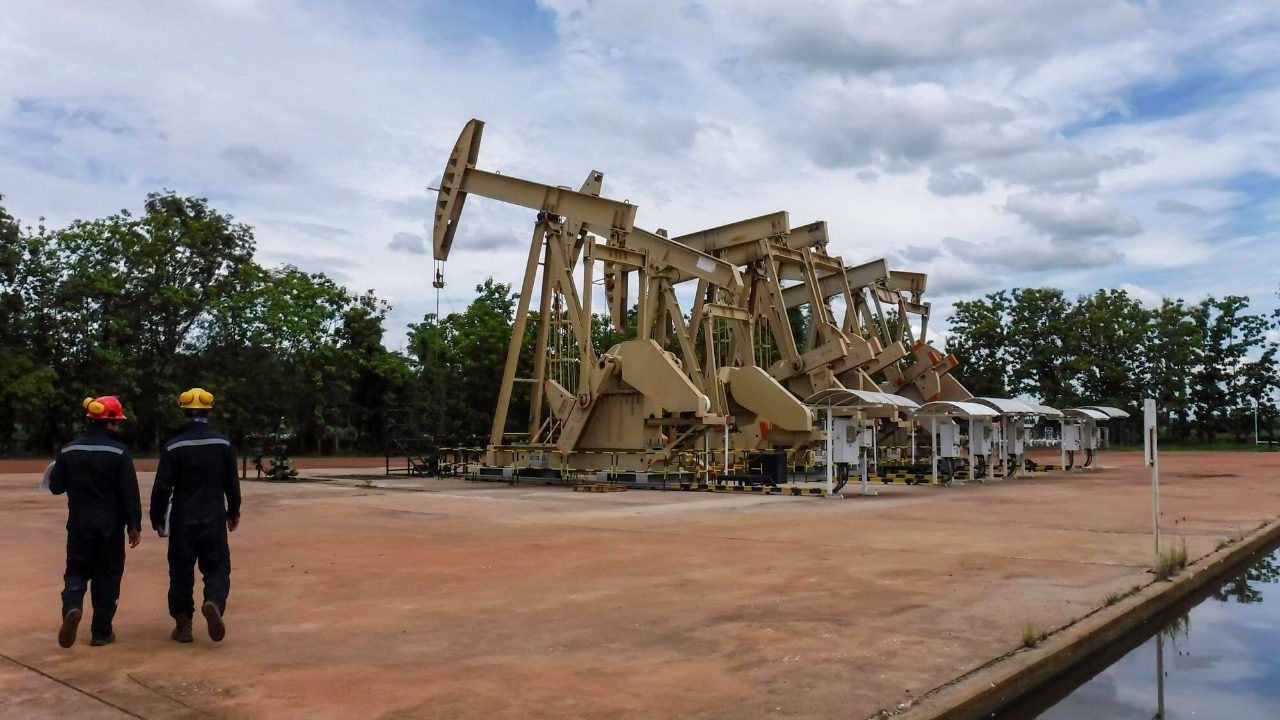
Venezuela is suddenly back at the center of global energy politics, but the real story is not just about barrels in the ground. Rebooting the country’s battered oil sector now carries a price tag that runs into the tens of billions of dollars, and the prospect of a $100 billion rebuild is colliding with a market already anxious about oversupply and volatile prices. As investors weigh the promise of vast reserves against the cost, the outcome will shape both Big Oil’s balance sheets and the trajectory of crude benchmarks for years.
At the same time, President Donald Trump is pitching a vision in which United States companies help revive Venezuelan production and, in theory, reap a windfall. The gap between that political ambition and the technical, financial, and geopolitical realities on the ground is where traders, refiners, and policymakers are now intensely focused.
The $100 billion question behind Venezuela’s oil reboot
The headline figure hanging over the debate is the estimated $100 billion needed to drag Venezuela’s oil industry back to something like its former scale. Analysts cited in one assessment of President Trump’s strategy say his planned revival of $100 billion would be required to modernize fields, pipelines, and export terminals after years of neglect. That figure is not a theoretical spreadsheet exercise, it reflects the accumulated damage from underinvestment, sanctions, and mismanagement that have left production far below the country’s geological potential.
Other industry research points to similarly daunting sums, with $183 billion in cumulative oil and gas CAPEX flagged as the kind of long term commitment needed to restore output to 3 million barrels per day by around 2040. When I look at those numbers side by side, the message is clear: even the lower $100 billion estimate implies a multiyear rebuilding program that rivals the largest upstream investment cycles of the past decade, and any company buying into the story has to be prepared for slow payback and heavy political risk.
From socialist showcase to crumbling infrastructure
To understand why the bill is so high, it helps to look at what has happened to the national oil company and its assets. The Venezuelan state producer, known as PDVSA, has seen refineries, upgraders, and pipelines fall into disrepair after Years of economic crisis and political interference. Reports describe plants where basic maintenance has been skipped, storage tanks have corroded, and safety systems have failed, leaving facilities operating far below capacity or shut altogether. In that context, the idea of simply turning a few valves and ramping up exports is a fantasy.
Independent analysts quoted in another assessment say that returning Analysts believe Venezuela to a production level of 3 million barrels per day will require more than $100 billion in fresh capital, which aligns with the broader CAPEX estimates. I read that as a sign that the physical state of the system is now the binding constraint, not just sanctions or access to markets. Before any new drilling campaign can deliver meaningful volumes, operators will have to rebuild gathering networks, power supply, and export infrastructure that have been hollowed out over time.
Trump’s big promise and the politics of a windfall
President Donald Trump has framed the opening in Caracas as a once in a generation opportunity for United States companies, telling supporters that seizing control of Venezuelan reserves could transform the country’s energy position. In one account of his pitch, Trump’s planned revival of Trump is described as a way to tap what he portrays as 30 percent of the world’s oil reserves on paper, even if the real world costs are far higher. The political message is simple: accept the upfront investment and regulatory risk now, and Big Oil will be rewarded later with secure access to heavy crude.
Market chatter has already latched onto the idea of a huge upside for listed producers. One trading focused report suggested that overnight action in futures and equity markets pointed to United States majors potentially adding more than $100 billion in combined market value as investors digested the Venezuela headlines. Another account of the same dynamic framed it as Big Oil set for a $100B windfall and noted that Trump admitted tipping companies off before and after the move against Maduro in Venezuela. I see that as a reminder that political access is now part of the investment thesis, which only heightens the scrutiny from regulators and shareholders.
Why Big Oil is not rushing in
Despite the rhetoric, the largest international producers are signaling caution rather than a stampede into Caracas. One detailed look at corporate thinking noted that Venezuela is broke after Years of underinvestment and international exile, and that just to keep the existing oil sector from shrinking further would require tens of billions of dollars in new spending. For boardrooms that have spent the past few years preaching capital discipline and shareholder returns, the idea of pouring that kind of money into a fragile political environment is a hard sell.
Another analysis of the investment climate stressed that, for the time being, For the Trump administration has not offered detailed terms on how production sharing, taxation, or legal protections would work for foreign operators. Experts quoted in that coverage warn that without clear rules, the dream of cheap and easy barrels will remain just that. From my perspective, the mismatch between political timelines in Washington and the multi decade horizon of upstream projects is one of the biggest reasons executives are keeping their powder dry.
Legal, military, and governance hurdles
Even if the money were available, the institutional framework in Caracas is not yet ready to absorb it. A policy focused breakdown of the situation lists several conditions that would need to be met for Big Oil to return to Venezuela at scale, starting with Rule of law and a credible commitment to honor contracts. The same analysis notes that Venezuela’s military has taken an active role in the oil sector, which complicates any attempt to create an independent regulator or depoliticize PDVSA. For international investors used to arbitration clauses and predictable courts, that is a red flag.
Another report on the post Maduro landscape underscores that, Perhaps most challenging, is the level of investment required to modernize Perhaps Venezuela’s oil infrastructure and the need for a stable political settlement before companies like Chevron, Exxon Mobil, or ConocoPhillips can fully reenter the country. I read those caveats as a reminder that capital will not flow just because reserves exist. It will only move once there is confidence that contracts will be enforced, security risks are manageable, and the state’s role in the sector is clearly defined.
Long timelines and uncertain payoffs
Even under optimistic scenarios, the path from today’s battered industry to a high output future is measured in decades, not quarters. One detailed modeling exercise concludes that a full return to 3 million barrels per day by 2040 would require roughly $183 billion in cumulative CAPEX from 2026, translating into a sustained ramp up in drilling, infrastructure, and enhanced recovery projects. The same analysis notes that announcements alone will not move barrels, a point that should temper some of the more breathless market reactions to political speeches.
Another set of projections cited by Venezuela focused Analysts estimate that returning the country to 3 million barrels per day would require more than $100 billion, reinforcing the idea that the initial $100 billion figure is a floor rather than a ceiling. From an investor’s standpoint, that means any discounted cash flow model has to incorporate not only the upfront checks but also the risk that future governments could change terms, impose new taxes, or even re nationalize assets before the full payoff is realized.
Global supply, price risks, and the “Venezuela effect”
All of this is unfolding in a market that is already wrestling with the prospect of oversupply. One global outlook notes that with a political transition, Venezuela could raise oil production significantly in the years ahead, and that this additional supply would likely depress prices according to analysts led by Natasha Kaneva. A separate impact series from another bank, referenced in a related report, also flags the risk that incremental Venezuelan barrels could weigh on benchmarks just as other producers are bringing new projects online.
Equity analysts tracking energy stocks have started to talk about a distinct “Venezuela effect” on valuations. One trading note from Oil Stock Predictions in Jakarta at Gotrade News warns that oil prices risk hitting $50 a barrel if Venezuelan supply ramps faster than demand, a scenario that could drastically reshape sector valuations. When I weigh those warnings against the huge capital requirements, the paradox becomes obvious: the more successful the investment push is in restoring output, the more it could undermine prices and squeeze returns.
How much oil can really flow, and how fast?
Even if the political and financial pieces fall into place, there are hard physical limits on how quickly production can rise. One detailed radio report points out that seizing current oil production is one thing, but overhauling But Venezuela’s entire oil industry would be another, and that independent experts doubt the country can sustainably reach 1 million barrels a day in the near term without major upgrades. That skepticism reflects the reality that many fields have suffered reservoir damage from poor management, and that heavy crude in the Orinoco Belt requires specialized upgraders and diluents to be marketable.
Short term market reactions have been driven more by sentiment than by actual barrels. A trading desk summary notes that Fundamental News from Bloomberg reported that realizing President Donald Trump’s plan for a United States led revival of Venezuela’s sector would take years, and that traders are still uncertain the country is stable enough to deliver. In that light, the near term impact on global balances looks modest, even if the long term potential is enormous.
Refiners, heavy crude, and who actually benefits
While upstream investors debate risk and reward, refiners along the United States Gulf Coast are quietly running the numbers on what Venezuelan barrels would mean for their margins. One regional industry report quotes Commodities analyst and Fox News Contributor Phil Flynn noting that Venezuela’s heavy crude is well suited to complex refineries that invested billions in coking and desulfurization units. Those plants have been scrambling for alternative feedstocks since sanctions cut off Venezuelan imports, and a renewed flow could improve utilization and profitability.
At the same time, the global context matters. A separate analysis of supply trends notes that Standard Bank CIB Impact Series and other banks see Venezuelan output rising in the years ahead, potentially keeping prices in check even as demand growth slows. For refiners, that combination of ample heavy crude and capped feedstock costs could be a boon. For upstream investors, it reinforces the idea that the benefits of a Venezuela reopening may accrue unevenly across the value chain.
Markets are watching, but the risks are structural
Financial markets have already shown how sensitive they are to any hint of progress or setback in Caracas. One early reaction piece described how oil prices also saw a sharp move after reports that $100 billion style windfall headlines hit screens, with futures spiking before settling back as traders reassessed the practical hurdles. Another layer of context comes from broader country risk assessments, which still classify Venezuela’s political and economic environment as fragile despite the change in leadership.
When I put all of this together, the picture that emerges is less about a quick $100B bonanza and more about a slow, contested rebuilding of a broken energy superpower. The capital requirements outlined by multiple studies, the need for Rule of law and institutional reform, the warnings from experts that Trump’s vision will not be cheap or easy, and the risk that extra barrels could push prices toward $50 all point in the same direction. Markets are right to watch closely, but the forces that will decide whether Venezuela becomes a $100 billion success story or a cautionary tale are structural, not just political headlines.
More From TheDailyOverview

Grant Mercer covers market dynamics, business trends, and the economic forces driving growth across industries. His analysis connects macro movements with real-world implications for investors, entrepreneurs, and professionals. Through his work at The Daily Overview, Grant helps readers understand how markets function and where opportunities may emerge.

