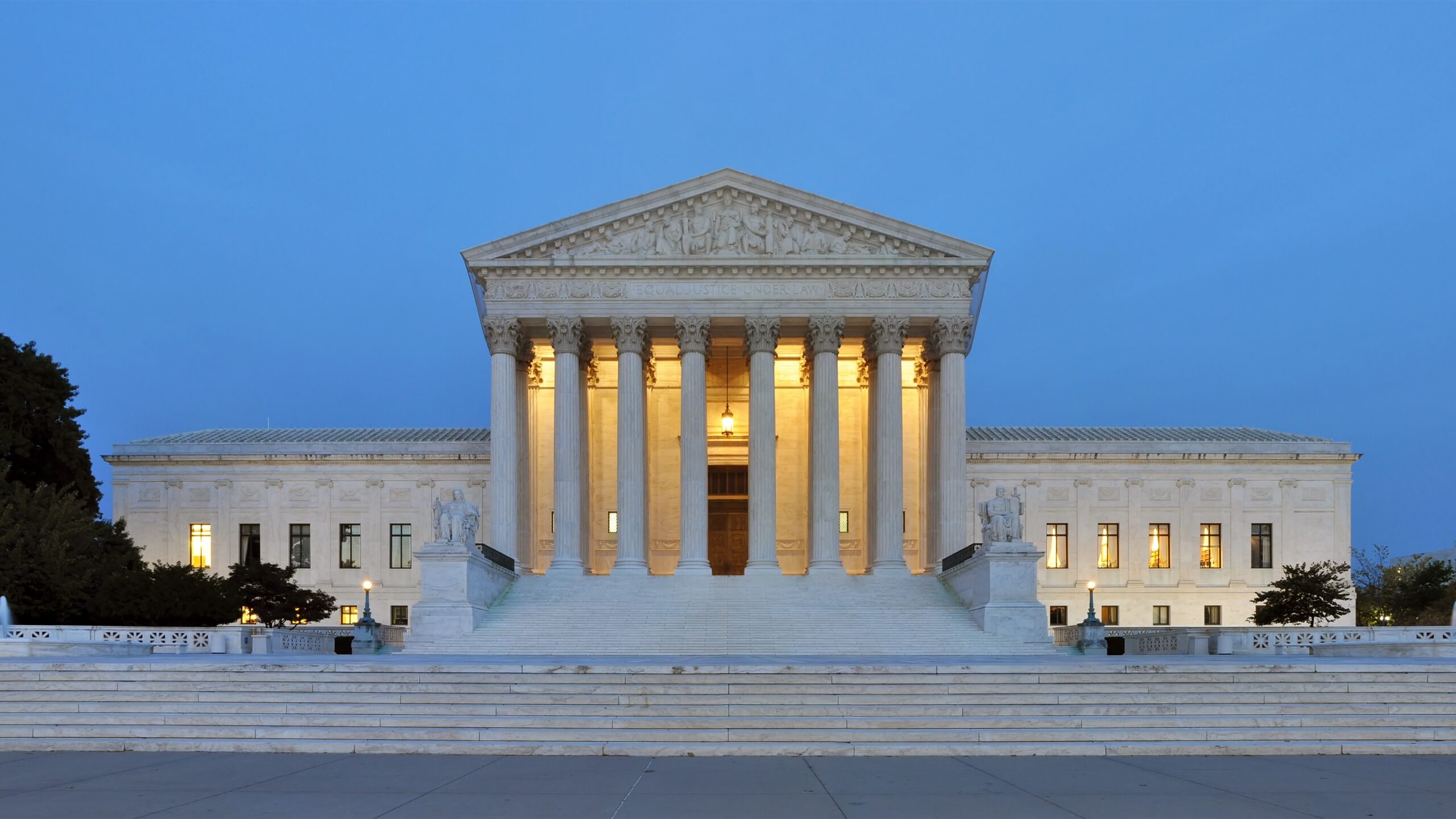
The Supreme Court’s silence on President Donald Trump’s trade agenda is not neutral ground. Each month without a ruling keeps his tariff machine humming, preserves his leverage abroad, and deepens the political and economic stakes at home. The longer the justices wait to say whether his use of emergency powers is legal, the more the status quo hardens in Trump’s favor.
At the center of the fight is whether the White House can keep using the International Emergency Economic Powers Act to tax imports on a massive scale. Until The US Supreme Court answers that question, Trump can keep collecting revenue, reshaping supply chains, and telling voters that only he is willing to weaponize tariffs to protect American jobs.
Uncertainty from the bench, clarity for Trump
From Washington to farm country, the most immediate effect of the delay is confusion for everyone except the president. In WASHINGTON, D.C., the latest signal came when The Supreme Court again declined to issue a decision on President Donald Trump’s tariffs, even as trade groups and lawmakers waited for clarity on whether the International Emergency Economic Powers Act actually allows this kind of sweeping import tax. That nondecision, reported out of WASHINGTON by RFD NEWS in Jan, underscored that the justices are in no rush to resolve whether Trump’s emergency declaration was lawful, leaving businesses to guess how long they will be living under his rules.
The Court has not announced the next possible opinion date, which means there is no calendar anchor for when this legal limbo might end. In practical terms, that gives Trump more time to frame the narrative, as he already has by questioning whether the USMCA needs to be renewed and by casting his tariffs as a permanent feature of American trade policy rather than a temporary bargaining chip. As The Court stays quiet and uncertainty builds around the agreement that replaced NAFTA, Trump can argue that only his hard line, not multilateral deals, really matters, a message that resonates with his base while unnerving exporters in Canada, Mexico, and the Midwest who are watching the USMCA’s future get pulled into the same fog.
How delay locks in Trump’s economic story
Legally, the stakes are enormous, but politically, the delay is already paying dividends for the president. Earlier this month, The US Supreme Court was expected to release opinions on tariffs imposed by Trump under the International Emergency Economic Powers Act, a case that goes to the heart of whether a president can invoke national security to reshape trade with countries like China and India. Instead, the justices passed on issuing a ruling, which lets Trump keep pointing to the ongoing litigation as proof that he is fighting entrenched interests that want to tie his hands on trade, even as the tariffs continue to bite importers and consumers.
The legal question is straightforward: did President Donald Trump and the Whi House have the authority to impose such broad tariffs under the statute, or did they stretch emergency powers beyond what Congress intended. A video briefing on the case laid out how The US Supreme Court may decide on the legality of President Donald Trump’s sweeping tariff policy, and how a ruling against the Whi House could force a rapid rollback of duties on everything from steel to consumer electronics. By not deciding yet, the Court effectively lets Trump keep collecting tariff revenue while he campaigns on the idea that only he is tough enough to stand up to foreign competitors, a narrative that is much harder to sustain if the justices eventually strike his policy down.
The economic stakes grow with every month of silence
Economists are unusually blunt about what is on the line. Mark Zandi and others have argued that unwinding Trump’s tariffs would be the fastest way to revive job growth, even if they acknowledge that Other factors are certainly at play, including highly restrictive immigration policies, DOGE cuts, and artificial intelligence. Their point is that tariffs are one of the few levers that could be reversed quickly, putting money back into consumers’ pockets and lowering costs for manufacturers that rely on imported components. As long as the Court delays, that potential stimulus is frozen, and Trump can continue to claim that his approach is helping workers even as some analysts say the opposite.
Market analysts are already gaming out what happens if the justices eventually pull the plug. In a recent Market Minute, economist Joseph Brusuelas described What could follow if the Supreme Court overturns the tariffs, estimating that rolling them back could free up as much as $367 billion in trade flows and ease pressure on supply chains. That kind of number is not just an abstract macroeconomic figure, it is a reminder that every month of delay keeps hundreds of billions of dollars tied to a legal question that only nine justices can answer, while Trump uses the same period to argue that his tariffs are indispensable to American strength.
Households and retailers carry the cost while Trump banks the politics
On the ground, the people paying for the Court’s caution are not in robes or on campaign stages. Trump’s authority to impose tariffs on specific types of imports, such as autos and metals, is not being challenged in this case, but close to half of all tariffs that hit consumer goods are at issue, including products that fill the shelves of retailers like Amazon and Walmart. Analysts warn that these duties fall heavily on low and middle income households, who see higher prices on everything from washing machines to smartphones while the federal budget deficit absorbs only a fraction of the revenue. As long as the justices hold off, those families keep paying at the register, even as Trump tells them the tariffs are a patriotic contribution.
The legal limbo also affects how businesses plan for the future. A recent report noted that a Supreme Court Does Not Issue Ruling on Trump Tariffs, even as the same Court Begins Arguments Over Transgender Sports Ban, a juxtaposition that shows how trade is competing with other hot button issues for judicial attention. For retailers and importers, that means deciding whether to lock in long term contracts at tariff inflated prices or gamble that a ruling will eventually bring relief. Trump, by contrast, can use the ongoing uncertainty to pressure companies to reshore production or to offer him political cover when they announce price hikes, arguing that they are simply passing along costs from a fight he insists is necessary.
Why even a loss at SCOTUS might not hurt Trump
There is a paradox at the heart of this case: some analysts say that even if SCOTUS eventually rules against Trump, the practical impact on his tariffs could be limited. One market strategist argued that a SCOTUS ruling will have little impact on Trump’s tariffs, noting that companies have already adapted to the current regime and that any refunds would be slow and partial. In that view, the legal fight is less about immediate economic change and more about setting boundaries for future presidents, which again plays into Trump’s hands by letting him cast himself as the leader who pushed executive power to its limits in defense of American industry.
Legal experts continue to expect the Supreme Court to rule against the use of emergency powers under the International Emergency Economic Powers Act for this kind of broad trade policy, according to one analysis that framed the case as a likely check on presidential authority. Yet the same reporting noted that the longer the Supreme Court delays its tariff decision, the better it is for President Trump, because he can keep collecting revenue and blaming any economic pain on judges and globalists rather than on his own choices. Although Trump has touted the tariffs as a method of paying off the $38 trillion national debt, the reality is that collections so far are a drop in that bucket and the rest will have to be paid for somehow, a gap that critics say will eventually show up in either higher taxes or reduced services.
More From TheDailyOverview

Alex is the strategic mind behind The Daily Overview, guiding its mission to uncover the forces shaping modern wealth. With a background in market analysis and a track record of building digital-first businesses, he leads the publication with a focus on clarity, depth, and forward-looking insight. Alex oversees editorial direction, growth strategy, and the development of new content verticals that help readers identify opportunity in an ever-evolving financial landscape. His leadership emphasizes disciplined thinking, high standards, and a commitment to making sophisticated financial ideas accessible to a broad audience.

