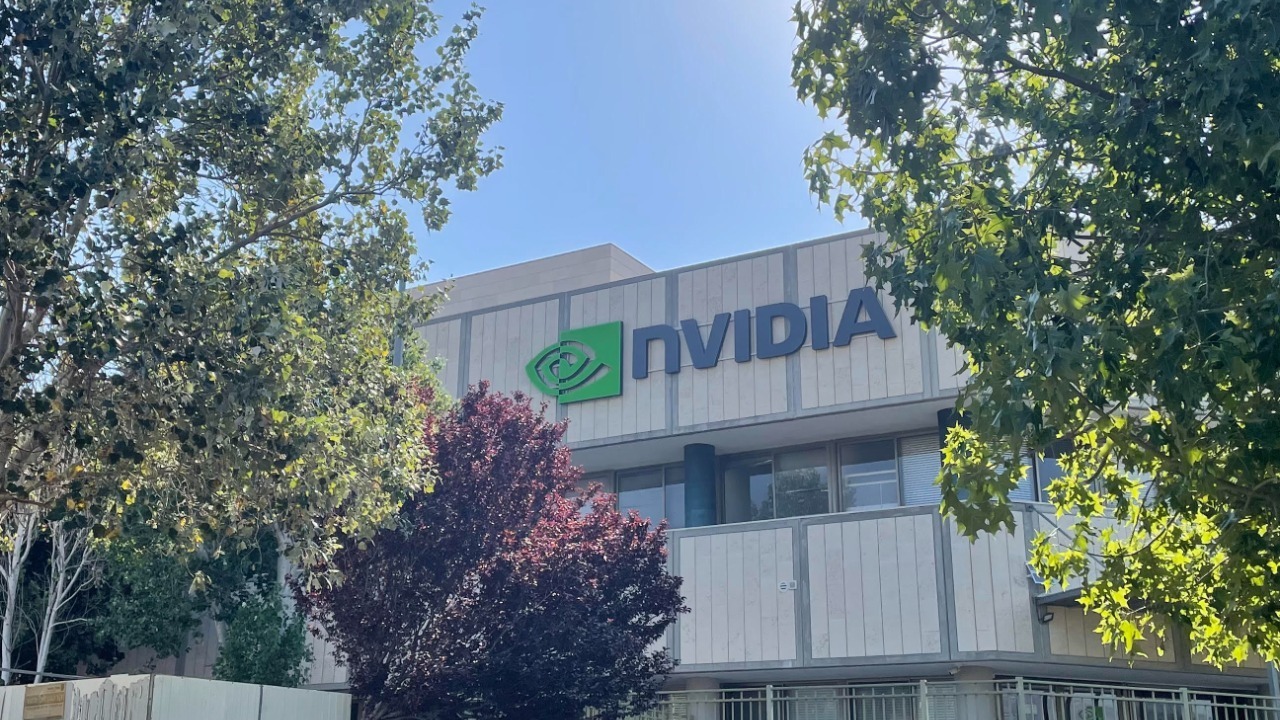
Nvidia filed its quarterly earnings with the SEC for the period ended July 27, 2025, and the reaction across Wall Street was strikingly muted. A company that once moved entire indexes with a single report now barely nudges the broader market, raising a pointed question: has the era of Nvidia as the sole bellwether for artificial intelligence investing already passed?
Earnings Still Strong, but the Surprise Factor Has Faded
Nvidia’s latest 10-Q filing, submitted to the U.S. Securities and Exchange Commission for the quarter ended July 27, 2025, contains the usual dense stack of financial statements, segment disclosures, management commentary, and risk factors. Just a year or two ago, that level of detail would have sent options desks scrambling to reprice volatility, with every new line item dissected for clues about AI demand. This time, the market absorbed the information with barely a ripple. The core reason is not that Nvidia’s numbers have suddenly turned disappointing; it is that investors have already internalized the company’s dominance in data center GPUs and AI training hardware. When a firm beats expectations quarter after quarter, the incremental information in each new report shrinks, and traders gradually shift from reacting to surprises to tracking a well-understood trajectory.
This dynamic has created a paradox. Nvidia can post record data center revenue and still see its stock trade flat or drift lower in the days that follow. The market has moved from asking “Will Nvidia beat?” to “By how much, and does that change anything we didn’t already know?” Increasingly, the answer to the second question is “not much,” which translates into smaller post-earnings price swings. Implied volatility around Nvidia’s reporting dates has compressed as the company’s growth story has become more predictable. For individual investors who once tried to time trades around Nvidia’s earnings as a high-volatility catalyst, the old playbook no longer delivers the same payoff, because the surprise premium has largely been arbitraged away by years of consistent outperformance.
Six Giants Now Share the Weight Nvidia Once Carried Alone
Part of the explanation for Nvidia’s diminished market shock value lies in how the top of the S&P 500 has evolved. As of mid-2024, Nvidia and five other technology heavyweights (Apple, Microsoft, Alphabet, Amazon, and Meta) together accounted for roughly 30% of the index, according to Bloomberg data. That concentration means the market’s AI exposure is now spread across multiple platforms rather than funneled through a single chipmaker. When investors believed AI leadership was essentially a one-company story, Nvidia’s earnings acted like a macro event. Beats and misses reverberated through the entire index as a proxy for the AI trade. Today, Microsoft’s cloud spending, Amazon’s custom accelerators, Alphabet’s TPU roadmap, and Meta’s open-source model strategy all provide independent channels for expressing an AI thesis.
This dispersion of AI exposure across several mega-caps changes how money moves after Nvidia reports. A strong quarter may still validate the broader AI buildout, but it also prompts rotation into peers that appear under-owned relative to Nvidia’s already massive market capitalization. Some investors treat Nvidia’s performance as a read-through for the ecosystem and choose to add positions in software or cloud providers instead of doubling down on the chip supplier. Conversely, if Nvidia’s numbers disappoint, the damage is more easily contained because the other five giants offer alternative ways to access AI-driven growth. The result is a dampening mechanism: no single earnings report can redirect every AI-related flow at once, and Nvidia’s once outsized influence on index-level moves is now shared among a small group of dominant names.
The Mega-Cap Rotation Trade Mutes Earnings Reactions
A separate but closely related force has been pulling attention away from Nvidia’s quarterly beats and misses, a broader investor rotation out of mega-cap technology stocks. As reporting from Bloomberg has noted, much of Nvidia’s recent lackluster share performance has been driven less by company-specific disappointment and more by portfolio managers stepping back from the entire mega-cap complex. After years in which a handful of technology leaders dominated returns, institutional allocators are rebalancing toward mid-cap names, international markets, and sectors that lagged during the AI boom. In that context, even a blowout quarter from Nvidia struggles to overcome the drag from structural selling.
This rotation is not a referendum on Nvidia’s competitive position so much as a response to concentration risk. Pension funds, endowments, and large mutual funds often operate under mandates that cap exposure to any single stock or sector. As Nvidia’s weight in benchmarks has swelled, those mandates have forced mechanical trimming whenever the position grows too large, regardless of whether the company beats earnings by a penny or a wide margin. The result is a stock that can deliver excellent fundamentals yet trade sideways or modestly lower as rebalancing flows wash through the market. For short-term traders, that can be frustrating, but from the perspective of risk-controlled portfolio construction, it is a rational attempt to prevent a single AI winner from dominating overall performance.
AI Hype Has Matured into AI Infrastructure
There is also a psychological shift undermining Nvidia’s ability to shock the market. From late 2022 through early 2024, each earnings call doubled as a referendum on whether generative AI was a durable technological wave or a passing fad. Nvidia’s guidance on GPU demand, supply constraints, and cloud customer commitments was treated as a proxy for the entire sector’s future. That debate is largely over. Few serious investors now question that AI workloads will keep expanding; the open questions center on the pace of monetization and the distribution of value across the stack. Instead of asking “Is AI real?” the market is asking “How quickly do AI investments translate into revenue and margin?” and “Which companies capture the economics (chipmakers, cloud platforms, software providers, or end users)?” Those issues are resolved gradually across dozens of earnings cycles, not by a single quarterly update from any one vendor.
As the AI thesis has broadened from hype to infrastructure, the informational content of Nvidia’s results has narrowed in relative terms. The company’s quarterly filing still matters enormously for its own valuation, cost structure, and competitive positioning, but it no longer resets the entire narrative for technology spending. Investors now triangulate AI trends using signals from cloud budgets, enterprise software adoption, and even industrial automation projects, diluting the signaling power of Nvidia’s numbers. In effect, the market has moved from treating Nvidia as the oracle of AI to viewing it as one crucial, but not singular, node in a much larger network of companies building and deploying intelligent systems.
What a Post-Bellwether Nvidia Means for AI Investors
The fading of Nvidia’s bellwether status does not mean the company has become irrelevant; instead, it marks a transition in how AI risk and opportunity are expressed in portfolios. For years, buying Nvidia stock was the simplest way to bet on the rise of generative AI, because the company’s GPUs sat at the heart of nearly every major training cluster. As more firms have entered the race (from cloud providers designing custom accelerators to software companies embedding AI into their products), investors have gained a wider menu of choices. That diversification allows them to fine-tune their exposure to different parts of the AI value chain, reducing their reliance on any single supplier’s quarterly guidance. In practice, this makes Nvidia’s earnings one important data point among many rather than the singular event around which AI sentiment pivots.
For long-term investors, this evolution may ultimately be healthy. A market in which one stock’s earnings can swing entire indexes is inherently fragile, because any misstep or supply shock risks outsized systemwide consequences. As AI infrastructure becomes more distributed and the sources of AI-related revenue multiply, the overall ecosystem may prove more resilient, even if no single earnings report commands the spotlight it once did. Nvidia’s latest quarter underscores that reality: strong fundamentals, detailed disclosures, and steady demand for AI hardware, but a market reaction that reflects a maturing, more diversified AI landscape rather than the adrenaline of an early-stage boom. In that sense, the muted response is less a verdict on Nvidia and more a sign that artificial intelligence has moved from speculative story to embedded, if still rapidly evolving, part of the global economy.
More From The Daily Overview
*This article was researched with the help of AI, with human editors creating the final content.

Grant Mercer covers market dynamics, business trends, and the economic forces driving growth across industries. His analysis connects macro movements with real-world implications for investors, entrepreneurs, and professionals. Through his work at The Daily Overview, Grant helps readers understand how markets function and where opportunities may emerge.

