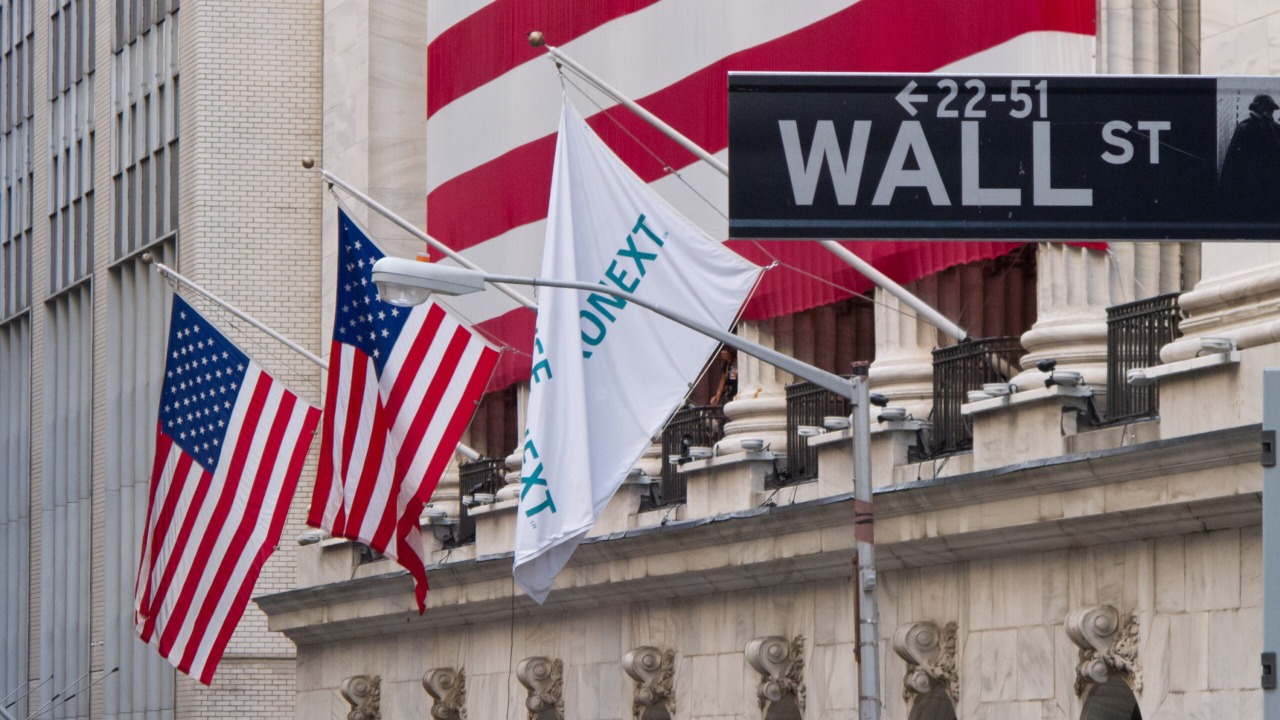
Wall Street just delivered a split verdict on Big Tech’s artificial intelligence ambitions, hammering Microsoft while rewarding Meta for a spending plan that is, on paper, even more aggressive. The market reaction is not about who believes in AI more, but about who is convincing investors that the money going out the door today will translate into durable profits tomorrow. I see the gap as less a story of fundamentals and more a referendum on narrative, timing, and how clearly each company is tying eye‑watering capital budgets to visible returns.
Both companies are pouring tens of billions into data centers, chips, and new AI products, yet only one is being treated as if that investment is already paying off. To understand why, it helps to look past the headline numbers and into how Microsoft and Meta are framing their strategies, how those strategies show up in current earnings, and what they signal about the next phase of the AI cycle.
Microsoft’s “great quarter” that still spooked the market
On the surface, Microsoft’s latest results looked like the kind of performance that usually earns applause. The company reported $81.3 billion in revenue, which was $1.1 billion above expectations, and Its earnings per share beat forecasts as well. According to detailed figures, earnings per share came in at $4.14 on an adjusted basis, while the company’s cloud unit continued to grow at a healthy clip. Chairman and CEO of Microsoft Satya Nadella, speaking earlier at the World Economic Forum Annual Meeting in Davos, has repeatedly framed this AI push as the next platform shift, and the numbers suggest customers are listening.
Yet the stock reaction was brutal. Microsoft Records Second Largest Value Loss in US History after the report, with a 12% Intraday Slump that wiped out an amount of market capitalization comparable to the entire size of Alibaba (BABA). In trading the next day, Microsoft (NASDAQ:MSFT) was highlighted in Stock Market Today coverage as one of the biggest drags on major indexes, even though the company has grown 445,782% since going public. The message from traders was clear: the numbers were fine, but the trajectory and cost of the AI buildout raised more questions than they answered.
Azure’s capacity problem and the cost of being early
At the heart of the sell‑off is Azure, the cloud platform that has become Microsoft’s growth engine and the primary delivery vehicle for its AI services. Investors had been primed for accelerating growth as AI workloads ramped, but instead they saw Azure growth slow, with commentary that it “cannot grow to the rates Wall Street expected because it does not have the capacity” to meet all the demand. That framing, captured in analysis of Azure, turns what should be a high‑class problem into a near‑term ceiling on revenue, and it undercuts the idea that Microsoft can simply spend its way into AI dominance without friction.
The spending itself has become a flashpoint. The primary source of investor anxiety is the massive price tag on MSFT’s artificial intelligence ambitions, with commentary pointing out that in Q2 the tech giant’s AI investments left its operating margin at a razor‑thin 0.2%. That detail, highlighted in a breakdown of how MSFT stock crashed below key support levels, reinforces the sense that Microsoft is front‑loading costs faster than it can translate them into pricing power. When I look at that combination of constrained Azure capacity and squeezed margins, I see a company that is early and aggressive on infrastructure, but still struggling to prove that every incremental dollar of AI capex will show up quickly in the top line.
Meta’s $135 Billion bet and a friendlier narrative
Meta, by contrast, is being rewarded for a plan that is arguably even more audacious. The company has laid out a multiyear AI roadmap that includes a $135 Billion capital spending commitment tied to data centers, custom chips, and new AI models. In the same market session that punished Microsoft, Meta stock surged as investors effectively endorsed that Billion AI Bet, treating it as a sign of confidence rather than a red flag. The key difference is that Meta is presenting its AI push as an extension of a business that is already visibly improving, rather than as a costly prerequisite for growth that has yet to fully materialize.
That optimism is rooted in the company’s advertising engine. Meta stock surged 9% after a positive Q4 earnings report highlighted ad business success, with management emphasizing that its advertising strength is providing the cash flow to fund its AI ambitions. Coverage of the move noted how Meta is using its improved ad targeting and engagement to underwrite the next wave of AI products. In other words, Meta is not asking investors to take it on faith that AI will eventually pay off; it is pointing to a business that is already throwing off cash and arguing that AI will make that engine even more efficient.
Why Meta’s AI spending “feels” different to investors
Meta has also been careful to frame its AI investments as tightly linked to user‑facing products and near‑term monetization. Analysts who track the company note that Meta is increasing its AI spending, but investors are pleased with the way it is pacing that ramp and tying it to improvements in recommendation systems, ad relevance, and new experiences across Facebook, Instagram, and WhatsApp. One report described how Meta’s stock found its way back into Wall Street’s good graces, citing commentary Provided By Christine Ji and Jefferies analyst Brent Thill that emphasized the company’s discipline after its earlier “year of efficiency.” That narrative, of a chastened Meta that learned from its metaverse overspend and is now applying that lesson to AI, resonates with investors who are wary of open‑ended capex.
The stock reaction underscores that point. What Happened is that Shares of social network operator Meta Platforms (NASDAQ:META) jumped 9.2% in the afternoon session after the company signaled strong business momentum to investors. Analysts highlighted that Meta has not taken its foot off the pedal on AI, yet the market is comfortable because the company is pairing that ambition with visible improvements in margins and user metrics. When I compare that to Microsoft’s message, I see Meta doing a better job of translating technical roadmaps into simple, financially grounded stories that portfolio managers can plug into their models.
Same AI boom, different stage of “proof of delivery”
Underneath the day‑to‑day volatility, both companies are riding the same structural wave: AI is moving from experimentation into deployment, and investors are trying to distinguish between hype and execution. One analysis framed the late‑January trading session by noting that if you watched the market and felt confused, you were not alone, because Microsoft (NASDAQ:MSFT) reported earnings that looked strong on paper while Meta’s AI spending plans were even larger. The argument was that the market is now in a phase where proof of delivery has begun, and investors are rewarding companies that can show concrete, near‑term benefits from AI rather than just big budgets.
In that framework, Microsoft looks like a company that is still in the heavy‑lifting phase of building capacity, while Meta looks like one that is already harvesting AI gains in its core business. Unlike Microsoft, Meta does not have to juggle the demands of a hyperscale cloud platform that serves thousands of enterprise customers while also training its own models, and it can time its infrastructure build so that most of the AI training occurs in quarters when ad demand is strongest. That nuance, captured in commentary that “Unlike Microsoft, Meta does not” face the same capacity constraints and can better align its AI training cycles with business seasonality, was highlighted in a follow‑up analysis of Why Wall Street. From my vantage point, that is the crux of the current divergence: both are spending heavily, but Meta is doing it in a way that feels synchronized with its revenue engine, while Microsoft is asking investors to be patient as it builds the pipes first and figures out the monetization cadence later.
More From TheDailyOverview
This article was researched with the help of AI, with editors refining and creating the final content.

Grant Mercer covers market dynamics, business trends, and the economic forces driving growth across industries. His analysis connects macro movements with real-world implications for investors, entrepreneurs, and professionals. Through his work at The Daily Overview, Grant helps readers understand how markets function and where opportunities may emerge.

