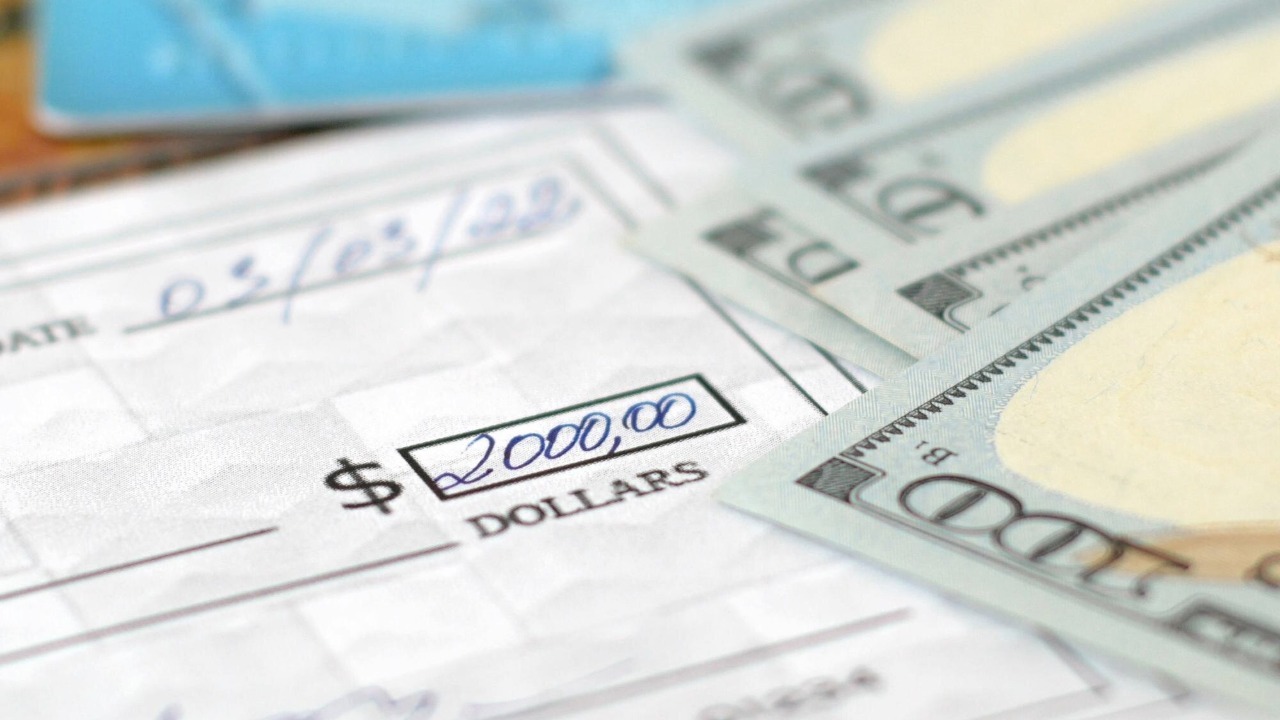
President Donald Trump has put a specific number on his latest promise to help households: a potential $2,000 “tariff dividend” check in 2026. The idea has ricocheted across social media and into kitchen-table conversations, raising expectations that another round of direct payments is just around the corner. I want to look past the hype and assess how realistic those expectations are, based on what is actually on paper in Washington and in the broader economy.
Right now there is a sharp gap between the political branding of a $2,000 stimulus-style payout and the legal, fiscal and logistical steps required to make it real. The odds that Trump will deliver checks of that size this year depend on three big variables: whether Congress cooperates, whether the tariff math adds up, and whether the administration treats this as a top-tier priority rather than a talking point that fades once the headlines move on.
What Trump has actually promised so far
The core of the pitch is simple: Trump has talked about sending Americans a one-time $2,000 payment funded by new tariffs, branding it a “tariff dividend” rather than a traditional stimulus check. In public comments highlighted in multiple fact checks, he has framed the idea as a way to share the proceeds of higher import taxes with households instead of letting the money disappear into the federal budget. One widely circulated explainer notes that his proposed $2,000 tariff dividend has been discussed in The Brief but stresses that the concept is still more slogan than statute.
So far, there is no formal legislation spelling out who would qualify, how the money would be distributed or how often it would be paid. Coverage of the idea notes that Trump’s $2,000 tariff dividend payment is “still being floated” with little detail, even as he talks about using tariffs to lower the national debt and potentially exclude “high income people” from eligibility, according to one detailed breakdown. Another overview aimed at consumers underscores that, despite the buzz, there are no new federal stimulus checks approved for Jan and that much of the online chatter about instant payments stems from scams or state-level programs, not a signed federal law, as one federal payment fact check makes clear.
Where the proposal stands in Washington
From a legislative standpoint, the odds of a $2,000 check hinge on Congress, not just the White House. Analyses of the plan stress that any broad-based tariff dividend would require legislation passed by Congr, because the executive branch cannot unilaterally order the Treasury to mail out billions of dollars in new benefits. One explainer on whether there will be a $2,000 stimulus check notes that the checks would likely need a full bill, similar to earlier pandemic relief packages, and that the total cost of such a program could reach about $216 billion, according to estimates cited in a recent overview.
So far, Congress has not passed such a bill, and there is no sign that a $2,000 tariff dividend is queued up for an imminent floor vote. Multiple reality checks emphasize that no new federal stimulus checks are approved for January 2026 and that Trump’s proposed $2,000 tariff dividend has no finalized structure, with any future payments still dependent on lawmakers, as one Jan fact check puts it. Another consumer advisory aimed at debunking viral posts is even more blunt, stating that, as of now, Congress has not passed a law authorizing a $2,000 check and that any message claiming the IRS is already sending such money is most likely a scam, a warning echoed in a Reality check.
Can tariffs really fund $2,000 checks?
The political sales pitch is that tariffs on foreign goods can pay for the checks so taxpayers do not have to. In practice, that math is far more complicated. A November analysis from the Tax Foundation, cited in coverage of Trump’s $2,000 tariff dividend proposals, examined how much revenue higher tariffs might generate and how that compares with the cost of mailing out checks to most households. That analysis suggests that while tariffs could raise significant sums, they may not fully cover a nationwide $2,000 payout once economic side effects and enforcement costs are factored in.
There is also the question of who ultimately pays those tariffs. Economists often note that import taxes are frequently passed along to consumers in the form of higher prices, which would blunt the benefit of any check. One business-focused explainer on tariff rebate checks points out that a separate proposal, the American Worker Rebate Act, would put $2,400 into the pocket of a family of four, or $600 for each adult and dependent child, funded by tariffs, illustrating both the scale of revenue needed and the trade-offs involved, as described in an American Worker Rebate Act breakdown. Another consumer-focused piece notes that an extra $1,000 is already on the way to the average American in 2026 in the form of larger tax refunds, according to the Tax Foundation, which estimates that tax savings in 2025 will show up in next year’s filings, as explained in a Tax Foundation summary, raising the question of whether Washington will want to layer a costly new program on top of that.
Signals from markets, media and the broader economy
Financial markets and betting platforms offer one window into how likely informed observers think the checks are. A look at prediction markets shows that users of one high-profile platform, Polymarket, have been skeptical that tariff dividend checks will actually be issued, even after trading volume on the question climbed above $931,500, according to a Does Polymarket snapshot. That kind of real-money skepticism does not decide policy, but it does reflect doubts about whether the political will and legislative follow-through are really there.
Traditional economic forecasters are also weighing in. One recent outlook on Trump’s broader tax and trade agenda notes that Most forecasters anticipate a quieter year on the trade policy front compared with the chaos of 2025, even as they warn that new tariffs could still weigh on growth and the US budget deficit, according to a Jan market analysis. Another business-focused piece highlights that President Donald Trump has promised to deliver a tariff dividend by March 31, tying the idea to a broader push to reshape trade flows, as described in a Port of Baltimore report. But those same analyses stress that the details of any payout remain unsettled and that the economic backdrop, including inflation and shipping costs, will shape how aggressive the administration can be.
What ordinary Americans should realistically expect in 2026
For households trying to budget, the most important fact is that no $2,000 federal stimulus check is in the mail right now. Multiple consumer advisories stress that there is no guarantee of stimulus checks in January 2026 and that many viral claims about instant payments are misleading, with one reality check on whether Will Americans receive stimulus checks in January 2026 emphasizing that the cost of sending the checks would be enormous and that the program is not yet approved, as laid out in a Will Americans explainer. Another advisory aimed at debunking rumors is equally clear that there is no $2,000 stimulus check being sent out by the IRS in January and that, As of now, Congress has not passed a law authorizing such payments, as a Reality check notes.
That does not mean the idea is dead. Several policy explainers describe $2,000 tariff dividend checks as still possible in 2026 if the White House and lawmakers can agree on a structure that targets middle- and lower-income Americans and fits within the broader budget, as one $2,000 tariff dividend checks overview puts it. Another consumer-focused piece framed as KEY TAKEAWAYS explains that Trump has pitched the payments as a way to help middle- and lower-income Americans cope with higher prices, while also noting that some coverage has mistakenly referenced $200 figures in the context of partial benefits, as seen in a KEY TAKEAWAYS summary. For now, the most realistic expectation is that any such program would arrive later in the year at the earliest, and only after a public debate over who qualifies and how it interacts with existing tax changes that are already set to put more money in some pockets.
How the politics and messaging shape the odds
Trump’s own messaging has helped fuel confusion about timing and certainty. In one televised appearance, he suggested that tariff dividend checks worth $2,000 could be issued relatively quickly, a claim that has been amplified in short clips and social posts, as recapped in a tariff dividend segment. Another political explainer notes that talk continues about the possibility of a $2,000 stimulus check in 2026 but stresses that lawmakers have not yet approved the checks and that the question “Are we getting a stimulus?” remains open, as summarized in a Latest update.
At the same time, the administration is already rolling out other forms of relief that could complicate the politics of another big check. One report notes that an extra $1,000 is effectively on the way to the average American in 2026 through larger tax refunds, According to the Tax Foundation, which expects tax savings in 2025 to show up in next year’s filings, as detailed in an American focused piece. Another policy explainer on Trump’s broader tax stimulus argues that his existing tax changes are already set to keep the US economy on track in 2026, with Most analysts expecting a quieter trade year even as they watch the impact on the US budget deficit, as described in a Jan forecast. Against that backdrop, the odds of a full $2,000 tariff dividend check this year look modest: the idea is on the table, but the concrete steps needed to turn it into money in your bank account are still missing.
For now, the safest assumption is that any $2,000 payment is a political possibility, not a financial plan you can bank on. Coverage aimed at everyday readers keeps returning to the same bottom line: While speculation about a fourth stimulus check has surged, there has been no official confirmation of a $2,000 tariff dividend, and much of the noise comes from unverified websites, as one While explainer notes. Another consumer-focused guide framed around when we are getting a $2,000 tariff dividend rebate stresses that President Donald Trump’s proposal is still moving through early stages and that people should be wary of anyone promising to help them “claim” money before programs are even approved, as Maria Francis of the USA TODAY NETWORK explains. Until Congress acts, the odds of seeing a real $2,000 check in 2026 remain uncertain at best, and households would be wise to treat the promise as a potential bonus, not a guaranteed lifeline.
Supporting sources: $2,000 stimulus checks in 2026? Here’s what needs to happen.
More From The Daily Overview

Cole Whitaker focuses on the fundamentals of money management, helping readers make smarter decisions around income, spending, saving, and long-term financial stability. His writing emphasizes clarity, discipline, and practical systems that work in real life. At The Daily Overview, Cole breaks down personal finance topics into straightforward guidance readers can apply immediately.

