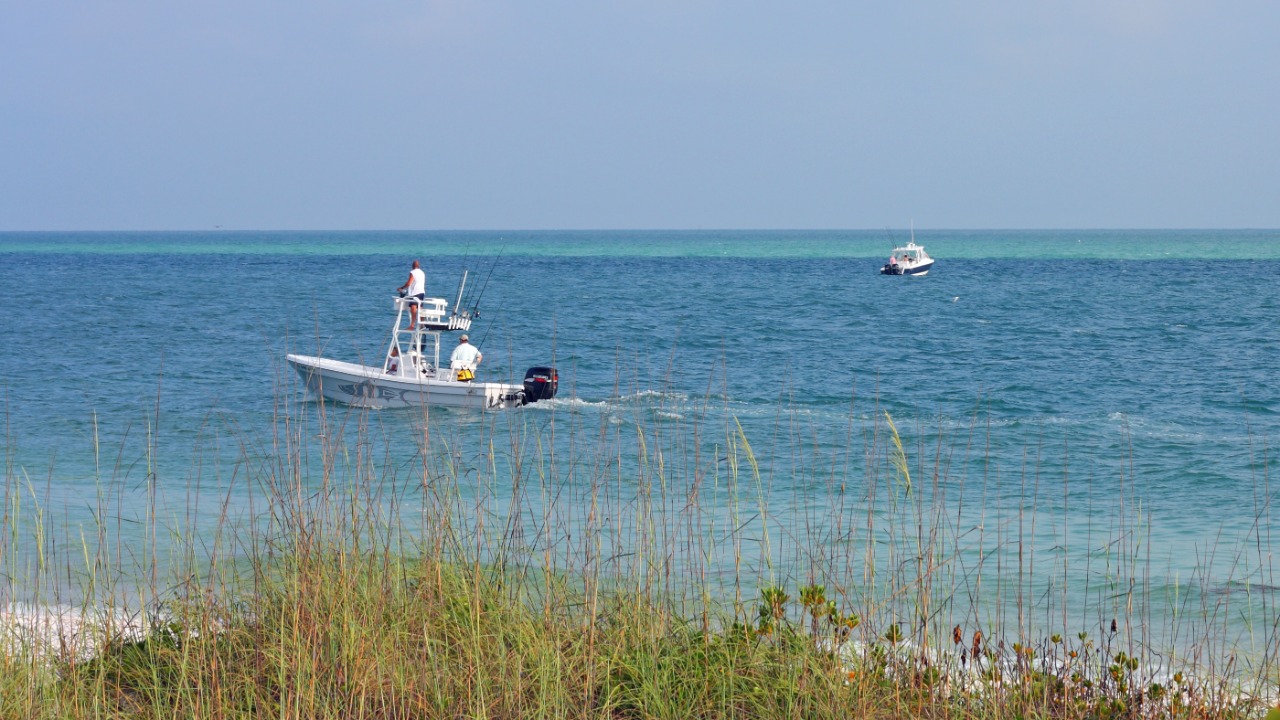
Retiring on a fixed income does not have to mean giving up on the beach. Across Florida, smaller coastal communities still let careful retirees live near the water on about $1,900 a month, especially when they rent modestly and keep discretionary spending in check. I focus here on quiet towns where housing, groceries, and entertainment can realistically fit that budget while still delivering the warm-weather lifestyle many people want in retirement.
1) Apalachicola, a quiet oyster-fishing haven on Florida’s Forgotten Coast – allows retirement on $1,900 a month (or less) with low housing costs and coastal charm.
Apalachicola sits on Florida’s Forgotten Coast, a stretch of shoreline known for slower growth and lower prices than larger resorts. One report on Florida beach towns notes that retirees can rent near the water for about $1,900 a Month, Or Less, which keeps total monthly costs manageable. Located on the Forgotten Coast, Apalachicola is described as a historic waterfront town with maritime heritage and a compact downtown that makes car-free living more realistic for older residents.
At the heart of the Forgotten Coast lies Apalachicola, long known as the Oyster Capital of the World, and local guides still describe it as “Called the world’s oyster capital,” with seafood restaurants clustered around the harbor. That working-waterfront character matters for retirees, because it supports year-round jobs and services rather than a purely seasonal economy. I see Apalachicola’s combination of modest rents, walkable streets, and small-town healthcare access as a practical fit for retirees who value authenticity over nightlife.
2) Cedar Key, an artsy island community off Florida’s northwest coast – supports a monthly budget of $1,900 or less for retirees seeking serene beaches and nature trails.
Cedar Key, a tiny island off Florida’s northwest coast, is often cited as one of the quietest towns on the Gulf Coast, with kayaking, birdwatching, and art galleries instead of high-rise condos. A social travel guide that lists “Some of the quietest towns” on the Gulf specifically highlights Cedar Key alongside Apalachicola, underscoring its low-key pace and limited commercial development. That restrained growth helps keep housing costs in line with a $1,900 budget, especially for retirees willing to choose older cottages or small apartments.
Because Cedar Key is compact and walkable, many residents rely on golf carts or short drives, which can reduce transportation costs for retirees on fixed incomes. The town’s arts festivals and nature trails provide low-cost entertainment, while the small population encourages neighbors to look out for one another. I find that this mix of affordability, community, and access to the Gulf Coast’s natural beauty makes Cedar Key appealing to retirees who prioritize peace and simplicity over big-city amenities.
3) Fernandina Beach, a historic Amelia Island gem in northeast Florida – enables living on $1,900 a month (or less) through affordable waterfront rentals and Southern hospitality.
Fernandina Beach, on Amelia Island in northeast Florida, blends Victorian-era streets with Atlantic Coast beaches, yet still appears in lists of Florida Beach Towns Where You Can Retire on $1,900 a Month, Or Less. A separate overview of Florida Beach Towns points out that Atlantic Coast communities like Pensacola, Vero Beach, and Panama City Beach can offer rentals near the water for $1,900, suggesting that similarly scaled towns such as Fernandina Beach can remain within reach for budget-conscious retirees.
Historic zoning and a focus on small inns rather than mega-resorts have helped Fernandina Beach preserve its character and avoid some of the steepest price spikes. Retirees who choose modest apartments a few blocks off the ocean often find that utilities, groceries, and healthcare can still fit under a $1,900 ceiling if they track expenses carefully. I see Fernandina Beach as a good match for retirees who want Atlantic breezes, walkable streets, and a sense of history without the cost of larger metro areas.
4) Anna Maria Island, a laid-back Gulf Coast barrier island near Bradenton – fits retirement within $1,900 a month (or less) with sandy beaches and no high-rises.
Anna Maria Island is a seven mile long barrier island of Anna Maria that lies just west of Bradenton on Florida’s famous Gulf Coast, with local tourism boards emphasizing its history, arts, and culture. Descriptions of island life stress that there are no high-rise condos, which has helped the community retain older housing stock and a village feel. For retirees, that can translate into more varied rental options, from upstairs apartments in beach houses to small duplexes set back from the sand.
Because Anna Maria Island is compact, many residents get around by bicycle or trolley, cutting transportation costs that often strain fixed incomes. Groceries and services in nearby Bradenton, on the Florida mainland, give retirees access to larger-store pricing without sacrificing Gulf Coast sunsets. I find that retirees who are willing to live a few blocks inland, share housing, or downsize to a one-bedroom can still keep total monthly spending near $1,900 while enjoying the island’s relaxed pace.
5) Port St. Joe, a peaceful panhandle town on the Gulf of Mexico – accommodates retirees on a monthly budget of $1,900 or less amid fishing spots and state parks.
Port St. Joe, on the Gulf of Mexico in Florida’s panhandle, appears in national rundowns of charming beach towns where retirees can live on a monthly budget of $1,900 or less. One analysis of beach towns retirees highlights how smaller Gulf Coast communities keep rents and everyday costs low enough for Social Security and modest savings to cover essentials. Port St. Joe fits that profile, with older single-story homes and small apartment complexes that often rent below big-city levels.
The town’s location near state parks and fishing piers provides inexpensive recreation, which matters when every restaurant meal or ticketed event has to be weighed against a tight budget. Healthcare access in nearby regional hubs helps fill gaps that very small towns sometimes face. I see Port St. Joe as a solid option for retirees who want a working harbor, boat ramps, and quiet neighborhoods rather than nightlife or luxury shopping.
6) Mexico Beach, a low-key Emerald Coast destination east of Panama City – offers coastal living on $1,900 or less per month for budget-conscious seniors.
Mexico Beach, east of Panama City on the Emerald Coast, is frequently described as a low-key alternative to busier resort strips, with a focus on low-rise buildings and wide beaches. Coverage of Gulf Coast and Atlantic Coast communities notes that retirees can still rent near the water for $190 or more below what they might pay in larger cities, keeping total housing costs within a $1,900 ceiling. Mexico Beach’s modest scale helps keep property taxes and association fees in check.
For retirees, the town’s simple street grid and limited commercial strip mean fewer temptations to overspend on entertainment and shopping. Many residents rely on nearby Panama City for specialized medical care and big-box stores, using Mexico Beach as a quiet home base. I find that this arrangement works well for budget-conscious seniors who are comfortable driving a bit farther for services in exchange for lower rent and a calmer shoreline.
7) Carrabelle, known as the “Gateway to the Gulf” in Florida’s panhandle – provides a charming retiree lifestyle on a monthly budget of $1,900 or less with uncrowded shores.
Carrabelle, often called the Gateway to the Gulf in Florida’s panhandle, sits along the same Forgotten Coast corridor as Apalachicola, with uncrowded beaches and a small marina. Its inclusion in lists of affordable coastal communities reflects the way older housing and limited tourism infrastructure keep rents compatible with a $1,900 monthly budget. Because Carrabelle has fewer large hotels and vacation towers, long-term rentals remain a meaningful part of the local market.
The town’s boat ramps, fishing piers, and nearby wildlife areas give retirees low-cost ways to stay active without expensive memberships. Groceries and basic services are available locally, while larger hospitals and specialty clinics are reachable by car. I see Carrabelle as a good fit for retirees who want to own a small boat, fish regularly, or simply enjoy quiet Gulf views without paying the premiums associated with more famous destinations.
8) St. George Island, a pristine barrier island off Apalachicola Bay – allows couples to retire on nothing but Social Security through modest home prices and eco-friendly vibes.
St. George Island, a barrier island off Apalachicola Bay, is highlighted in national coverage of charming beach towns where couples can retire on nothing but Social Security. One analysis of charming beach towns notes that careful couples relying solely on federal benefits can still cover rent, utilities, and groceries in select communities, and St. George Island is cited as an example. Modest home prices and a focus on low-impact development help keep overall costs from spiraling.
The island’s eco-friendly orientation, with protected dunes and limited commercial strips, naturally caps the number of high-end businesses that might drive up prices. Retirees can spend their days walking the beach, fishing, or volunteering with local conservation groups, activities that cost little but provide structure and social connection. I view St. George Island as especially attractive for couples who value nature and are disciplined about living within the constraints of Social Security alone.
9) Cape San Blas, a remote peninsula in the panhandle with pristine dunes – sustains retirement on nothing but Social Security with fishing piers and lighthouse views.
Cape San Blas, a narrow peninsula in the Florida panhandle, is known for its pristine dunes, lighthouse views, and relative isolation from major highways. It appears in the same Social Security focused rundowns that identify beach towns where couples can live on federal benefits alone, indicating that rents and daily expenses can be managed without significant savings. The limited commercial footprint helps keep land values and taxes more moderate than in heavily built-up resorts.
For retirees, Cape San Blas offers fishing piers, long stretches of pet-friendly beach, and nearby state parks that provide year-round recreation at low cost. Many residents shop and access medical services in Port St. Joe, balancing rural quiet with essential infrastructure. I see Cape San Blas as best suited to retirees comfortable with a bit of driving and a slower pace in exchange for the ability to stretch Social Security checks further.
10) Holmes Beach, a relaxed Anna Maria Island community on Florida’s Gulf side – makes $1,900 a month viable for retirees via bike-friendly paths and sunset beaches.
Holmes Beach occupies the central portion of Anna Maria Island on Florida’s Gulf side, sharing the same seven-mile barrier island described in tourism materials. National lists of Florida Beach Towns Where You Can Retire on $1,900 a Month, Or Less, which include Gulf Coast communities like Pensacola and Panama City Beach, show that this price point is still realistic in select areas. A separate travel guide urging readers to Discover Florida on the Gulf Coast emphasizes that some island towns remain affordable for retirees.
Holmes Beach is notably bike-friendly, with flat streets and multiuse paths that reduce reliance on cars and help older residents stay active. Public beach access points, free sunsets, and casual local restaurants give retirees plenty to do without blowing their budgets. I find that those who choose smaller condos or duplex units, and who are willing to shop in nearby Bradenton, can realistically keep total monthly spending near $1,900 while enjoying a classic Florida beach lifestyle.
More From The Daily Overview

Nathaniel Cross focuses on retirement planning, employer benefits, and long-term income security. His writing covers pensions, social programs, investment vehicles, and strategies designed to protect financial independence later in life. At The Daily Overview, Nathaniel provides practical insight to help readers plan with confidence and foresight.

