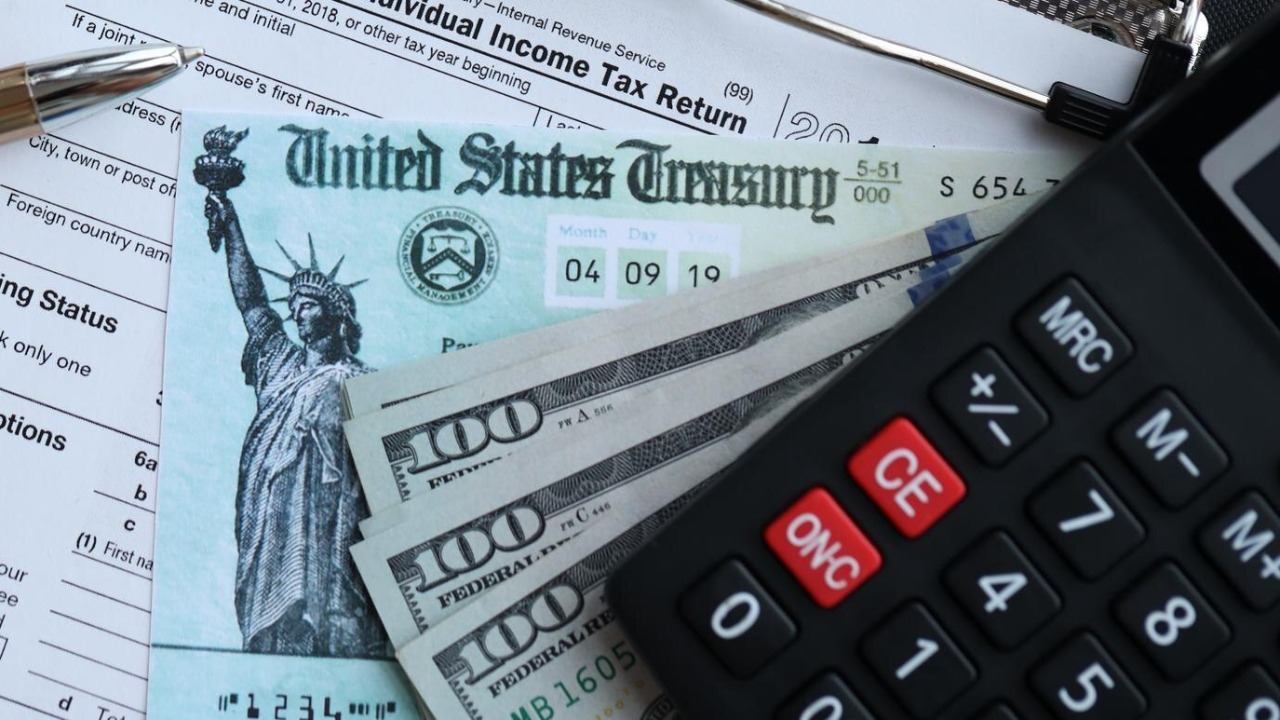
Tax pros are bracing for a very different filing season in early 2027, when Americans settle up for tax year 2026. New rules tied to President Donald Trump’s signature tax package are expected to lift many households’ refunds by roughly $1,000, but the gains will be uneven and highly dependent on how and where you earn your income. The key question is not whether refunds will rise in aggregate, but whether your specific situation lines up with the groups that stand to benefit most.
To understand who could see that four-figure bump, I am looking at how the One Big Beautiful Bill Act reshapes income, credits, and deductions, and how those changes interact with long-standing provisions like the Earned Income Tax Credit. The result is a map of clear winners, modest gainers, and people who may not notice much change at all unless they adjust their tax planning now.
Why analysts think refunds will jump by about $1,000
The starting point is a simple projection: several analysts expect the average refund for tax year 2026 to be roughly $1,000 higher than in recent years, largely because the new law cuts taxable income for targeted groups instead of just trimming rates. One research team at Piper Sandler, cited in coverage of the new rules, has argued that the combination of higher standard deductions, new exclusions for certain pay, and expanded family incentives could make “one of the largest tax refund seasons ever” for qualifying households, especially those in the middle of the income distribution.
That projection is grounded in the mechanics of the One Big Beautiful Bill Act, which raises the standard deduction to $15,750 for single filers and $31,500 for married couples filing jointly, according to detailed breakdowns of the new refund projections. When you pair that larger write off with targeted breaks on overtime and tips, the law effectively shifts more income out of reach of the IRS for millions of workers. The result is a smaller final tax bill, which, for anyone who has been having too much withheld from each paycheck, translates directly into a bigger refund check.
How the One Big Beautiful Bill Act reshapes the playing field
The One Big Beautiful Bill Act, often shortened to the One Big Beautiful Bill Act or OBBBA, is not a single tweak but a broad rewrite of how certain kinds of income and deductions are treated. The law’s architects focused on boosting take home pay for working families and homeowners while also creating new savings vehicles for children. That means the law does not simply cut rates across the board, it carves out favored categories of income and expenses and gives them more generous treatment than before.
For example, the statute’s official summaries describe how the Overview of Trump Accounts fits into the broader package, alongside changes to employer benefits and payroll treatment that can reduce taxable income for the employee. At the same time, separate guidance on the state and local tax deduction explains how The One Big Beautiful Bill Act, also referred to as OBBBA and the One Big Beautiful Bill Act, adjusts SALT limits for certain homeowners, which can further lower their taxable base. Put together, these provisions help explain why some households will see a sharp jump in refunds while others, whose income does not match the favored categories, may see only a modest change.
Service workers, overtime earners and the “Biggest winners”
Among all taxpayers, two groups stand out as the clearest winners from the new rules: service and hourly workers who earn a significant share of their pay from overtime or tips, and households with children who can stack multiple credits and new savings incentives. Analysts who have modeled the law’s impact describe these as the “Biggest winners” because their income is most likely to fall into the categories that are now partially shielded from tax, while they also tend to qualify for refundable credits that turn those breaks into larger checks at filing time.
One detailed breakdown of the law’s impact notes that “Two groups stand to benefit most” from the changes, pointing specifically to workers whose employers report substantial overtime or gratuities and to families with dependents who can claim enhanced child related provisions under the new rules, as explained in coverage of the tax changes that could boost 2026 refunds. Because these workers often have taxes withheld as if every dollar of overtime and tips were fully taxable, any new exclusion or credit that applies at filing can produce a particularly large swing between what they paid in and what they ultimately owe, which is exactly how you get to a $1,000 jump in the final refund.
“Why Your Refund Might Increase” and who qualifies in practice
To move from theory to practice, it helps to look at how tax attorneys and planners are describing the new landscape. One widely cited analysis titled “Why Your Refund Might Increase” walks through how the higher standard deduction, new exclusions for certain pay, and expanded family incentives interact with existing credits. The author notes that projections from Piper Sandler suggest refunds could rise by over $1,000 for many middle income households, particularly those that combine wage income with qualifying overtime, tips, or child related benefits.
In that analysis, the key message is that not everyone will automatically see a four figure gain, but those who align their withholding and planning with the new rules can amplify their refunds. The piece emphasizes that workers who adjust their W 4 forms to reflect the higher standard deduction and new exclusions, and who make sure to claim every credit they are entitled to, are best positioned to capture the full benefit of the law, as laid out in the “Why Your Refund Might Increase” guidance. In other words, the $1,000 figure is not a guarantee, it is a realistic upside for taxpayers who fit the profile and take the time to file accurately.
Homeowners, SALT changes and the “You” factor
Homeowners in high tax states are another group that could see a noticeable bump in their refunds, thanks to how the One Big Beautiful Bill Act reworks the state and local tax deduction. Under prior law, the SALT deduction was tightly capped, which meant that many homeowners in places with high property or income taxes could not fully deduct what they paid. The new statute temporarily increases that cap for certain filers, which can significantly reduce taxable income for those who itemize.
One detailed explainer frames it directly in terms of the individual homeowner, noting that “You” are more likely to benefit if you own a home in a high tax state and have enough deductible expenses to clear the higher standard deduction. It goes on to describe how the SALT deduction, often shortened to SALT, interacts with mortgage interest and charitable gifts under the new rules, and how that combination can push some households into refund territory they have not seen before, as outlined in the analysis of bigger 2026 payouts for homeowners and SALT. For these taxpayers, the path to a $1,000 larger refund runs through careful record keeping of property tax bills, state income tax payments, and other itemizable costs.
Credits, the Earned Income Tax Credit and unclaimed money
Refund size is not only about deductions and exclusions, it is also about credits that can exceed your total tax bill. The Internal Revenue Service urges low and moderate income workers to “See if you qualify for the Earned Income Tax Credit,” highlighting that this is a refundable credit that can generate a refund even if you owe no income tax. The agency’s guidance on credits and deductions for individuals stresses that the Earned Income Tax Credit can be available even to workers who are not otherwise required to file, which means some of the biggest potential refund boosts are currently being left on the table.
Separate IRS data underscore how much money is at stake. In a recent alert, officials warned that “They could also miss out on money from any refundable tax credits, including the Earned Income Tax Credit, EITC, the Recovery Reb” and other applicable credits if they fail to file for prior years, as detailed in a notice about more than $1 billion in unclaimed refunds. That warning about unclaimed Earned Income Tax Credit and Recovery Reb funds is a reminder that the law can only boost your refund if you actually claim what you are owed. For workers who now benefit from new exclusions on overtime or tips, stacking those breaks with the EITC could easily push their refund over the $1,000 mark.
Trump Accounts, Dell’s gift and families with kids
Families with children are central to the new tax architecture, and one of the most novel features is the creation of Trump Accounts for kids. Official IRS materials describe an “Overview of Trump Accounts” in which parents, guardians, or others can establish a Trump Account for an eligible child, with contributions and certain employer matches receiving favorable tax treatment. These accounts are designed to encourage long term saving for education or other goals while also offering near term tax benefits to the adults who fund them.
The White House has highlighted how private philanthropy is intersecting with this policy, pointing to a “Landmark Dell Gift” that helps seed Trump Accounts for America’s kids. In that announcement, officials explain that families can “Use IRS Form 4547 to make the election to establish an initial Trump Account for the exclusive benefit of a child who is eligible,” and that parents can continue to contribute in later years if they are eligible for the contribution, as described in the guidance on how to Use IRS Form 4547 to open a Trump Account for the child. While the immediate effect of these accounts is more about long term savings than annual refunds, the associated deductions and credits can still help push a family’s 2026 refund higher, especially when combined with the expanded child related provisions in the broader bill.
Overtime, tips and new guidance from WASHINGTON
One of the most concrete ways the new law boosts refunds is by changing how overtime and tipped income are taxed. The Trump administration has touted that Americans will get an “extra $1,000” in tax refund on average because the legislation enacted new tax breaks retroactive to 2025, including no tax on some overtime and tipped income, according to reporting that cites CBS. That means workers in restaurants, hospitality, retail, and other service sectors could see a significant share of their variable pay excluded from taxable income when they file, even though employers may still have withheld as if it were fully taxable.
To help workers navigate this shift, The Department of the Treasury and the Internal Revenue Service issued detailed guidance from WASHINGTON for individuals who received tips or overtime during tax year 2025. That notice explains which categories of overtime compensation and reported tips qualify for the new treatment and how to document them properly on a return, as laid out in the Treasury and IRS guidance for tipped and overtime workers. For a bartender who logged hundreds of hours of overtime and thousands of dollars in tips, having a portion of that income excluded at filing can easily swing the final calculation by $1,000 or more, especially when combined with the higher standard deduction and any refundable credits.
Charitable giving, “New” rules and strategic planning
High earners and charitably inclined households will feel the new law in a different way, through changes to how donations are deducted. Financial planners are already warning that “New tax rules in 2026 will change deductions for high earners, making 2025 a pivotal year for strategic giving,” and urging clients to “Discov”er how to time their gifts to maximize the tax benefit. The idea is that bunching donations into a single year, or pairing them with other itemized deductions, can help taxpayers clear the higher standard deduction threshold and unlock a larger write off.
Specialists in charitable planning also note that the One Big Beautiful Bill Act has shifted the giving landscape, altering percentage of income limits and the treatment of certain vehicles like donor advised funds. One advisory firm explains that the charitable giving landscape has shifted significantly with the passage of the One Big Beautiful Bill Act, and that while the rules are more complex, there are still ways to “While” maximizing deductions under current favorable rules, as discussed in guidance on navigating new charitable giving rules. For donors who plan carefully, these strategies can reduce taxable income enough to generate a noticeably larger refund, even if their wages themselves are not directly affected by the new exclusions.
Practical moves now: deductions, “$100” levers and who may not benefit
Even with all the structural changes, individual choices still matter. Tax preparers point out that making tax deductible contributions throughout the year, whether to retirement accounts, health savings accounts, or other eligible plans, can meaningfully lower your final bill. One widely shared rule of thumb notes that on average, every $25 reduction in your taxable income lowers your taxes by about $5, which means you could add $100 to your refund with relatively modest adjustments, as explained in guidance on $100 refund boosts from deductible contributions. Layered on top of the new law’s broader changes, these small levers can help push a borderline taxpayer into that $1,000 plus territory.
At the same time, not everyone will see a dramatic change. Analysts caution that some higher income households who already max out their deductions, or workers whose pay is mostly salary without overtime, tips, or dependents, may not notice as much difference in their refunds, even if their overall tax liability falls slightly. For these taxpayers, the main impact of the One Big Beautiful Bill Act and related rules may show up more in their paychecks than in their refund checks, and the best strategy may be to adjust withholding to avoid giving the government an interest free loan. For those who do fall into the law’s target groups, however, the combination of new exclusions, enhanced credits, and smarter planning could make that $1,000 bigger refund a very real possibility.
More From TheDailyOverview

Julian Harrow specializes in taxation, IRS rules, and compliance strategy. His work helps readers navigate complex tax codes, deadlines, and reporting requirements while identifying opportunities for efficiency and risk reduction. At The Daily Overview, Julian breaks down tax-related topics with precision and clarity, making a traditionally dense subject easier to understand.


