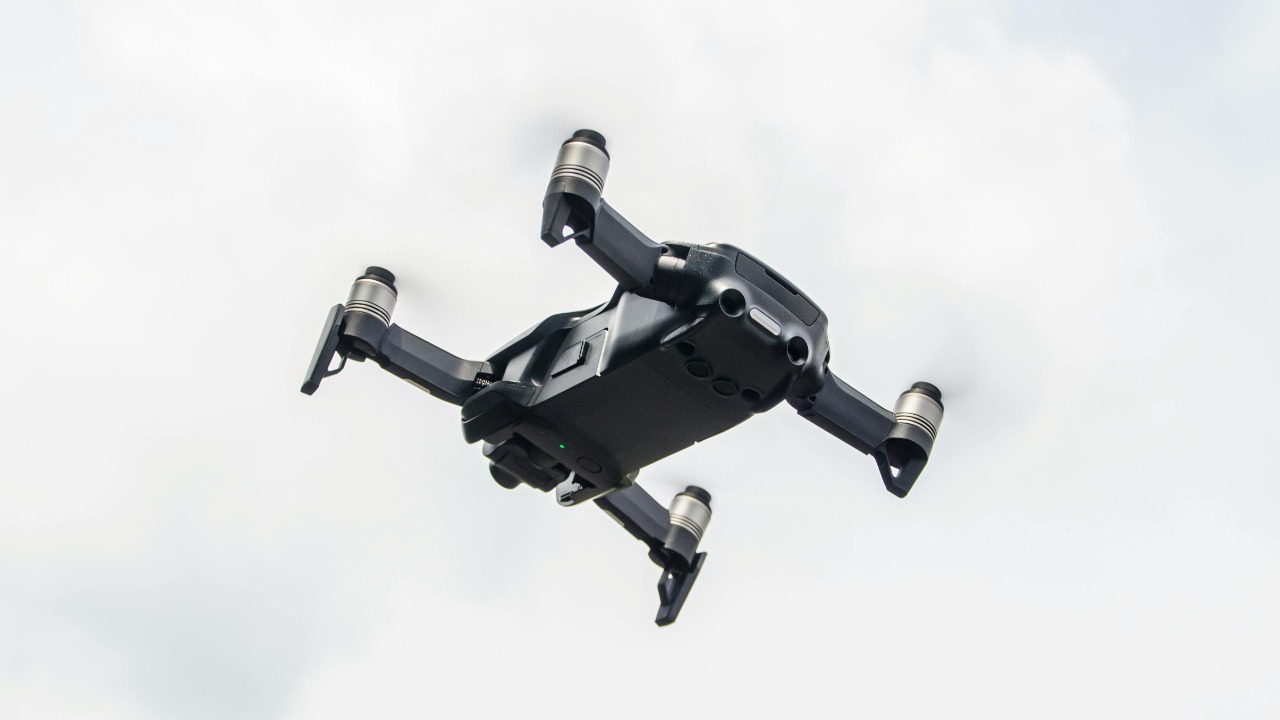
The destruction of a vast Russian stockpile of Iranian-made attack drones has abruptly removed a major threat from Ukraine’s skies and exposed how vulnerable Moscow’s supply chain has become. By wiping out roughly 1,000 Shahed systems in a single operation, Ukrainian forces did not just erase an estimated nine-figure cache, they also signaled that Russia’s reliance on imported loitering munitions is now a strategic liability.
I see this strike as the culmination of a broader shift in the drone war, where Ukraine’s own unmanned forces, new detection systems, and precision long-range weapons are converging to hit the Shahed problem at its source rather than only at the front line. The result is a rare moment in this conflict when a single blow appears to have both immediate battlefield impact and longer term implications for how Russia can sustain its campaign against Ukrainian cities and energy infrastructure.
The high-precision strike that gutted a Russian Shahed hub
Ukrainian officials describe the latest attack on a Russian Shahed hub as a carefully planned operation that combined long-range missiles with coordinated unmanned systems to overwhelm local defenses. In their account, a concentrated salvo hit a munitions warehouse at a Russian Base, triggering secondary explosions that indicated a dense concentration of stored drones and components. The scale of the blast and follow-on fires suggested that the target was not a minor depot but a central node in Russia’s Shahed logistics network, the kind of facility that feeds multiple front-line units rather than a single sector.
According to that official narrative, the High Precision Strike eliminated around 1,000 Shahed Drones at the Russian Base in a single blow, a figure that aligns with independent estimates of the warehouse’s capacity and the visible intensity of the fire. I read that number as more than a talking point, because it matches the pattern of Russia’s recent massed Shahed launches and the stockpiles needed to sustain them. If accurate, it means a significant portion of Moscow’s ready-to-use loitering munitions for the coming months has simply vanished, forcing Russian planners to rethink both their targeting tempo and their assumptions about the safety of rear-area storage sites.
Donetsk airport and the earlier warehouse that foreshadowed this strike
The Russian Base hit in the latest operation is not the first Shahed hub to suffer catastrophic damage, and the precedent helps explain why this new strike matters so much. Earlier, Ukrainian forces used a mix of missiles and drones to hit a major Russian facility at Donetsk airport, where they say a large stockpile of imported Iranian systems was being assembled and prepared for launch. That attack was notable because it showed Ukraine could reach deep into heavily defended territory and still achieve a high rate of impact on a hardened target.
Ukrainian accounts of the Donetsk operation say their drones and missiles penetrated Russian defenses and detonated inside a warehouse that held about 1,000 Shahed units, with roughly 90 percent of the attacking Ukrainian drones reportedly reaching the warehouse itself. That same reporting links the destroyed stockpile to Russian combat units on the airfield, underscoring that this was not a peripheral cache but a key operational reserve. When I compare that earlier strike with the latest one, I see a pattern of Ukraine systematically hunting the largest Shahed concentrations it can find, turning what was once a one-sided drone threat into a contest of deep-strike capabilities.
Unmanned Systems Forces and the long campaign to down 1,000 Shaheds
The warehouse attacks sit on top of a longer, grinding campaign in which Ukraine’s own drone and air defense units have been steadily eroding Russia’s Shahed inventory in the air. Ukraine’s Unmanned Systems Forces have emerged as a central actor in that effort, integrating radar, electronic warfare, and mobile fire units to intercept incoming loitering munitions before they reach cities and power plants. Their work is less spectacular than a warehouse explosion, but over time it has removed hundreds of drones from Russia’s arsenal and forced Moscow to adapt its flight paths and tactics.
Those same Unmanned Systems Forces reported that by Oct 20, 2025 they had already destroyed 1,000 Shahed drones in flight, a tally they valued at $70 m or roughly $70 million in lost Russian hardware. In that same account, The Unmanned Systems Forces also highlighted the destruction of a Russian Zhytel electronic warfare station, a reminder that they are targeting not only the drones themselves but the systems that protect and guide them. When I put that figure alongside the 1,000 units reportedly destroyed on the ground, it becomes clear that Ukraine is now inflicting Shahed losses on a scale that rivals or exceeds Russia’s ability to replace them quickly.
Madyar, social media Videos, and the Donetsk airport confirmation
One reason the latest strike has resonated so widely is that it was not just announced in a dry communique, it was also documented in real time by people on the ground. Social media Videos captured towering flames and shockwaves rolling across the Russian-held side of Donetsk airport, images that matched Ukrainian claims of a massive secondary detonation inside a drone storage site. For analysts, those clips provided a visual cross-check on official statements and helped confirm that the target was indeed a large ammunition or drone depot rather than a small logistics point.
Ukraine’s Unmanned Systems Forces leader Madyar later described the same operation as a coordinated drone and missile strike on a Russian Shahed base at the airport, a description that aligns with the footage and with earlier Ukrainian accounts of how they combine unmanned systems with long-range fires. Reporting on the incident notes that the attack on Nov 5, 2025 came amid a broader wave of Ukrainian strikes that also rocked several Russian energy sites, suggesting a deliberate effort to hit both the tools of attack and the infrastructure that powers Russia’s war machine. I see that combination of Madyar’s testimony and the widely shared Videos as a powerful example of how open-source evidence now shapes the narrative of high-impact strikes in this war.
Shahed design, Loitering tactics, and why stockpiles matter
To understand why the loss of 1,000 units is so significant, it helps to look at what the Shahed actually is and how Russia uses it. The HESA Shahed 136 is a relatively low-cost loitering munition, often described as a “kamikaze drone,” that trades speed and survivability for range and payload. Its Loitering profile allows it to cruise toward a target area, adjust course in flight, and then dive onto a selected aim point, which makes it especially useful for saturating air defenses or striking fixed infrastructure like power plants and substations.
Because these systems are designed to be expended on impact, Russia needs large stockpiles to sustain its campaign, and that is where the vulnerability lies. Reporting on the Shahed 136 notes that when these loitering munitions are intercepted after they have reached cities, the falling wreckage can still cause collateral damage, which is one reason Ukraine has invested so heavily in layered defenses. The same background material also traces the Initial operational use of the Shahed 136 and documents how it has been adapted for Russian needs. When I weigh that technical profile against the destruction of a warehouse holding roughly 1,000 units, it becomes clear that Ukraine has not just removed a batch of drones, it has temporarily blunted one of Russia’s most flexible tools for long-range harassment of civilian areas, as detailed in open sources on the HESA Shahed 136.
From St. Petersburg Fire to Donetsk: a pattern of deep strikes
The Donetsk airport strike also fits into a broader pattern of Ukrainian operations that reach far behind the front line to hit Russia’s drone infrastructure. Earlier, a major Fire at a warehouse in Petersburg drew attention because it appeared to involve facilities linked to arms production and storage, including sites associated with the Shahed program. Analysts noted that the blaze did not look like a routine industrial accident, pointing instead to the possibility of a deliberate attack or sabotage effort aimed at disrupting Russia’s ability to assemble and field new variants of the Iranian-designed drone.
Coverage of that incident, which surfaced around Dec 23, 2024, framed it as part of a growing Ukrainian campaign to take the Shahed fight into Russian territory itself. The reporting highlighted how the blaze in Petersburg affected facilities involved in arms production and suggested that the warehouse may have held a newer version of the attack drone, a detail that hints at Russia’s ongoing attempts to refine the design. When I connect that earlier event with the more recent destruction of a 1,000-unit stockpile at a Russian Base, I see a consistent strategy: Ukraine is not content to intercept drones in the air, it is also trying to burn them on the ground, as reflected in analysis of Ukraine Burns Russian Shahed Warehouse And Reveals New Capabilities in Dec.
Civilian toll and why removing 1,000 drones matters for cities
The strategic value of destroying a 1,000-strong Shahed cache becomes even clearer when set against the human cost of Russia’s long-range drone and missile campaign. United Nations monitors have documented how repeated strikes on Ukrainian cities and energy infrastructure have killed and injured large numbers of civilians, particularly during periods of intensified attacks. Those figures are not abstract; they represent families hit in their homes, workers caught near substations, and communities left without power or heat after targeted strikes on the grid.
One UN assessment notes that Last year, from January to October 2024, long-range drones and missiles killed 434 and injured 2,045 civilians as Russian forces stepped up attacks on Ukraine’s energy infrastructure. In the same report, dated Nov 24, 2025, the UN’s Human Rights Monitoring Mission in Ukraine warned that In the coming winter months, further strikes on the grid could have severe humanitarian consequences. When I place those numbers alongside the removal of 1,000 Shahed drones from Russia’s arsenal, the connection is stark: every drone that never leaves a warehouse is one less potential hit on a residential block or power plant, and that is why Ukrainian officials are so quick to frame these deep strikes as both military and humanitarian victories.
Russia’s evolving Shahed designs and Ukraine’s “drone killers”
Russia has not stood still in the face of these losses, and its response underscores how central the Shahed has become to its strategy. Recent reporting describes a new Shahed modification that appears designed to outsmart Ukraine’s growing network of “drone killers,” including improved navigation, altered flight profiles, and other tweaks intended to make interception harder. The very existence of such a variant is a tacit admission that the original design is no longer performing as reliably against Ukraine’s upgraded defenses as it once did.
That same coverage notes that the new model is being fielded in parallel with continued mass use of the existing Shahed fleet, and it explicitly links the development to Ukraine’s success in shooting down large numbers of drones, including the 1,000 units destroyed in earlier High Precision Strike reporting. I read this as a classic offense-defense cycle: Ukraine improves its detection and interception tools, Russia tweaks the Shahed to slip past them, and Ukraine responds with deeper strikes on storage and production sites. In that context, the loss of a 1,000-unit stockpile is not just a one-off setback for Moscow, it is a blow that lands while Russia is already scrambling to adapt its drone fleet to a more hostile environment.
New detection systems with “over a thousand” kills
Behind the headline-grabbing warehouse explosions sits a quieter revolution in how Ukraine finds and tracks incoming drones. A new detection and engagement system, showcased publicly by Ukrainian officials, has reportedly achieved over a thousand kills of Shaheds, a figure that speaks to both its effectiveness and the sheer volume of attacks it has had to counter. The system combines sensors, software, and rapid-response fire units in a way that allows operators to spot low-flying drones and cue weapons quickly enough to bring them down before they reach critical infrastructure.
In a presentation on Nov 22, 2025, Ukrainian representatives emphasized that the system you’ll see today has had over a thousand kills of shaheds and that it has been very effective at protecting key sites. For me, that claim, captured in a widely shared video, helps explain how Ukraine has been able to survive repeated waves of Shahed attacks long enough to develop and execute deep strikes on Russian stockpiles. It also suggests that the 1,000 drones destroyed in the latest warehouse blast are only part of a much larger tally of Shaheds that have failed to achieve their intended effect, whether shot down over Ukraine or incinerated on the ground in Russian-controlled territory.
Counting the cost: from $70 million in the air to $50M up in smoke
When I add up the numbers from these various strands of reporting, the financial scale of Russia’s Shahed losses becomes hard to ignore. Ukraine’s Unmanned Systems Forces alone claim to have downed 1,000 drones worth $70 m, or $70 million, in the air, a figure that does not include the cost of launch infrastructure, operators, or supporting systems. On top of that, the destruction of a 1,000-unit warehouse at a Russian Base represents another massive write-off, both in terms of direct hardware costs and the time and resources needed to rebuild the stockpile.
One account of the High Precision Strike on Nov 5, 2025, which echoed the official line that Ukraine Destroys 1,000 Shahed Drones in a single operation, described the result as roughly $50M up in smoke, a shorthand way of capturing the economic impact of the blast. That same summary, shared widely on social media, ties directly back to the earlier United24Media report that framed the strike as a High Precision Strike on a Russian Base. When I combine that $50M estimate with the $70 million in airborne losses, I see a Russian Shahed program that has already absorbed well over $100M in damage, even before counting the indirect costs of disrupted operations, lost infrastructure, and the need to rush out new variants to cope with Ukraine’s evolving defenses.
More From TheDailyOverview
- Dave Ramsey warns to stop 401(k) contributions
- 11 night jobs you can do from home (not exciting but steady)
- Small U.S. cities ready to boom next
- 19 things boomers should never sell no matter what

Grant Mercer covers market dynamics, business trends, and the economic forces driving growth across industries. His analysis connects macro movements with real-world implications for investors, entrepreneurs, and professionals. Through his work at The Daily Overview, Grant helps readers understand how markets function and where opportunities may emerge.

