The health care system is bracing for a shock as the One Big Beautiful Bill Act begins to reshape coverage, costs, and basic protections. Nonpartisan estimates indicate that close to 11 million people could lose insurance as key Medicaid and Affordable Care Act supports are rolled back, with ripple effects for hospitals, state budgets, and family finances. The stakes are not abstract: they are measured in canceled appointments, skipped prescriptions, and the return of medical debt as a defining feature of American life.
How the “Big Beautiful Bill” Became Law
The One Big Beautiful Bill Act moved from talking point to statute through a compressed budget process that prioritized speed over consensus. After months of internal bargaining, the Senate advanced the package as a single reconciliation measure, with supporters touting it as a streamlined way to cut federal spending and rework tax and health policy at the same time. The upper chamber’s approval of what was branded as one “big beautiful bill” cleared the way for final negotiations with the House and set expectations that health programs would be tapped as a major source of savings, as reflected when the Senate formally passed the package in the form described in a key Senate action.
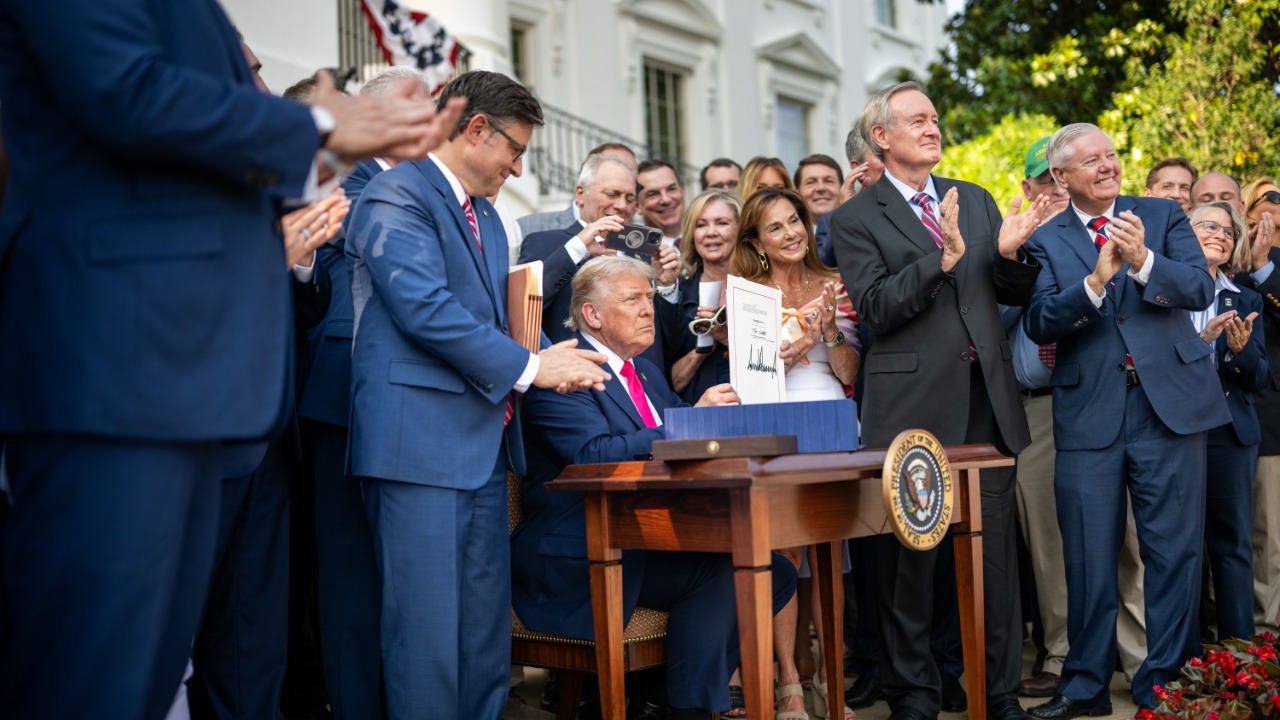
On July 4, President Trump signed the One Big Beautiful Bill Act, locking into place a sweeping set of tax and spending changes that its own supporters acknowledged would touch nearly every corner of the health sector. A detailed One Big Beautiful Bill Law Summary notes that, on July, President Trump approved the law as a budget reconciliation package, cementing its status as the central fiscal blueprint for the coming years. From that moment, the debate shifted from whether the bill would pass to how its provisions would be implemented and who would bear the brunt of the cuts.
What the CBO Says About Coverage Losses
Before the bill ever reached the Resolute Desk, independent budget analysts had already sketched out its human cost. The CBO warned that the House version of the legislation, formally titled The One Big Beautiful Bill Act, would significantly increase the number of uninsured people as Medicaid funding was constrained and marketplace subsidies were pared back. In a widely cited estimate, the CBO projected that the House bill would cost $2.4 trillion and cause nearly 11 million people to lose health insurance, underscoring that the fiscal gains were inseparable from coverage losses.
Those topline numbers were echoed and refined as the reconciliation package moved forward. A separate CBO report found that nearly 11 million people could become uninsured if the reconciliation bill was enacted, confirming that the coverage impact was not a marginal side effect but a central feature of the legislation. The analysis from the Congressional Bu apparatus made clear that the uninsured rate would rise in every state, with the steepest increases in places that had leaned heavily on Medicaid expansion and Affordable Care Act subsidies to bring down the number of people without coverage.
Why Analysts Say “Close to 11 Million” Will Lose Coverage
Independent health policy experts have converged on a similar figure when assessing how many people stand to lose coverage as the law’s health provisions take effect. One detailed assessment concluded that close to 11 million people would lose health insurance under the Big Beautiful Bill, with the largest share coming from Medicaid and the rest from the individual market. That analysis, summarized in a report on how close 11 million people would lose health insurance under the Big Beautiful Bill, emphasized that the changes are not limited to a single program but instead reflect a coordinated pullback from multiple coverage pathways.
Those projections align with broader modeling that tracks how changes to Medicaid and marketplace subsidies interact. The same reporting underscores that Changes to Medicaid would be expected to account for a substantial portion of the coverage losses, particularly among low income adults and children who gained insurance through expansion. When I look across these estimates, the pattern is consistent: the law’s savings are achieved in large part by shrinking the safety net, and the phrase “close to 11 million” is less a rhetorical flourish than a composite of overlapping, program specific cuts that add up to a national reversal in coverage gains.
Medicaid Cuts at the Core of the Shakeup
Medicaid sits at the center of the One Big Beautiful Bill Act’s health care story, both as a budget target and as a lifeline for tens of millions of people. A comprehensive policy review of The One Big Beautiful Bill Act, referred to as OBBBA, concludes that the law will make deep cuts to Medicaid and the Affordable Car coverage framework that has defined the post ACA era. That analysis of The One Big Beautiful Bill Act finds that every state and congressional district will see an increase in the number of Americans without health coverage, a direct consequence of reduced federal support for Medicaid and related programs.
Public health experts have warned that these reductions are not just line items in a spreadsheet but structural changes that will alter who can get care and when. A commentary on what cuts to Medicaid really mean explains that the One Big Beautiful Bill Act, also known as OBBB, which Trump signed into law on July 4, 2025, includes provisions that cap federal Medicaid spending and shift more risk to states. That assessment of the One Big Beautiful Bill Act argues that the combination of per capita caps and reduced growth rates will force states to consider tightening eligibility, cutting benefits, or lowering provider payments, each of which can translate into fewer people covered or worse access to care.
ACA Subsidies and the Coming Premium Shock
While Medicaid bears much of the immediate focus, the law’s treatment of Affordable Care Act subsidies may prove just as disruptive for people who buy coverage on their own. The enhanced premium tax credits that have kept marketplace plans within reach for many families are scheduled to lapse, and legal analysts have warned that these enhanced ACA health insurance subsidies are likely to end under the new fiscal framework. A Quick Hits briefing on how enhanced ACA health insurance subsidies are likely to end notes that individuals who rely on state run exchanges or the federal Marketplace will face higher out of pocket premiums once the temporary boost expires.
Independent research suggests that the consequences of letting those subsidies expire will be dramatic. An analysis from KFF found that ACA premiums for over 24 million Americans are predicted to double starting in 202, a projection that has been cited as evidence that the entire health care economy could move toward free fall if policymakers do not intervene. That warning, detailed in a report on how ACA subsidies set to expire, underscores that the premium shock will not be confined to a niche slice of the market but will instead affect a broad cross section of Americans who depend on regulated individual plans.
Marketplace Enrollees on the Front Line
The people most exposed to these shifts are those who buy coverage through the ACA Marketplace, often without the cushion of employer contributions. A report from KFF, a nonpartisan health policy nonprofit, revealed that the average ACA Marketplace enrollee currently benefits from enhanced subsidies that significantly reduce monthly premiums, a support that is now scheduled to phase out. That finding, highlighted in an examination of how ACA enhanced subsidies expire, shows that families who have built their budgets around subsidized premiums may soon face untenable increases, forcing some to downgrade coverage or drop it altogether.
At the same time, the structure of the marketplaces themselves is under pressure from the broader law. Policy analysts note that Another 24 million are enrolled in the Marketplaces, which primarily serve working individuals and families who do not have access to employer sponsored insurance and do not qualify for Medicaid. A detailed review of what the health care provisions of the One Big Beautiful Bill Act mean for states points out that Another 24 million Marketplace users will be affected by changes to cost sharing reductions and premium tax credits, creating a second wave of coverage risk that sits on top of the Medicaid cuts.
State Budgets and Hospital Systems Under Strain
As federal dollars recede, states are being pushed into difficult choices about how to sustain coverage and keep their health systems solvent. A legal and policy overview of the health related provisions in the One Big Beautiful Bill Act notes that, after months of intense negotiation, President Trump’s sweeping budget reconciliation package was signed into law on July 4, 2025, with explicit expectations that states would absorb more financial responsibility for safety net care. That assessment of the health related provisions explains that reductions in federal matching funds for Medicaid and marketplace subsidies will reverberate through state budgets, forcing trade offs with education, transportation, and other priorities.
Hospitals, particularly those that serve large numbers of low income patients, are already warning that they cannot simply absorb the loss of insured patients without cutting services. A policy focused summary of the One Big Beautiful Bill Act, often referred to as OBBBA, underscores that the law’s changes to Medicaid and ACA funding will increase uncompensated care and strain provider finances. In a frequently asked questions document on How OBBBA affects Medicaid and ACA, analysts note that the One Big Beautiful Bill Act will hit hospitals in states with limited fiscal capacity especially hard, since those states have fewer options to backfill lost federal dollars.
Who Gets Hurt First: Low Income Americans and People With Disabilities
Behind every coverage statistic is a person whose access to care depends on programs that are now being pared back. Republicans who championed the bill argued that it would streamline government and reduce deficits, but they did so in part by squeezing savings from two major programs that provide many lower income and disabled Americans with essential coverage. A detailed examination of what the GOP’s tax bill means for health care explains that Republicans targeted Medicaid and ACA subsidies as sources of budgetary offsets, a strategy that inevitably concentrates the pain on Americans who are least able to absorb higher costs or coverage gaps.
Nonpartisan modeling reinforces that the uninsured rate will rise most sharply among groups that have historically faced barriers to care. An in depth assessment from KFF notes that President Trump signed into law on July 4, 2025 a budget reconciliation package formerly called the One Big Beau, and that the resulting policy changes will increase the uninsured rate in each state, with particularly large jumps among low income adults, children, and people with disabilities. That analysis of how President Trump’s reconciliation law will affect the uninsured rate underscores that the law’s design shifts risk downward, from the federal government to states, and from states to individual households that have little margin for error.
The Road Ahead as Key Provisions Take Effect
As the One Big Beautiful Bill Act moves from statute to lived reality, the central question is not whether coverage losses will occur but how quickly and unevenly they will unfold. A concise policy brief on the One Big Beautiful Bill Act, labeled as The One Big Beautiful Bill Act (OBBBA) FAQs, estimates that Roughly 11.8 m people could lose coverage or face higher costs as Medicaid and ACA subsidies expire at the end of 2025. That projection, embedded in a discussion of how Roughly 11.8 m people are affected, suggests that the headline figure of 11 million uninsured may actually understate the broader disruption to coverage and affordability.
For now, state officials, insurers, hospitals, and advocacy groups are scrambling to adapt, even as many of the law’s most significant changes are still phasing in. Some governors are exploring state funded subsidies or reinsurance programs to blunt premium spikes, while safety net providers are bracing for an uptick in uninsured patients who delay care until conditions become emergencies. As I weigh the available evidence, the throughline is clear: the “big beautiful bill” is poised to reshape American health care not through a single dramatic cut, but through a series of interlocking policy shifts that collectively push millions closer to the edge of losing coverage, with consequences that will be measured in health outcomes as much as in budget tables.
More From TheDailyOverview

Nathaniel Cross focuses on retirement planning, employer benefits, and long-term income security. His writing covers pensions, social programs, investment vehicles, and strategies designed to protect financial independence later in life. At The Daily Overview, Nathaniel provides practical insight to help readers plan with confidence and foresight.