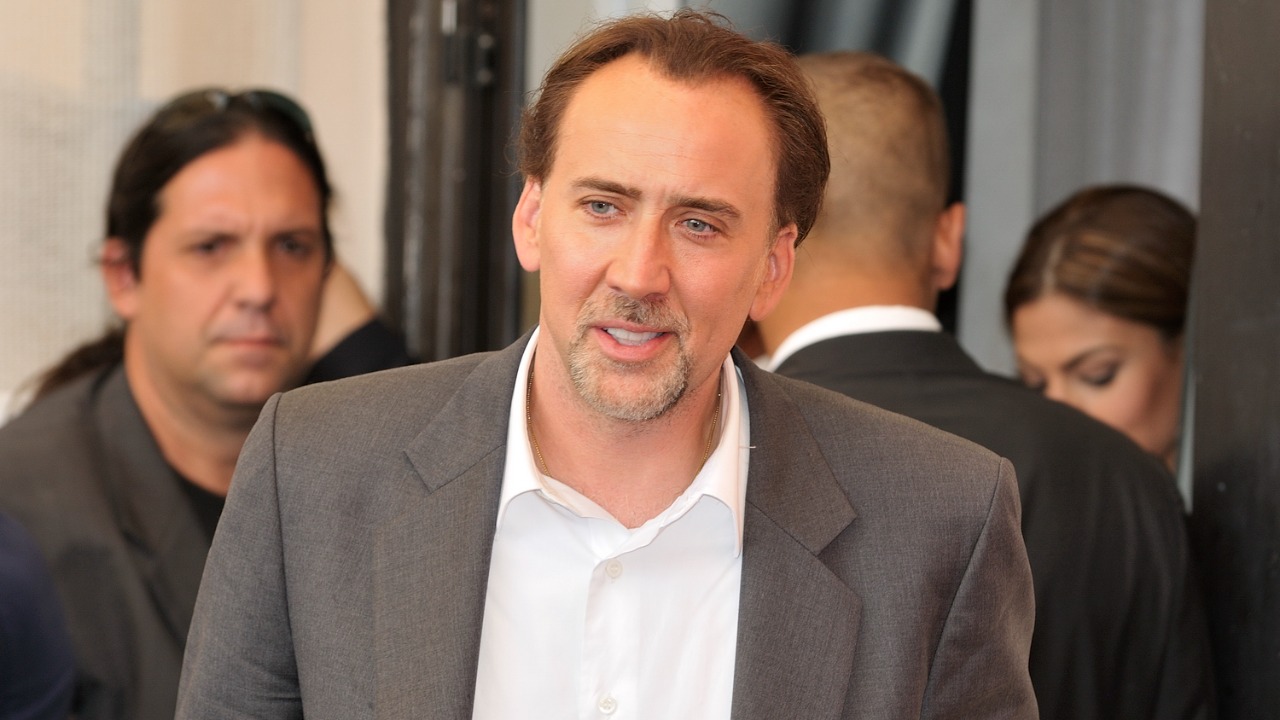
Even the biggest stars can watch their bank balances evaporate. These 13 celebrities did not just overspend, they ended up completely broke, facing tax bills, lawsuits, bankruptcies and, in some cases, saying flatly that they “had zero money.” Their stories show how fast fame-fueled wealth can disappear when risky investments, legal trouble and personal chaos collide, especially when careers stall or personal lives broke the rule of careful planning and discipline behind the scenes.
1) Nicolas Cage, the actor who squandered millions on exotic purchases leading to financial ruin
Nicolas Cage built a reputation as one of Hollywood’s most bankable leading men, yet he also became a textbook example of a star who lost his fortune after years of extreme spending. Reports have detailed how he poured tens of millions into rare cars, high-end jewelry and a sprawling portfolio of properties, including castles and unusual real estate that were expensive to maintain and difficult to offload quickly. When income slowed and tax obligations mounted, those eye‑catching assets turned into liabilities, forcing sales at steep discounts and leaving him scrambling to stabilize his finances.
His downfall illustrates how even eight‑figure paydays cannot withstand unchecked consumption and complex debt. For studios and financial advisers, Cage’s trajectory is a warning that star clients need rigorous budgeting and tax planning, not just lucrative roles. For fans, it undercuts the illusion that blockbuster success guarantees lifelong security, showing how quickly a Hollywood high roller can slide into emergency asset sales and public money problems.
2) Johnny Depp, the star facing massive legal battles and lifestyle costs
Johnny Depp spent decades as a global box office draw, yet extensive reporting has described how he also blew his fortunes on a sprawling lifestyle and costly disputes. One account noted that he reportedly spent $A101 million maintaining 14 residences, including a 45-acre chateau in the South of France, a level of overhead that would strain even the most successful careers. At the same time, he became embroiled in high‑profile legal battles with former managers and in defamation cases, with legal fees and damages compounding the pressure on his finances.
Those overlapping costs turned a once‑unassailable fortune into a precarious balance sheet, forcing property sales and renegotiated deals. For the wider industry, Depp’s situation underscores how long‑running litigation and lavish fixed expenses can destabilize even top‑tier talent. It also highlights the risk for investors and studios when a star’s off‑screen troubles threaten to overshadow their box office value and complicate insurance, casting and marketing decisions.
3) Mike Tyson, the boxer who blew through earnings on mansions and cars
Mike Tyson earned hundreds of millions of dollars as the most feared heavyweight of his era, yet he still became one of the athletes who ended up going BROKE. Accounts of his spending describe fleets of luxury cars, multiple mansions and extravagant purchases for his entourage, all funded by fight purses that seemed limitless at the time. When his career was interrupted by legal issues and suspensions, the income that supported that lifestyle collapsed, but the mortgages, maintenance costs and obligations to creditors did not.
Tyson’s eventual bankruptcy showed how quickly sports earnings can vanish when there is little long‑term planning or diversification. For promoters and financial planners, his story has become a case study in why even peak‑earning athletes need conservative budgets and transparent accounting. It also reflects a broader trend in combat sports, where short career windows and intense pressure can encourage reckless spending that leaves stars vulnerable once the spotlight fades.
4) MC Hammer, the rapper known for his lavish 1990s lifestyle
MC Hammer turned early‑1990s hits into a reported $30 million net worth, only to see that fortune evaporate in a few years, placing him among celebrities who lost it all. He famously maintained a massive payroll for friends and employees, funded a large entourage and invested in an opulent mansion that became a symbol of his success and excess. As record sales slowed and touring revenue dipped, those fixed costs remained, and unpaid debts piled up until he filed for bankruptcy protection.
The speed of Hammer’s reversal illustrates how fragile music wealth can be when it is tied to a short commercial peak. For labels and managers, his experience underscores the importance of realistic revenue projections and contingency planning once a hit single cools off. It also shows fans how quickly a chart‑topping artist can go from dominating MTV to liquidating assets, simply because the lifestyle built for peak earnings could not adjust to a more modest reality.
5) Willie Nelson, the country legend hit by IRS troubles
Willie Nelson’s financial collapse was driven less by flashy spending than by a devastating tax dispute. In 1990, the IRS went after country music singer‑songwriter Willie Nelson for $16.7 m in back taxes and seized most of his assets, with reports also describing the bill as $16.7 million in some accounts. That same timeline appears in other coverage that notes how, In 1990, Willie Nelson filed for bankruptcy after the government’s action left him with little choice but to negotiate and sell what he could.
Those IRS seizures forced auctions of his properties and possessions, turning a beloved icon into a high‑profile example of how tax problems can wipe out decades of work. For other artists, Nelson’s ordeal is a stark reminder that complex tax shelters and aggressive accounting can backfire catastrophically. It also shows how government enforcement can reshape an entertainer’s legacy, with fans rallying to support him even as he scrambled to satisfy federal demands.
6) Kim Basinger, the actress who invested poorly in real estate
Actress Kim Basinger made a bold bet on real estate that ultimately pushed her into bankruptcy and onto lists of stars who lost all their money. In 1989, Basinger paid $20 million for the town of Braselton, Georgia, acquiring a 1,691-acre property with plans to turn it into a tourist and film hub. The project never delivered the returns she expected, and when she later backed out of a film deal, the producers took Bassinger to court and she ended up owing them over $8 million, a judgment that contributed directly to her bankruptcy filing.
Her experience highlights the risks when entertainers venture into large, illiquid investments without a clear exit strategy. For investors and advisers, Basinger’s story is a cautionary tale about mixing personal branding with speculative property deals. It also shows how a single lawsuit, layered on top of an ambitious but underperforming asset, can erase the financial cushion even an Oscar‑winning actor once enjoyed.
7) Toni Braxton, the singer filing for bankruptcy multiple times
Toni Braxton’s soaring success in the 1990s masked a series of financial crises that eventually placed her among celebrities who repeatedly declared bankruptcy. Despite multi‑platinum albums, she has spoken about restrictive recording contracts that left her with far less income than fans might assume, even as she maintained the image of a luxury lifestyle. Medical issues, including serious health problems, added large bills, and her divorce compounded the strain, leaving her with what she has described as essentially zero assets at different points.
Braxton’s financial turmoil underscores how opaque music contracts and high recoupable costs can undermine even chart‑topping artists. For younger performers, her experience is a warning to scrutinize royalty structures and tour expenses before assuming long‑term security. It also illustrates how personal health crises and family breakdowns can intersect with industry practices to push a Grammy winner into courtrooms, restructuring deals just to stay afloat.
8) Pamela Anderson, the model-actress struggling post-fame
Pamela Anderson became one of the most recognizable faces in television, yet she has also been cited among stars who became homeless or broke after their peak fame. Reports have described how exploitative contracts and uneven pay during her early television years left her with far less than the cultural impact of her roles might suggest. Later, expensive divorces, property disputes and unpaid renovation bills reportedly triggered liens and legal actions that further eroded her finances.
Her trajectory shows how the glamour of a hit series can conceal structural inequities in pay and residuals, particularly for women whose image is heavily commercialized. For producers and unions, Anderson’s experience reinforces ongoing debates about fair compensation and long‑term royalties for syndicated work. It also highlights how personal upheaval and legal wrangling over homes and alimony can turn a once‑ubiquitous star into someone fighting to regain basic financial stability.
9) Lindsay Lohan, the child star derailed by addiction and legal fees
Lindsay Lohan transitioned from child star to leading actor, but a string of arrests, rehab stints and missed work left her finances in tatters, placing her among modern celebrities who clearly broke the rule that fame alone can sustain wealth. Court records and entertainment reporting have detailed unpaid tax bills, mounting legal fees and lost roles as studios hesitated to insure productions built around her. At one point, she faced publicized back taxes and was forced to accept lower‑paying projects and overseas work to stay solvent.
Lohan’s story underscores how addiction and legal trouble can erode not only reputation but also earning power, as insurers and financiers balk at perceived risk. For young performers, her experience is a stark reminder that early success does not guarantee a financial cushion if personal issues derail a career. It also shows how quickly Hollywood can pivot away from once‑bankable talent when reliability comes into question.
10) Courtney Love, the musician facing estate disputes
Courtney Love inherited a stake in Kurt Cobain’s legacy while also fronting her own band, yet she has repeatedly surfaced in coverage of stars who broke up financially under the weight of lawsuits and estate battles. Disputes over control of Nirvana’s catalog, combined with her own legal fights and reported tax issues, have led to asset freezes and costly settlements. At various points, she has acknowledged losing large sums through mismanagement and alleged fraud by people she trusted with her money.
Her situation highlights how complex intellectual property rights and family estates can become flashpoints that drain wealth instead of preserving it. For heirs and managers, Love’s experience is a warning that creative legacies require rigorous legal structures and transparent accounting. It also illustrates how personal turmoil and public controversy can complicate efforts to monetize valuable catalogs, leaving the artist at the center struggling with cash flow despite owning iconic material.
11) Drake Bell, the Nickelodeon alum hit by career setbacks
Drake Bell, once a staple of Nickelodeon programming, has faced severe financial strain as scandals and shifting public perception cut into his earning power, making him one of the younger stars who effectively broke up with financial stability. Court filings in recent years have shown limited assets and significant debts, with income from residuals and smaller projects failing to cover obligations. Legal issues and public allegations have also made it harder for him to secure mainstream roles or lucrative endorsements.
Bell’s decline underscores how fragile child‑star wealth can be when the transition to adult roles falters. For networks and talent agencies, his case raises questions about long‑term support and financial education for young performers who earn substantial sums before they are old enough to manage them. It also shows how reputational damage in the social‑media era can quickly translate into lost revenue streams and, ultimately, insolvency.
12) Gary Busey, the actor with repeated financial filings
Gary Busey, known for intense performances and a turbulent personal life, has appeared on lists of celebrities who repeatedly went bankrupt after a series of bad investments and mounting debts. Reports have described how medical issues, including the aftermath of a serious motorcycle accident, collided with inconsistent acting work and unpaid bills. Eventually, he turned to bankruptcy court to discharge obligations that far exceeded his available income and assets, listing relatively modest property compared with his earlier Hollywood stature.
Busey’s financial troubles highlight how health crises and career volatility can devastate actors who lack residual‑rich catalogs or diversified investments. For unions and industry advocates, his experience underscores the importance of safety nets, from health insurance to pension plans, for performers whose earnings can swing wildly. It also shows how fame does not shield aging actors from the same medical debt and credit problems that confront ordinary workers.
13) Burt Reynolds, the icon who declared bankruptcy in the 1990s
Burt Reynolds was once one of the highest‑paid stars in Hollywood, yet by the 1990s he had declared bankruptcy and later admitted, “I had zero money,” placing him squarely among celebrities who became homeless or broke in practical terms. Coverage of his finances has pointed to an expensive divorce, a string of underperforming films and costly real estate, including a Florida ranch, that became difficult to maintain. Business ventures that failed to generate steady profits added to the strain, leaving him to sell memorabilia and properties to satisfy creditors.
Reynolds’s fall from box office king to debtor encapsulates how quickly fortunes can reverse when personal upheaval and career misfires collide. For studios and financial planners, his story is a reminder that even long‑running success needs conservative assumptions about future income. It also shows fans that behind the charm and swagger, one of cinema’s most recognizable faces was quietly confronting the reality of starting over with almost nothing.
More From TheDailyOverview
- Tennessee loses $2.6B megafactory and faces major layoffs
- Retired But Want To Work? Try These 18 Jobs for Seniors That Pay Weekly
- What to do with your pennies after the U.S. stops minting them
- Home Depot CEO warns of a troubling customer trend in stores

Cole Whitaker focuses on the fundamentals of money management, helping readers make smarter decisions around income, spending, saving, and long-term financial stability. His writing emphasizes clarity, discipline, and practical systems that work in real life. At The Daily Overview, Cole breaks down personal finance topics into straightforward guidance readers can apply immediately.
