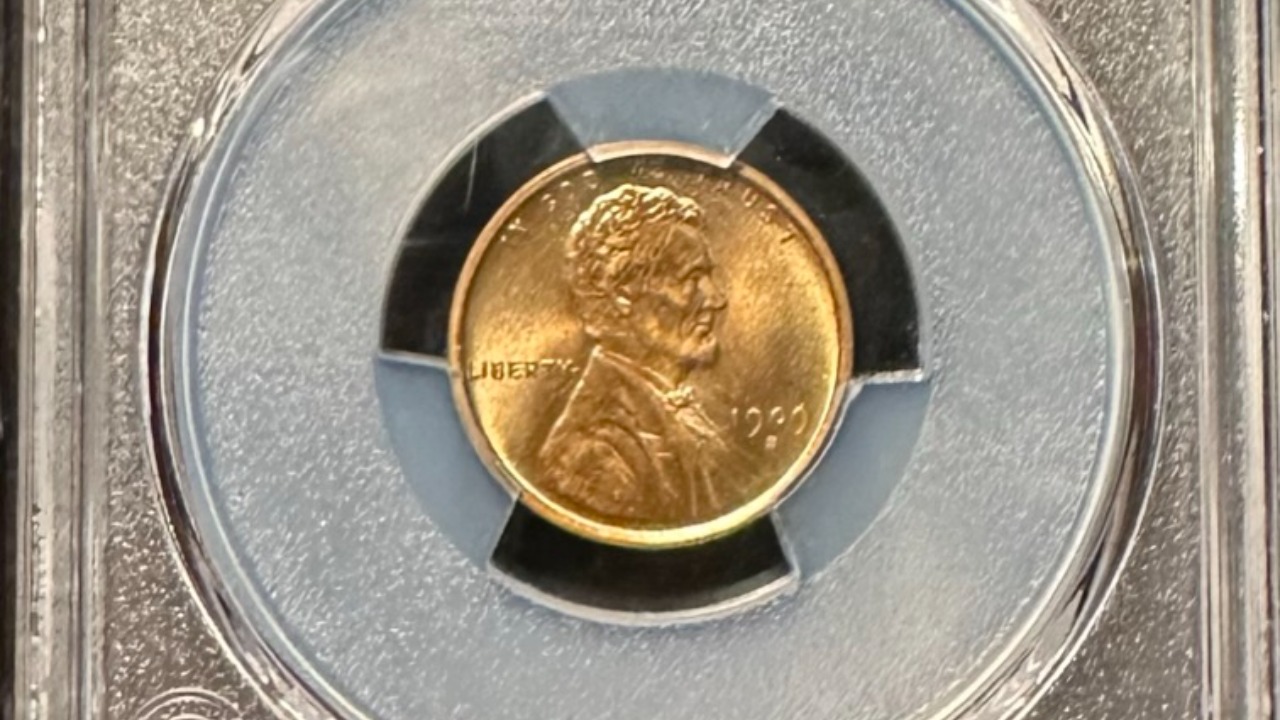
I’ve learned that the right penny can be worth far more than its face value, and sometimes a single coin hiding in spare change can rival a year’s salary. When I dig into the stories behind rare cents, I see clear patterns that anyone can use to spot valuable pieces, from dramatic minting mistakes to short-lived designs that collectors chase today.
By understanding which dates, mint marks, and errors matter most, I can quickly separate ordinary pocket change from the 13 rare pennies that have a real shot at making you rich. The key is knowing what to look for, how to confirm authenticity, and when it makes sense to call in a professional before you cash in.
1. 1943 Copper Lincoln Cent: The Accidental Wartime Rarity
When I think about the most famous “lottery ticket” penny, the 1943 copper Lincoln cent is always at the top of the list. During World War II, the United States Mint shifted to zinc-coated steel planchets to conserve copper for the war effort, so any 1943 cent struck on a leftover copper planchet is a dramatic mistake. Because nearly all 1943 cents are steel, a genuine copper example is incredibly rare and has sold for six-figure prices at major auctions, making it one of the most valuable coins you could ever pull from an old jar.
To separate fantasy from reality, I focus on simple tests before dreaming about a windfall. A real 1943 copper cent will not stick to a magnet, and it will show the warm brown or reddish tone of bronze rather than the silvery look of steel. High-grade examples authenticated by major grading services have brought prices well into the hundreds of thousands of dollars at public sales, and even lower-grade pieces can command life-changing sums when they are confirmed as genuine errors from the wartime copper shortage.
2. 1909-S VDB Lincoln Cent: The Short-Lived Designer Initials
When the Lincoln cent debuted in 1909, the design change created a wave of public interest, and that excitement still echoes in the value of certain first-year issues. I pay special attention to the 1909-S VDB cent, which combines a low mintage from the San Francisco Mint with the controversial “VDB” initials of designer Victor David Brenner on the reverse. Those initials were removed quickly after criticism that they were too prominent, so the coins that slipped out before the change became a key rarity in the series.
Because of that short production window, the 1909-S VDB has long been a cornerstone of Lincoln cent collecting, and demand has kept prices strong across all grades. Even well-circulated examples can be worth hundreds of dollars, while sharply struck, red pieces graded by top-tier services can reach into the thousands. When I evaluate one, I look for the clear “S” mint mark under the date and the “VDB” at the bottom of the reverse, then compare it to authenticated images and population data from major grading references to gauge how rare a particular grade might be.
3. 1914-D Lincoln Cent: A Low-Mintage Key Date
Some pennies are valuable not because of a dramatic error, but simply because very few were made and even fewer survived in nice condition. The 1914-D Lincoln cent is a classic example of a low-mintage key date that I always watch for when sorting older collections. With a relatively small production run at the Denver Mint and heavy circulation over the decades, high-grade survivors are scarce, and even worn pieces can bring serious money.
What makes the 1914-D especially tricky is the number of altered coins and added mint marks that have surfaced over the years. When I examine one, I look closely at the shape and placement of the “D” mint mark, checking it against known genuine examples and watching for signs of tampering. Certified pieces in mid to high grades regularly sell for strong four-figure prices, and auction records for top-condition coins show why this date is considered a cornerstone of any complete Lincoln cent set.
4. 1922 No D Lincoln Cent: The Missing Mint Mark Mystery
One of the most intriguing pennies I’ve studied is the 1922 “No D” Lincoln cent, a coin that looks like it came from Philadelphia even though all cents that year were struck in Denver. The missing mint mark is not a simple omission; it stems from heavily worn dies and repeated polishing at the Denver Mint, which caused the “D” to fade or disappear on certain dies. Because there were no Philadelphia cents dated 1922, any coin from that year without a visible mint mark is a potential rarity.
Collectors prize the strong “No D” variety, where Lincoln’s details remain sharp even though the mint mark is gone, and those coins can command impressive prices. When I evaluate one, I check the strength of the obverse details and compare the reverse to known die pairings documented by specialists. High-grade examples authenticated as the true “No D” variety have sold for thousands of dollars, and even circulated coins can be valuable when they match the recognized die varieties that define this famous error.
5. 1955 Doubled Die Obverse: The Classic Error Everyone Knows
When people first hear that a penny can be worth thousands, the 1955 doubled die obverse is often the coin they’re thinking of. This dramatic error happened when the obverse die received a misaligned second impression, creating bold doubling on the date and inscriptions. I’ve seen how striking the effect is in person: the words “LIBERTY” and “IN GOD WE TRUST” appear almost like a shadowed echo, making this one of the most visually obvious errors in U.S. coinage.
Because the doubling is so strong, the 1955 doubled die has become a gateway coin for new collectors and a trophy piece for seasoned ones. Circulated examples can still bring hundreds to thousands of dollars depending on condition, while high-grade, red pieces certified by major grading services have reached well into five figures at auction. When I’m checking a 1955 cent, I look for that unmistakable spread in the lettering and then confirm it against detailed error guides that distinguish the true doubled die from minor machine doubling that carries little premium.
6. 1969-S Doubled Die Obverse: A Modern Rarity with Big Upside
While the 1955 doubled die gets most of the attention, the 1969-S doubled die obverse is actually much rarer and can be even more lucrative. This variety shows strong doubling on the date and inscriptions similar to the 1955, but it comes from the San Francisco Mint and was produced in far smaller numbers. For years, some early finds were even seized as suspected counterfeits, which only adds to the mystique that I sense around this coin.
Today, authenticated examples are recognized as one of the top modern Lincoln cent rarities, and auction records reflect that status with prices that can reach six figures for high-grade pieces. When I evaluate a 1969-S cent, I focus on the bold doubling in “LIBERTY” and “IN GOD WE TRUST,” then cross-check it with high-resolution images from specialized variety references. Because the stakes are so high, I would never try to sell one raw; professional grading and attribution are essential to unlock its full value and protect against the risk of sophisticated counterfeits.
7. 1972 Doubled Die Obverse: A More Accessible Error to Find
Not every valuable penny is out of reach for the average collector, and the 1972 doubled die obverse is a good example of a high-demand error that still turns up in collections and rolls. The strongest variety, often called “DDO-001,” shows clear doubling on the date and inscriptions, though it is generally less dramatic than the 1955 or 1969-S. I like this coin because it offers a realistic chance for roll hunters to find something special without needing access to elite collections.
There are several different doubled die varieties for 1972, but only the strongest ones bring serious premiums, so I pay close attention to the clarity of the doubling. Certified examples of the main variety in high grades can sell for hundreds or even over a thousand dollars, especially when they retain bright original color. To avoid confusing minor anomalies with the real thing, I compare suspect coins to detailed variety listings that show the exact spread and die markers specialists use to confirm the most valuable versions.
8. 1982 Small Date Copper Cent: The Transitional Metal Jackpot
In the early 1980s, the composition of the Lincoln cent changed dramatically, and that transition created one of the most talked-about modern rarities. For most of its life, the Lincoln cent was made of a copper alloy, but rising metal prices pushed the Mint to switch to a copper-plated zinc core. During that changeover, a small number of 1982 cents with the “small date” style were struck on leftover copper planchets, and those are the coins I zero in on when I’m weighing and sorting this year.
The key to spotting a 1982 small date copper cent is a combination of design and weight. Genuine copper pieces weigh about 3.11 grams, while the newer zinc cents come in around 2.5 grams, so a digital scale is essential. Once I confirm the weight, I compare the date style to known images of the “small date” variety, paying attention to the shape of the “2” and the overall spacing. Authenticated examples have sold for strong four-figure prices, and detailed composition data from the Mint helps explain why these transitional pieces are so coveted.
9. 1983 Doubled Die Reverse: A Hidden Gem in Pocket Change
Some of the most profitable pennies are errors that most people have never heard of, and the 1983 doubled die reverse fits that description. Instead of doubling on the obverse, this variety shows clear doubling on the reverse lettering, especially in “UNITED STATES OF AMERICA” and “E PLURIBUS UNUM.” I like to think of it as a reminder to always flip a coin over, because the value might be hiding on the back.
Because 1983 cents are common and still circulate, this variety offers a realistic opportunity for sharp-eyed collectors to find something valuable in everyday change. High-grade examples with strong doubling can sell for hundreds of dollars, and certified pieces with full red color bring even more. When I’m checking 1983 cents, I use a 10x loupe to scan the reverse lettering and then compare any promising candidates to specialized error references that document the exact look of the recognized doubled die reverse.
10. 1992 Close AM and 1992-D Close AM: Subtle Spacing, Big Value
One of the most subtle but lucrative modern penny varieties involves the spacing between the letters “A” and “M” in “AMERICA” on the reverse. In 1992, the Mint used different reverse designs for proof and circulation strikes, and a small number of circulation cents were accidentally struck with the proof-style “Close AM” reverse. When I examine 1992 and 1992-D cents, I pay close attention to how tightly those letters sit together, because the difference can mean the jump from pocket change to a serious payday.
Genuine “Close AM” varieties show the letters nearly touching, with the base of the “A” and “M” very close compared to the normal wide spacing. Certified examples of the 1992 and 1992-D Close AM cents have sold for thousands of dollars in high grades, making them some of the most valuable modern circulation finds. To avoid misidentifying normal coins, I compare suspect pieces to high-resolution variety images and check other markers like the distance between the “FG” initials and the Lincoln Memorial, which help confirm the rare reverse design.
11. 1999 Wide AM Lincoln Cent: The Reverse Mix-Up
Just as the Close AM varieties create value through subtle design differences, the 1999 Wide AM cent flips the script by putting a proof-style reverse on a circulation coin. In this case, the rare variety shows a wider gap between the “A” and “M” in “AMERICA” than the normal business-strike design. I find it fascinating that such a small design mix-up can create a coin worth far more than face value, especially in a year when billions of cents were produced.
When I’m searching 1999 cents, I look for the Wide AM spacing and then confirm it by checking the shape of the letters and the position of the designer’s initials. High-grade examples certified as the Wide AM variety can sell for hundreds of dollars, and they are particularly desirable in uncirculated condition with strong luster. Detailed variety guides show side-by-side comparisons of the normal and Wide AM reverses, which I use to train my eye so I can spot these valuable mix-ups quickly when going through rolls.
12. 2000 Wide AM and Other Late-1990s Reverse Varieties
The 1999 Wide AM is not an isolated case; it is part of a small family of reverse design mix-ups that span the late 1990s and 2000. In 1998 and 2000, a limited number of circulation cents were also struck with the proof-style Wide AM reverse, creating additional varieties that I always watch for when sorting those years. While they are generally less valuable than the 1992 Close AM or the rarest doubled dies, they still offer a meaningful premium over face value, especially in high grades.
To identify these coins, I use the same spacing test between the “A” and “M” and then verify other design details like the distance between the “FG” initials and the Lincoln Memorial. Certified Wide AM cents from 1998 and 2000 can bring strong prices at auction, particularly when they grade at the top of the scale. By studying the documented reverse varieties, I’ve learned to treat every late-1990s cent as a potential candidate, because the difference between a common coin and a valuable one can be just a fraction of a millimeter in letter spacing.
13. 2014-D Shield Cent Double Die and the Future of Modern Penny Hunting
Even the newest designs can produce valuable errors, and the 2014-D Shield cent with a doubled die offers a glimpse into where modern penny hunting is headed. The Shield reverse introduced a fresh look for the cent, and with any new design, there is a chance for misaligned hubbing that creates doubled dies. I pay attention to reports of doubling on the date, motto, or shield details, because early discoveries in a new design type can become key varieties that collectors chase for decades.
While the market for 2014-D doubled die Shield cents is still developing compared to classic errors, certified examples with clear doubling already command premiums over face value, especially in high mint-state grades. As more coins are examined and documented, specialized error references help distinguish meaningful doubled dies from minor anomalies that carry little value. For me, the lesson is clear: rare pennies that could make you rich are not just relics from the early 1900s—new varieties continue to emerge, and staying informed about modern issues is just as important as knowing the classic key dates.
More From TheDailyOverview
- Dave Ramsey warns to stop 401(k) contributions
- 11 night jobs you can do from home (not exciting but steady)
- Small U.S. cities ready to boom next
- 19 things boomers should never sell no matter what

Cole Whitaker focuses on the fundamentals of money management, helping readers make smarter decisions around income, spending, saving, and long-term financial stability. His writing emphasizes clarity, discipline, and practical systems that work in real life. At The Daily Overview, Cole breaks down personal finance topics into straightforward guidance readers can apply immediately.
