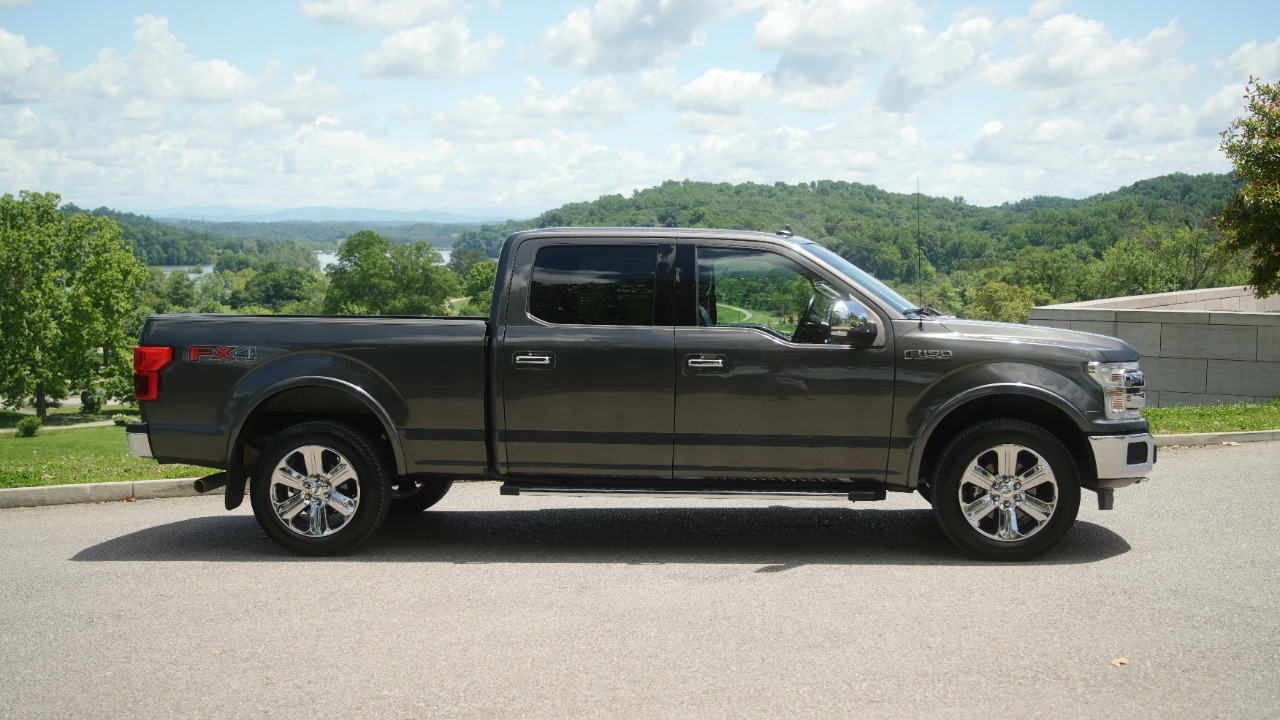
If you hate spending money on maintenance, the wrong truck can quietly drain your budget through constant repairs and high shop bills. Recent reporting on the 15 worst trucks for upkeep highlights how certain models rack up excessive costs over time, especially as they age. Drawing on that analysis and additional expert warnings about trucks that are not worth the money, I am focusing on models that combine frequent problems with expensive fixes so you can better protect your wallet.
1) Ford F-150
The Ford F-150 appears in the reporting on the 15 worst trucks for upkeep because of frequent transmission repairs that drive up long-term ownership expenses. In that analysis of trucks with excessive upkeep costs, the F-150 is singled out for issues that can surface as mileage climbs, turning what looks like a solid purchase into a recurring line item in your budget. When a truck’s transmission is a known weak point, every hard tow, steep grade, or heavy load increases the odds that you will be paying for major work sooner than you expect.
From a cost perspective, transmission problems are especially punishing because they often require specialized labor and extended shop time, which means you are paying both for parts and for days without your truck. For owners who rely on an F-150 for work, that downtime can translate into lost income on top of repair bills. The broader trend in the reporting is clear, trucks that seem affordable up front can become some of the worst choices if you hate spending money on maintenance, and the F-150’s transmission track record is a prime example of why careful research matters.
2) Chevrolet Silverado
The Chevrolet Silverado is another full-size pickup that the high-maintenance reporting flags, this time for electrical issues that require costly fixes. According to the rundown of the 15 worst trucks for maintenance, the Silverado’s wiring and electronic systems can be a recurring headache, from malfunctioning sensors to intermittent power accessories. Modern trucks are packed with electronics, so when a model is known for electrical gremlins, owners can face a string of diagnostic visits that never feel truly “finished.”
Electrical repairs are often tricky because problems can be intermittent and hard to reproduce, which means technicians may spend hours tracing a fault before replacing a single part. That complexity drives up labor charges and can leave owners frustrated as warning lights reappear or features fail again. For anyone trying to keep ownership costs predictable, a truck with a reputation for electrical issues is a risky bet, and the Silverado’s presence in a list of the worst trucks for maintenance underscores how hidden systems can become a major financial liability.
3) Ram 1500
The Ram 1500 shows up in the same high-maintenance reporting for suspension problems that lead to repeated shop visits. In the evaluation of trucks with excessive upkeep costs, the Ram 1500 is associated with components that wear out or fail sooner than owners expect, especially in the suspension. When a truck’s suspension is a weak link, every pothole and jobsite rut accelerates the march toward repairs, from control arms and bushings to shocks and struts.
Suspension work can be deceptively expensive because it often involves multiple parts and an alignment to finish the job, and if you tow or haul regularly, those costs can stack up quickly. The reporting’s focus on the Ram 1500’s suspension issues highlights a broader concern, a truck that rides comfortably when new can become one of the worst options for anyone who hates spending money on maintenance once the underpinnings start to loosen up. For buyers, that means factoring in not just fuel and insurance, but also the likelihood of repeated suspension work over the life of the truck.
4) GMC Sierra
The GMC Sierra earns its place among the 15 worst trucks for maintenance because of rust-related bodywork expenses. In the reporting that identifies trucks with excessive upkeep costs, the Sierra is noted for corrosion that can attack frames, beds, and body panels, especially in harsh climates. Rust is not just a cosmetic issue, once it takes hold, it can compromise structural integrity and make routine repairs more complicated, since bolts and brackets may seize or break.
Bodywork and rust remediation are rarely cheap, and they often do not add much resale value, which means owners are spending money simply to keep the truck safe and presentable. For fleets and small businesses, that can be a serious budget problem, as multiple Sierras may need attention at the same time. The reporting’s emphasis on rust-related costs shows how a truck that looks like a good deal on the used market can quickly become one of the worst choices if you want to avoid pouring money into maintenance and corrosion control.
5) Toyota Tundra
The Toyota Tundra appears in the high-maintenance list because of engine overhaul needs that inflate maintenance bills. In the analysis of trucks with excessive upkeep costs, the Tundra is associated with engine-related work that goes beyond routine oil changes and spark plugs, pointing to repairs that can approach the cost of a used truck on their own. When a model’s engine is flagged in this way, it signals that long-term durability may not match the brand’s broader reputation.
Engine overhauls are among the most expensive repairs an owner can face, often involving extensive labor and a long parts list, and they can be especially painful if they arrive just after a warranty expires. A separate video review asking whether the 2025 Toyota Tundra is safe to buy or if buyers should wait for 2026 notes that “you have to stick with probably a 2026 or newer to be safe,” and that there is “more information potentially coming,” a caution that aligns with concerns about long-term reliability in that discussion of model-year timing. For shoppers who hate maintenance surprises, the combination of reported engine overhaul risks and uncertainty about which years are safest is a strong reason to proceed carefully.
6) Nissan Titan
The Nissan Titan is highlighted in the 15 worst trucks reporting for brake system failures that weigh heavily on owners’ budgets. In the assessment of money-draining trucks, the Titan’s braking components are singled out as a recurring trouble spot, suggesting that rotors, calipers, or related hardware may need attention more often than expected. When a truck’s brakes are a known weak point, the cost is not just financial, it also raises safety concerns, especially when towing or hauling.
Frequent brake work can add up quickly, particularly if heat-related issues lead to warped rotors or if calipers seize and require replacement rather than simple servicing. For drivers who use a Titan in hilly areas or for regular trailer duty, those costs can become a predictable, unwelcome line item. The reporting’s focus on brake system failures underscores a broader trend, some trucks that look capable on paper can be among the worst choices for anyone who wants to minimize maintenance spending once real-world use exposes their weaknesses.
7) Ford F-250
The Ford F-250 makes the high-maintenance list because of expensive diesel maintenance routines that are detailed in the reporting. In the overview of trucks with excessive upkeep costs, the F-250’s diesel configurations are associated with service schedules and component replacements that can strain a budget, from emissions systems to high-pressure fuel components. Heavy-duty trucks often promise long life, but that longevity can come with complex systems that are costly to maintain.
For owners who rack up high mileage or tow heavy loads, staying ahead of diesel maintenance is not optional, ignoring it can lead to even more expensive failures. That reality is reflected in broader warnings from mechanics about the worst trucks to buy in 2025, where diesel variants such as the Ram 1500 (Diesel) are flagged in a list that includes the Ford F-150 Lightning (Base Model) and the Chevrolet Silverado 1500 (2025 Redesign), with “Mechanics Warn” that these are among the “Worst Trucks” to “Buy” and explicitly citing the number 150 in their rundown of problem models in 2025. For anyone considering an F-250, those patterns reinforce how heavy-duty capability can come with heavy-duty maintenance bills.
8) Chevrolet Colorado
The Chevrolet Colorado appears in the 15 worst trucks reporting because of timing chain issues that escalate repair costs. In the findings on high-maintenance trucks, the Colorado’s engine timing components are identified as a vulnerability that can lead to significant shop time and large invoices. Timing chain problems are particularly concerning because they can cause serious internal engine damage if they fail completely, turning a repair into a potential engine replacement.
Addressing timing chain wear often requires substantial disassembly, which means high labor charges even if the parts themselves are not the most expensive items on the truck. For owners who bought a Colorado expecting midsize efficiency and lower running costs, the prospect of major engine work can be a rude surprise. The reporting’s focus on timing chain issues illustrates how a single weak component can push a truck into the “worst for maintenance” category, especially when failures tend to occur outside warranty coverage and at mileages where many owners still expect reliable service.
9) Ram 2500
The Ram 2500 is included among the 15 worst trucks for maintenance because of axle wear that demands frequent interventions. In the truck report that identifies models with excessive upkeep costs, the Ram 2500’s axles are highlighted as a recurring source of repairs, particularly for owners who use the truck for heavy towing or hauling. When a truck’s axles are underbuilt for real-world loads, the result can be a cycle of bearing replacements, seal leaks, and differential work.
Axle repairs are not only expensive, they also take the truck out of service, which can be a major problem for contractors and businesses that depend on a Ram 2500 to move equipment or materials. The reporting’s emphasis on axle wear fits into a broader pattern in which some heavy-duty trucks, while powerful on paper, become some of the worst choices for anyone trying to avoid high maintenance spending once the strain of daily work exposes their mechanical limits. For buyers, that means looking beyond towing ratings and considering how the driveline holds up over time.
10) Toyota Tacoma
The Toyota Tacoma earns a spot in the high-maintenance list because of frame rust repairs that are outlined in the reporting. In the analysis of trucks with high upkeep costs, the Tacoma’s susceptibility to frame corrosion is a central concern, especially in regions that use road salt. Frame rust is more than a cosmetic issue, it can lead to structural problems that are difficult and expensive to fix, sometimes requiring extensive reinforcement or even frame replacement.
For owners, frame rust repairs can be among the most disruptive and costly types of work, often involving long periods in the shop and complex procedures that not every repair facility can handle. That reality undercuts the Tacoma’s reputation for durability, showing how a truck that seems like a safe bet can still become one of the worst options if you hate spending money on maintenance. The reporting’s focus on frame issues also highlights a broader trend, corrosion is an increasingly important factor in long-term truck ownership, and ignoring it can be a costly mistake.
11) Nissan Frontier
The Nissan Frontier appears in the 15 worst trucks reporting because of cooling system breakdowns that add to ownership burdens. In the analysis of high-maintenance trucks, the Frontier’s cooling components are identified as a recurring trouble spot, suggesting that radiators, hoses, or related parts may fail more often than owners expect. When a truck’s cooling system is unreliable, the risk of overheating rises, which can quickly escalate into engine damage if not addressed.
Cooling system repairs can seem minor at first, but repeated failures or neglected leaks can lead to warped heads or blown gaskets, dramatically increasing costs. For drivers who use a Frontier for long commutes or towing, that uncertainty can be stressful and expensive. The reporting’s emphasis on cooling system breakdowns shows how even midsize trucks can become some of the worst choices for maintenance-averse buyers when key systems are prone to failure, and it underscores the importance of inspecting and servicing cooling components proactively if you already own one.
12) GMC Canyon
The GMC Canyon rounds out the 15 worst trucks for maintenance by being associated with fuel pump replacements in the reporting. In the evaluation of trucks to avoid, the Canyon’s fuel delivery system is singled out as a source of repeated repairs, which can leave owners stranded and facing unexpected towing and shop bills. Fuel pump failures are particularly frustrating because they often occur without much warning, turning a routine drive into an immediate breakdown.
Replacing a fuel pump can be labor intensive, especially if it is located inside the fuel tank, and repeated failures can erode confidence in the truck. For owners who rely on a Canyon as a daily driver or light work truck, that kind of unpredictability can be costly in both time and money. The reporting’s focus on fuel pump issues reinforces the broader theme that some trucks, even in the midsize segment, can be among the worst options if you want to minimize maintenance spending, particularly when critical components have a track record of premature failure.
13) Dodge Ram
The Dodge Ram is identified in separate reporting by a car expert as one of the trucks that are not worth the money because of persistent reliability shortfalls. In that expert opinion piece, the author highlights three trucks that are not worth the investment due to ongoing costs, and the Dodge Ram is singled out as a model where repeated issues erode any initial value. The focus is on how reliability problems translate into a steady stream of repairs, making the truck a poor choice for anyone trying to keep ownership costs under control.
That perspective aligns with broader concerns about certain Ram models already appearing in high-maintenance lists, reinforcing the idea that some versions of the truck can be especially punishing on a budget. By framing the Dodge Ram as not worth the money, the expert is effectively warning buyers who hate spending on maintenance to look elsewhere, a stance that is laid out clearly in the car expert’s discussion of three trucks that are not worth the money. For shoppers, that kind of consistent criticism across sources is a strong signal to scrutinize reliability data and long-term costs before committing.
14) Jeep Gladiator
The Jeep Gladiator is another truck that the same car expert criticizes for value loss driven by repair demands. In the reporting that highlights three trucks not worth the money, the Gladiator is portrayed as a model where the combination of off-road hardware and reliability concerns leads to higher-than-expected maintenance costs. When a truck is designed for rugged use but struggles with durability, owners can find themselves paying repeatedly to keep it trail-ready.
Those repair demands also affect resale value, since used buyers are wary of models with a reputation for frequent issues. For owners who expected the Gladiator to hold its value like other Jeep products, that can be a disappointing surprise. The expert’s assessment that the Gladiator is not worth the money because of repair-driven value loss fits neatly into the broader theme of trucks that are among the worst choices if you hate spending on maintenance, especially when you factor in both direct repair costs and the indirect hit to resale.
15) Hummer H2
The Hummer H2 completes the trio of trucks that the car expert labels as not worth the money, highlighted as an unwise investment over time because of steep upkeep. In the reporting that focuses on three trucks that are not worth the money, the H2 is described as a model where maintenance and operating costs overwhelm any appeal it might have as a bold, distinctive vehicle. From fuel consumption to parts prices, the H2 is portrayed as a truck that keeps asking for more cash long after the purchase.
For owners, that means budgeting not just for routine service, but also for the higher cost of components and the possibility of age-related repairs as these vehicles get older. The expert’s conclusion that the Hummer H2 is an unwise long-term investment because of steep upkeep aligns with broader warnings about high-maintenance trucks, and it reinforces the idea that some of the most eye-catching models can be the worst choices for anyone who hates spending money on maintenance. That message is echoed in other cautionary lists, including video rundowns of the worst trucks to purchase in 2025 from Consumer Reports, such as a countdown of six trucks you should avoid according to Consumer Reports and a separate discussion titled “The WORST Trucks To Purchase in 2025 From Consumer Reports Now, I know what you’re thinking: ‘Aren’t all modern trucks basically bulletproof,’” which together show how concerns about high upkeep are shaping truck-buying advice.
Across these 15 models, the pattern is consistent, whether the problem is transmissions, rust, suspension, or overall reliability, each truck has been flagged in reporting as a poor choice for anyone who hates spending money on maintenance. The detailed list of the 15 worst trucks for upkeep, available through a breakdown of trucks with excessive maintenance costs, and the expert warnings about three trucks that are not worth the money, together provide a roadmap for buyers who want to avoid the most expensive pitfalls. Additional context from mechanics and Consumer Reports, including discussions like The WORST Trucks To Purchase in 2025 From Consumer Reports Now, Aren, shows that in 2025, careful research is essential if you want a truck that works hard without constantly working over your wallet.
More From TheDailyOverview
- Dave Ramsey warns to stop 401(k) contributions
- 11 night jobs you can do from home (not exciting but steady)
- Small U.S. cities ready to boom next
- 19 things boomers should never sell no matter what

Cole Whitaker focuses on the fundamentals of money management, helping readers make smarter decisions around income, spending, saving, and long-term financial stability. His writing emphasizes clarity, discipline, and practical systems that work in real life. At The Daily Overview, Cole breaks down personal finance topics into straightforward guidance readers can apply immediately.
