Reliable dividend payers can turn a volatile stock market into a steady stream of cash, especially when investors give those businesses a decade or more to compound. The next 10 years are likely to feature more rate cycles, political shifts, and technological shocks, but companies with durable cash flows and disciplined payout policies can keep sending money to shareholders through it all. I see three names that stand out today as candidates to anchor a long-term income portfolio.
What makes a dividend stock worth holding for a decade
Before picking individual companies, I focus on the traits that let a payout survive recessions, inflation scares, and changing investor fashions. Classic value thinkers such as Benjamin Graham emphasized strong balance sheets and consistent earnings, and that lens still works for income investors. I look for companies that generate reliable free cash flow, carry manageable debt, and treat the dividend as a core part of their capital allocation rather than a leftover. Research on long-term dividend growth highlights exactly those factors, pointing to consistency of payments and a sensible debt-to-equity ratio as key filters.
Strategy matters as much as stock selection. A structured approach, such as the one laid out in a Comprehensive Guide to income investing, stresses diversification across sectors, attention to payout ratios, and clarity about whether you plan to reinvest dividends or spend them. I also cross-check candidates against curated lists of Best Dividend Stocks, which typically favor companies with durable competitive advantages and a track record of shareholder-friendly policies. With that framework in place, three names rise to the top for the coming decade of passive income.
AbbVie: Big pharma scale with a shareholder focus
Pharmaceuticals can be a fertile hunting ground for long-term dividends, provided the company is large enough to manage patent cliffs and fund new therapies. AbbVie fits that bill. It is described as a global biopharmaceutical leader and is explicitly Valued at $383 billion, which gives it the scale to invest heavily in research and development while still returning cash to shareholders. That size also provides diversification across immunology, oncology, and aesthetics, reducing reliance on any single blockbuster drug.
AbbVie appears again in a separate breakdown of Reliable Stock No candidates, which underscores its reputation as a dependable payer. I view that dual recognition as a sign that the company’s dividend is not an afterthought but a central part of its investor appeal. When I combine AbbVie’s global footprint, its diversified pipeline, and its explicit positioning as a shareholder-focused business, it stands out as a pharmaceutical name that can plausibly keep funding a growing payout for the next 10 years.
Realty Income: Monthly checks backed by hard assets
Real estate investment trusts can be volatile in the short term, but the right landlord can deliver remarkably steady income over long stretches. Realty Income brands itself as a bellwether net lease REIT, and I see its history through stress periods as a key reason to own it for the long haul. During the financial crisis, the company maintained 97% occupancy in 2008, a figure that speaks to the resilience of its tenant base even in a deep downturn. The same analysis notes that Realty Income, trading under ticker O, offers a yield of 5.28%, which is a compelling starting income stream for investors willing to ride out rate cycles.
More recent commentary describes Realty Income as a good fit for conservative income investors, highlighting its long record of regular increases and its diversified portfolio of net lease properties. I pay close attention to that combination of high occupancy, disciplined acquisitions, and a management team that has navigated multiple economic cycles. When I overlay those fundamentals with the company’s reputation as a reliable payer in lists of Dividend Stocks Every, Realty Income looks built to keep mailing out monthly checks for another decade.
Coca-Cola: A consumer staple built for all seasons
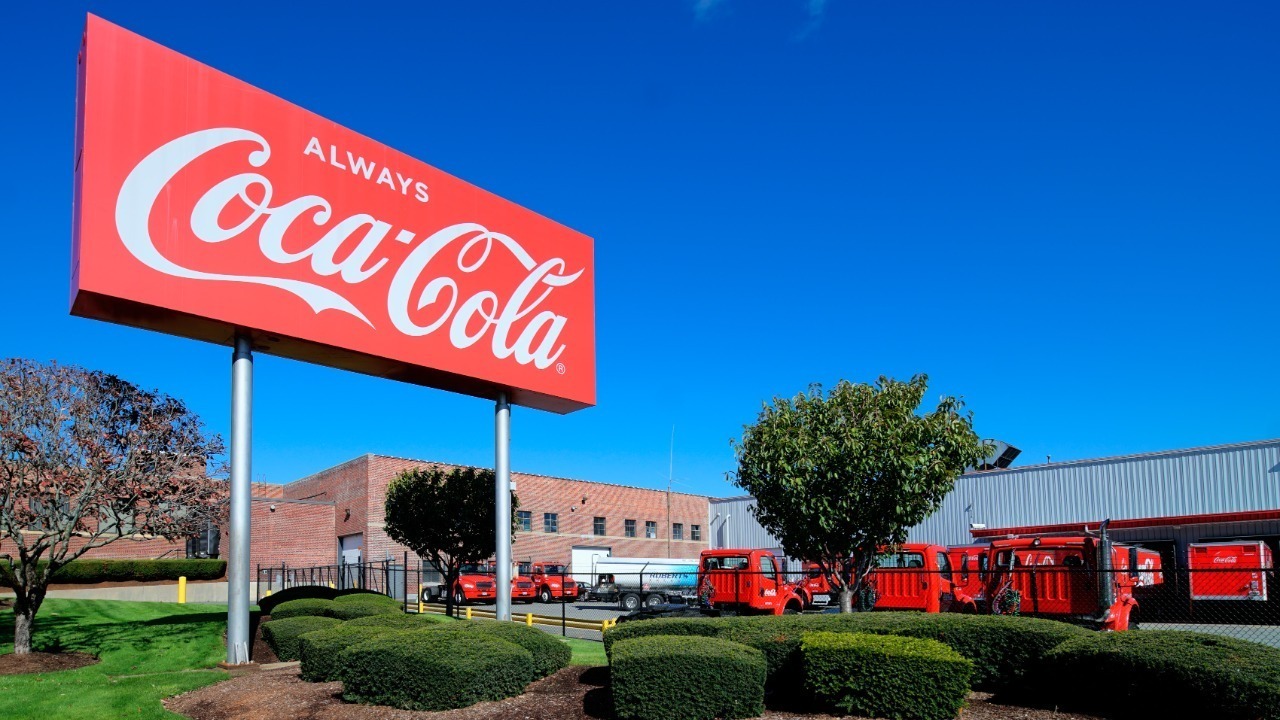
Consumer staples rarely grab headlines, but their products quietly flow through households in good times and bad, which is exactly what a long-term income investor wants. Coca-Cola sits at the center of that universe. It appears prominently in curated rundowns of the 10 Best Dividend, where it is grouped with other global brands like PepsiCo and Altria Group. That kind of inclusion reflects not just its iconic status but also its ability to convert brand power into steady cash flows that support a rising payout.
Several independent analyses of the best dividend names to hold indefinitely single out Coca-Cola as a stock that can provide protection and income, noting that its yield sits around 2.9% at the current price. Another review of whether a basket of consumer giants could support retirement income points out that Coca-Cola, Costco, and are three of the most reliable dividend stocks, and that Coca-Cola is the only one of the trio that has raised its payout every year for decades. When I combine that history with its global distribution network and pricing power, it is hard to find a more straightforward candidate for 10 years of passive income.
How these three fit into a broader income strategy
AbbVie, Realty Income, and Coca-Cola cover three very different parts of the economy, which is exactly why I like them together. Pharmaceuticals, real estate, and consumer staples respond differently to interest rates and economic growth, so owning all three can smooth the ride. That sector mix also lines up with the kind of diversified approach described in guides on How to Develop a Dividend Investing Strategy, which stress that no single company, however strong, should carry the entire income burden. I also note that each of these names shows up, directly or indirectly, in lists of stocks to hold for the, which reinforces the idea that they are built for patience rather than quick trades.
To round out a portfolio around these three, I would look at complementary holdings that share similar traits. Some investors study how legendary managers approach income, for example by reviewing the Dividend holdings of The Kraft Heinz Company, ticker KHC, inside a well-known value portfolio. Others benchmark their picks against broad market barometers like the S&P 500 or the NASDAQ, where growth names like NFLX, LCID, INTC, AMC, KHC, and AMD dominate the conversation but income still plays a role. However you build around them, AbbVie, Realty Income, and Coca-Cola offer a blend of yield, resilience, and scale that, in my view, makes them three dividend stocks worth stashing away for the next decade of passive income.
More From TheDailyOverview
*This article was researched with the help of AI, with human editors creating the final content.

Cole Whitaker focuses on the fundamentals of money management, helping readers make smarter decisions around income, spending, saving, and long-term financial stability. His writing emphasizes clarity, discipline, and practical systems that work in real life. At The Daily Overview, Cole breaks down personal finance topics into straightforward guidance readers can apply immediately.

