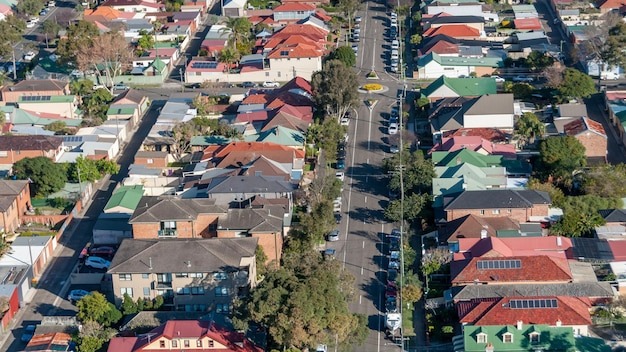
Several East Coast housing markets that have enjoyed steady price gains over the past two years now face conditions that could push values lower within the next 12 months. National home prices rose 4.0 percent year over year and 0.7 percent from late 2024, according to the latest federal data, but that broad upward trend masks growing vulnerabilities in specific metro areas along the Atlantic seaboard. A combination of softening demand, rising inventory, and persistent affordability strain is converging in ways that suggest corrections are not just possible but increasingly likely in at least five cities.
National Price Growth Hides Regional Cracks
The headline numbers look reassuring on the surface. The Federal Housing Finance Agency reported that U.S. house prices rose 4.0 percent over the prior year and gained 0.7 percent from the fourth quarter of 2024. The FHFA House Price Index, which tracks repeat sales on properties financed with conforming mortgages, serves as the government benchmark for gauging appreciation trends at the national and state level. But averages can be misleading. A 4.0 percent national gain can coexist with flat or declining prices in individual metros, especially when local conditions diverge sharply from the national picture.
That divergence is exactly what is emerging along the East Coast. While Sun Belt construction has surged, adding supply that puts downward pressure on prices in parts of the South, several Northeastern and Mid-Atlantic cities face a different problem: prices that climbed too fast relative to local incomes, paired with mortgage rates that remain high enough to sideline a significant share of would-be buyers. The result is a growing pool of listings sitting longer on the market, a classic early signal that sellers are losing pricing power.
Why These Five Cities Are Vulnerable
The cities most exposed share a common profile. They experienced sharp appreciation during the pandemic-era buying frenzy, they have relatively high costs of living that amplify the impact of elevated borrowing costs, and they are now seeing inventory climb from historically low levels. The five metros that fit this pattern most clearly are New York, Boston, Philadelphia, Baltimore, and Washington, D.C. Each has distinct local dynamics, but the underlying math is similar: when prices outrun wages and rates stay elevated, the market eventually recalibrates.
This is not a prediction of a crash. A correction typically means a pullback measured in single-digit percentages, enough to restore some balance between buyers and sellers without triggering the kind of distress seen during the 2008 financial crisis. The distinction matters because the current cycle lacks many of the riskiest features of that era, such as widespread subprime lending and heavily leveraged speculation. What it does have is a straightforward affordability problem that has been building for years and is now reaching a tipping point in these specific markets.
New York: Affordability Hits a Wall
New York’s housing market has long operated under its own gravitational rules, but even this market is not immune to the math of affordability. Median prices in the broader metro area climbed aggressively through 2024 and into 2025, outpacing wage growth in most boroughs and surrounding counties. The gap between what homes cost and what local incomes can support has widened to a point where buyer pools are shrinking. Listings in outer boroughs and suburban ring communities are spending more days on market, and price cuts are becoming more frequent.
The city’s rental market adds another layer of pressure. When renting remains cheaper than owning on a monthly basis, even for households that could qualify for a mortgage, the incentive to buy weakens. That dynamic is now firmly in place across much of the New York metro, and it removes a key source of demand that had been propping up prices. Federal data on new residential construction shows that the Northeast has lagged other regions in housing starts and permits, which historically supports prices by keeping supply tight. But when demand softens faster than supply grows, even modest inventory increases can tip the balance.
Boston: Overheated and Overexposed
Boston’s housing market rode a wave of tech-sector expansion and institutional investment through the pandemic years, pushing prices to levels that now look stretched by almost any measure. The metro area’s median home price sits well above national norms, and the cost burden on middle-income households has intensified as mortgage rates have remained elevated. Unlike markets in the South where builders have responded aggressively with new supply, Boston’s construction pipeline has been constrained by zoning restrictions and high land costs, which kept inventory low but also concentrated price gains in a narrow band of buyers.
That concentration is now a liability. When only a small slice of the population can afford to buy, any reduction in that group’s willingness or ability to transact has an outsized effect on prices. Federal Reserve economic data on regional employment and wage trends suggests that the Boston metro’s income growth, while solid by national standards, has not kept pace with the rate of home price appreciation over the past three years. That gap is the mechanism through which a correction would occur: not a sudden collapse, but a steady erosion of asking prices as sellers adjust to a smaller buyer pool.
Philadelphia: Quiet Weakness Building
Philadelphia often flies under the radar in national housing discussions, overshadowed by its larger neighbors to the north and south. But the city’s market carries its own set of vulnerabilities that are becoming harder to ignore. Price gains in Philadelphia accelerated during the pandemic as remote workers sought more affordable alternatives to New York, but that migration-driven demand has slowed considerably. The city is now left with price levels that were set by a temporary surge in outside buyers, while local income levels have not risen enough to sustain those valuations.
The broader supply picture adds to the concern. HUD affordability research has consistently flagged the Mid-Atlantic region as an area where housing costs have outstripped local economic fundamentals. Philadelphia’s older housing stock also presents a challenge: maintenance and renovation costs eat into the value proposition for buyers, making them more price-sensitive than in markets with newer inventory. As listings accumulate and days on market stretch, sellers in Philadelphia will likely face increasing pressure to reduce asking prices over the coming year.
Baltimore: Stagnant Demand Meets Rising Supply
Baltimore’s housing market has been one of the more fragile along the East Coast for years, and current conditions suggest further softening ahead. The city’s population has been essentially flat or declining in recent years, which removes the demographic tailwind that supports price growth in expanding metros. Without net new households forming at a meaningful rate, demand for housing depends almost entirely on turnover, and turnover slows when borrowing costs are high and price expectations remain elevated.
What makes Baltimore particularly vulnerable is the combination of weak demand fundamentals and a gradual increase in available inventory. New construction in the broader region, while not at the pace seen in the South, has added enough units to shift the supply-demand balance. The FHFA’s repeat-sales methodology captures this dynamic at the state level, where Maryland’s appreciation rate has trailed the national average. For Baltimore specifically, the trajectory points toward a correction that could materialize as flat-to-declining prices over the next 12 months, driven less by any single catalyst and more by the slow grind of unfavorable fundamentals.
Washington, D.C.: Government Town Feels the Squeeze
Washington, D.C., benefits from the stabilizing presence of the federal government, which provides a floor of steady employment that most cities lack. But even that advantage has limits. The D.C. metro area saw aggressive price gains through 2023 and 2024, fueled in part by remote-work flexibility that allowed federal employees and contractors to bid up homes in suburban Maryland and Northern Virginia. As return-to-office policies have tightened and some agencies have reduced headcount, that demand engine has lost momentum.
The region’s condo market is particularly exposed. Condo inventory in the District itself has climbed noticeably, and price per square foot has softened in several neighborhoods. The single-family market in the suburbs has held up better, but even there, the pace of sales has slowed. Federal Reserve assessments of broader financial conditions provide context for why: when rates remain elevated and credit standards tighten, even well-employed buyers in high-income metros pull back. The D.C. area is not immune to this dynamic, and the next 12 months are likely to bring measurable price adjustments, particularly in the condo segment and in suburban communities that overshot during the pandemic boom.
What a Correction Actually Looks Like
A common misconception is that a housing correction means a dramatic collapse in values. In practice, corrections in established East Coast markets tend to be gradual and measured. Prices soften over several quarters as sellers slowly lower expectations and buyers gain negotiating leverage. The process often begins with longer days on market, followed by an increase in price reductions, and eventually shows up in closing data as lower median sale prices. For homeowners who bought recently at peak prices, this can mean a period of negative equity, but for long-term holders, the impact is typically modest.
The distinction between a correction and a crisis matters for policy as well. A moderate pullback in overheated markets can actually improve long-term stability by bringing prices closer to levels that local incomes can support. It also creates opportunities for first-time buyers who have been priced out. The risk is that corrections can overshoot, especially if they coincide with a broader economic slowdown or a spike in unemployment. For now, the labor market remains relatively healthy in all five of these metros, which suggests that any price declines are more likely to be orderly than chaotic.
The Supply Side of the Equation
One of the most important variables to watch is new construction. The U.S. Census Bureau’s construction series tracks housing starts, building permits, and completions at the national and regional level, and it shows a clear pattern: the South has dominated new building activity, while the Northeast has lagged significantly. This regional imbalance has traditionally supported prices in East Coast cities by keeping supply constrained. But the effect is weakening as demand softens, because even low supply cannot prop up prices when fewer buyers are willing or able to transact at current levels.
For the five cities identified here, the supply story is less about a flood of new construction and more about a shift in the ratio of available homes to active buyers. When that ratio tips, even slightly, toward buyers, the pricing dynamic changes. Sellers who listed with confidence a year ago now face a market where multiple offers are rare and contingencies are back on the table. This shift is already visible in real-time listing data across all five metros, and it is likely to accelerate if mortgage rates remain above the threshold that keeps marginal buyers on the sidelines.
What Buyers and Sellers Should Watch
For prospective buyers in these five cities, the next 12 months may offer the best purchasing conditions since before the pandemic. A correction does not mean bargain-basement prices, but it does mean more inventory to choose from, less competition, and greater room to negotiate on price and terms. The key metric to monitor is months of supply, which measures how long it would take to sell all current listings at the current pace of sales. When that number rises above six months, it generally signals a buyer’s market.
For sellers, the calculus is more uncomfortable. Those who need to sell in the near term should price realistically from the start rather than testing the market with aspirational asking prices. Overpricing in a softening market leads to stale listings, which often sell for less than they would have if they had been priced correctly from day one. Sellers should also be prepared to offer concessions (such as closing cost credits or rate buydowns) to keep deals together as buyers become more price-conscious and more selective about the properties they pursue.
How Policy and Rates Could Shift the Outlook
The trajectory of these East Coast markets will ultimately depend on the interaction between local fundamentals and national policy. If mortgage rates ease meaningfully over the next year, some of the pressure on affordability will lift, potentially cushioning price declines. Conversely, if rates stay elevated or move higher, the correction could deepen as more buyers are priced out. Federal housing and lending policies will also matter, from down payment assistance programs to potential changes in underwriting standards that could either expand or restrict access to credit.
At the same time, federal and state policymakers will be watching these markets closely for signs that price adjustments are turning into broader distress. Tools such as targeted tax incentives for first-time buyers, support for affordable housing development, and careful monitoring of lending practices can help ensure that corrections remain orderly. For now, the evidence points to a cooling phase rather than a crisis, but the experience of past cycles suggests that conditions can shift quickly if economic growth slows or if financial conditions tighten more than expected.
More From The Daily Overview
*This article was researched with the help of AI, with human editors creating the final content.

Elias Broderick specializes in residential and commercial real estate, with a focus on market cycles, property fundamentals, and investment strategy. His writing translates complex housing and development trends into clear insights for both new and experienced investors. At The Daily Overview, Elias explores how real estate fits into long-term wealth planning.

