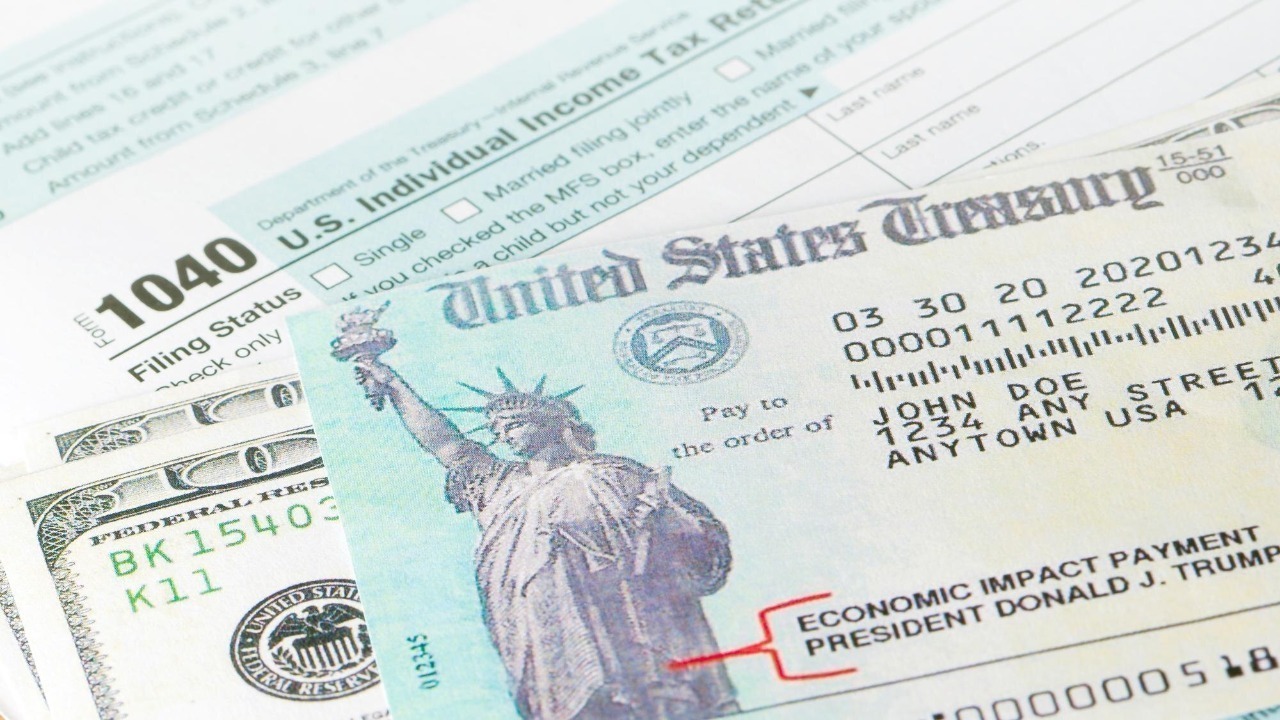
President Donald Trump has floated the idea of $2,000 relief tied to tariff revenue, but the details, timing and even likelihood of broad payments remain uncertain and heavily debated. I want to walk through five specific mistakes to avoid so that, if any $2,000 rebate or stimulus materializes, you protect your household finances instead of planning around promises that may shift or shrink.
1) Expecting $2,000 rebate checks before Christmas
The first mistake is assuming a firm holiday deadline for any $2,000 rebate. In a recent interview, President Donald Trump signaled that there would be no $2,000 checks before Christmas and suggested that any tariff-linked relief would be pushed into next year, a point reflected in reporting that he does not expect $2,000 checks to arrive before Christmas. If I build my December budget around money that is not scheduled to arrive, I risk missing rent, running up credit cards or skipping essential bills.
Complicating matters further, a separate clip of President Donald Trump discussing a “tariff dividend” shows him talking about sending $2,000 tariff dividend checks to individuals with moderate incomes by mid 2026, as seen in a video of his remarks. That kind of long runway means any holiday shopping or debt payoff plan that depends on an imminent $2,000 rebate is speculative at best. The safer move is to budget only around income I already have or can verify, and treat any future rebate as a bonus, not a lifeline.
2) Falling for the hype around Trump’s $2K stimulus check
The second mistake is taking campaign-style rhetoric about a $2,000 stimulus at face value without checking the underlying math. One economist has publicly warned Americans, “don’t fall for it,” arguing that the tariff-funded $2,000 idea is far less generous and far less certain than it sounds when President Donald Trump touts a big check for households, a caution detailed in coverage of an economist’s warning about the $2K stimulus pitch. When experts question whether tariff revenue can realistically support such payments, I need to factor that skepticism into my own planning.
Beyond the headline number, the structure matters. Tariffs can raise prices on imported goods, which means some families could pay more at the store than they ever receive in a rebate. If I only hear the $2,000 figure and ignore the possibility of higher costs or narrower eligibility, I may overestimate how much I will actually gain. Treating the proposal as a political promise rather than guaranteed income helps me avoid overcommitting to new expenses or long-term obligations.
3) Ignoring general pitfalls if Trump’s $2,000 stimulus check is approved
A third mistake is failing to prepare for the practical issues that arise if any $2,000 stimulus or rebate is eventually approved. Reporting on potential relief has already highlighted common mistakes people make when a $2,000 stimulus is on the table, including not updating direct deposit information, ignoring tax implications and using the money for impulse purchases instead of necessities. If I wait until a program launches to think about these basics, I could see delays or lose part of the benefit to avoidable fees and penalties.
There are also behavioral traps. Treating a one-time $2,000 payment as permanent income can lead to new subscriptions, car leases or buy-now-pay-later plans that outlast the money itself. A more resilient approach is to earmark any future check for high-interest debt, emergency savings or overdue essentials like utilities and medical bills. By planning ahead for how I would use such funds, I can turn a hypothetical windfall into a concrete strategy instead of a vague hope.
4) Overlooking costly errors with Trump’s $2,000 Tariff Dividend
The fourth mistake is ignoring the specific risks tied to a tariff-based “dividend.” Detailed guidance on Trump’s proposed tariff dividend has outlined six costly mistakes people could make with a $2,000 tariff dividend, from underestimating how tariffs might raise everyday prices to failing to coordinate the rebate with existing debt or benefits. If tariffs push up the cost of items like electronics, clothing or auto parts, the real value of a $2,000 check can shrink quickly.
Another overlooked risk is double-counting the benefit. Some households may assume they will receive the full $2,000 on top of other programs, when in reality eligibility rules or income thresholds could reduce or eliminate their payment. I should also consider how a lump-sum rebate might interact with income-based assistance such as SNAP or housing vouchers. Treating the tariff dividend as part of a broader financial picture, rather than a stand-alone gift, helps me avoid decisions that backfire months later.
5) Assuming immediate approval of Trump’s $2,000 stimulus check
The final mistake is acting as if approval is guaranteed and imminent. Even articles that walk through what to do “if” a $2,000 stimulus check is approved emphasize that the program is still conditional, and that President Donald Trump’s repeated references to $2,000 tariff rebate checks for low- and middle-income Americans remain proposals rather than finalized law, as reflected in reporting on potential mistakes around tariff stimulus checks. Until legislation is passed and implementation details are published, any spending based on that money is speculative.
For households under pressure, it is tempting to treat political promises as a timeline. I might delay seeking a side job, negotiating with creditors or applying for hardship programs because I expect a $2,000 check to solve everything. The safer course is to move forward with concrete steps that are within my control today, and only adjust once an actual program, eligibility rules and payment schedule are confirmed. That way, if the proposal stalls or shrinks, my financial stability does not collapse with it.
More From TheDailyOverview

Julian Harrow specializes in taxation, IRS rules, and compliance strategy. His work helps readers navigate complex tax codes, deadlines, and reporting requirements while identifying opportunities for efficiency and risk reduction. At The Daily Overview, Julian breaks down tax-related topics with precision and clarity, making a traditionally dense subject easier to understand.

