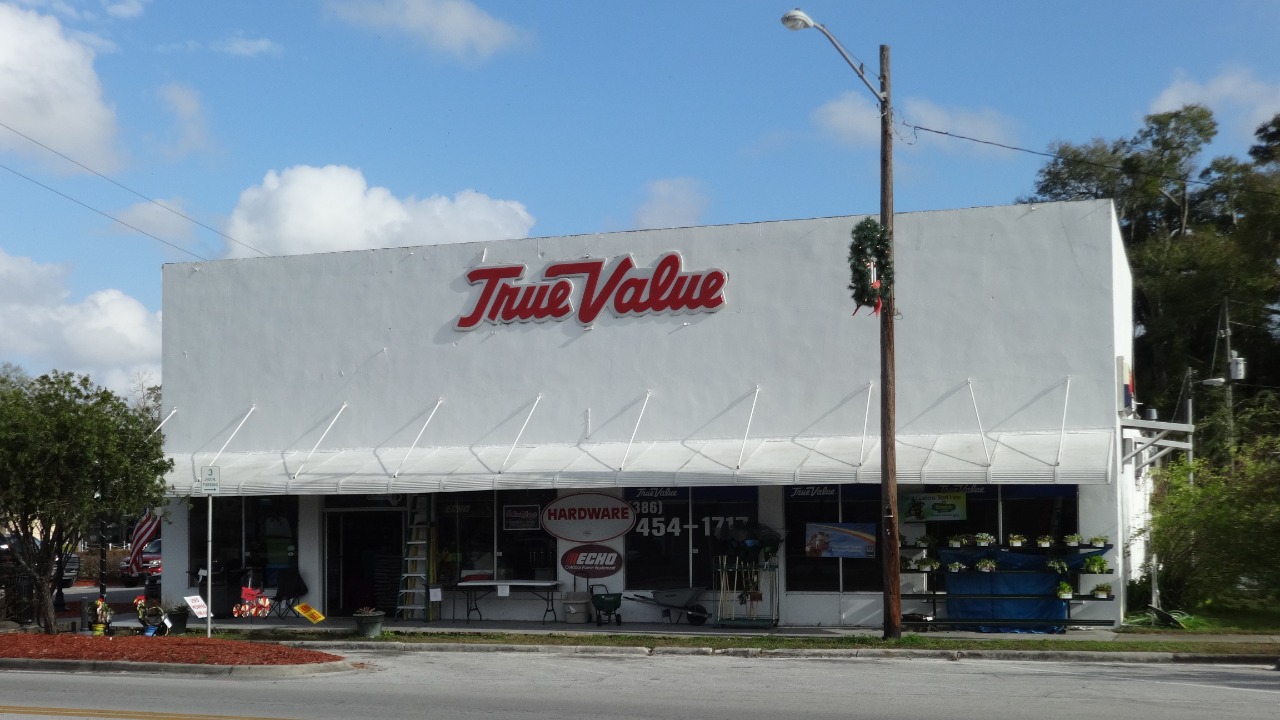
True Value Company, the decades-old hardware cooperative that built its name supplying independent retailers competing against big-box chains like Home Depot and Lowe’s, is ceasing operations as a standalone business. The company announced a sale agreement with fellow cooperative Do It Best and simultaneously initiated Chapter 11 proceedings in the U.S. Bankruptcy Court for the District of Delaware to facilitate the transaction. The deal effectively ends True Value’s run as an independent entity, raising hard questions about the future of smaller hardware retailers in a sector dominated by national chains.
A Cooperative Sale, Not a Collapse
The distinction between a structured sale and a disorderly liquidation matters here. True Value did not simply run out of cash and padlock its warehouses. Instead, the company entered into a definitive sale agreement with Do It Best and then filed Chapter 11 specifically to move that deal through the courts in an orderly fashion. Chapter 11, often misunderstood as a death sentence for businesses, is in this case a legal tool designed to transfer assets while keeping operations running. True Value’s retailer-owners can continue placing orders and serving customers during the process, which separates this outcome from the kind of abrupt shutdown that leaves employees and suppliers empty-handed.
That said, calling this anything other than the end of True Value as a going concern would be misleading. The company’s official statement made clear that the Chapter 11 filing exists to facilitate the sale to Do It Best, not to reorganize and emerge as an independent competitor. The brand may survive under new ownership, but the organization that ran it for decades will not. For the thousands of independent hardware store owners who relied on True Value’s distribution network, the practical question is whether Do It Best can absorb those relationships without disruption, preserving the supply chains that keep local stores stocked and viable.
Why True Value Could Not Go It Alone
True Value operated as a wholesale cooperative, meaning its member retailers collectively owned the company and purchased inventory through its distribution system. That model worked well for decades when local hardware stores were the primary option for homeowners. But the rise of Home Depot and Lowe’s, with their massive square footage, aggressive pricing, and national advertising budgets, steadily eroded the competitive position of independent stores. True Value’s member retailers found themselves squeezed between big-box pricing they could not match and supply chain costs that kept climbing, even as consumers became more comfortable buying tools and building materials online.
The cooperative structure itself created friction. Unlike a publicly traded corporation that can raise capital by issuing shares or a private company that can bring in outside investors, a cooperative depends on its members for financial support. When those members are themselves struggling small businesses, the money available for investment in technology, logistics, and marketing shrinks. True Value attempted various strategies over the years to modernize, from updating ordering systems to experimenting with new store formats, but the gap between its resources and those of its giant competitors kept widening. The sale to Do It Best represents an acknowledgment that the cooperative could no longer sustain itself independently in a market where scale increasingly determines survival, and where even regional chains are feeling pressure to bulk up or sell.
What Do It Best Gains From the Deal
Do It Best, headquartered in Fort Wayne, Indiana, is itself a member-owned cooperative serving independent hardware and lumber retailers. By acquiring True Value’s assets, Do It Best stands to significantly expand its distribution footprint and member base. The combined entity would serve a far larger network of independent stores, potentially giving those retailers better purchasing power and more efficient logistics. In theory, consolidating two cooperatives into one creates the kind of scale that individual small retailers cannot achieve on their own, allowing them to negotiate more favorable terms with manufacturers and to stock a broader assortment of products without sacrificing margins.
The risk, though, is execution. Merging two cooperative cultures, integrating distribution centers, and retaining True Value’s retailer-owners who may be skeptical of new management is a complex undertaking. Some True Value members may use the transition as an opportunity to switch to other buying groups or exit the business entirely, particularly if they fear changes to rebate structures or private-label assortments. Do It Best will need to demonstrate quickly that the combined operation offers tangible benefits, whether through lower wholesale prices, faster delivery, or better marketing support, to prevent defections during a vulnerable transition period. How the cooperative communicates with store owners in the coming months (on issues like credit terms, branding options, and inventory continuity) will shape whether this deal becomes a springboard for growth or simply a managed wind-down of a venerable name.
Independent Hardware’s Shrinking Middle Ground
The broader pattern here is consolidation driven by competitive pressure from national chains. Home Depot and Lowe’s together control an enormous share of the U.S. home improvement market, and their advantages in purchasing volume, real estate, and digital commerce are difficult for smaller players to counter. Independent hardware stores survive by offering personalized service, local expertise, and convenience in markets that big-box stores underserve. Many thrive by focusing on niche categories, contractor relationships, or community loyalty. But those advantages have limits, especially when consumers can order supplies online and have them delivered the same or next day, often at prices small retailers struggle to match.
True Value’s exit as an independent entity removes one of the established names that independent retailers could rally around. The consolidation into Do It Best may strengthen the surviving cooperative, but it also narrows the options available to store owners who want alternatives and reduces competitive tension among wholesalers. If Do It Best stumbles in integrating True Value’s operations, some retailers could find themselves without a reliable wholesale partner at a moment when they can least afford disruption. The deal is a bet that bigger is better for cooperatives, even as the broader market continues to favor the biggest players of all. For communities that have already lost local hardware stores to big-box competition, the outcome of this consolidation will influence whether remaining independents can hold their ground or whether more storefronts go dark on Main Street.
What Comes Next for Retailer-Owners
For the independent store owners who built their businesses around the True Value brand, the immediate future depends on how smoothly the bankruptcy court approves the sale and how quickly Do It Best can integrate operations. The Chapter 11 process, filed in the District of Delaware, is designed to move efficiently, but court proceedings carry inherent uncertainty. Creditor objections, regulatory reviews, or competing bids could extend the timeline or alter the terms of the deal. In the interim, retailers will be watching closely for any signs of strain in the distribution network (delayed shipments, reduced product availability, or changes in payment terms) that might signal deeper challenges beneath the legal choreography.
The practical reality for a hardware store owner in a small town is straightforward: they need inventory on their shelves and customers walking through the door. Whether the sign out front says True Value or Do It Best matters less than whether the trucks keep arriving on schedule and the wholesale prices remain competitive. Many store owners will have to decide whether to rebrand, join the Do It Best cooperative formally, or operate under an independent banner while still relying on the combined distribution system. The success or failure of this transaction will ultimately be measured not in courtroom filings but in whether independent retailers can still make a living selling hammers, paint, and plumbing supplies in communities where the nearest Home Depot might be a thirty-minute drive away, and where losing a local hardware store would mean losing a piece of the town’s everyday infrastructure.
True Value’s story is not one of sudden failure but of gradual erosion. A business model that thrived when hardware was a local affair struggled to adapt as the industry consolidated around a handful of dominant players and as technology reshaped how people shop for building materials. The sale to Do It Best offers a path forward for the brand and its retailers, but it also closes a chapter for one of the most recognizable names in American hardware. Whether the next chapter is written by a stronger cooperative that can meaningfully bolster independent stores, or by the continued advance of big-box retail and e-commerce giants, will depend on how effectively the combined organization can translate its new scale into real-world advantages for the people behind the counters of neighborhood hardware stores.
More From The Daily Overview
*This article was researched with the help of AI, with human editors creating the final content.

Grant Mercer covers market dynamics, business trends, and the economic forces driving growth across industries. His analysis connects macro movements with real-world implications for investors, entrepreneurs, and professionals. Through his work at The Daily Overview, Grant helps readers understand how markets function and where opportunities may emerge.