The idea that Venezuela is quietly sitting on a secret Bitcoin fortune worth $60 billion has rocketed around crypto circles, promising a geopolitical plot twist and a potential windfall for whoever controls it. The story is irresistible: a sanctioned petrostate, a digital escape hatch, and a stash that would rival the largest corporate treasuries in the world. I find that once the rumor is stripped of hype and measured against what is actually known, the narrative looks far less solid than its viral reach suggests.
There is a real history of cryptocurrency experimentation and improvisation inside Venezuela, and that history helps explain why the rumor caught fire so quickly. But the leap from scattered mining operations and failed state tokens to a hidden reserve of 600,000 Bitcoin is enormous, and the evidence that such a hoard exists is, at best, fragmentary and, at worst, nonexistent.
How a $60 billion rumor took hold
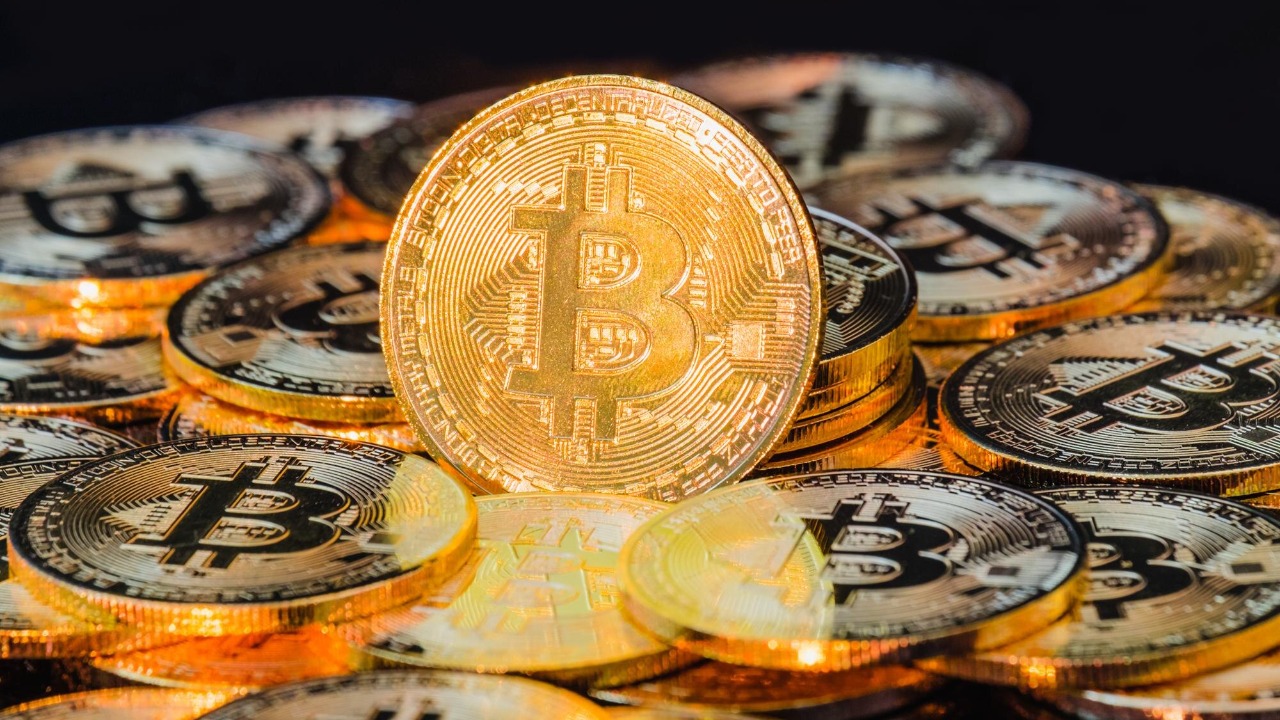
The current frenzy traces back to claims that Venezuela has quietly accumulated roughly 600,000 Bitcoin, a figure that, at recent prices, would translate into about $60 billion. In some tellings, this cache is described as a “shadow reserve,” a kind of off‑books war chest that would be nearly double the official holdings of some of the largest sovereign and corporate players in the market. I see why that framing resonates: it suggests that a country long locked out of traditional finance has outmaneuvered its creditors by stockpiling digital gold.
What gives the story extra punch is the way it taps into years of reports about corruption, embezzlement and missing public money in Venezuela, and then retrofits those scandals into a single, tidy explanation. Instead of billions vanishing into offshore accounts or shell companies, the rumor suggests that the funds were converted into Bitcoin and parked in a reserve that could be mobilized at a moment’s notice. The idea of a vast, hidden shadow reserve fits neatly with the country’s reputation for opaque finances, which is precisely why it has spread so quickly despite the lack of hard proof.
What analysts actually see on the blockchain
When I look past the narrative and focus on what can be observed on chain, the picture changes dramatically. Blockchain analytics firms and independent researchers have scoured transaction data for wallets that could plausibly be linked to the Venezuelan state and that might hold anything close to 600,000 Bitcoin. So far, Analysts Unsure Venezuela found no on‑chain proof that such a Bitcoin Reserve exists, and the figure of 600,000 coins remains a theoretical construct rather than a traceable reality.
The same skepticism shows up in broader reviews of the rumor. Detailed examinations of the supposed wallets, transaction patterns and timing of alleged purchases have not produced verifiable links to the Venezuelan government, and some of the addresses cited in online threads have already been tied to unrelated entities. One widely circulated assessment bluntly highlights Lack of Concrete for any $60 billion hoard, stressing that, Despite the appeal of the story, the data simply does not confirm that such a reserve is sitting untouched on the blockchain.
Venezuela’s real, messy crypto footprint
None of this means Venezuela has no relationship with digital assets. On the contrary, the country has spent years experimenting with crypto as its traditional economy has crumbled. In 2018, the government launched the Petro, a state‑backed token that was pitched as a way to monetize oil reserves and bypass sanctions. That project, promoted as a bold innovation, largely failed to gain traction, but it cemented Venezuela’s crypto connection in the public imagination and showed how far officials were willing to go in search of alternative funding channels.
At the same time, ordinary citizens have turned to Bitcoin and other digital assets as a hedge against the collapsing bolívar and as a tool for cross‑border payments. That grassroots adoption, combined with reports of state‑linked mining operations and ad hoc deals with foreign intermediaries, has created a dense fog of anecdotes around the country’s crypto activity. When I factor in that history, it becomes easier to see why a claim about a massive hidden reserve feels plausible to many observers, even if the leap from scattered mining rigs to a 600,000 coin stockpile is not supported by verifiable data.
Sanctions, Maduro and the appeal of a hidden stash
To understand why the rumor has staying power, I have to look at the incentives facing President Nicolás Maduro and his inner circle. For years, the Maduro administration has navigated a labyrinth of international sanctions that restrict access to global banking, oil markets and dollar funding. Faced with those constraints, officials have repeatedly turned to unorthodox financial channels, including barter arrangements, opaque intermediaries and, according to multiple accounts, digital assets that can move across borders without relying on traditional correspondent banks. That pattern is central to analyses of how Maduro has tried to keep the state afloat.
Experts who follow the region note that Bitcoin and other cryptocurrencies have likely played a role in sanctions evasion, emergency payments and discreet cross‑border trade. Some point to “billions in bitcoin” that may have passed through networks tied to the state or its business partners, a scale that, if even partially accurate, helps explain why the idea of a large stash is taken seriously. Yet when I look at detailed breakdowns of those flows, including commentary from market participants such as partner Diogo Mónica, the emphasis is on transactional use and opportunistic holdings, not on a carefully managed, long‑term sovereign reserve. The suggestion that the regime could be sitting on a big Bitcoin stash is framed as a possibility in Billions in bitcoin terms, not as a documented fact.
Why experts keep calling the story shaky
When I weigh the rumor against the available reporting, the throughline from specialists is consistent: the story is intriguing, but the foundations are weak. Analysts who track sovereign Bitcoin positions stress that there is no transparent accounting, no public declaration and no on‑chain cluster that convincingly matches a 600,000 coin holding attributed to the Venezuelan state. Some have gone further, saying they have identified any such despite targeted searches, which undercuts the notion that the reserve is simply hiding in plain sight.
Others point out that even if Venezuela had diverted significant sums into Bitcoin over the years, the volatility of the asset and the regime’s chronic need for hard currency would make it difficult to leave a $60 billion trove untouched. Detailed reviews of corruption cases and missing funds highlight how money has been siphoned off into private pockets or spent to maintain political patronage, rather than carefully preserved as a national endowment. One assessment of the rumor notes that Now that the claim is circulating widely, it is being tested against independent estimates of Venezuela’s holdings, and those estimates do not come close to confirming a reserve on the scale being touted.
Why the myth still matters
Even if the $60 billion figure never checks out, I think the myth tells us something important about how the world now sees both Bitcoin and fragile states. The idea that a government like Venezuela could quietly accumulate a stash of that size reflects a broader belief that digital assets have become a parallel financial system, one where sanctions, court orders and traditional oversight can be sidestepped. That belief is amplified by the country’s history of experiments like the Petro and by the way citizens have used crypto as a lifeline, which together reinforce the sense that Venezuela is deeply embedded in the digital asset ecosystem.
The rumor also exposes how easily complex realities can be compressed into a single, dramatic number. A mix of small‑scale mining, opportunistic trades and sanctions‑driven improvisation gets reimagined as a monolithic Bitcoin Reserve, and the nuance of what is actually happening on the ground is lost. As one detailed review of the saga puts it, Bradley Hope and others have helped popularize the idea of a colossal hoard, but the more technical community, including Analysts who specialize in tracing flows, keep coming back to the same conclusion: the story is big, the evidence is thin, and until hard data emerges, the $60 billion stash belongs more to the realm of speculation than to the ledger of confirmed sovereign wealth.
More From The Daily Overview

Grant Mercer covers market dynamics, business trends, and the economic forces driving growth across industries. His analysis connects macro movements with real-world implications for investors, entrepreneurs, and professionals. Through his work at The Daily Overview, Grant helps readers understand how markets function and where opportunities may emerge.