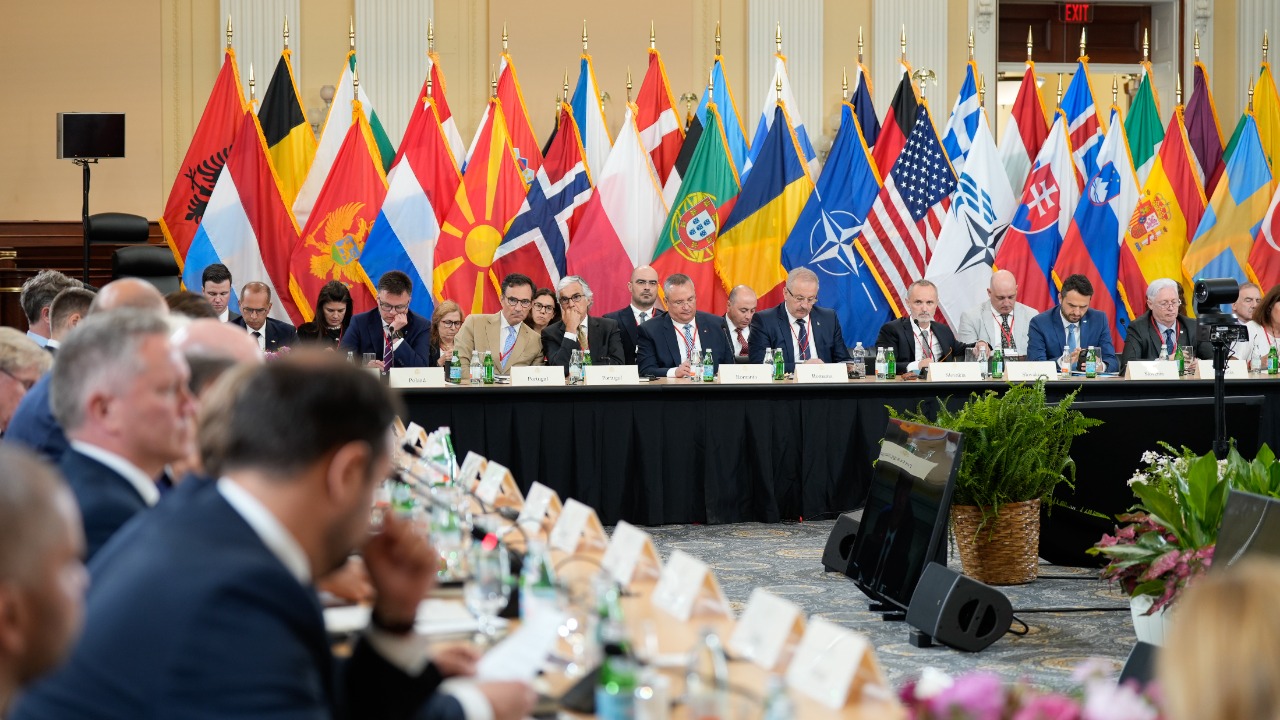
Across NATO, approval of Washington’s leadership has slumped while views of Beijing improve, and that shift is reshaping how key allies balance their security and economic bets. A recent poll of NATO members found that Washington and Beijing now draw similar ratings, echoing the pattern seen during Trump’s earlier term as President. I see eight allies whose policies, trade choices, and diplomatic outreach show how the alliance is splintering as they edge toward China.
1) Turkey
Turkey has become the clearest example of a NATO member hedging between Washington and Beijing. While remaining central to NATO’s Black Sea posture, Ankara has deepened economic and infrastructure cooperation with China, including projects linked to the Belt and Road Initiative and growing trade in energy and construction services. These moves coincide with a broader slide in U.S. leadership approval across NATO, which recent polling shows has fallen to levels comparable with Beijing’s standing.
That erosion of trust is not abstract. As Washington presses Turkey on defense procurement and human rights, Ankara has more leverage to seek financing, technology, and diplomatic cover from Beijing. A separate survey of NATO publics found that in several member states, Chinese leadership now matches or exceeds Washington in perceived reliability, reinforcing Turkey’s sense that it can play both sides. For NATO planners, a member that controls key straits yet cultivates Chinese capital complicates alliance cohesion and sanctions policy.
2) Greece
Greece illustrates how economic dependence can translate into geopolitical ambiguity. Chinese firms have invested heavily in Greek ports and logistics, turning Piraeus into a flagship Mediterranean hub for Chinese shipping. At the same time, U.S. leadership approval among Greek citizens has softened, in line with alliance-wide data showing Washington’s ratings dropping while Beijing’s edge upward. That combination encourages Athens to treat China as an indispensable economic partner even as it hosts NATO facilities.
According to a broader NATO poll, median approval of China’s leadership has risen as Washington’s has fallen, narrowing the perceived gap between the two powers. In Greece, that sentiment reinforces political arguments for a “multi-vector” foreign policy that resists automatic alignment with U.S. sanctions or technology controls. For NATO, a frontline state that leans on Chinese capital for recovery and infrastructure becomes less predictable in any future confrontation involving Taiwan or maritime chokepoints.
3) Iceland
Iceland is a small ally with outsized strategic value in the North Atlantic, and its evolving ties with China highlight how even remote states are recalibrating. Chinese interest in Arctic shipping routes, rare earths, and scientific research has translated into diplomatic outreach and proposed investments in Icelandic infrastructure and energy. These initiatives arrive as U.S. leadership approval among NATO publics declines, encouraging Reykjavik to keep its options open rather than rely solely on Washington’s security umbrella.
Regional analysts note that Arctic states are weighing how to benefit from Chinese capital without undermining alliance security. A research paper on greater security cooperation argues that European allies are hedging against the possibility of U.S. retrenchment by diversifying economic partners. Iceland’s cautious engagement with Chinese projects fits that pattern, raising questions inside NATO about how to protect undersea cables, airspace, and maritime routes if Beijing’s footprint in the Arctic grows.
4) Slovenia
Slovenia has quietly emerged as another NATO member reassessing its balance between Washington and Beijing. As a small Central European economy, it has courted Chinese investment in manufacturing and logistics, while public opinion data show U.S. leadership approval slipping across the alliance. A separate survey of NATO countries, conducted as a broad-based poll, found that in several smaller states Chinese leadership now scores close to Washington, giving governments political cover to deepen economic ties with Beijing.
Slovenia’s participation in regional connectivity schemes linked to China, alongside its role in EU decision making, gives Beijing an indirect voice in debates over technology standards and infrastructure funding. At the same time, U.S. pressure on allies to exclude Chinese vendors from critical networks has fueled domestic arguments about sovereignty and economic opportunity. For NATO, a member that sees China as a key export market and investor may be less willing to back hard-line measures if U.S. approval continues to erode.
5) Luxembourg
Luxembourg is best known inside NATO for its financial sector, and that is precisely where China’s influence is growing. As Chinese companies seek European listings and access to capital, Luxembourg’s funds industry and stock exchange have become important gateways. This financial interdependence is unfolding while alliance-wide polling shows Washington’s leadership ratings dropping and Beijing’s improving, narrowing the perceived reputational gap between the two capitals.
Those shifts matter because Luxembourg punches above its weight in EU regulatory debates on finance and data. If policymakers there view Chinese issuers and investors as core clients, they may resist U.S. efforts to tighten screening of Chinese capital flows. The broader trend, captured in a survey of NATO attitudes, links growing skepticism of U.S. military interventions to a willingness to see China as an alternative partner.
6) Bulgaria
Bulgaria sits on NATO’s eastern flank, yet its economic gaze is increasingly drawn eastward to China. Chinese firms have targeted Bulgarian transport corridors and energy assets, positioning the country as a potential bridge between the Black Sea and Central Europe. These moves coincide with alliance-wide data showing that Washington and Beijing now receive similar approval ratings within NATO, a striking reversal from earlier years when U.S. leadership enjoyed a clear advantage.
Domestic politics amplify that trend. Bulgarian leaders can point to Chinese infrastructure offers as alternatives when EU or U.S. funding appears slow or conditional, reinforcing a narrative of diversification. A detailed NATO survey notes that approval of Washington’s leadership has fallen while views of Beijing rose eight points in 2025 to 22 percent, underscoring why Sofia feels less pressure to align reflexively with U.S. preferences on sanctions or technology controls.
7) Spain
Spain is a major NATO power where the reputational slide of U.S. leadership has been particularly sharp. Data compiled on alliance attitudes show that in countries such as Germany and Portugal approval of Washington’s leadership has fallen by 39 percent and 38 percent, and Spain tracks the same downward pattern. At the same time, perceptions of China have improved, with a Statista analysis noting that views of Chinese leadership have strengthened in several NATO states.
That shift is visible in policy debates over 5G, electric vehicles, and green technology, where Spanish firms see Chinese partners as essential suppliers and investors. A separate chart of approval underscores how rising confidence in Beijing’s leadership is reshaping commercial calculations. For NATO, a large southern member that increasingly weighs Chinese market access against U.S. strategic demands could dilute consensus on sanctions, export controls, and naval deployments in the Indo-Pacific.
8) Canada
Canada has long been one of Washington’s closest allies, yet even there the approval gap with China is narrowing. Polling across NATO shows that Washington and Beijing now receive similar ratings, a finding that would have been unthinkable a decade ago. Canadian policymakers are responding with a dual-track strategy, tightening security screening of Chinese investments while still courting Chinese demand for commodities and clean technology.
That balancing act is shaped by global supply chains. A recent report on critical metals noted that China temporarily lifted export bans on gallium, germanium, and rare earth elements after weeks of high-level engagement between Washington and Beijing. As Canada ramps up its own mining initiatives in these sectors, it must navigate a NATO environment where U.S. approval is slipping and several allies are more openly receptive to Chinese leadership, complicating alliance unity on technology and trade policy.
More From The Daily Overview
*This article was researched with the help of AI, with human editors creating the final content.

Grant Mercer covers market dynamics, business trends, and the economic forces driving growth across industries. His analysis connects macro movements with real-world implications for investors, entrepreneurs, and professionals. Through his work at The Daily Overview, Grant helps readers understand how markets function and where opportunities may emerge.

