The sudden collapse of an 88-year-old Southern cafeteria chain has turned what should be a season of comfort into a scramble for paychecks and answers. Thousands of workers now face holiday layoffs, while longtime customers are processing the loss of a regional institution that fed generations at modest prices. The chain’s abrupt shutdown is more than a business failure, it is a warning flare for an entire corner of the restaurant industry that has struggled to adapt to new economic and cultural realities.
The shock of an 88-year-old institution going dark
When a restaurant brand survives for 88 years, it tends to feel permanent, like part of the landscape rather than a business that can simply vanish. That sense of permanence shattered when K&W Cafeteria, a North Carolina based chain that helped define the classic Southern cafeteria experience, closed its doors with little warning. For workers who had built careers there and families who treated it as a weekly ritual, the shutdown was not just another retail headline, it was the end of a shared routine that had quietly structured daily life across multiple communities.
The chain’s age is not just a sentimental detail, it is central to understanding the scale of the disruption. An 88-year-old southern chain that had weathered wars, recessions, and shifting food fads finally buckled in a year already defined by restaurant closures. Its longevity had masked how fragile the underlying business had become, and the abruptness of the shutdown underscored how quickly a legacy brand can unravel once the economics no longer work.
How the closures unfolded with almost no warning
The way the shutdown played out made the blow even harsher. Employees arrived expecting another routine shift and instead found out that the company was finished. On a Monday morning, over 300 K&W Cafeteria workers learned that their jobs were gone, with the news landing just as households were budgeting for holiday travel, gifts, and higher winter utility bills. That kind of surprise layoff strips workers of the basic ability to plan, turning what might have been a managed transition into an immediate financial emergency.
Reporting on that Monday morning announcement describes a chain that did not stage a slow fadeout but instead flipped the sign from “open” to “closed” almost overnight. That pattern held across the system. Workers and diners alike were left to piece together what had happened from hurried messages and locked doors, a jarring end for a company that had once prided itself on predictability and routine.
North Carolina communities lose a familiar anchor
The closures hit especially hard in North Carolina, where K&W Cafeteria was more than just another place to grab a plate of baked chicken or vegetables. The brand’s roots in the state ran deep, and its dining rooms functioned as informal community centers where church groups, retirees, and families gathered after school events or Sunday services. When the company shut down every location with no warning, it left a patchwork of towns suddenly without a familiar meeting place that had quietly stitched together daily life.
Accounts of the 88-year-old North Carolina cafeteria shutting down describe how, on December 1, 2025, K&W Cafeteria closed all of its locations at once. That single day effectively erased a regional chain that had been woven into the state’s identity, from suburban shopping centers to older strip malls. For many North Carolina residents, the loss is not just about where to eat, it is about the disappearance of a shared space that felt safe, affordable, and reliably local.
A nearly 90-year run ends in WINSTON-SALEM
The emotional center of the story sits in WINSTON and SALEM, where K&W Cafeteria’s history is most closely tied to the city’s own evolution. For almost 90 years, the chain’s flagship locations served as a kind of living archive of mid-century Southern dining, complete with cafeteria lines, trays, and a menu that changed slowly, if at all. When the North Carolina based restaurant chain abruptly closed its doors, it felt to many locals like a chapter of WINSTON-SALEM’s civic story had been torn out.
Coverage of the North Carolina-based restaurant chain notes that K&W Cafeterias had been operating for almost 90 years, a span that saw WINSTON-SALEM shift from a tobacco and textile hub to a more diversified economy. Through all of that, the cafeteria line remained a constant. Its disappearance now leaves a hole that newer fast casual concepts, with their app-based ordering and minimalist interiors, are unlikely to fill in quite the same way.
What made K&W Cafeteria feel irreplaceable
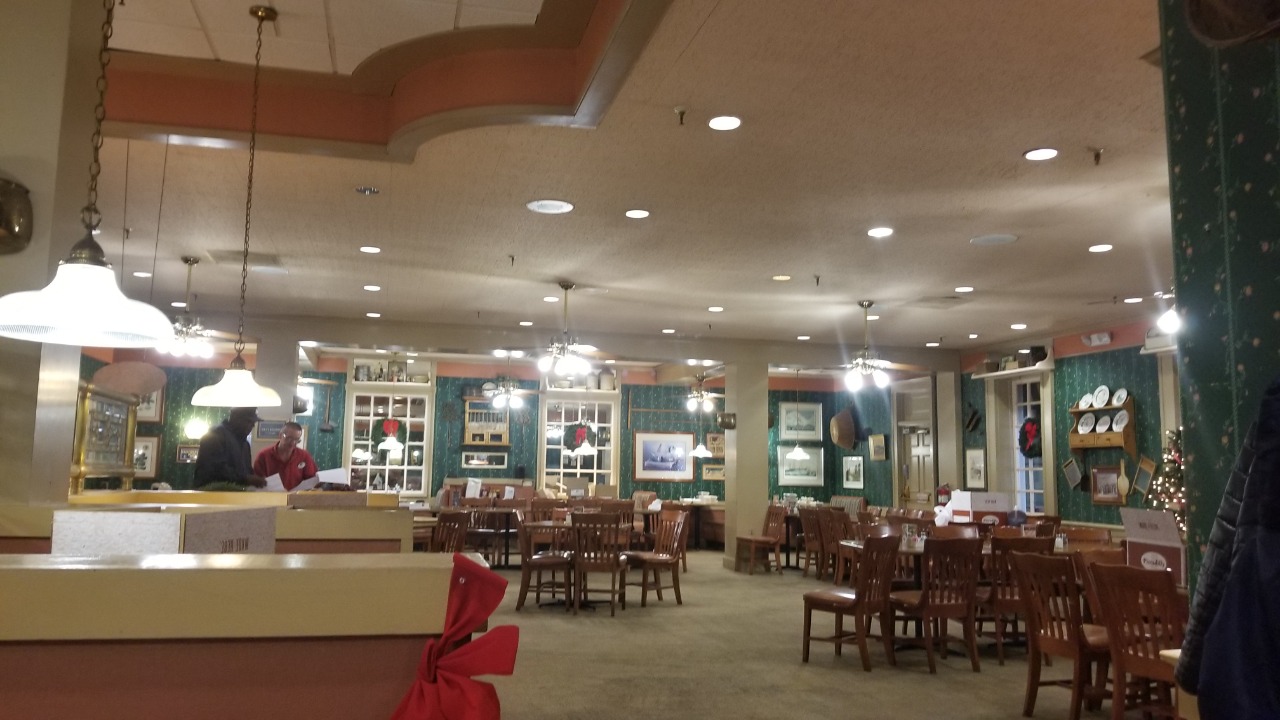
Part of what stings about the collapse is how specific the experience of eating at K&W Cafeteria was. The chain built its reputation on straightforward, homestyle cooking served in generous portions at prices that made it accessible to working families and retirees on fixed incomes. Regulars knew they could count on familiar staples like baked chicken, vegetables, and pies, served on real plates in a dining room where lingering over coffee was not just tolerated but expected.
Descriptions of the cafeteria-style eatery emphasize how K&W Cafeteria leaned into that identity, offering affordable, homestyle meals that felt more like a church potluck than a corporate chain. That formula created a kind of intergenerational loyalty that is hard to manufacture in an era of algorithm-driven menus and limited-time offers. Losing it means losing a particular flavor of Southern hospitality that lived in the rhythm of the line, the clatter of trays, and the quiet familiarity between staff and regulars.
Behind the scenes, a decade of decline
As sudden as the final closure felt, the underlying business had been weakening for years. Behind the scenes, K&W’s model was in decline for more than a decade, squeezed by rising labor and food costs, changing consumer tastes, and the slow erosion of the mall and strip-center traffic that once fed its dining rooms. The cafeteria format, which depends on steady footfall and high volume, became harder to sustain as more diners shifted to drive-thru lanes, delivery apps, and fast casual concepts that promised customization and speed.
Reporting on the beloved Southern restaurant chain notes that in the mid-2010s the company operated 33 stores across multiple states, but sales at each restaurant were already slipping. Like many other restaurants, its revenue crashed during the pandemic, which forced management into a cycle of cost cutting and closures that ultimately could not save the brand. By the time the final announcement arrived, the chain had been fighting a losing battle against structural headwinds for years.
From 33 stores to zero: the numbers behind the collapse
The scale of the contraction is stark when you look at the numbers. In the mid-2010s, K&W Cafeteria’s 33 locations gave it a meaningful footprint across the South, large enough to support centralized operations but still small enough to feel regional rather than national. Each store represented dozens of jobs, from line cooks and dishwashers to managers and part-time servers, along with a web of local suppliers who depended on steady orders of meat, produce, and baked goods.
As sales declined at each restaurant, the math that had sustained those 33 stores no longer worked. The same reporting that tracks the chain’s 33 stores also details how the pandemic’s shock accelerated that decline, pushing already thin margins into the red. Once the company began closing units, it lost the economies of scale that had helped it negotiate with suppliers and spread overhead, creating a feedback loop that made a full shutdown increasingly likely.
Holiday layoffs and the human cost
For the workers caught in the middle, the timing could hardly be worse. Holiday layoffs are painful in any industry, but in food service, where wages are often low and savings thin, losing a job in late November or early December can mean immediate choices between rent, groceries, and gifts for children. The collapse of this 88-year-old chain has left thousands of employees scrambling to line up new work in a crowded seasonal labor market that is already flooded with temporary retail and hospitality jobs.
The report on the thousands of workers facing holiday layoffs underscores how the shutdown ripples beyond the immediate staff. Families that relied on steady cafeteria paychecks now have to navigate unemployment systems, patch together gig work, or lean on relatives at a time when household budgets are already stretched by inflation. The loss of a familiar workplace also severs social ties, from co-workers who have shared shifts for years to regular customers who knew servers by name.
What the collapse signals for Southern cafeterias
The fall of K&W Cafeteria is not just a local story, it is a signal about the future of the cafeteria model across the South. For decades, these restaurants thrived on a mix of affordability, routine, and a kind of quiet egalitarianism, everyone grabbed a tray and moved through the same line. Today, that model is under pressure from fast casual brands that promise customization, national breakfast chains that operate around the clock, and delivery platforms that have trained customers to expect meals at their door rather than on a plastic tray.
Even as some Southern cafeterias try to modernize with online ordering or refreshed interiors, the core economics remain challenging. The existential questions facing K&W Cafeteria are mirrored in other regional players, from smaller independents to larger brands that share similar cost structures and customer bases. The chain’s long history, its deep roots in places like North Carolina, and its role as a community gathering spot, all documented in coverage of the cafeteria locations, now serve as a case study in how quickly a beloved format can slide from staple to endangered species. For diners who grew up moving a tray down a steam table line, the loss is personal, but for the industry, it is a strategic warning that nostalgia alone cannot keep the lights on.
More From TheDailyOverview

Grant Mercer covers market dynamics, business trends, and the economic forces driving growth across industries. His analysis connects macro movements with real-world implications for investors, entrepreneurs, and professionals. Through his work at The Daily Overview, Grant helps readers understand how markets function and where opportunities may emerge.