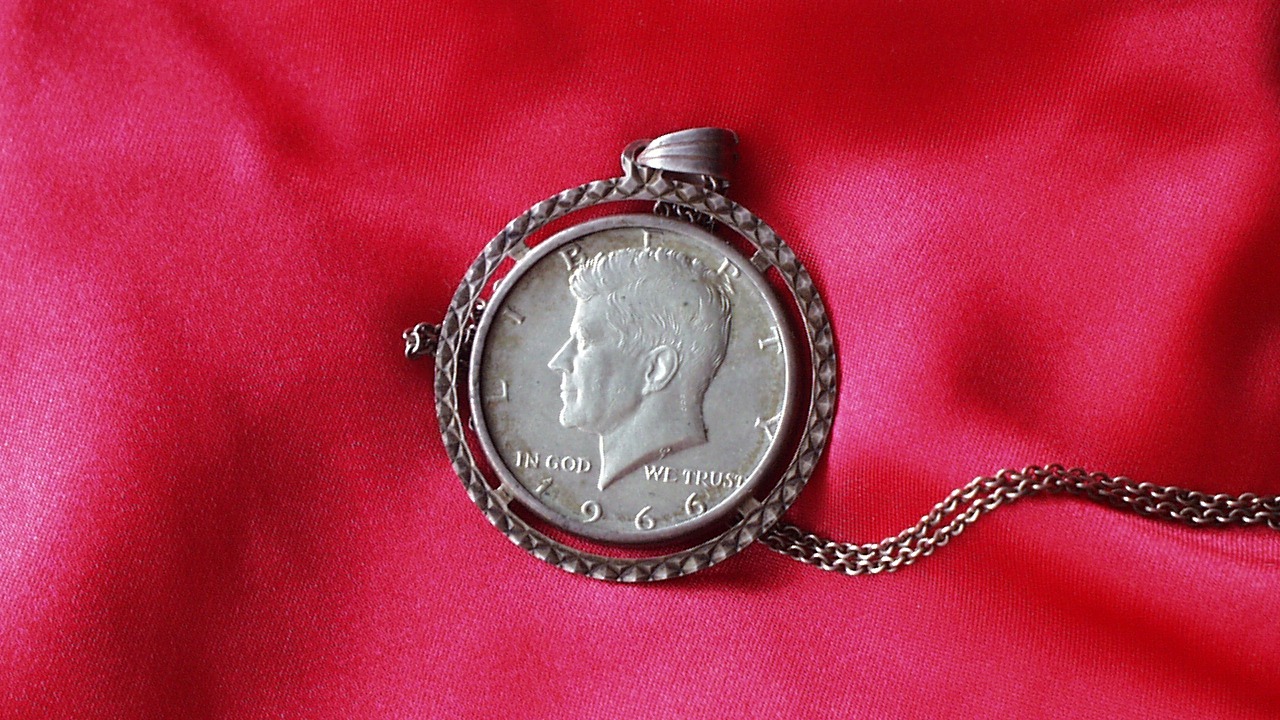
Kennedy half dollars still turn up in pocket change and bank rolls, but a handful of dates and varieties are worth far more than face value. I focus here on nine standout issues that auction records and specialist guides flag as surprisingly valuable, showing how small design tweaks, special finishes, and silver content can turn a 50‑cent piece into a serious collectible.
1) 1964 Special Mint Set Kennedy Half Dollar
The 1964 Special Mint Set Kennedy Half Dollar is the classic example of a coin worth far more than most collectors expect. Coverage of Kennedy Half Dollars Worth Far More Than Most Collectors highlights this Special Mint Set piece, often abbreviated as SMS, as a standout rarity. Struck in a finish that sits between proof and standard circulation, it shows unusually sharp details and satin-like surfaces that separate it from regular 1964 issues. Because so few were produced, certified high-grade examples can command strong four- or even five‑figure prices.
The stakes for collectors are clear: a coin that looks like an ordinary early Kennedy can actually be a Special Mint Set Kennedy Half Dollar worth hundreds of times its face value. Specialists look for squared-off rims, crisp lettering, and a distinctive texture that differs from proof mirror fields. For anyone searching inherited collections or dealer junk boxes, recognizing this finish can mean the difference between spending fifty cents and uncovering a major rarity.
2) 1964 Accented Hair Proof Kennedy Half Dollar
The 1964 Accented Hair Proof Kennedy Half Dollar is one of the Rare Kennedy Half Dollars Collectors Want Most, and it is singled out in detailed guides to early proofs. Reporting on the Accented Hair Proof Kennedy Half Dollar notes that this early proof variety stands apart from regular proofs because of extra hair detail above John F. Kennedy’s ear. That sharper, more textured hair design was reportedly modified after Jacqueline Kennedy requested a softer portrait, leaving a relatively small population of Accented Hair pieces.
For collectors, the implication is that a subtle design nuance can translate into a major price premium. Accented Hair proofs in top grades are aggressively pursued, and even mid‑range certified examples trade well above common proof values. Because the difference is visible without magnification once you know what to look for, this variety rewards careful inspection of proof sets that many families still keep in original Mint packaging.
3) 1964 90% Silver Kennedy Half Dollar
The 1964 90% silver Kennedy half dollar is not rare in the same way as a special variety, but its metal content alone makes it worth more than face value. A detailed table of Melt Values of Silver Coins lists each Coin, its Composition, and a Melt Value Updated figure that tracks bullion prices. For a 90% silver half dollar, that melt value routinely exceeds fifty cents by a wide margin, even before any numismatic premium is considered.
Because millions were struck, circulated examples often trade close to their silver melt value, while uncirculated rolls and high‑grade pieces can bring more. The key takeaway is that any 1964 Kennedy half dollar is fundamentally a small silver investment. For people who treat half dollars as pocket change, understanding the underlying bullion value can change how they handle bank rolls, coin jars, and estate accumulations.
4) 1965–1969 40% Silver Kennedy Half Dollars
The 1965–1969 Kennedy half dollars, struck in 40% silver, are another group that quietly outperforms face value. Although their Composition is lower than the 1964 issue, they still appear in modern melt charts alongside other Kennedy silver pieces that trade based on bullion. As silver prices move, the intrinsic value of these coins rises and falls, but it consistently sits above fifty cents, which means even worn examples are worth pulling from circulation.
For collectors and small-scale investors, these 40% silver halves offer a lower-cost entry point into precious metal coinage. They also illustrate how policy changes in the 1960s, which gradually reduced silver content, created distinct sub‑series within the Kennedy design. Anyone sorting bank rolls or casino rejects can benefit from recognizing the 1965–1969 date range and setting these coins aside for their silver value and modest collector demand.
5) 1970-D Kennedy Half Dollar
The 1970-D Kennedy half dollar is a key date because it was not released for general circulation, appearing only in Mint sets. Guides to Kennedy Half Dollars explain that US Mint designers Gilroy Roberts and Frank Gasparro created the design in response to national demand for a memorial coin, and later dates like 1970-D saw sharply reduced mintages. Because this issue was confined to collector sets, many were preserved in high grade, but relatively few ever entered change.
That limited distribution means even circulated 1970-D halves can sell for several dollars, while uncirculated examples from intact Mint sets bring more. For people who inherit old government-packaged sets, recognizing the 1970-D as a semi‑key can influence whether they break the set apart or keep it intact. It also underscores how mintage decisions at the Mint can quietly create scarcity that only becomes obvious decades later.
6) 1974-D Doubled Die Obverse Kennedy Half Dollar
The 1974-D doubled die obverse Kennedy half dollar is a variety that transforms a common date into a sleeper worth serious attention. Specialists point to strong doubling on the inscriptions, especially “IN GOD WE TRUST,” as the diagnostic feature that separates it from ordinary Denver‑minted halves. Because the base 1974-D issue is abundant, most examples still circulate unnoticed, which is why this variety fits the theme of coins worth far more than casual observers realize.
For collectors, the stakes lie in careful examination. A single 1974-D with clear doubling can be worth dozens of times face value, particularly in higher grades. Roll hunters and bank customers who take the time to inspect lettering and dates can uncover these varieties at minimal cost, turning routine change-checking into a potentially profitable habit.
7) 1979-S Type 2 Proof Kennedy Half Dollar
The 1979-S Type 2 proof Kennedy half dollar, distinguished by a clearer, more well-defined “S” mintmark, is another modern issue that commands a premium. Proof sets from this era contain either the more common Type 1 mintmark or the scarcer Type 2, and collectors pay up for the latter because of its lower production and sharper appearance. Identifying the mintmark style requires only a modest magnifier, which makes this an accessible hunt for beginners.
In the broader market, the Type 2 proof shows how small typography changes can drive value. Dealers often sort bulk proof sets to pull out these varieties, then price them individually at several times the cost of an ordinary proof. For families with late‑1970s proof sets in drawers, checking the mintmark style can reveal an unexpectedly valuable coin hiding in plain sight.
8) High-Grade Modern Kennedy Half Dollars
High-grade modern Kennedy half dollars from the 1980s, 1990s, and beyond can also be worth far more than their face value when certified at top population levels. While most circulation strikes from these decades are common, coins that grade at the very top of the scale, such as MS‑67 or MS‑68, are scarce because of bag marks and handling. Registry set collectors compete fiercely for these finest-known pieces, driving prices well beyond what casual collectors might expect.
Modern price trends show that condition rarity can matter as much as mintage. A coin that appears ordinary in a pocketful of change might, if perfectly preserved and professionally graded, bring a strong premium. For everyday holders, this dynamic underscores the value of careful storage, minimal handling, and, when a coin looks flawless, considering third‑party certification to unlock its full market potential.
9) Special Strikes Highlighted by Record Prices
Special strike Kennedy half dollars, including rare presentation and experimental pieces, have achieved headline-making results that prove how far values can climb. Coverage of Rare Kennedy Half Dollars Worth Far More Than You notes a Record Price of $156,000 for a special strike graded PCGS SP68 and sold by Stack in 2019, a figure that dwarfs typical collector expectations. That sale underscores how unique finishes and limited distribution can transform a half dollar into a six‑figure rarity.
For the market, such Record Price results ripple outward, raising awareness of special strikes and prompting closer scrutiny of unusual surfaces or packaging. Collectors who understand the difference between standard proofs, circulation strikes, and special strikes are better positioned to spot outliers. Even if most people never encounter a six‑figure Kennedy, knowing that such coins exist reinforces why careful research and authentication matter whenever an unusual half dollar appears.
More From TheDailyOverview

Cole Whitaker focuses on the fundamentals of money management, helping readers make smarter decisions around income, spending, saving, and long-term financial stability. His writing emphasizes clarity, discipline, and practical systems that work in real life. At The Daily Overview, Cole breaks down personal finance topics into straightforward guidance readers can apply immediately.

