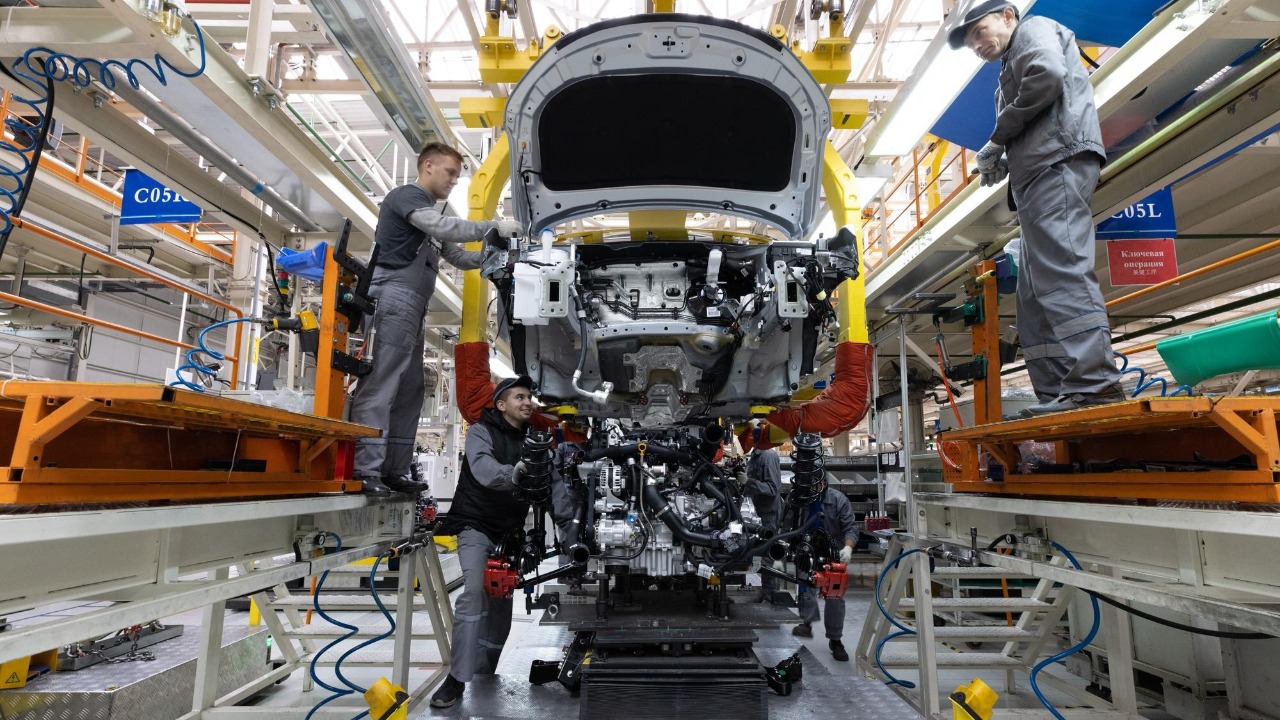
The sudden collapse of a $148 million electric truck maker has left 900 people without pay, benefits, or a clear path forward, turning a decade of promise into a case study in how quickly a high‑growth dream can unravel. What began as a bold bet on battery‑powered work trucks has ended in a pay blackout that exposes how fragile life can be inside a venture‑backed startup once the money stops flowing. For workers, investors, and local economies tied to the plant, the shutdown is less about technology and more about what happens when basic obligations like payroll are treated as optional.
The $148 million promise that never reached the road
From the outside, the company looked like a classic success story in the making: an EV startup that had attracted $148 million in backing and spent ten years pitching a new generation of electric trucks to fleet buyers and early adopters. The firm, identified in multiple reports as Bollinger Motors, positioned itself as a rugged alternative to passenger EV brands, talking up boxy prototypes and commercial platforms that could haul tools and cargo as easily as a diesel pickup. Yet after a decade of engineering, marketing, and fundraising, the company still had 0 products in customers’ hands, a gap that became impossible to ignore once capital markets tightened and patience ran out.
That mismatch between money raised and vehicles delivered is at the heart of the collapse. Investors effectively funded a ten‑year experiment that never crossed the line from prototype to production, even as the company’s valuation and headcount grew. When the end came, it came abruptly: the entire staff was left unpaid, with no transition, no severance, and no soft landing that might have cushioned the blow. The shutdown of the $148M EV startup is a stark reminder that in this corner of the auto industry, even well‑funded players can fail before a single VIN is stamped.
How 900 workers lost pay overnight
For the 900 people on the payroll, the company’s financial story only mattered once it collided with their own. According to detailed accounts of the shutdown, employees discovered almost in real time that their wages were not arriving, their benefits were in limbo, and their jobs were effectively gone. Many had already endured months of uncertainty, including delayed paychecks and shifting explanations about the company’s cash position, before the final announcement confirmed that the automaker could no longer meet the most basic obligation of any employer, paying its staff. The shock was not just that the business failed, but that it failed in a way that left workers exposed with no warning and no buffer.
Reporting on the collapse describes a workforce that had been whittled down through multiple restructurings, only to be told at the end that there was nothing left for them at all. The figure of 900 employees is not an abstract statistic; it represents engineers who relocated for specialized roles, line workers who trained on new assembly processes, and support staff who believed they were helping build a long‑term enterprise. When the company finally admitted it could not cover payroll, those 900 workers effectively lost both their income and their trust in management overnight. The scale of that loss is captured in coverage of how 900 workers lose pay overnight after the $148 million automaker’s collapse, a phrase that now doubles as a shorthand for corporate failure.
A year‑long collapse in employment
What looks like an overnight disaster for workers was, inside the company, a year‑long collapse in employment that unfolded in slow motion. Earlier rounds of layoffs had already cut deeply into the organization, as leadership tried to stretch remaining funds while still claiming that production was just over the horizon. Each restructuring chipped away at morale and institutional knowledge, leaving smaller teams to shoulder larger workloads and raising quiet questions about whether the business model still made sense. By the time the final shutdown arrived, the workforce had already been compressed through multiple rounds of cuts, a process that masked the true scale of the unraveling until the last paychecks failed to clear.
Accounts of the final months describe a pattern that will be familiar to anyone who has lived through a failing startup: missed payrolls, hurried internal messages, and a human resources department caught between legal obligations and dwindling cash. The company’s own human resources director is cited as having to manage layoffs across multiple rounds of restructuring, a role that turned one department into the face of a broader financial crisis. The phrase “A Year‑Long Collapse in Employment Bollinger” appears in coverage of the truck maker’s decline, underscoring how the Year Long Collapse Employment Bollinger was not a single event but a drawn‑out contraction that culminated in hundreds of layoffs and a final closure.
Inside the culture of missed payrolls
Missed payroll is not just a financial data point, it is a cultural turning point inside any company. Once employees realize that their employer cannot reliably deliver wages, every other promise, from future raises to product launches, starts to look suspect. In the case of Bollinger Motors, the pattern of missed or delayed paychecks signaled that the leadership was effectively asking workers to extend an involuntary loan, using their unpaid labor as a bridge to an uncertain future funding round or acquisition. That dynamic erodes trust faster than any product delay, because it shifts risk from investors, who knowingly back a speculative venture, to employees, who typically sign on expecting at least basic financial stability.
I see that shift as one of the most corrosive aspects of the collapse. When a company normalizes missed payrolls, it implicitly tells staff that their time and obligations outside work are secondary to the firm’s survival. People who have rent due, medical bills, or childcare costs cannot simply “ride out” a rough patch without consequences. The reporting on the truck maker’s shutdown makes clear that hundreds of workers were left to absorb those consequences personally, even as the company’s backers had already had a decade to manage their exposure. That imbalance between who took the risk and who paid the price is what turns a business failure into a broader labor story.
What this collapse signals for EV workers
The implosion of a $148 million EV startup with 0 products on the road is not just an isolated misstep, it is a warning sign for workers across the electric vehicle sector. As more automakers chase the same pool of capital and customers, the pressure to show rapid progress can tempt leaders to overpromise on timelines and underplay financial strain. For employees, especially those considering offers from early‑stage manufacturers, the Bollinger Motors saga is a reminder to look beyond glossy prototypes and investor decks. Questions about cash runway, revenue, and contingency plans for payroll are no longer just for venture capital term sheets, they are essential due diligence for anyone whose livelihood depends on the next funding round closing.
I also see a broader policy question emerging from this kind of collapse. When 900 people lose pay overnight at a single employer, the shock ripples through local housing markets, small businesses, and public services that rely on stable employment. Yet in most jurisdictions, there is little to stop a company from running right up to the edge of insolvency while still assuring staff that everything is under control. The story that began with Dec coverage of 900 workers and a $148 million valuation now reads like an argument for stronger guardrails, from stricter rules on how missed payrolls are handled to clearer disclosure requirements when a company is effectively out of options. For the workers left unpaid, those reforms will come too late, but their experience is already reshaping how others in the EV industry think about risk, reward, and the real cost of a failed bet.
More From TheDailyOverview

Grant Mercer covers market dynamics, business trends, and the economic forces driving growth across industries. His analysis connects macro movements with real-world implications for investors, entrepreneurs, and professionals. Through his work at The Daily Overview, Grant helps readers understand how markets function and where opportunities may emerge.

