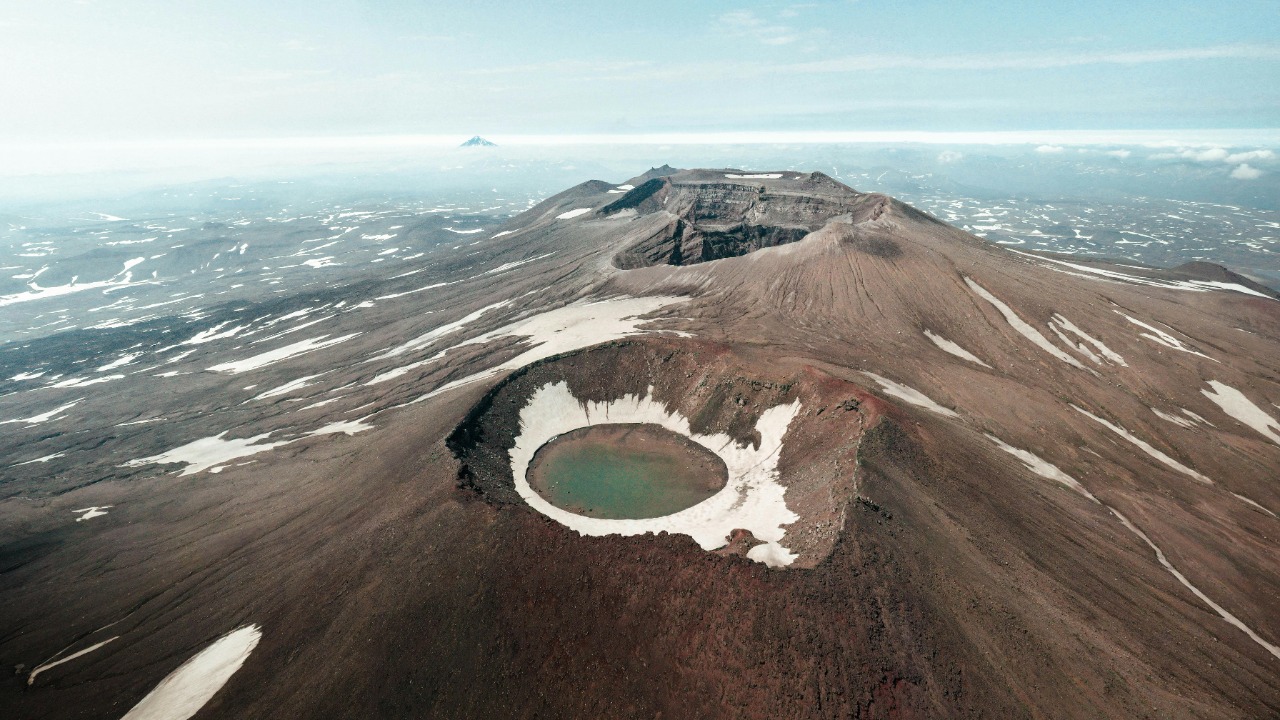
The United States is suddenly sitting on what looks like a once‑in‑a‑generation mineral windfall: a volcanic trove of lithium, the “white gold” that underpins electric vehicles, smartphones, and grid batteries. Geologists and energy analysts now estimate that a single supervolcano complex could hold a lithium resource valued at roughly $1.5 trillion, enough to reshape global supply chains and the balance of power in clean technology. The discovery arrives just as demand for battery metals is accelerating, turning a remote stretch of the West into a strategic prize.
At its core, this jackpot is about far more than a big number. It is about whether the United States can convert buried wealth into secure, responsibly produced energy materials without repeating the environmental and social mistakes of past mining booms. The choices made in the next few years will determine whether this lithium stays a geological curiosity or becomes the backbone of a new industrial era.
Inside the $1.5 trillion volcanic find
The heart of the story lies in a 16‑million‑year‑old volcanic crater in the American West, where researchers say they have confirmed what may be the world’s largest lithium deposit. Studies of the McDermitt Caldera, a vast ancient supervolcano, indicate that its clay‑rich rocks and sediments could contain lithium worth about $1.5 trillion, a figure that instantly places the site among the most valuable mineral assets on the planet. Geologists have framed the find as a turning point, arguing that the scale of the resource could rival or exceed the output of traditional brine fields in South America.
Reporting on the caldera emphasizes that this is not a speculative guess but the product of detailed geological work and economic modeling. One assessment describes a $1.5 trillion “volcanic white gold” deposit in the McDermitt Caldera, while another analysis of the same region describes a $1.5 trillion lithium trove that could supply batteries for decades. A separate report, attributed to Nov and journalist Mark Tyson, similarly details a $1.5 trillion lithium deposit in a U.S. supervolcano crater, reinforcing the sense that this is not a marginal discovery but a resource of global consequence.
Why “white gold” matters so much
Lithium has earned its “white gold” nickname because it is both visually silvery and economically pivotal to modern life. As one scientific overview notes, the metal has become so coveted that it is widely known as white gold, a reflection of its high market value and its central role in rechargeable batteries. Every Tesla Model Y, every Apple iPhone, and every grid‑scale storage unit soaking up surplus solar power depends on lithium‑ion chemistry, and there is no commercially ready substitute at comparable cost and performance.
That dependence is colliding with a price environment that underscores just how valuable new supply could be. One market evaluation earlier in Mar put average prices for battery‑grade lithium carbonate at about $37,000 per metric ton, a level that makes large, high‑grade deposits extraordinarily lucrative. Another assessment of the same market pegs battery‑grade material at $37,000 per metric ton, underscoring why automakers and grid developers are scrambling to lock in long‑term contracts. In that context, a domestic resource measured in the hundreds of billions or trillions of dollars is not just a geological curiosity, it is a strategic asset.
Salton Sea and the rise of geothermal lithium
The McDermitt Caldera is not the only place where the United States is discovering vast stores of white gold. Beneath The Salton Sea in southern California, scientists and engineers have identified roughly 18 million tons of lithium dissolved in super‑hot geothermal brine, a resource valued at about $540 billion. One detailed account describes this as a “new era” for electric vehicles, arguing that the Salton Sea deposit could revolutionize EV production and large‑scale energy storage systems. Another report from Mar similarly highlights that The Salton Sea’s lithium reserves, worth $540 billion, could reduce dependence on foreign imports while raising complex environmental and geopolitical questions.
What makes the Salton Sea particularly significant is the way lithium is produced there. Instead of open‑pit mines or sprawling evaporation ponds, companies plan to tap geothermal plants that already pump super‑hot brine to the surface to generate electricity, then strip lithium from that fluid before reinjecting it underground. One video explainer describes how geothermal brine in Nevada and California can yield lithium with a smaller surface footprint, while a separate analysis notes that The Department of Energy relied on an analysis by Lawrence Berkeley National Laboratory to confirm the scale of the Salton Sea resource. Public‑facing briefings describe how U.S. agencies see the California Salton Sea region as a potential “Saudi Arabia of lithium” for America, with $540 billion in potential value and the ability to meet a significant share of national demand.
From geology to geopolitics
The scale of these discoveries is already rippling through Washington, where policymakers have spent years worrying that the United States outsourced too much of its mining and refining capacity. One policy analysis notes that, In the past, Washington largely treated mining as an industry to be offshored, but rising tensions and supply disruptions have forced a rethink. The same discussion describes how federal agencies now talk openly about a “white gold rush,” with projections for domestic lithium demand climbing higher than initially forecasted as electric vehicles and grid storage scale up.
Strategists see the McDermitt Caldera and Salton Sea as key pieces in a broader effort to reduce reliance on China and other dominant suppliers. One report on the supervolcano deposit highlights how US can become in lithium, arguing that the new resource could make the country less dependent on Chinese processing while still requiring careful planning to reduce land impacts. Another study, cited by FOX Business, quotes Geopolitical strategist Peter Zeihan warning that while the geology appears promising, there has not yet been a full accounting of the environmental cost of extracting these resources. That tension between strategic independence and local impact will define how quickly projects move from maps to mines.
The difficult road from discovery to production
Turning buried lithium into working mines and chemical plants is neither quick nor cheap. In Arkansas, where another large lithium resource has been identified, project developers estimate that the first phase of construction will cost about $3 billion, with hopes of starting mine operations by late 2027. The U.S. Geological Survey estimates that Arkansas alone could support long‑term operations for the nation’s benefit, but the price tag illustrates why even rich deposits require patient capital and regulatory certainty. Similar cost and permitting hurdles are expected in the McDermitt Caldera, where developers must navigate federal land rules, tribal concerns, and local opposition.
Market analysts also caution that the sheer size of the new deposits does not guarantee easy extraction. One Mar assessment of the two‑state lithium find notes that extracting clay‑hosted lithium at scale could be technically difficult and environmentally challenging, even if the underlying resource is enormous. A related evaluation stresses that the new reserve could significantly boost U.S. resources for car manufacturing companies, but only if developers can minimize harm in the extraction process. Those caveats suggest that the $1.5 trillion figure is a ceiling, not a guarantee.
Communities, climate and the next energy frontier
For communities near these deposits, the lithium boom is both an economic opportunity and a source of anxiety. Public briefings around the California Salton Sea emphasize that the project could create thousands of jobs, accelerate electric‑vehicle adoption, and strengthen clean‑energy storage, but they also acknowledge the need for advanced, environmentally friendly techniques to manage geothermal brine and protect local ecosystems. One detailed post about the California Salton Sea notes that scientists see the site as capable of reshaping America’s energy future if it is fully developed, with lithium for EV batteries, smartphones, grid‑storage systems, and modern electronics.
At the same time, the broader geography of the lithium rush is coming into focus. Mapping tools highlight how the McDermitt Caldera and surrounding region, accessible through place data, sit alongside other emerging hubs in the West. Additional location records for the same area, including entries tied to regional and local identifiers, underscore how much of this new wealth is concentrated in rural counties that have long struggled with underinvestment. For residents there, the arrival of lithium mining and processing could mean new infrastructure, schools, and tax revenue, but also more trucks, dust, and industrial traffic. As I weigh the evidence from geological surveys, policy analyses, and community briefings, it is clear that the $1.5 Trillion jackpot is not just a story about rocks under a supervolcano. It is a test of whether the United States can build a cleaner energy system while respecting the landscapes and people that sit atop its newfound white gold.
Supporting sources: World’s Largest Lithium.
More From The Daily Overview

Grant Mercer covers market dynamics, business trends, and the economic forces driving growth across industries. His analysis connects macro movements with real-world implications for investors, entrepreneurs, and professionals. Through his work at The Daily Overview, Grant helps readers understand how markets function and where opportunities may emerge.