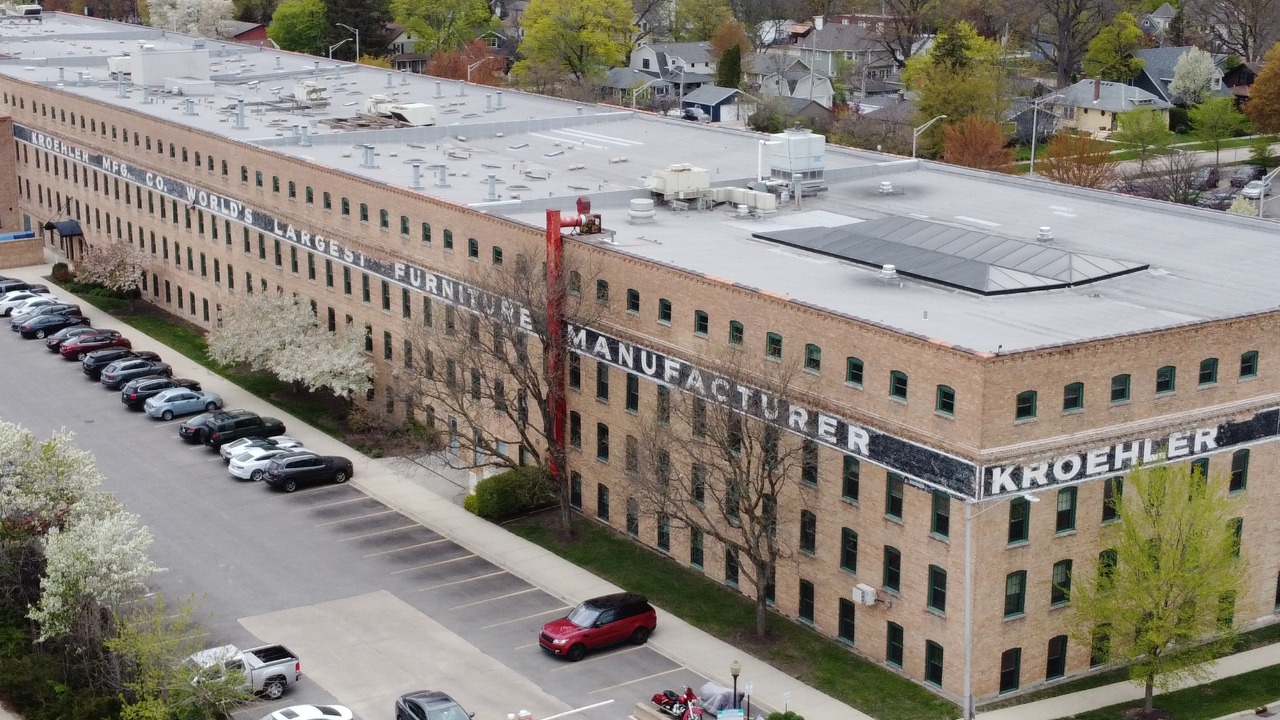
A 132-year furniture institution has gone from American manufacturing mainstay to bankruptcy court case study, closing a key factory and leaving workers scrambling just as the new year begins. The unraveling of Kroehler Furniture, once a symbol of mass-market craftsmanship, captures how even century-old brands can be overwhelmed by shifting consumer habits, rising costs, and brutal competition. Its shutdown lands at a moment when other household names in home furnishings are also seeking court protection, signaling deeper strain across the sector.
The fall of a 132-year-old furniture name
The collapse of Kroehler Furniture is striking not only because a 132-year-old brand has gone under, but because it underscores how long-established manufacturers are no longer insulated from rapid economic change. The company, which built its reputation on upholstered pieces and living room sets, has now shuttered a major production facility after entering bankruptcy, ending a chapter in American industrial history that stretched back to the late nineteenth century. For workers and longtime customers, the closure is a reminder that heritage alone cannot offset the pressures of modern retail and supply chains.
Reports on the bankruptcy describe 132-year-old Kroehler Furniture as having formally shut a production facility as part of its court-supervised restructuring, a move that effectively ends its role as a meaningful domestic manufacturer. The decision follows a period of mounting financial stress, with the company unable to keep pace with changing demand patterns and cost structures in the furniture market. While some homebuyers may welcome the broader cooling of prices that comes when distressed inventory is liquidated, the closure also strips communities of stable industrial jobs and erases a familiar name from the showroom floor.
A North Carolina plant goes dark
The most visible casualty of Kroehler’s bankruptcy is its factory in North Carolina, where production lines that once turned out sofas and chairs have gone quiet. The company’s manufacturing arm, identified as Kroehler Furniture Co, has permanently closed its plant in Conover, a small city that has long relied on furniture making as an economic anchor. For local workers, the shutdown is not an abstract restructuring decision but the loss of a paycheck, a routine, and in many cases a career built over decades on the factory floor.
Industry coverage notes that Kroehler Furniture Co in Conover has been permanently closed, part of a wave of layoffs and bankruptcies hitting U.S. logistics and manufacturing at the start of 2026. Local reporting adds that, according to employees at Kroehler Furniture located at 1800 Conover Blvd E in Conover, NC 28613, the plant is in the process of laying off workers and shutting down operations, confirming that the closure is not theoretical but already unfolding on the ground. That account from According to employees at Kroehler Furniture captures the human dimension of a corporate failure that might otherwise be reduced to a line item in a bankruptcy filing.
From wartime heyday to slow decline
To understand the weight of this closure, it helps to recall how central Kroehler once was to American home life. During the company’s heyday in the 1940s, Kroehler Manufacturing Company was delivering 128 truckloads of furniture a day, a staggering volume that speaks to both the postwar housing boom and the firm’s manufacturing muscle. Those truckloads carried the sofas, chairs, and bedroom sets that filled new suburban homes, embedding the Kroehler name in living rooms across the country.
That scale is not anecdotal nostalgia but a documented figure: During the 1940s Kroehler Manufacturing Company was recorded as delivering 128 truckloads of furniture daily, an output that would be the envy of many modern brands. Over time, however, the company’s fortunes shifted. In 1981 Kroehler was acquired by the ATR Group of Northbrook, which later put the company up for sale, signaling that its best days were behind it. By the early 2000s, furniture production had increasingly migrated to lower cost regions and overseas suppliers, and Kroehler, ATR and the Group of Northbrook were no longer synonymous with industry leadership. The bankruptcy and plant closure are the culmination of that long, uneven decline.
Legal questions and WARN scrutiny
Factory closures are not just economic events, they are legal minefields, and Kroehler’s shutdown is already drawing scrutiny. When a company abruptly ends operations, workers and their advocates quickly ask whether federal and state notice requirements were followed, particularly under the Worker Adjustment and Retraining Notification (WARN) Act. That law generally requires larger employers to provide advance notice of mass layoffs, giving employees time to prepare for the loss of income and benefits.
In the case of Kroehler Furniture Co, a law firm is investigating whether those obligations were met. A letter obtained by WSOC-TV, dated December 29, 2025, stated that operations at Kroehler Furniture Co would end effective Wednesday, December 31, 2025, a window that raises questions about how much warning workers actually received. The fact that a firm is probing a potential WARN violation involving WSOC and Kroehler Furniture Co underscores how fraught the final days of a failing manufacturer can be. For employees, the outcome of that review will determine not only whether they were treated fairly, but whether they might be entitled to additional compensation or remedies as the bankruptcy proceeds.
Bankruptcy in a battered furniture sector
Kroehler’s failure does not exist in isolation. It is part of a broader pattern of distress in the furniture business, where midmarket brands are squeezed between low cost imports and high end niche players. Over the past year, several well known chains have turned to the courts for protection, citing a mix of weak demand, rising operating costs, and heavy debt loads. The result is a sector where long familiar store signs are suddenly accompanied by liquidation banners and “store closing” notices.
One of the most prominent examples is Value City Furniture, whose parent company, American Signature Inc, has entered Chapter 11 bankruptcy after 77 years in business. The company has pointed to softening demand and rising operating costs as key reasons for its restructuring, a narrative that echoes the pressures facing Kroehler. Reporting on the filing notes that Value City Furniture and American Signature Inc in Chapter 11 are emblematic of how even sizable chains with decades of history are struggling to adapt. When a 77 year old retailer and a 132 year old manufacturer both end up in court within months of each other, it signals structural problems rather than isolated missteps.
American Signature’s numbers tell a similar story
The financial details emerging from American Signature’s case help quantify the pressures that have also weighed on manufacturers like Kroehler. In late 2025, American Signature formally sought bankruptcy protection, describing a confluence of structural and macroeconomic headwinds that had eroded its balance sheet. The company’s filings point to significant liabilities and a mismatch between legacy store footprints and current consumer behavior, particularly as more shoppers browse and buy furniture online.
One figure stands out: American Signature reported roughly $803 million in 2025 obligations, a scale of debt that limited its ability to invest in new formats or weather sales downturns. That number, cited in coverage of how Dec filings by American Signature laid out the company’s finances, illustrates how quickly leverage can become a trap when demand softens. While Kroehler’s capital structure is different, the shared themes of high fixed costs, shifting consumer expectations, and intense competition help explain why both a retailer and a manufacturer have been pushed into bankruptcy in such close succession.
What went wrong for Kroehler’s business model
Looking at Kroehler’s trajectory, I see a company caught between its manufacturing legacy and a market that increasingly rewards flexibility and speed. The firm’s roots in large scale production made sense in an era when consumers bought standardized living room sets and expected them to last for years. Today, shoppers are more likely to mix pieces from different brands, order online, and prioritize quick delivery over brand loyalty, a shift that favors nimble players with asset light models rather than factory heavy incumbents.
The historical record shows that Kroehler’s ownership changes were early warning signs. When Kroehler was acquired by the ATR Group of Northbrook in 1981, and later put up for sale, it suggested that the business was already struggling to generate the returns expected by its owners. By the early 2000s, as global supply chains matured and imports gained ground, the company’s traditional strengths became liabilities. The fact that By the early 2000s Kroehler and ATR Group of Northbrook were repositioning or selling assets reflects a business model under strain. The eventual decision to close a North Carolina plant and seek bankruptcy protection is the endpoint of that long running mismatch between fixed industrial capacity and a volatile, margin thin market.
Ripple effects for workers, towns, and suppliers
For the communities tied to Kroehler, the shutdown is not just a corporate restructuring but a shock to the local economy. In places like Conover, furniture plants have historically provided relatively well paid, blue collar jobs that support families and small businesses. When a plant closes, the immediate impact is lost wages, but the secondary effects can include reduced spending at local shops, lower tax revenues, and pressure on social services as laid off workers seek assistance or retraining.
Suppliers and logistics partners also feel the blow. The same industry coverage that documented how layoffs and bankruptcies batter U.S. logistics and manufacturing at the start of 2026 highlights how interconnected these businesses are. When a manufacturer like Kroehler stops ordering fabric, foam, wood, and trucking services, the revenue shortfall ripples outward to vendors that may already be operating on thin margins. For workers, the WARN investigation tied to WSOC and Kroehler Furniture Co is one avenue to seek redress, but even a favorable finding cannot fully replace the stability that a functioning plant once provided.
What Kroehler’s collapse signals about American manufacturing
Stepping back, Kroehler’s bankruptcy and factory closure offer a sobering snapshot of American manufacturing at a crossroads. Legacy brands with deep roots in domestic production are under intense pressure to modernize, streamline, or specialize, and those that cannot move quickly enough risk being overtaken by more agile competitors. The story of a 132-year-old furniture maker that once shipped 128 truckloads of product a day, only to shutter a key plant and face legal scrutiny over layoffs, encapsulates both the achievements and vulnerabilities of the industrial era that shaped much of the twentieth century.
At the same time, the parallel struggles of retailers like Value City Furniture and American Signature Inc show that the pain is not confined to factories. It runs through the entire value chain, from design and sourcing to sales and delivery. As I look at the converging narratives of Kroehler, American Signature, and other distressed players, the message is clear: history and brand recognition are no longer enough to guarantee survival. Companies that want to avoid Kroehler’s fate will need to rethink how they produce, finance, and sell furniture in a world where consumer expectations, cost structures, and competitive dynamics are all shifting at once.
More From TheDailyOverview

Grant Mercer covers market dynamics, business trends, and the economic forces driving growth across industries. His analysis connects macro movements with real-world implications for investors, entrepreneurs, and professionals. Through his work at The Daily Overview, Grant helps readers understand how markets function and where opportunities may emerge.