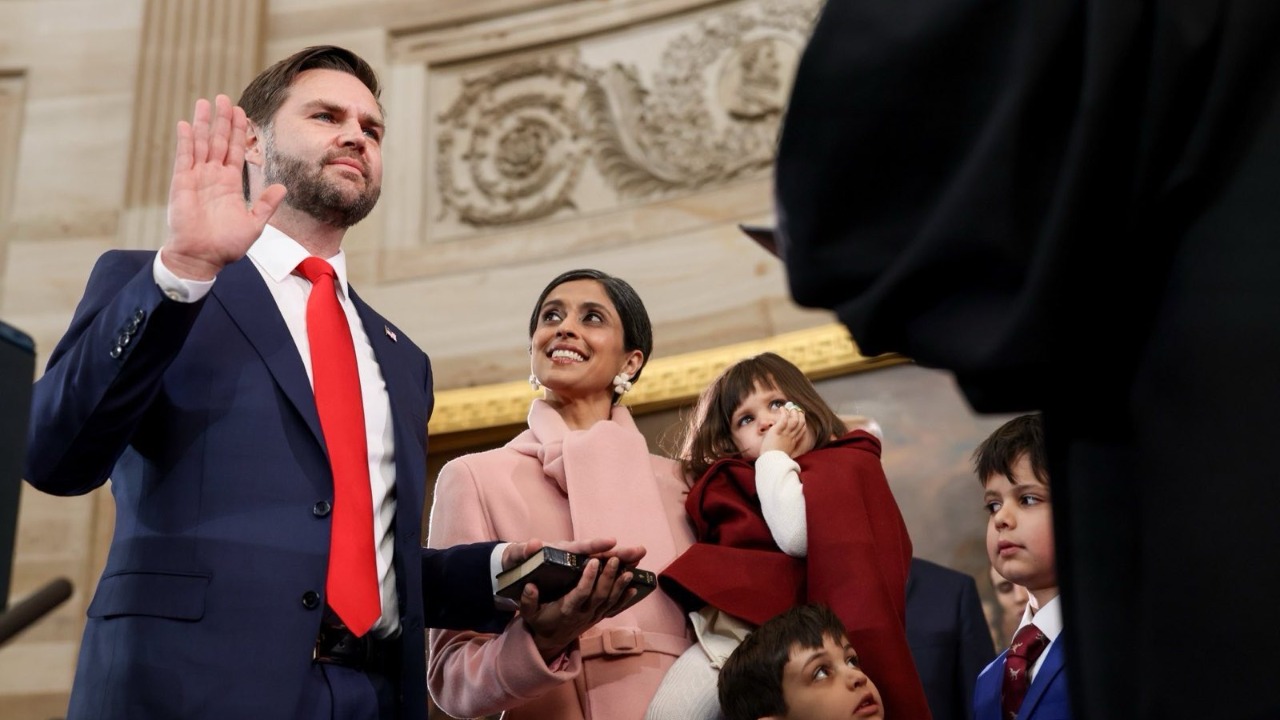
JD Vance is betting that a sweeping legal assault on campaign finance rules will help Republicans dominate the money race in 2026 and beyond. I see a different risk: if voters come to view him as the architect of a system that lets billionaires buy elections outright, the political backlash could swamp any fundraising advantage his allies hope to gain.
The legal gambit behind Vance’s money machine
At the center of Vance’s strategy is a coordinated push to strip away what remains of federal limits on big money in politics. The goal is not just to loosen the rules at the margins, but to turn the post–Citizens United landscape into something closer to a free-for-all in which ultra-wealthy donors can effectively run parallel campaigns for their preferred candidates. That ambition is what turns a technical court fight into a multibillion-dollar political risk for a national ticket that already faces skepticism about its ties to corporate power.
The stakes are clearest in the numbers. One key case involves a challenge to federal rules that restrict how much parties and outside groups can coordinate spending with candidates, a set of Curbs that a Lower court upheld earlier this year. Those limits are supposed to keep Companies and party committees from turning into simple pass-throughs for candidate-controlled war chests. If the Supreme Court, which agreed to hear the Republican challenge on Jun 29, 2025, tears those rules down, it would open the door to a torrent of coordinated cash that campaigns can help direct while still avoiding traditional contribution caps.
From Citizens United to “Citizens United 2.0”
Vance and his allies are not hiding that they see this moment as a chance to go far beyond the status quo. They are explicitly chasing what some conservatives describe as a sequel to Citizens United, a ruling that already unleashed corporate and union spending but left a few guardrails in place. I read their project as an effort to erase those remaining lines, turning what was once a controversial expansion of political money into a mere starting point for a much more permissive regime.
One investigative account describes how, after Citizens United, outside groups and super PACs poured a total of $2.6 billion into federal elections while Still Citizens United technically preserved campaign contribution limits and a formal ban on direct coordination. That same reporting, published on Oct 15, 2025, details how Vance’s circle is now working to move the fight back to the Supreme Court House, where a more aggressive conservative majority could treat those remaining limits as unconstitutional. In parallel, another deep dive traces how Vance’s allies began laying out a blueprint for what they openly call Citizens United 2.0, with one figure, Malloy, telling reporters on Sep 11, 2024, that it was unusual to see so many judges signaling that the Supreme Court was the proper venue for resolving these disputes, especially in a case tied to former president Trump in May, a sign of how deliberately the issue is being steered upward.
The secret plan to supercharge billionaire influence
Behind the legal briefs sits a broader political vision that treats billionaires not as bit players but as central protagonists in future campaigns. Vance’s allies are effectively designing a system in which a handful of mega-donors can bankroll entire messaging operations, digital turnout programs, and opposition research shops that function as shadow campaigns. In that world, candidates would not need to raise small donations at scale if a few wealthy patrons are willing to underwrite the whole effort.
One detailed account of this strategy describes how conservative operatives have quietly mapped out what they call The Court Case That Could Blow the Roof Off Political Spending, a Commentary that situates Vance’s role inside a broader Right’s Secret Plan to help billionaires buy elections. That same reporting connects the dots between this legal push and other efforts to expand corporate political power, including tactics used by The Gun Industry and its Digital Tricks to reach voters outside traditional campaign channels. Taken together, the picture is of a movement that sees the courts as the most efficient way to entrench donor dominance for a generation.
How the Supreme Court fight could backfire on Vance
For Vance, the upside of this strategy is obvious: if the Supreme Court wipes out coordination rules and further weakens contribution caps, Republican campaigns aligned with his vision could tap virtually unlimited outside money. The downside is more subtle but potentially more damaging. By tying his political brand so closely to a legal crusade that many voters already associate with corruption and backroom influence, he risks becoming the face of a system that feels rigged in favor of the rich.
The legal path itself underscores that vulnerability. When Malloy noted on Sep 11, 2024, that so many judges were signaling the Supreme Court was the right place to settle these disputes, he was effectively acknowledging that the fight had become as much political as legal. Voters may not follow every procedural twist, but they do understand when a candidate appears to be engineering a system that lets wealthy insiders, including Companies and industry groups, exert more control over elections. If the Court sides with the Republican challenge that reached it on Jun 29, 2025, and strikes down the Curbs that the Lower court upheld, Vance will own that victory in the public mind, for better or worse.
The multibillion-dollar risk to a national ticket
The financial stakes of this project are staggering, but the political stakes may be even higher. If the new rules Vance is chasing unlock another wave of spending on the scale of the $2.6 billion that flooded in after Citizens United, the immediate effect would be to supercharge the role of wealthy donors in both parties. I see a real possibility that voters, already wary of concentrated economic power, will respond by punishing the politician most closely associated with making that system permanent.
That is the core danger for a White House bid built around this legal revolution. Every time a new outside group funded by a handful of billionaires drops a barrage of attack ads or floods social media with slick content, it will remind people that the rules were rewritten to make such dominance possible. Because Vance has positioned himself as a chief architect of that rewrite, his opponents will have an easy story to tell: that he chose to side with The Court Case That Could Blow the Roof Off Political Spending and with the Right’s Secret Plan to empower billionaires, rather than with voters who want their voices to matter as much as those of The Gun Industry and other deep-pocketed interests. In a close national race, that narrative could matter more than any single donor check, turning a legal triumph for his movement into a defining liability for his campaign.
More From TheDailyOverview
- Dave Ramsey says these two simple questions show whether you’re rich or poor
- Retired But Want To Work? Try These 18 Jobs for Seniors That Pay Weekly
- IRS raises capital gains thresholds for 2026 and what’s new
- 12 ways to make $5,000 fast that actually work

Grant Mercer covers market dynamics, business trends, and the economic forces driving growth across industries. His analysis connects macro movements with real-world implications for investors, entrepreneurs, and professionals. Through his work at The Daily Overview, Grant helps readers understand how markets function and where opportunities may emerge.

