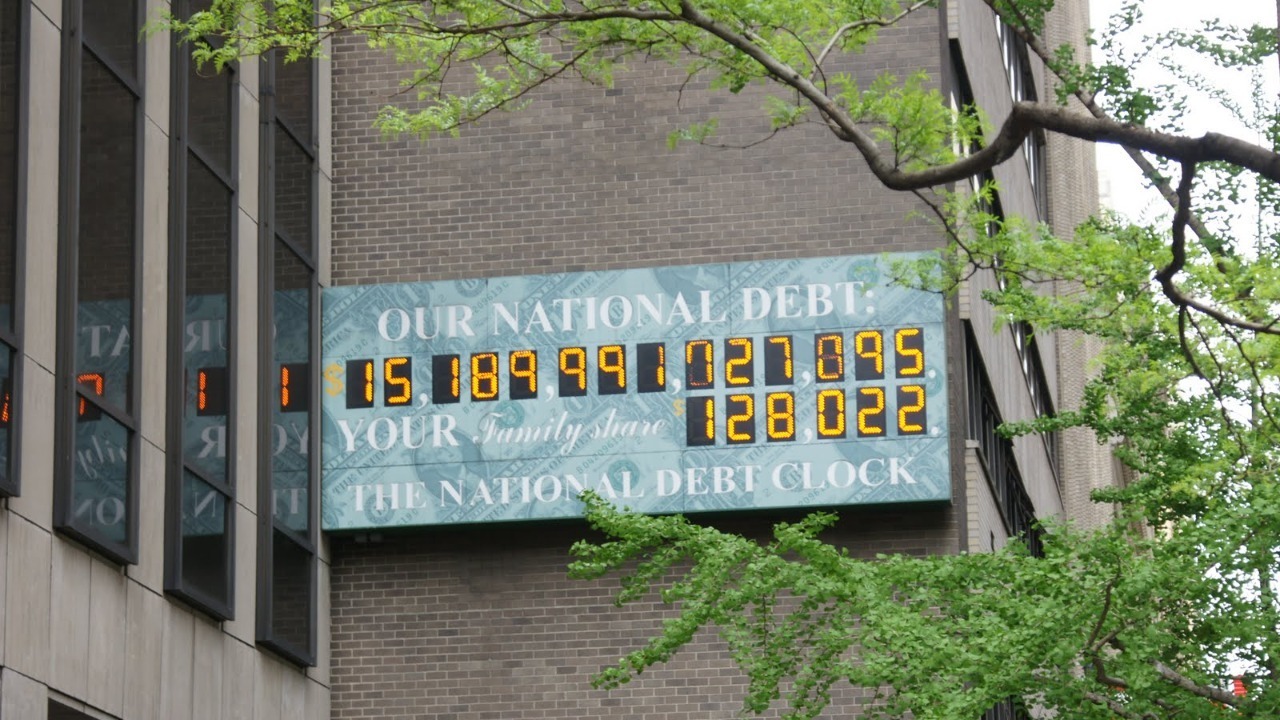
A bipartisan group of senators is pushing to create a fiscal commission charged with reining in federal spending and debt, which now exceeds $38.8 trillion. Senators Tim Kaine, a Virginia Democrat, John Curtis, a Utah Republican, and Angus King, a Maine independent, along with other colleagues, introduced the Bipartisan Fiscal Commission Act as the government’s annual interest bill approaches $1 trillion. The proposal arrives at a moment when the national debt is growing by roughly $7.23 billion every single day, forcing a renewed debate over whether Congress can discipline itself or needs an outside structure to do it.
What the Commission Would Actually Do
The bill would establish an 18-member panel that is bicameral, bipartisan, and includes outside experts appointed by congressional leaders and the president. According to Kaine’s office, the commission’s mandate is to stabilize federal finances and put debt on a more sustainable path, with members drawn evenly from both parties and both chambers. That framing is deliberately broad, but the legislative text gets more specific about how the panel must operate.
The draft legislation directs the commission to set a public debt-to-GDP target, produce a formal report, and transmit implementing legislation by fixed deadlines. It lays out expedited procedures that would guarantee a prompt up-or-down vote in both chambers, limiting amendments and blocking the usual procedural delays. Within the commission, supermajority voting rules are designed to ensure that any package reaching the floor has genuine bipartisan backing rather than a narrow partisan edge.
That fast-track mechanism is the sharpest tool in the proposal. Previous deficit-reduction efforts, including the Simpson-Bowles commission of 2010, produced detailed plans that Congress simply ignored. By embedding expedited floor consideration into statute, the sponsors are betting that process changes can succeed where appeals to fiscal responsibility have failed. Whether that bet pays off depends on whether enough lawmakers are willing to vote for a mechanism that could force them into politically painful choices on taxes, Social Security, Medicare, or defense.
$38.86 Trillion and Climbing Fast
The urgency behind the bill is not abstract. According to the Republican staff of the Joint Economic Committee, total gross national debt stood at $38.86 trillion as of March 4, 2026, up $2.64 trillion from a year earlier. That works out to $7.23 billion added per day. The committee notes that this pace reflects a combination of structural deficits, higher interest rates, and temporary factors such as timing shifts in tax receipts.
The Treasury Department’s public data confirm the broad trend. Through early March, the federal government had already spent $3.10 trillion in fiscal year 2026, according to the department’s official budget portal, with outlays continuing to outstrip revenues. Persistent primary deficits (spending excluding interest that remains higher than tax collections) mean that even in the absence of new programs, existing commitments are enough to keep the debt rising.
Behind the headline number is a detailed accounting system. Treasury’s “Debt to the Penny” series, made accessible through its public debt API, records daily totals for debt held by the public and intragovernmental holdings. Those two categories carry different economic implications: securities held by investors outside the federal government affect financial markets and are sensitive to interest rates, while intragovernmental debt represents obligations to trust funds such as Social Security and Medicare. Methodological notes in Treasury’s national debt guide explain how these figures are compiled and why they can move sharply around major tax dates or large auction settlements.
Interest Costs Rival Defense Spending
The most alarming line item in the federal budget is no longer any single program but the cost of servicing existing obligations. Net interest payments are approaching $1.0 trillion in 2026, according to baseline projections cited by House Budget Committee Chairman Jodey Arrington, who warned that Congress must “reverse the curse” of compounding debt costs. Rising rates over the past two years mean new borrowing and maturing securities are being financed at much higher yields than during the previous decade.
The Congressional Budget Office has been flagging this shift for years. In its long-term outlook, the nonpartisan agency projects that interest will become one of the largest federal expenditures, outpacing many domestic programs and eventually exceeding the size of the economy’s annual output if policies remain unchanged. The CBO’s debt projections show net interest consuming a growing share of GDP, leaving less fiscal space for responding to recessions, wars, or public health emergencies.
Already, interest costs are rivaling the defense budget. Every dollar directed toward servicing past borrowing is a dollar unavailable for infrastructure, healthcare, education, or tax relief. Because interest is effectively mandatory (bondholders must be paid), these payments crowd out discretionary programs first. For households, that crowd-out is likely to manifest as tighter caps on domestic spending, more frequent brinkmanship over appropriations, and pressure to trim benefits or raise taxes in ways that could touch everything from veterans’ services to research grants.
Why Past Efforts Failed and What Is Different Now
Skeptics have reason to doubt that another commission will produce results. The National Commission on Fiscal Responsibility and Reform, commonly known as Simpson-Bowles, issued a detailed deficit-reduction blueprint in 2010 that won support from a majority of its members but fell short of the supermajority threshold needed to trigger automatic congressional action. Without a binding process, leaders in both parties treated the plan as advisory and ultimately shelved it.
The Bipartisan Fiscal Commission Act tries to learn from that history. Its expedited consideration rules are written directly into law, not left to informal promises. The bill specifies how quickly leaders must appoint members, when hearings must begin, and when recommendations must be released, attempting to prevent the slow fade that doomed earlier efforts. By including outside experts alongside lawmakers, the sponsors hope to blend technical analysis with political judgment in a single forum, rather than relying on think-tank reports that can be ignored.
Still, the structural challenge is severe. Any serious debt-reduction package will require tradeoffs on taxes, Social Security, Medicare, and defense that are unpopular with key constituencies. Lawmakers facing tight reelection races have strong incentives to avoid votes that can be framed as cutting benefits or raising taxes. A commission can spread political responsibility across a bipartisan group, but it cannot eliminate the underlying choices. With the 2026 midterm elections approaching, the window for action before campaign pressures intensify is narrow.
The Debt-to-GDP Target and Its Limits
One of the bill’s most concrete features is its requirement that the commission set a public debt-to-GDP target and design a package to reach it over a defined horizon. That approach reflects a broad consensus among budget analysts that the ratio of debt to economic output is a better gauge of sustainability than the nominal dollar level alone. A stable or declining ratio suggests that the economy is growing fast enough to support the debt load. A steadily rising ratio signals mounting risk.
Yet targets are only as credible as the policies that back them up. To stabilize the debt ratio, the commission would have to recommend either significant spending restraint, higher revenues, or some combination of both. The CBO’s long-term scenarios underscore how sensitive the debt path is to relatively small changes in growth, interest rates, and primary deficits. If economic growth underperforms or borrowing costs stay elevated, even an ambitious package could fall short of the target, forcing future Congresses back to the table.
Implementation also depends on the mechanics of federal finance. Treasury manages borrowing through regular auctions of bills, notes, and bonds, increasingly supported by modern data infrastructure such as its marketable securities API, which helps market participants track issuance and holdings. Any commission plan that significantly alters the trajectory of deficits would eventually change the volume and mix of securities Treasury must sell, with implications for investors and interest costs.
In that sense, the Bipartisan Fiscal Commission Act is less a technocratic exercise than a political test. The data on spending, revenues, and debt are transparent, widely accessible through Treasury’s reporting systems and analytic tools. The question is whether elected officials are prepared to bind themselves to a process that forces tradeoffs they have long postponed. If they are, the commission could become a vehicle for long-delayed reforms. If they are not, it risks joining a long list of well-intentioned panels whose reports gather dust while the numbers on the national ledger continue to climb.
More From The Daily Overview
*This article was researched with the help of AI, with human editors creating the final content.

Grant Mercer covers market dynamics, business trends, and the economic forces driving growth across industries. His analysis connects macro movements with real-world implications for investors, entrepreneurs, and professionals. Through his work at The Daily Overview, Grant helps readers understand how markets function and where opportunities may emerge.

