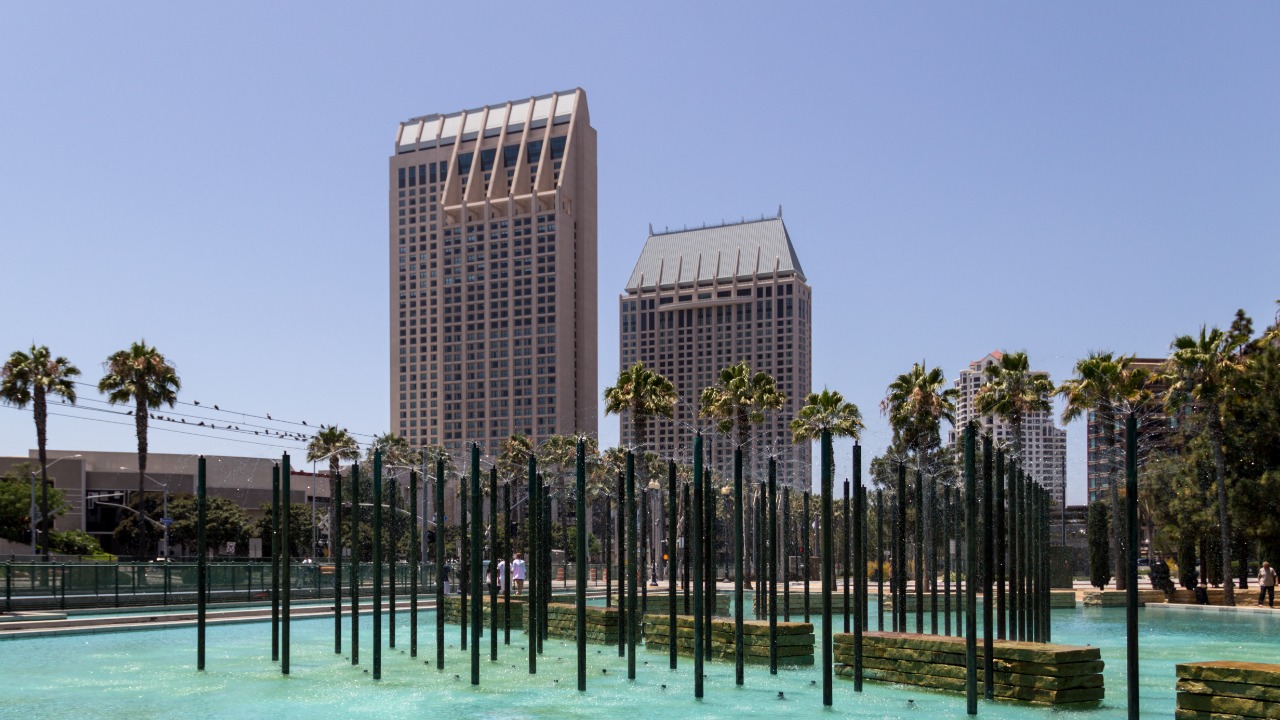
San Diego’s commercial core is being reordered in real time as one of America’s most powerful landlords walks away from a portfolio that once defined the city’s skyline. A single decision to unload a critical mass of office towers is not just reshaping who owns downtown real estate, it is forcing the region to rethink what kind of economy it wants at its center.
What looks like a straightforward selloff is, in practice, a stress test of San Diego’s office market, its civic ambitions, and its ability to adapt to a post‑pandemic work culture. The exit of a dominant player is flipping the script from quiet stability to open‑ended uncertainty, and the choices local leaders make now will determine whether this becomes a slow bleed or a rare chance to reset.
The mogul behind the shake‑up
The figure at the center of this upheaval is not a speculative newcomer but one of the most entrenched names in American property. Donald Bren built his reputation as a long‑term owner who preferred patient control over quick trades, so his decision to unwind a major position in San Diego signals more than a routine portfolio tweak. When a landlord of his stature changes course, it sends a marketwide message about where value is headed and how much risk he is willing to tolerate.
That signal carries extra weight because Donald Bren is widely described as Leading the pack among real estate fortunes, with reporting identifying him as America’s wealthiest real estate baron. His Irvine Company brand has long been shorthand for deep pockets, meticulous master planning, and a preference for coastal markets that can command premium rents. When someone with that profile decides that a half‑dozen or more towers in one city no longer fit the strategy, it is hard for other investors, tenants, and public officials to shrug it off as business as usual.
How a San Diego exit became a market‑moving event
In most cities, a landlord trimming exposure would barely register outside brokerage circles, but San Diego is feeling something closer to a tectonic shift. The portfolio in question is not scattered suburban flex space, it is a cluster of high‑visibility buildings that helped define the modern downtown skyline. By choosing to sell a large block of those assets in a compressed window, the mogul effectively turned his own repositioning into a referendum on the city’s future as an office hub.
Reporting describes how a famed investor’s decision to dump a half‑dozen or more properties in Dec has been portrayed as turning San Diego upside down, precisely because it concentrates so much change into the city’s commercial core. When a single owner controls a critical mass of Class A space, its exit can reset pricing, shift negotiating leverage toward or away from tenants, and even alter which industries feel welcome downtown. That is the dynamic now playing out as brokers, lenders, and rival landlords try to gauge whether this is a one‑off move or the start of a broader revaluation.
Downtown San Diego’s office reckoning
The immediate impact is most visible in Downtown San Diego, where the office market was already struggling to find its footing in a hybrid‑work era. Vacancy had been creeping higher, sublease space was piling up, and tenants were using uncertainty to push for shorter terms and richer concessions. Into that fragile equilibrium comes a major selloff that effectively tells the market that one of its most sophisticated participants sees better risk‑adjusted returns elsewhere.
Coverage of the shift notes that the Downtown San Diego office market is now in a holding pattern after the Irvine Company exodus, with a reported $120M selloff marking the end of an era of single‑owner dominance. That figure is not just a line item on a balance sheet, it is a benchmark that will influence appraisals, loan covenants, and future trades. If buyers demand steep discounts to take on aging towers in a soft leasing environment, the ripple effects could extend to property tax rolls and city budgets that rely on stable commercial values.
Why the Irvine Company walked away
When a landlord like the Irvine Company chooses to exit a market, the reasons are rarely sentimental. The calculus typically blends rent trajectories, capital expenditure needs, regulatory climate, and the opportunity cost of tying up equity in one city instead of another. In San Diego’s case, the combination of rising interest rates, expensive seismic and sustainability upgrades, and a tenant base still sorting out long‑term space needs likely made the math less compelling than in core Orange County or coastal Los Angeles.
Insiders quoted in coverage of the Irvine Company exit describe a strategic pullback rather than a distressed fire sale, underscoring that the firm is choosing to redeploy capital rather than being forced out. That distinction matters for San Diego because it suggests the problem is not a single landlord’s balance sheet, it is the city’s relative position in a crowded field of West Coast office markets. If a player with patient capital and a long time horizon no longer sees downtown towers as core holdings, it raises hard questions about what mix of uses and incentives will be needed to make those buildings competitive again.
Tenants caught between leverage and anxiety
For tenants, the mogul’s exit is a paradox. On one hand, more buildings in transition can translate into better deals, as new owners look to fill space quickly and lenders push for stabilized income. On the other, uncertainty about who will own and operate a tower over the life of a lease can make corporate real estate teams wary of committing to long terms, especially for headquarters or mission‑critical operations.
In San Diego’s commercial core, companies that once prized the Irvine Company’s reputation for meticulous maintenance and consistent service now face a patchwork of incoming owners with varying track records. Reporting on the investor’s decision to unload a half‑dozen properties in the city’s commercial core notes that the move has effectively scrambled the tenant landscape in Join segments of downtown. Some tenants will seize the moment to trade up into higher‑quality space at lower effective rents, while others may use the disruption as a pretext to shrink footprints or shift more staff to suburban campuses where parking is easier and commutes shorter.
Investors smell both risk and opportunity
On the capital side, the exit has turned San Diego into a test case for how secondary coastal markets reprice in a world of higher borrowing costs and hybrid work. Value‑add investors that specialize in repositioning tired towers into creative offices, life‑science labs, or mixed‑use projects are already circling, drawn by the chance to buy at a discount from a blue‑chip seller. Yet the same forces that pushed the Irvine Company to sell, from soft leasing demand to rising construction costs, will also constrain how aggressively new buyers can underwrite ambitious business plans.
The reported $120M in sales tied to the $120 figure is likely to serve as a reference point for every lender and equity partner evaluating downtown deals over the next few years. If cap rates move out sharply from those trades, it could signal that the market believes more pain is ahead. If, instead, competition for well‑located assets keeps pricing relatively firm, it would suggest that investors see the current disruption as a temporary reset rather than a structural decline. Either way, the mogul’s decision has forced capital to take a fresh, unsentimental look at San Diego’s fundamentals.
What this means for San Diego’s urban identity
Beyond spreadsheets, the exit raises existential questions about what kind of downtown San Diego wants. For years, civic leaders leaned on a familiar formula: office towers for daytime workers, tourist‑friendly waterfront attractions, and a growing base of residential towers to keep the streets active after hours. If a marquee landlord no longer believes that formula supports premium office rents, the city may need to accelerate a shift toward a more mixed, neighborhood‑driven core where housing, education, health care, and culture share equal billing with traditional corporate space.
The portrayal of the investor’s departure as turning the city upside down in San Diego captures how deeply real estate decisions are intertwined with civic identity. A skyline dominated by a single institutional owner sends one message about stability and control. A patchwork of owners experimenting with conversions, co‑working, and ground‑floor activation sends another, more improvisational signal. The coming years will show whether residents and local officials embrace that improvisation or try to reassemble a version of the old order with new names on the lobby directories.
How other cities will read San Diego’s experiment
San Diego is not the only city grappling with half‑empty towers and landlords rethinking their footprints, but the scale and speed of this particular exit make it a closely watched case study. Markets from Seattle to Denver are tracking how quickly the vacated buildings lease up, what kinds of tenants move in, and whether local government steps in with zoning tweaks or tax incentives to encourage conversions. If San Diego manages to turn a destabilizing selloff into a catalyst for a more resilient, diversified downtown, it could offer a playbook for peers facing similar headwinds.
At the same time, the fact that the move comes from a figure described as America’s wealthiest real estate baron, with Donald Bren sitting atop rankings of property fortunes, will not be lost on other institutional owners. If someone with that level of experience and access to data concludes that a strategic retreat is the right call, it may embolden others to make similar moves in markets where they feel overexposed. In that sense, San Diego’s upheaval is both a local story and an early chapter in a broader reordering of who owns America’s downtowns.
The new script: from landlord city to laboratory
For decades, San Diego’s commercial core functioned as a landlord’s city, where a few big names set the tone and most others followed. The mogul’s exit has abruptly ended that era and replaced it with something messier but potentially more dynamic. Instead of a single, coherent vision imposed from the top, the next phase is likely to be shaped by a mix of mid‑sized investors, adaptive reuse specialists, and tenants willing to bet on a downtown in transition.
Coverage that frames the selloff as turning the city upside down in Read the city’s commercial core hints at the opportunity embedded in that disruption. A downtown that once revolved around a single owner’s risk tolerance can now experiment with new mixes of use, new forms of tenancy, and new partnerships between public and private sectors. Whether that experimentation leads to a more inclusive, resilient urban center or a prolonged period of drift will depend on how quickly San Diego can move from reacting to one mogul’s exit to writing its own, more durable script.
More From TheDailyOverview

Elias Broderick specializes in residential and commercial real estate, with a focus on market cycles, property fundamentals, and investment strategy. His writing translates complex housing and development trends into clear insights for both new and experienced investors. At The Daily Overview, Elias explores how real estate fits into long-term wealth planning.

