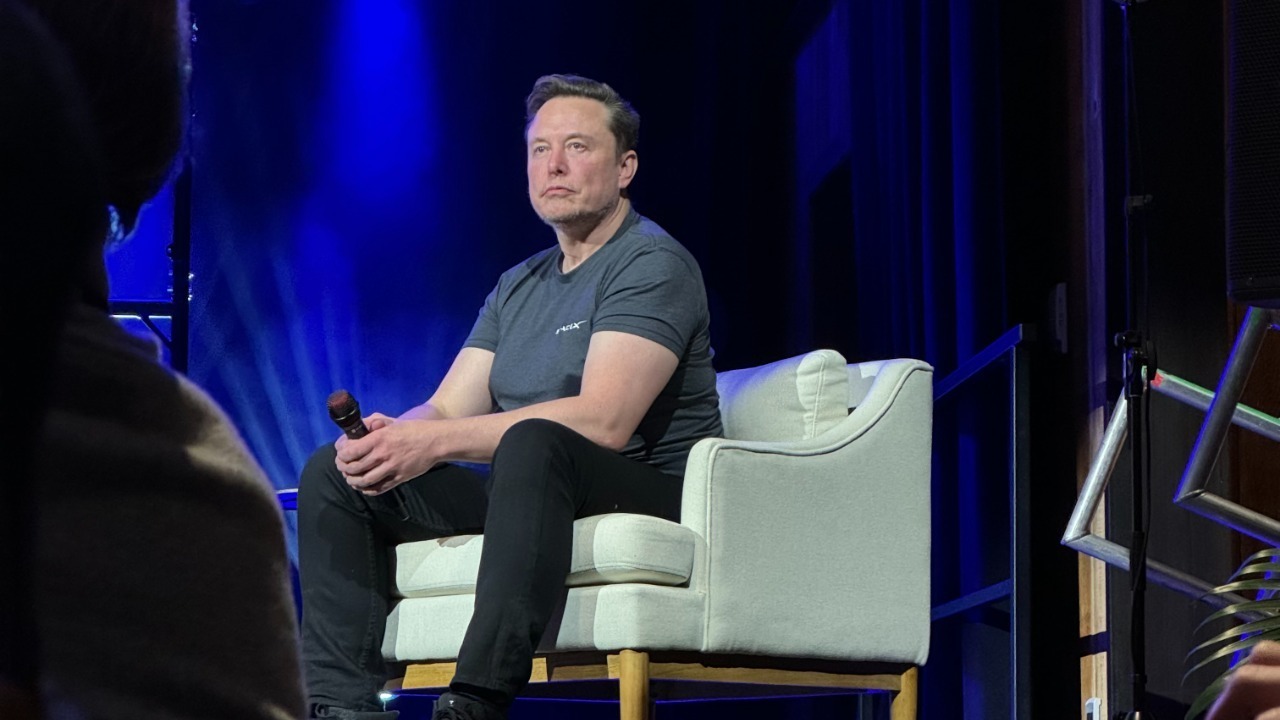
Elon Musk is already the richest person on the planet, but the numbers now swirling around SpaceX suggest his personal balance sheet is on the verge of entering a different universe. With a towering private valuation and a confirmed path to the public markets, a SpaceX IPO could be the catalyst that turns a several-hundred-billion-dollar fortune into the world’s first trillion-dollar net worth.
Investors are not just betting on rockets, they are pricing in a vertically integrated space and satellite infrastructure business that touches everything from broadband to national security. If that vision holds when SpaceX lists, the combination of Musk’s existing stake and a higher public valuation could push his wealth past the $1 trillion mark far sooner than traditional equity markets alone would allow.
Musk’s wealth machine is already in uncharted territory
Before SpaceX ever sells a share to public investors, Elon Musk’s fortune has already broken records that once seemed unreachable. Earlier this month, his net worth was described at an estimated $600bn, making him the first person ever to reach that level according to Forbes. That milestone came as markets reassessed the value of his private holdings and the growth prospects of his companies, particularly SpaceX, which has shifted from a scrappy launch provider into a central player in global connectivity and defense.
Other estimates now peg his fortune even higher, with one analysis putting Elon Musk’s net worth at $677 Billion as investors look ahead to a planned public offering in 2026. That figure reflects the market’s willingness to ascribe enormous value to his stakes in Tesla and SpaceX, and it frames the trillion-dollar conversation less as science fiction and more as a plausible next step if those assets continue to appreciate.
How Tesla’s surge set the stage for a trillionaire
Musk’s path toward a potential trillion-dollar net worth has been paved in large part by Tesla’s stock market performance. As the electric vehicle maker’s shares climbed, his holdings in Tesla helped push his wealth to levels that were once reserved for nation-states, not individuals. One report noted that his fortune was now more than double that of his closest rival as Tesla stock continues to surge, underscoring how central the automaker has been to his financial ascent.
That dominance is echoed elsewhere, with another account stressing that Elon Musk’s net worth soars as Tesla’s valuation keeps climbing. That context matters for the SpaceX story, because it shows how public markets have already rewarded Musk’s ability to scale capital-intensive technology businesses. If investors treat SpaceX with the same enthusiasm that they once reserved for Tesla’s growth narrative, the incremental wealth created by an IPO could be even more dramatic.
SpaceX’s $800 billion valuation changes the math
The real inflection point for Musk’s wealth, however, is coming from SpaceX. The company has reportedly set an $800B valuation as it prepares for a public listing, a figure that would instantly make it one of the most valuable aerospace and technology companies on Earth. At that scale, even a partial stake translates into hundreds of billions of dollars on Musk’s personal ledger, and it explains why his net worth is now so tightly linked to the rocket maker’s trajectory.
Another assessment underscores that SpaceX’s estimated $800 billion valuation already makes it Elon Musk’s primary driver of personal wealth. That shift means the center of gravity in his portfolio has moved from electric cars to orbital infrastructure, with launch services and satellite broadband now doing more to shape his financial future than even Tesla’s market cap. For a potential IPO, it also signals that public investors will be buying into a business that is already priced as the core engine of the world’s richest person’s fortune.
Why an IPO could unlock a trillion-dollar fortune
Private valuations are one thing, but public markets can take them to another level, especially when demand for a high-profile listing is intense. One analysis suggests that if SpaceX goes public at a valuation of $1.5 trillion, Elon Musk could more than double his $460.6 billion fortune and become the world’s first trillionaire. That scenario assumes the market is willing to pay a premium for SpaceX’s growth prospects and that Musk maintains a large equity stake through the offering.
Other reporting has already framed the upcoming listing as a key step in that direction, noting that Elon Musk is signaling a potential SpaceX IPO that has Musk Inches Toward Becoming a trillionaire. When I look at those numbers alongside the current $800B valuation, the path to a twelve-figure net worth does not require heroic assumptions. It simply requires that public investors value SpaceX at roughly double its latest private mark, a leap that is aggressive but not unprecedented for a company that dominates its sector.
From $600bn to $677 Billion: the rapid climb
The speed of Musk’s wealth accumulation is as striking as the absolute numbers. Earlier this month, he was reported to have a net worth of about $600bn, a figure that already dwarfed the fortunes of previous record holders. Within days, another estimate placed his wealth at $677 Billion ahead of SpaceX’s planned public offering in 2026, highlighting how sensitive his net worth is to shifts in perceived value for his companies.
That jump is not just a curiosity for rich lists, it is a sign of how tightly Musk’s personal finances are tied to market expectations around SpaceX and Tesla. One social media post captured the mood by noting that Elon Musk has officially become not just the richest person alive but the richest ever recorded, and that $1 trillion doesn’t seem so far away for him now. When valuations can add tens of billions to his fortune in a matter of days, the leap from hundreds of billions to a trillion starts to look like a question of timing rather than possibility.
Where Musk stands among the world’s richest
Musk’s ascent is not happening in a vacuum, it is reshaping the entire landscape of global wealth. One overview of the world’s richest individuals notes that his achievement not only solidifies his position as the world’s richest person but also dramatically widens the gap between him and other billionaires, as highlighted in a rundown of the world’s richest billionaires. That widening spread matters because it shows how singular the SpaceX and Tesla combination has become in generating personal wealth.
Other reports echo that Musk’s net worth is now more than double his closest rival’s, a point underscored when Elon Musk’s net worth soars alongside Tesla’s share price. In that context, a SpaceX IPO would not just extend his lead, it could create a structural gap between Musk and every other billionaire that might be difficult to close, even for tech founders with large stakes in fast-growing companies.
SpaceX’s business model and why markets are paying up
To understand why investors are willing to assign such lofty valuations to SpaceX, it helps to look at the company’s underlying business. SpaceX has revolutionized launch economics with reusable rockets and has rapidly deployed its satellite infrastructure through the Starlink constellation, a transformation captured in one account that notes the company has revolutionized the way payloads reach orbit. That combination of lower costs and recurring revenue from satellite services gives SpaceX a profile that blends aerospace, telecommunications, and infrastructure, sectors that often command premium multiples.
At the same time, SpaceX’s role in global connectivity and national security has expanded, making its services critical for governments and enterprises. The company’s ability to rapidly scale Starlink and secure contracts has fed into the $800B valuation now attached to it, and that figure is what underpins the projections that Musk’s wealth could soar past $1 trillion. When I look at those fundamentals, the market’s willingness to pay up reflects not just hype around rockets but a belief that SpaceX has built a defensible, cash-generating platform in orbit.
The timeline: from private rocket “startup” to public giant
The journey from private rocket “startup” to potential trillion-dollar wealth engine has unfolded quickly. One social media post pointed out that just four weeks after Tesla shareholders approved his $1 trillion pay package, Elon Musk’s rocket “startup, SpaceX” was already the subject of renewed IPO speculation. That sequence shows how closely linked Musk’s compensation, Tesla’s governance, and SpaceX’s capital plans have become, with each development feeding into expectations about his future net worth.
More recently, SpaceX has confirmed its intention to go public in 2026, locking in a rough timeline for when public investors will get their first shot at owning the company directly. The confirmation that SpaceX sets an $800B valuation and has IPO plans in place has already been baked into some of the higher net worth estimates for Musk, including the $677 Billion figure cited ahead of the offering. With that schedule, the market now has a clear window in which Musk’s wealth could cross the trillion-dollar threshold if valuations cooperate.
What a trillion-dollar Musk would mean for markets and power
If a SpaceX IPO does push Musk’s net worth past $1 trillion, the implications will extend far beyond rich lists. A single individual controlling that level of wealth, much of it tied to companies that provide critical infrastructure on Earth and in orbit, would concentrate financial and technological power in unprecedented ways. One commentator, Eva Ados, has already described Elon Musk as perhaps the greatest entrepreneur of all time in coverage of how Elon Musk’s net worth soars, and a trillion-dollar milestone would only intensify debates about his influence.
At the same time, the symbolism of a trillionaire could reshape public conversations about inequality and the role of technology founders in society. One social media post captured the mood with the line that the richest keep getting richer, and that sentiment is likely to grow louder if Musk’s fortune crosses into twelve figures. For markets, a trillion-dollar Musk would be a testament to the value investors see in electrification and space infrastructure. For policymakers and the public, it would raise fresh questions about how to balance innovation, competition, and the outsized clout of a single entrepreneur whose companies now touch everything from cars and rockets to satellites and global communications.
More From TheDailyOverview

Grant Mercer covers market dynamics, business trends, and the economic forces driving growth across industries. His analysis connects macro movements with real-world implications for investors, entrepreneurs, and professionals. Through his work at The Daily Overview, Grant helps readers understand how markets function and where opportunities may emerge.

