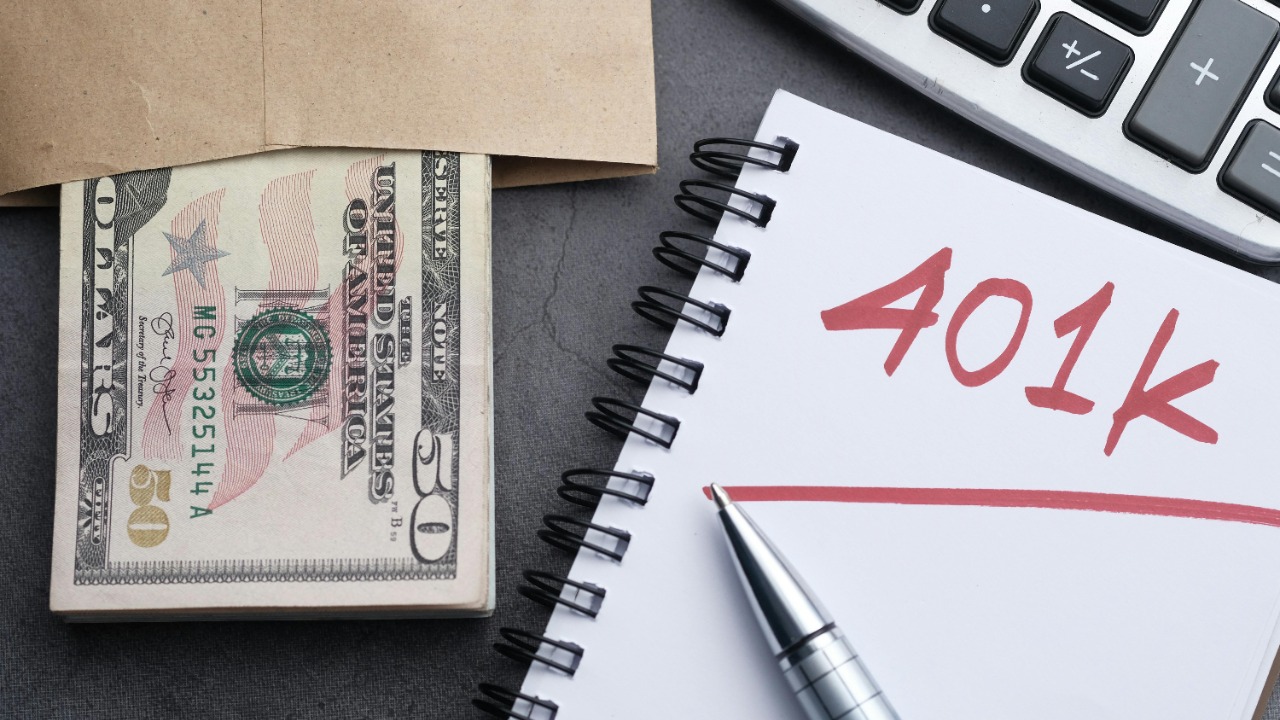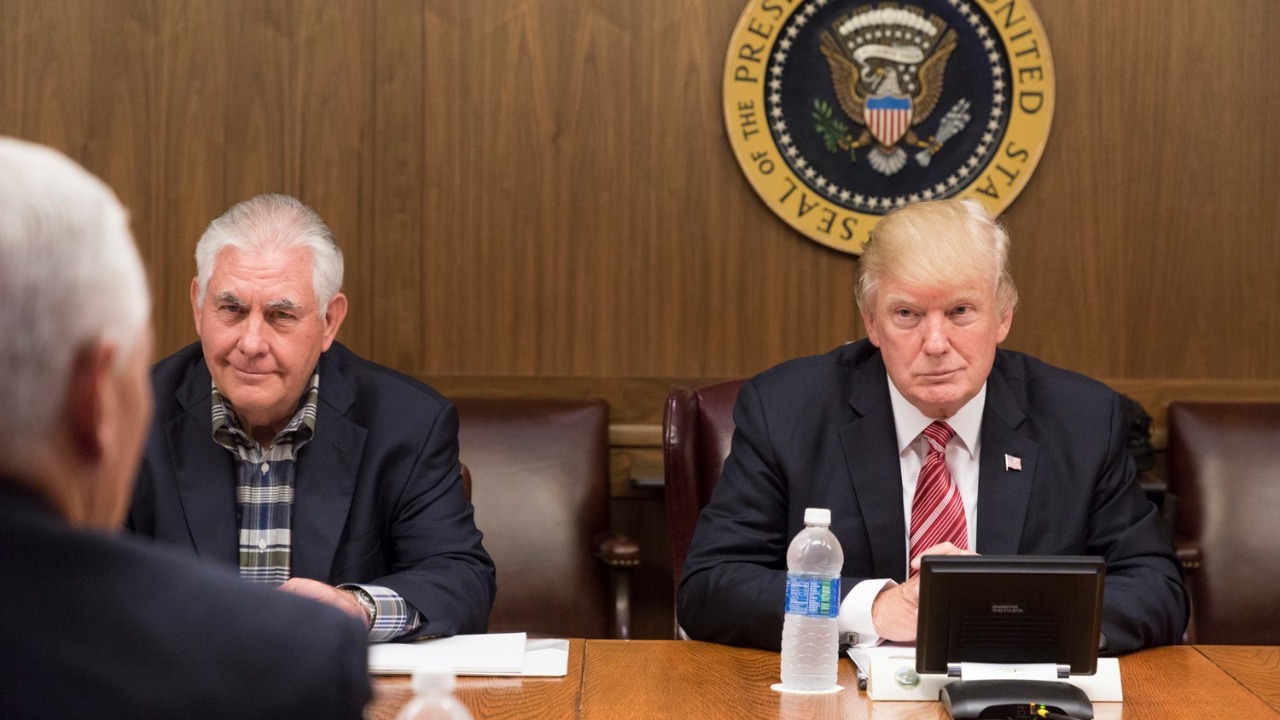
The White House is mounting an unusually direct appeal to the richest Americans, urging them to pour private money into new “Trump accounts” that are meant to seed investment portfolios for children. The push effectively turns a flagship policy of President Trump into a philanthropic challenge for billionaires and high net worth families, blending public guarantees with voluntary donations at a scale rarely seen in federal social programs.
At stake is whether a savings initiative framed as a patriotic investment in the next generation becomes a durable wealth-building tool or a branded experiment that depends on the generosity of a small elite. As the Administration courts the ultra wealthy, the early response from figures like Michael and Susan Dell and Bridgewater Associates Chairman Ray Dalio suggests that some of the country’s most powerful financiers are willing to test the model.
The White House’s quiet but aggressive fundraising blitz
The Administration has moved beyond traditional policy rollouts and into something closer to a capital campaign, privately asking the ultra wealthy to help bankroll Trump accounts on top of the public commitment. Officials inside The White House have framed the effort as a way to accelerate the impact of the program by front-loading private capital, effectively inviting billionaires to underwrite a national experiment in childhood investing that carries the president’s name.
According to detailed accounts of these conversations, the Administration has approached high net worth donors with a request to channel money into dedicated Trump accounts donations that would sit alongside federal contributions. In these briefings, aides have emphasized that the accounts are designed to be permanent investment vehicles for children, not short term cash transfers, and that early philanthropic money could determine how quickly the program reaches scale.
How Trump accounts are structured and who can contribute
Trump accounts are built to function as long term savings and investment vehicles that begin at birth and grow over time, with rules that resemble a hybrid of college savings plans and retirement accounts. The Internal Revenue Service has already issued initial guidance spelling out that contributions to Trump accounts, which can start being made on July 4, 2026, may come from many sources, including parents or legal guardians, extended family, employers, and philanthropic donors, all subject to specific tax treatment.
That guidance makes clear that contributions to Trump accounts are meant to be flexible in origin while still tightly regulated in use, with Parents and other contributors facing caps and reporting requirements that mirror existing tax advantaged savings vehicles. By opening the door to a wide range of funders, the Administration has created the legal scaffolding for its current push to the ultra wealthy, effectively inviting them to act as large scale “parents” of last resort for children whose families cannot afford to save.
The Administration’s pitch: private money for a public brand
In its outreach, the Administration has leaned heavily on the branding power of the president’s name, arguing that Trump accounts will only succeed if they are both financially robust and culturally visible. Officials have told potential donors that the program’s promise is to give every eligible child a stake in the markets, but that the federal budget alone will not be enough to deliver the kind of balances that could meaningfully change life trajectories by adulthood.
Reporting on these conversations indicates that the Administration has explicitly asked the ultra wealthy to help fill that gap, positioning the initiative as a chance to align private philanthropy with a signature Trump policy. One detailed account describes how the Administration asks the ultra wealthy to support accounts for babies born during Trump’s term, effectively tying donors’ legacies to a specific presidential window and reinforcing the political branding baked into the program’s design.
Ray Dalio and the Wall Street test case
One of the clearest early tests of this model is unfolding in Connecticut, where Bridgewater Associates Chairman Ray Dalio has stepped forward as a marquee donor. Dalio has pledged $75 million to support Trump accounts for children in the state, a commitment that instantly turned a theoretical national framework into a concrete local pilot and signaled that at least some in the financial elite see the program as compatible with their own long running interest in economic mobility.
The scale and framing of Dalio’s gift are notable. In public remarks, he has described the accounts as a way to put low income children on a path toward financial independence, aligning his pledge with years of advocacy around inclusive capitalism. Coverage of the announcement notes that Bridgewater Associates Chairman Ray Dalio is effectively using his personal fortune to test whether a branded federal account can deliver the kind of compounding benefits that private wealth managers routinely engineer for their own clients.
Michael and Susan Dell’s $6.25 billion bet on take-up
If Dalio’s pledge is a test case, Michael and Susan Dell have turned the Trump accounts experiment into a full scale stress test of philanthropic ambition. The couple has committed $6.25 billion to encourage families to claim Trump accounts, a sum that instantly makes them the program’s most important private backers and underscores how central billionaire participation has become to the Administration’s vision.
The structure of their gift is as important as its size. Michael and Susan Dell are donating $6.25 billion to deposit $250 into savings accounts for eligible children, effectively creating a universal on ramp that nudges families to sign up and start building balances. Reporting on the pledge notes that Michael and Susan Dell are targeting children who will qualify for accounts under the federal rules, while separate reporting highlights that Michael and Susan Dell donate $6.25bn specifically to encourage families of babies born between 2025 and 2028 to claim the new Trump branded accounts.
The Treasury blueprint and the promise of $1,000 per child
While private donors are being asked to supercharge the program, the core architecture still runs through the Treasury Department. Officials have outlined a blueprint in which each eligible child receives a federally backed Trump account with an initial public contribution of $1,000, creating a baseline stake in the markets that can then be supplemented by families, employers, and philanthropists.
In unveiling the details, senior advisers have framed the accounts as a way to ensure that every American will be invested in the free market system and, as one put it, “most importantly, its continued success.” The Treasury plan envisions that once the program goes live, Trump accounts will be opened automatically for qualifying children, with the $1,000 seed money and any private matches positioned as one of the largest coordinated investments in children in our nation’s history, a framing reflected in the official Trump account details released by the Administration.
Tax rules, market exposure, and the fine print for families
For families, the appeal of Trump accounts will hinge on how the tax rules and investment options translate into real world gains. The IRS guidance indicates that contributions will enjoy specific tax advantages, but also that withdrawals will be constrained to approved uses, such as education, homeownership, or retirement, depending on how the final regulations are written. That balance between flexibility and guardrails will determine whether parents see the accounts as a genuine wealth building tool or a restricted pot of money that is hard to access when immediate needs arise.
On the investment side, the Administration has signaled that accounts will be exposed to diversified portfolios rather than single stock bets, with age based allocations that gradually shift from equities to safer assets as beneficiaries grow older. Analysts tracking the rollout have noted that the Trump Administration seeks private funding for new Trump Accounts in part because market exposure introduces volatility, and larger balances from donors can help smooth out downturns over time. One detailed policy analysis of how the Trump Administration Seeks Private Funding for New accounts underscores that the mix of public guarantees and private contributions is meant to cushion children from market shocks while still giving them meaningful upside.
Equity, branding, and the politics of billionaire-backed benefits
The decision to lean so heavily on billionaire donors raises hard questions about equity and political symbolism. On one hand, the Administration is channeling private fortunes into accounts that, at least on paper, are targeted at broad swaths of children, including those from low income families who have historically been shut out of investment markets. On the other, the program’s very name and the reliance on voluntary philanthropy risk turning a universal policy idea into a branded benefit that depends on the goodwill of a small, unelected class.
Critics of similar public private experiments have long warned that when core social supports rely on donors, coverage can become patchy and subject to the shifting priorities of the ultra wealthy. In the case of Trump accounts, the Administration’s direct appeals to billionaires, the central role of figures like Michael and Susan Dell and Ray Dalio, and the explicit focus on babies born during Trump’s term all deepen the sense that this is as much a political project as a technocratic one. Whether families ultimately embrace the accounts may depend less on the president’s brand than on whether the promised $1,000 seeds, the $250 nudges, and the larger philanthropic infusions translate into balances that feel real and reachable by the time today’s newborns come of age.
What success would look like for Trump accounts
For the Administration, success will be measured in both participation rates and account balances. High take up among eligible families, especially in communities that have historically lacked access to financial services, would validate the decision to pair federal guarantees with aggressive outreach and philanthropic sweeteners. Robust balances by the time beneficiaries reach adulthood would then serve as proof that compounding returns, seeded by public money and billionaire gifts, can narrow wealth gaps rather than simply padding the portfolios of those already positioned to save.
From the perspective of donors, the calculus is slightly different. For Michael and Susan Dell, the $6.25 billion commitment is a bet that a relatively modest $250 deposit can change behavior by nudging families to engage with the accounts early and often. For Ray Dalio, the $75 million pledge is a test of whether targeted investments in Connecticut kids can create a replicable model for other states. And for the White House, the entire experiment is a referendum on whether an Administration that asks the ultra wealthy to fund Trump accounts can turn a politically branded idea into a durable, bipartisan tool for building children’s wealth, rather than a one term curiosity tied to a single president’s name.
More From TheDailyOverview

Grant Mercer covers market dynamics, business trends, and the economic forces driving growth across industries. His analysis connects macro movements with real-world implications for investors, entrepreneurs, and professionals. Through his work at The Daily Overview, Grant helps readers understand how markets function and where opportunities may emerge.