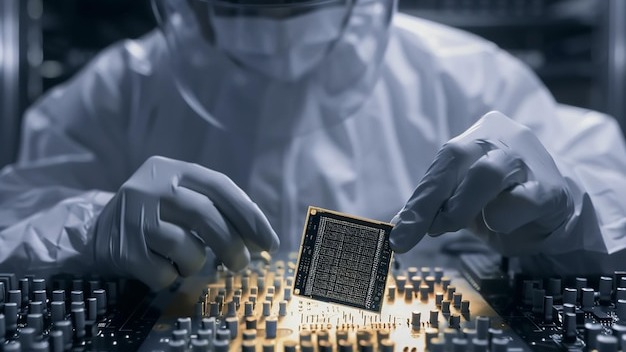
Samsung’s long-promised chip hub on former Williamson County farmland is finally moving from construction site to functioning factory, turning years of delay into the first cautious steps of production. The Taylor complex, initially pitched as a $17 billion bet on advanced manufacturing, was supposed to be running by late 2024 but instead spent much of 2025 in limbo as demand wobbled and timelines slipped. Its belated start now collides with a global scramble for AI silicon, raising the stakes for whether this plant becomes a cornerstone of U.S. chip resilience or a monument to overpromised industrial policy.
I see the Taylor ramp as more than a local jobs story. It is a live test of whether a global giant like Samsung can sync its capital-heavy buildout with a volatile, AI-driven market cycle, while still delivering on the public subsidies and community expectations that helped pave its way to Texas.
From stalled mega-project to “limited operations”
The Taylor facility was originally slated to begin operations by the end of 2024, with construction largely wrapped by late 2025, but that schedule slipped as Samsung reassessed demand for its most advanced chips. The company has now formally begun limited operations at the new plant, a shift that turns a sprawling construction zone into an active manufacturing site and signals that the years of waiting are finally giving way to production-focused work on the ground. Several hundred employees have been on site since November, and those early staff have been tasked with readying tools, clean rooms, and support systems so the factory can kickstart production by the end of this year, according to Several.
Physically, the site already looks like a small city. Samsung has built about 4 million square feet of space, including a six-story office building that looms over the 1,200-acre campus northeast of Austin, and local agreements call for that footprint to reach 6 million square feet by 2026 as the project matures. The plant sits on former farmland in Williamson County, a reminder that this is not just a corporate expansion but a permanent reshaping of the local landscape, and the shift from dirt to fabs has been under way since 2022, as chronicled in coverage of Samsung’s Taylor buildout.
Delays, demand shocks, and a strategic pause
For critics, the Taylor project became a symbol of how fragile the U.S. chip resurgence could be when exposed to real market cycles. Samsung itself acknowledged that it delayed completion of what has grown into a roughly $44 billion Texas investment because there was insufficient customer demand for advanced chips to justify a full-speed launch, a reality spelled out in Key Points on the delay. That admission cut against the political narrative that domestic fabs would be built and filled almost automatically once subsidies were on the table, and it underscored how even heavily incentivized projects still live or die by private orders.
I read the drawn-out timeline less as simple foot-dragging and more as a strategic pause that happened to coincide with a brutal downcycle in some chip segments. Samsung had already committed to Taylor, but slowing the ramp gave it room to align the facility with the next wave of demand rather than locking in capacity for a softer market. The fact that the company is now targeting a massive 130% growth in 2nm GAA orders in 2026 for the growing AI market suggests that the company is now betting the Taylor plant will come online into a far more favorable environment than the one it faced when it first broke ground.
Tesla AI, 2nm ambitions, and the race for AI silicon
The clearest sign that Taylor is being wired for the AI era rather than yesterday’s smartphone cycle is its emerging role in Tesla’s chip roadmap. Samsung is moving toward production of Tesla’s upcoming AI6 chips, and early approval at the Texas factory has been framed as a key step toward that ramp, according to reporting on Tesla AI plans. That kind of anchor customer is exactly what the plant lacked when Samsung cited a lack of buyers for its earlier delay, and it gives the company a marquee AI workload to justify high-end process investments.
At the same time, Samsung is positioning its most advanced 2nm GAA technology as the centerpiece of its next growth phase, with the company reportedly aiming for that 130% surge in orders as AI training and inference workloads explode. If Taylor becomes one of the main sites for that node, the plant’s late start could actually be an advantage, allowing it to skip directly to bleeding-edge tooling instead of retrofitting a line that was optimized for an older process. I expect the first meaningful volumes of AI6 and other advanced chips from Taylor to arrive in phases rather than a single big bang, with the “big milestone” of the first chips rolling off the line this year described in coverage of the first chips as the start of a longer AI-focused ramp rather than its culmination.
Jobs, incentives, and the Texas bet on semiconductors
For Taylor and Williamson County, the plant’s shift into operation is the moment when abstract promises of “high-paying jobs” start to materialize into actual paychecks. Several hundred employees have already been working out of the 1,200-acre campus since November, and that number is expected to climb as more tools are installed and production lines come online, according to reports on Samsung’s new Taylor factory. The early workforce is heavy on engineers and technicians, but as with other fabs, the long-term employment base will also include facilities staff, logistics workers, and contractors who keep the ecosystem running.
Those jobs are intertwined with a web of tax breaks and state support that helped lure Samsung to Texas in the first place. Agreements with local authorities require the company to complete 6 million square feet of floorspace by 2026 and another 3 million square feet by 2030, conditions tied to incentives that include access to the Texas Semiconductor Innovation Fund, as detailed in coverage of Samsung Electronics Co, and its commitments in Taylor. Another analysis of the project notes that these buildout requirements are part of a broader push to restore profitability in Samsung’s chip division after several years of losses, reinforcing how public subsidies and private turnaround plans are tightly linked in this mega-fab.
Local impact, environmental tradeoffs, and what comes next
Transforming former farmland into one of the world’s largest chip complexes inevitably reshapes the local environment, from water use to traffic patterns. The Taylor site covers 1,200 acres in Williamson County, and the company’s obligation to reach 6 million square feet of floorspace by 2026 and 9 million square feet by 2030 means the physical footprint will keep expanding, as outlined in As part of the agreement with local authorities. That scale brings with it heavy infrastructure demands, from power and water to new roads, and it will test whether the region can support a fab cluster without the kind of bottlenecks that have plagued other U.S. chip projects.
There is also a broader question of whether the Taylor plant will catalyze a sustainable tech corridor or simply import a self-contained industrial island. The presence of several hundred early employees, the six-story office building, and the growing square footage suggest a long-term corporate town in the making, but the depth of local integration will depend on how many suppliers, research partners, and smaller manufacturers follow Samsung into the area. I expect a gradual buildout of that ecosystem rather than an overnight boom, with milestones like the first chips rolling off the line and the completion of 6 million square feet serving as triggers for additional investment, as described in reporting on the plant’s former farmland origins.
More From The Daily Overview
*This article was researched with the help of AI, with human editors creating the final content.

Grant Mercer covers market dynamics, business trends, and the economic forces driving growth across industries. His analysis connects macro movements with real-world implications for investors, entrepreneurs, and professionals. Through his work at The Daily Overview, Grant helps readers understand how markets function and where opportunities may emerge.

