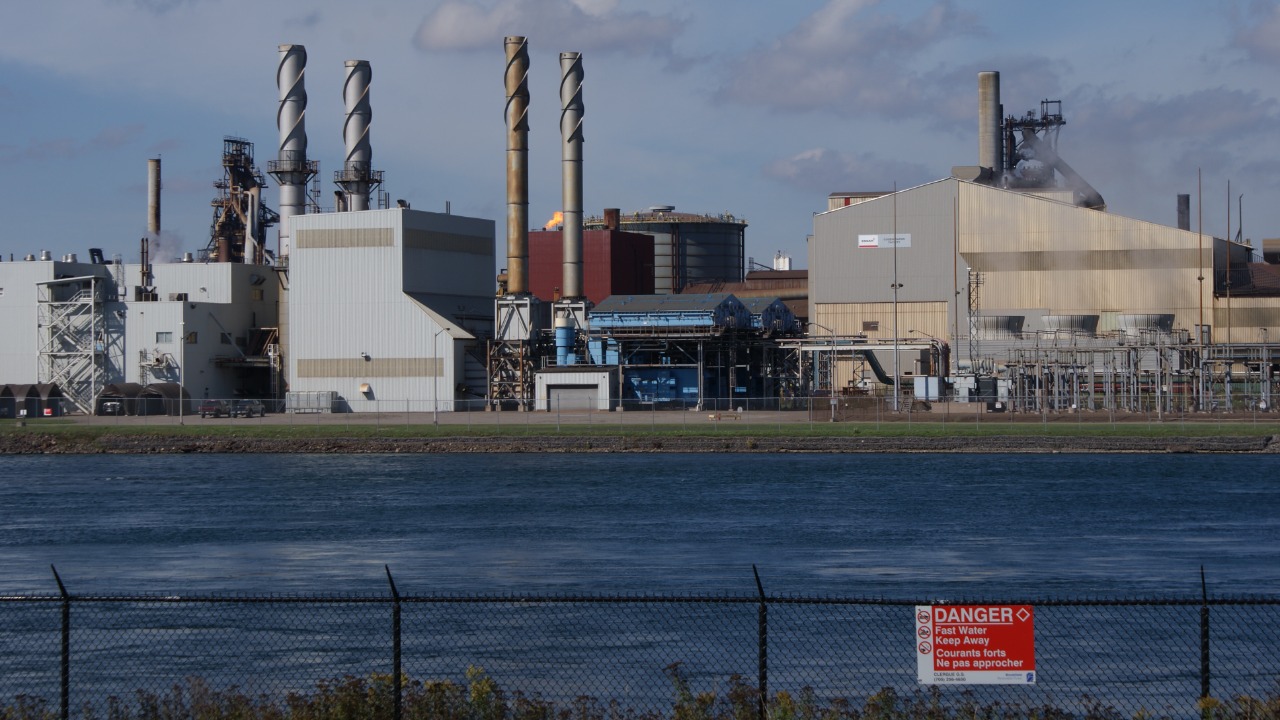
Algoma Steel’s decision to eliminate roughly 1,000 jobs is more than a corporate restructuring, it is a stark example of how trade policy can ripple through a local economy and upend working lives. The company is tying the cuts directly to U.S. tariffs, arguing that the new costs have shattered its ability to compete in its most important export market. For workers in Sault Ste. Marie and across northern Ontario, the move signals that the era of easy assumptions about cross-border steel flows is over.
What is unfolding around Algoma Steel is not an abstract trade dispute but a concrete loss of paycheques, tax revenue and industrial capacity. As the company accelerates a shift in how it makes steel and governments scramble with hundreds of millions of dollars in aid, the layoffs show how quickly policy decisions in Washington can reshape the future of a Canadian mill town.
The scale of the layoffs and who is hit hardest
The headline number is blunt: Algoma Steel is preparing to cut about 1,000 employees from its workforce, a reduction large enough to reshape the labour market in a city the size of Sault Ste. Marie. In corporate terms, this is framed as a necessary response to a hostile trade environment, but for the people behind that figure it means lost income, disrupted careers and a scramble to find new work in a region that has long depended on a single industrial anchor. Local coverage has described the decision as a massive blow to the steel industry and to 1,000 Almo workers and their families, underlining how concentrated the pain will be in one community that has already weathered previous downturns linked to global steel cycles and currency swings.
When a plant announces a cut of 1,000 jobs, the impact extends far beyond the mill gates, and that is especially true in a place where steelmaking has shaped the city’s identity for generations. Suppliers, small businesses and service providers that rely on steady paycheques from the plant will feel the shock as well, from auto repair shops to daycare centres. The fact that the company is tying the layoffs so explicitly to tariffs has also sharpened the political edge of the story, with local voices warning that the decision is not just about corporate strategy but about how national governments choose to manage cross-border trade. That sense of frustration is evident in the way the job losses have been framed in local video reports on the 1,000 layoffs at Almo workers and their families.
Tariffs as the trigger, not a distant backdrop
Algoma Steel is not being coy about what it sees as the trigger for this restructuring: the company is directly citing Trump’s tariffs on imported steel as the reason it is cutting 1,000 employees. In its communications with investors and the public, Algoma Steel has linked the job cuts to a sharp deterioration in its access to the U.S. market, arguing that the new levies have made its products significantly more expensive relative to American competitors. That narrative has been reinforced by market reaction, with Algoma Steel, which trades under the ticker ASTL, seeing its shares fall by 8.9% on the Monday when it disclosed that it would cut 1,000 employees, a sign that investors expect the tariffs to weigh on earnings for some time.
From my perspective, what stands out is how directly the company is tying its labour decisions to the policy choices of the current U.S. administration. Rather than treating tariffs as one factor among many, Algoma Steel is presenting them as the central reason it can no longer sustain its current headcount. That framing matters because it turns a corporate downsizing into a case study in how presidential trade policy can reshape industrial employment beyond U.S. borders. The explicit reference to Trump’s tariffs in the company’s explanation of the 1,000 employees affected, and the immediate 8.9% drop in ASTL on that Monday, are captured in market-focused coverage of Algoma Steel to cut 1,000 employees.
A community built on steel faces a new shock
For Sault Ste. Marie, the layoffs are not just another round of belt-tightening but a potential turning point in the city’s economic story. Algoma Steel has long been one of the largest employers in Sault Ste. Marie, Ontario, and the announcement that 1,000 Algoma Steel workers in Sault Ste. Marie, Ontario, face layoffs due to U.S. tariffs has rattled local leaders who understand how deeply the plant is woven into the city’s tax base and social fabric. When a single employer accounts for such a large share of well paid industrial jobs, a cut on this scale can affect everything from housing demand to school enrolment.
Mayor Matthew Shoemaker has been blunt in his assessment, warning that the 1,000 lost Algoma Steel jobs are likely not to come back and pressing higher levels of government for more robust support, including defense procurement and port development that could help diversify the local economy. I see that as a recognition that the city cannot simply wait for trade winds to shift and tariffs to be lifted, but must instead plan for a future where steel employs fewer people even if the mill itself survives. The mayor’s comments about the 1,000 Algoma Steel workers in Sault Ste. Marie, Ontario, and his call for broader support, are laid out in a detailed local video on 1,000 Algoma Steel workers in Sault Ste. Marie, Ontario.
Union anger and the question of public money
Labour leaders have reacted to the layoffs with a mix of anger and exasperation, particularly because Algoma Steel has benefited from significant government support in recent years. Union representatives argue that it is unacceptable for a company to receive large public subsidies and then proceed to lay off 1,000 workers when trade conditions turn against it. That frustration is echoed in coverage of a similar case at Alma Steel, where Alma Steel lays off 1,000 workers due to tariffs despite government financial support, and the Union urges governments to attach conditions to funding so that job protections are built into any rescue package.
From where I sit, the union’s argument raises a broader policy question that goes beyond Algoma Steel: if taxpayers are effectively insuring companies against trade shocks, should they be able to demand guarantees on employment levels in return. The call for governments to attach strings to future aid reflects a belief that public money should not simply shore up balance sheets but should also secure long term industrial jobs. The way Alma Steel’s 1,000 worker layoffs have been linked to tariffs and prior government support, and the Union’s push for tougher conditions on funding, is captured in a video segment on how Alma Steel lays off 1,000 workers.
Inside Algoma Steel’s strategic pivot to new technology
Even as it cuts jobs, Algoma Steel is presenting the layoffs as part of a broader strategic pivot in how it makes steel. The company has said it is speeding up its shift to Electric Arc Furnace Production, a move that is meant to reduce costs, lower emissions and make the plant more flexible in the face of volatile demand. In practice, that means moving away from traditional blast furnaces that rely heavily on iron ore and coking coal and toward electric arc furnaces that can melt scrap steel using large amounts of electricity, a technology that is often more labour efficient.
I read that as a sign that Algoma Steel is trying to use a moment of crisis to accelerate changes it likely saw as inevitable, even before tariffs hit. By framing the layoffs as part of a Company Speeds Up Shift to Electric Arc Furnace Production, the firm is signalling to investors that it is not simply retrenching but attempting to modernize its operations for a world where carbon constraints and trade frictions are both intensifying. The description of how Algoma Steel is advancing this shift, and the way it is presented in Key Takeaways about the company’s strategy, is laid out in a detailed report on how Algoma Steel said it will lay off 1,0.
Tariffs that “fundamentally altered” the playing field
Algoma Steel’s leadership has not minced words about the effect of U.S. tariffs on its business model. Executives have said that these tariffs have fundamentally altered the competitive landscape and sharply limited the company’s ability to access the U.S. market, which has long been a crucial outlet for Canadian steel. When a company uses language that strong, it is signalling that the problem is not a temporary dip in demand but a structural change in how it must compete, with higher costs at the border that rivals inside the United States do not face.
In my view, that kind of structural shock helps explain why the company is resorting to layoffs on this scale rather than trying to ride out a short term downturn. If tariffs are expected to remain in place for an extended period, management will feel pressure to resize the workforce and retool production rather than simply cutting overtime or delaying maintenance. The company’s own description of how tariffs have fundamentally altered the competitive landscape and sharply limited its ability to access the U.S. market is captured in a northern Ontario report on how Algoma Steel lays off 1,000 workers due to high tariffs.
Hundreds of millions in Canadian aid on the line
Algoma Steel’s reliance on public support is central to the political debate now swirling around the layoffs. Earlier this year, Canada’s federal government announced a major support package, with OTTAWA confirming that Canada’s government would provide $400 million in financial support for Algoma St, a sum that was also described as $400 m and $287.13 m, or $287.13 million, in U.S. dollar terms. That injection of public money was justified as a way to help the company weather U.S. tariffs and invest in cleaner, more efficient production, with the hope that a stronger Algoma Steel would preserve jobs and maintain a domestic steelmaking capacity that is strategically important.
From my perspective, the fact that Algoma Steel is now cutting 1,000 jobs despite that level of support will intensify scrutiny of how such packages are structured. Taxpayers may reasonably ask what they received in return for a $400 million commitment if the company is still shedding workers and citing tariffs as the reason. The details of the federal support, including the figures of $400 m, $287.13 m, $400 million and $287.13 million for Algoma St, are laid out in a financial report on how Canada’s government is to provide $400 million.
Additional loans and the question of conditions
The $400 million package is not the only public lifeline Algoma Steel has received. The company has also secured a $500-million tariff relief loan from federal and provincial governments, a figure that underscores just how much public capital has been deployed to keep the mill competitive in the face of U.S. trade measures. That $500-million commitment, sometimes shortened to $500 in shorthand references, was framed as a way to help Algoma Steel weather U.S. tariffs while it invests in new technology and environmental upgrades.
When I put that $500-million loan alongside the job cuts, the tension that unions and local leaders are highlighting becomes even clearer. Governments have effectively become major financial stakeholders in Algoma Steel, yet they appear to have limited leverage over decisions that directly affect employment in Sault Ste. Marie. The description of how Algoma Steel gets $500-million in government loans to fight tariffs, and the way that $500 is meant to help the company weather U.S. tariffs, is detailed in a political report on how Algoma Steel gets $500-million tariff-relief loan.
What Algoma’s cuts signal for Canada’s industrial future
Algoma Steel’s layoffs are a local tragedy, but they are also a warning sign for Canada’s broader industrial strategy. If a company that has received $400 million in direct support and a $500-million loan still feels compelled to cut 1,000 jobs in response to U.S. tariffs, it suggests that traditional tools of industrial policy may not be enough to shield workers from the fallout of aggressive trade measures. The combination of tariffs, technological change and investor pressure is pushing firms to become leaner and more automated, even when governments are willing to write large cheques to preserve capacity.
In my view, the lesson is that Canada will need a more integrated approach that links trade policy, climate goals and regional development if it wants to keep communities like Sault Ste. Marie from bearing the full brunt of global economic shifts. That could mean pushing harder for exemptions from U.S. tariffs, designing aid packages with stricter job guarantees, or investing more heavily in alternative industries that can absorb displaced workers. For now, though, the immediate reality is that 1,000 families connected to Algoma Steel are facing an uncertain future, and their experience will shape how Canadians judge the effectiveness of both domestic policy and the country’s relationship with a U.S. administration that has chosen tariffs as a central economic tool.
More From TheDailyOverview
- Tennessee loses $2.6B megafactory and faces major layoffs
- Retired But Want To Work? Try These 18 Jobs for Seniors That Pay Weekly
- What to do with your pennies after the U.S. stops minting them
- Home Depot CEO warns of a troubling customer trend in stores

Grant Mercer covers market dynamics, business trends, and the economic forces driving growth across industries. His analysis connects macro movements with real-world implications for investors, entrepreneurs, and professionals. Through his work at The Daily Overview, Grant helps readers understand how markets function and where opportunities may emerge.