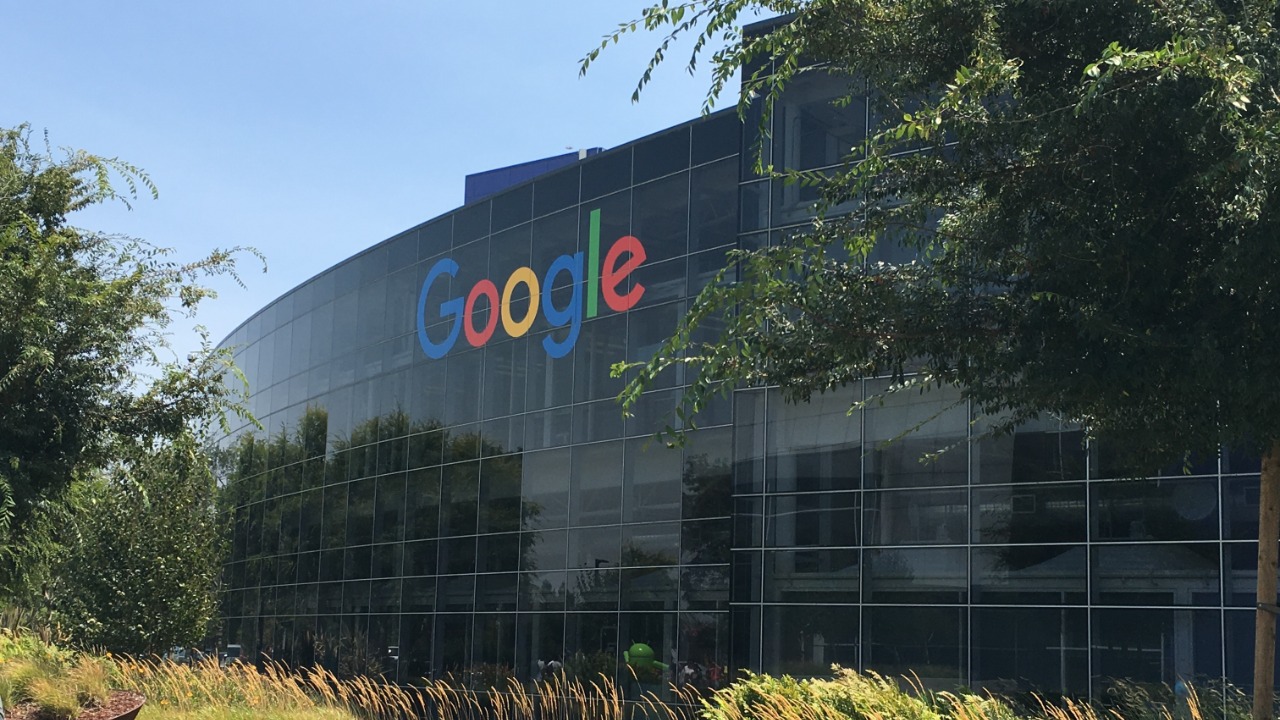
Alphabet is testing the outer limits of corporate finance, pairing a massive $20 billion bond sale with plans for an ultra-rare 100-year security. The parent of Google is using its balance sheet strength and investor hunger for Big Tech exposure to lock in long-term money just as the artificial intelligence race demands unprecedented capital.
The move signals a new phase in how the largest technology platforms fund their ambitions, shifting from cash hoards toward structured borrowing that stretches across currencies and even generations. It also offers a revealing snapshot of how credit markets now view the durability of Alphabet’s business model and the staying power of AI-driven growth.
Inside Alphabet’s $20 billion dollar bond splash
Alphabet Inc has gone far beyond a routine funding exercise, lining up a US dollar bond offering sized at $20 billion that ranks among the largest corporate deals on record. Legal advisers including Cleary Gottlieb are working with Alphabet Inc on the transaction, which is structured across multiple maturities and remains subject to customary closing conditions. For a company that already sits on substantial cash, tapping bond markets at this scale is less about plugging a liquidity gap and more about optimizing its capital structure while money is still relatively cheap for top tier issuers.
Demand has validated that strategy. Investor orders for the US dollar tranches alone have reportedly surged past $100 billion, with one account of the book building process putting total interest at $141, a figure that underscores how aggressively buyers chased the deal from the outset. That same reporting credits Brian Smith with detailing how $141 billion of demand gave Alphabet ample room to tighten pricing while still leaving investors eager for allocations. In practical terms, that kind of oversubscription lets Alphabet push down borrowing costs and fine tune maturities in its favor.
A 100-year bond that stretches tech’s time horizon
Alongside the jumbo sale, Alphabet is preparing a 100-year bond that would be the first such century-long issue by a major technology company in roughly three decades. The structure effectively asks investors to underwrite the resilience of Google’s ecosystem and its successors across an entire century, a horizon more commonly associated with sovereigns or old-line industrial giants. One detailed account notes that Alphabet, described explicitly as Google parent, is teeing up this 100-year security as part of a broader strategy that it has nicknamed “Far and Wide,” a label that captures both the tenor and geographic reach of the borrowing.
Market specialists have framed the century bond as a test of just how far investors are willing to go in treating Big Tech as a quasi-permanent fixture of the global economy. One analysis points out that the move highlights both the scale of Alphabet’s AI ambitions and the extraordinary investor appetite for Big Tech debt, suggesting that buyers are comfortable trading duration risk for the perceived stability of Alphabet’s cash flows. In that sense, the 100-year tranche is not just a curiosity, it is a barometer of how credit markets are pricing the long term viability of the digital advertising, cloud, and AI infrastructure businesses that underpin Google.
Borrowing across currencies, continents and investor bases
Alphabet is not confining its borrowing spree to US dollars. The company is also issuing in sterling and Swiss francs, tapping European investors who are hungry for high grade corporate paper and often accept lower yields than their US counterparts. One report describes how Alphabet Inc has moved into the sterling and Swiss markets as part of this mega deal, aligning the currency mix of its liabilities more closely with the geographic spread of its revenues. For a company with significant operations and customers in Europe, that kind of natural hedge can be as important as the headline coupon.
The 100-year component itself is expected to be denominated in sterling, a market that has historically been more receptive to ultra long dated corporate bonds. Coverage of the deal notes that the century bond would be the first of its kind in the technology sector since the dot-com era, with Tasos Vossos highlighting how investors are weighing the risks and rewards of such a long commitment in a world where interest rates and technology cycles can shift quickly. In that context, the planned structure, flagged in detail by Tasos Vossos, shows Alphabet using currency choice and tenor to segment demand, pairing shorter US dollar notes with ultra long sterling paper to reach different pockets of capital.
AI, capex and the logic behind loading up on debt
Alphabet’s borrowing binge is inseparable from the capital intensity of the AI race. Building and operating hyperscale data centers, acquiring advanced chips, and wiring global networks all require multi year spending that can dwarf even the robust cash generation of a company like Google. One detailed breakdown of hyperscaler budgets notes that capital expenditures for the four biggest US tech companies are forecast to surge as they chase AI opportunities that could, in the words of that analysis, completely reshape the global economy. Within that context, Alphabet’s decision to lean on bond markets looks less like opportunism and more like a strategic response to a once in a generation infrastructure build out.
Specific use of proceeds reinforces that picture. Alphabet, explicitly identified as Google’s parent company, is raising $20 billion in bonds with the stated aim of funding AI hardware, expanding data centers, and covering other general corporate purposes that support its machine learning roadmap. One concise summary explains that Alphabet intends to channel the money into servers, networking gear, and related infrastructure that can handle the compute demands of large language models and other advanced systems. In effect, the bond market is being asked to finance the physical backbone of AI, from the chips in Google Cloud regions to the fiber that links them.
From $15 billion talk to a $20 billion reality
What makes the final size of the US dollar deal even more striking is how quickly expectations shifted upward. Early chatter among market watchers suggested that Alphabet was looking to raise about $15 billion, a figure that already would have placed the offering among the larger corporate financings of the year. One widely shared discussion thread, in which the author corrected a typo that had initially referenced $1.5 billion, captured how the title was updated to reflect a $15 billion target and then marveled at how the $1.5 error had understated the scale of Alphabet’s ambitions. That same commentary later noted that the deal ultimately priced at $20 billion, describing the outcome as “crazy demand” and reading it as a bullish signal for the stock.
Formal deal reporting backs up that narrative of an upsized transaction. Coverage of the book building process explains that Alphabet Inc initially floated a smaller size before investor orders swelled, allowing the company to push the final tally to $20 billion while still tightening spreads relative to early talk. One detailed account notes that Alphabet Inc is set to raise $20 billion from its US dollar bond offering, exceeding earlier expectations and ranking among the largest corporate bond financings ever completed. For investors, the shift from a $15 billion idea to a $20 billion execution is a reminder that in a yield hungry environment, marquee issuers can often stretch supply far beyond initial plans.
How the 100-year bond fits into a wider AI financing wave
Alphabet’s century bond is not emerging in a vacuum. It is part of a broader financing wave sweeping across the largest technology platforms as they race to secure capital for AI. One synthesis of recent deals notes that The AI arms race is fueling a surge of bond issuance by tech giants, with Google’s parent company planning to issue more than $20 billion in bonds after similar moves by peers such as Meta. That analysis frames Alphabet’s plans as a textbook example of how The AI race is reshaping corporate balance sheets, pushing companies that once relied heavily on equity and retained earnings to embrace long dated debt as a strategic tool.
Within that landscape, Alphabet’s 100-year bond stands out as a statement of confidence in its own longevity and in the durability of AI as a profit engine. One early look at the structure, which described how Google’s parent company is going on a borrowing spree across currencies and continents, emphasized that the century bond is designed to anchor a global funding program that stretches from US dollars to European currencies. The same coverage, illustrated with an image credited to Justin Sullivan of Getty Images, highlighted how Google is using its brand strength to tap every corner of the credit markets. In that sense, the 100-year tranche is both a financing instrument and a signaling device, telegraphing to investors and rivals alike that Alphabet expects to be a central player in AI for decades to come.
What this means for investors, rivals and the future of tech credit
For bond investors, Alphabet’s mega deal offers a rare combination of scale, liquidity and brand recognition, but it also raises questions about concentration risk. Buying a 100-year security tied to Google’s parent company is effectively a bet that search, cloud computing and AI services will remain dominant profit centers well into the next century. One detailed analysis of the planned structure, which noted that the update came on a Mon evening at 9:56 PM PST and flagged the ticker GOOG, underlined how unusual it is to see a technology issuer stretch maturities this far. The same report, attributed to Mon and PST timing in its metadata and to Tasos Vossos in its byline, suggested that some investors are comfortable with that risk because they view Alphabet’s business as more akin to a regulated utility of the digital age than a cyclical hardware maker.
Rivals will be watching closely. If Alphabet’s 100-year bond and $20 billion sale trade well in secondary markets, it could embolden other Big Tech names to follow suit with their own ultra long dated offerings and multi currency programs. One early preview of the borrowing spree, which referenced how Google is lining up a rare century bond, framed the move as a potential template for peers that need to fund AI infrastructure without diluting shareholders. If that pattern holds, the tech sector could become an even more dominant presence in global credit indices, and investors who once thought of corporate bonds as a way to diversify away from equities may find that their fixed income portfolios are increasingly tied to the same handful of digital platforms.
More From The Daily Overview
*This article was researched with the help of AI, with human editors creating the final content.

Grant Mercer covers market dynamics, business trends, and the economic forces driving growth across industries. His analysis connects macro movements with real-world implications for investors, entrepreneurs, and professionals. Through his work at The Daily Overview, Grant helps readers understand how markets function and where opportunities may emerge.

