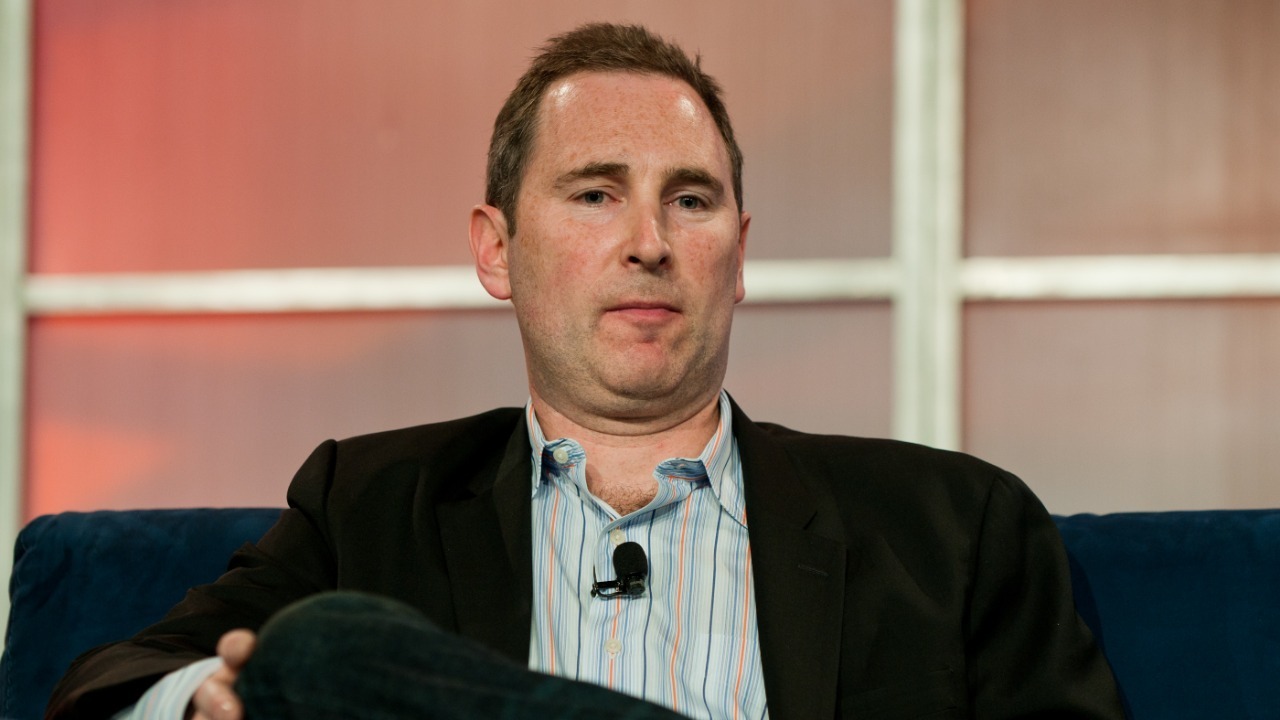
President Trump’s new 10% tariffs are no longer an abstract policy debate for the world’s biggest online marketplace. They are starting to show up in the totals on checkout screens, and Amazon chief executive Andy Jassy is now publicly acknowledging that the impact is real. After months of insisting the company had largely insulated shoppers, Jassy is warning that the tariff shock is creeping into prices and could reshape how Amazon sources and sells goods.
The shift marks a rare moment when the leader of a consumer giant is effectively telling customers to brace for higher costs driven by Washington. It also exposes a tension at the heart of Amazon’s model: a platform built on global supply chains and relentless price competition is being forced to adapt to a world where trade barriers are rising again.
From calm to alarm: Jassy’s tariff U-turn
When Andy Jassy spoke with CNBC last summer, he said Amazon had not seen “prices appreciably move” as tariff talk heated up, signaling confidence that the company could ride out the policy storm. That message has flipped. At the World Economic Forum in Davos, Amazon CEO Andy said President Trump’s tariffs have started to “creep” into prices, a notable change in tone that underscores how quickly the policy has moved from theory to practice. He framed the 10% levy as a cost that companies cannot absorb indefinitely, especially in categories where margins are already thin.
That new candor is even starker when set against his earlier comments. Reporting on the shift notes that Jassy is now openly saying that prices “have gone up from tariffs,” a direct acknowledgment that the company’s earlier optimism has given way to a more sober assessment. Another account describes how, six months later, Amazon CEO Andy is “singing a different tune” on tariffs, warning that the pain of higher prices is arriving in 2026 despite earlier efforts to keep them flat.
How Trump’s 10% tariffs are filtering into the Amazon cart
Jassy’s core message is that a 10% tariff functions like a tax on the entire supply chain, and that tax is now being shared between sellers and shoppers. He has explained that Amazon and many of its third party merchants stocked up on inventory ahead of the tariffs to keep prices low, but that buffer is finite. Once pre tariff stock runs down, new imports arrive with the extra 10% baked in, and the math becomes unavoidable. In Davos, the Amazon CEO said tariffs are “starting to bump up product prices,” describing a gradual but broad based effect rather than a sudden spike in one niche.
So far, the company is drawing a distinction between specific brands and the overall marketplace. In a statement to CNN, Amazon said that “while we are seeing prices for some sellers and some brands go up, overall the prices of products on Amazon have not changed outside of what we would expect,” a line repeated in coverage that cites Toledo Blade reporting. Another account of that same statement notes that the company told CNN that overall price levels have not moved more than expected, even as some categories tick higher. That split view helps explain why some shoppers are already feeling the squeeze while headline inflation on the platform still looks contained.
Where shoppers are feeling it first
Jassy has not published a neat table of affected categories, but his comments and outside reporting point to import heavy goods as the early pressure points. Electronics, home gadgets and toys that rely on Asian manufacturing are particularly exposed, since a 10% tariff lands on top of existing logistics and component costs. One analysis of his Davos remarks notes that price hikes are beginning to appear across Amazon’s marketplace, especially in goods that are hard to re source quickly. That is consistent with the last trade war cycle, when tariffs hit categories like laptops and apparel before spreading more widely.
For shoppers, the effect is subtle but cumulative. A Bluetooth speaker that used to be $29.99 might now be $32.99, while a set of imported kitchen knives edges up by a few dollars. Jassy has said that Amazon CEO Andy Jassy sees tariffs as a key reason prices are increasing, but he also stresses that the company is trying to keep hikes as modest as possible. That balancing act is visible on the main Amazon storefront, where deals and coupons are increasingly used to offset list price increases without fully erasing the underlying tariff cost.
Consumers adjust as uncertainty continues
Despite the higher prices, Jassy says shoppers are still spending, but they are changing how they do it. In a recent interview, he described how “consumers have remained resilient and continue to spend, but many are adjusting,” a line captured in a report that highlights the section titled Consumers Adjust As. Shoppers are trading down to cheaper brands, delaying big ticket purchases and leaning harder on promotions, much as households do when gasoline prices jump. The tariff effect is not yet catastrophic, but it is nudging behavior in ways that could compound over time.
Jassy has also warned that shoppers are “starting to see more of that impact” as Trump’s 10% tariffs begin hitting prices on Amazon, a phrase that appears in coverage under the banner Amazon CEO Andy. That framing matters because it signals that the company is preparing customers for a longer period of elevated prices rather than a short lived blip. It also hints at a political subtext: by tying higher bills directly to President Trump’s tariff agenda, Jassy is implicitly pushing back on the idea that companies alone are to blame for the new inflationary pressure.
Inside Amazon’s playbook: stockpiles, messaging and limits
Behind the scenes, Amazon has been running a playbook that blends logistics and public relations. Jassy told Jassy explained that Amazon’s approach would be to stock up ahead of tariffs, negotiate with suppliers and then, “at a certain point,” accept that some of the cost must be passed on. That strategy bought time, but it could not rewrite the basic arithmetic of a 10% surcharge on imported goods. In Davos, the Tariffs discussion made clear that some brands are absorbing part of the hit, some are passing it on fully and others are “doing something in between.”
On messaging, Amazon is trying to reassure shoppers without sugarcoating reality. One report quotes the company saying that “while we are seeing prices for some sellers and some brands go up,” overall levels remain within expected ranges, a line that appears in coverage flagged with the word While. Another account of the same statement emphasizes that, in a message to In a statement, the company stressed that shoppers “have endless options,” hinting that competitive pressure will keep any individual seller from hiking prices too aggressively.
More From The Daily Overview
*This article was researched with the help of AI, with human editors creating the final content.

Grant Mercer covers market dynamics, business trends, and the economic forces driving growth across industries. His analysis connects macro movements with real-world implications for investors, entrepreneurs, and professionals. Through his work at The Daily Overview, Grant helps readers understand how markets function and where opportunities may emerge.

