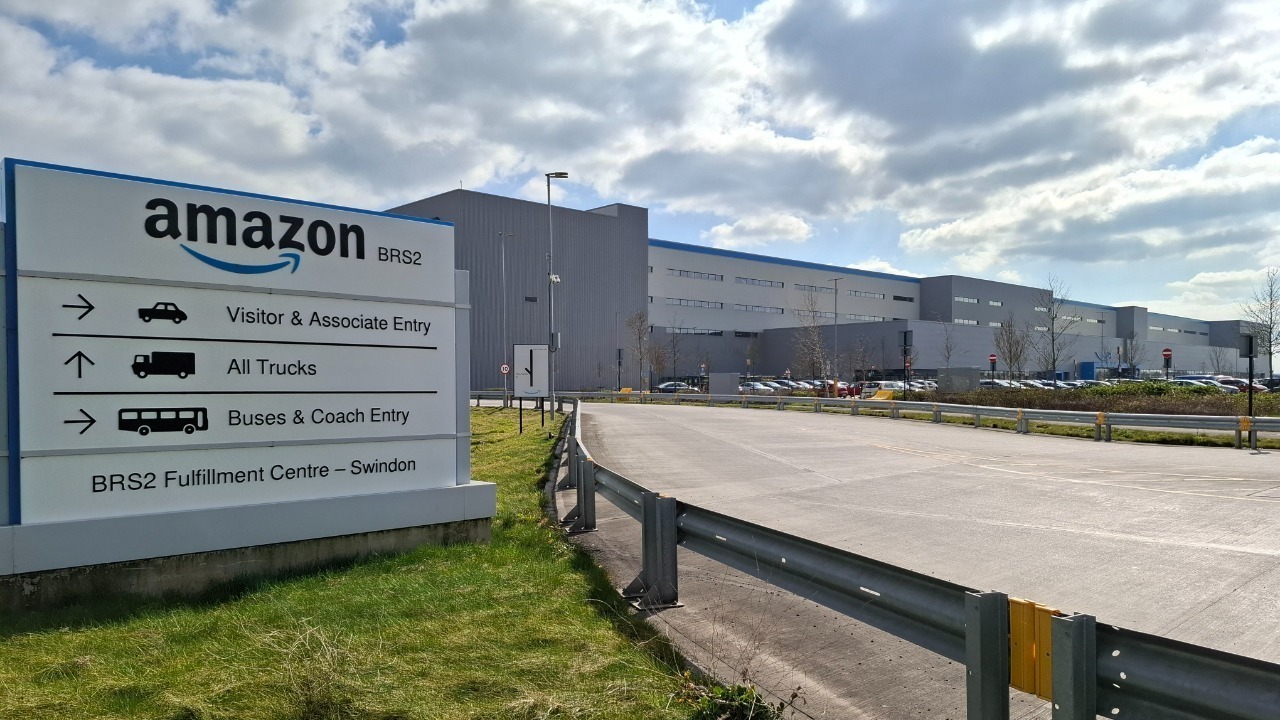
Amazon is quietly redrawing the future of work inside its warehouses, not by trimming around the edges but by designing a system that simply never needs to hire hundreds of thousands of people in the first place. Instead of posting jobs and then cutting them later, the company is building fleets of robots and AI tools that allow it to sidestep as many as 160,000 potential hires over the next few years. The result is a labor strategy that keeps headcount lean while demand keeps rising, and it raises hard questions about who benefits from the next wave of automation.
As I look at the numbers and timelines now emerging from inside the company, a pattern comes into focus: Amazon is not just experimenting with automation, it is methodically scaling it to cover most of its logistics network. The company’s own projections show that robots and software will do much of the work that would once have gone to entry-level warehouse employees, call center staff, and even some corporate roles. That shift is already colliding with layoffs and hiring slowdowns, and it is reshaping what a “good job” at Amazon will mean in the decade ahead.
Amazon’s automation pivot is about avoiding future workers, not just cutting current ones
The most striking feature of Amazon’s current strategy is that it is framed less as a wave of pink slips and more as a decision to never bring people on in the first place. Internal planning described in recent reporting shows that Amazon aims to automate up to 75% of its operations, a shift that would allow the company to “Avoid” roughly 160,000 “Hires By” 2027. That figure is not about replacing existing workers, it is about jobs that will never be posted because robots and AI systems will do the work instead. When a company the size of Amazon decides that three out of four tasks in its logistics network can be handled by machines, it is effectively rewriting the social contract it once offered to communities that welcomed its warehouses.
Other reporting reinforces just how aggressive that pivot has become. One analysis of the company’s robotics roadmap found that Amazon robots could replace over 160,000 new jobs “by 2027” and more than 600,000 “by 2033” through the use of robotics. In parallel, a separate report on the company’s internal automation team describes how Amazon’s U.S. work force has more than tripled since 2018 to almost 1.2 m, yet the same planning documents show that “But Amazon” expects robots to handle work that it would otherwise need hundreds of thousands of additional people to do by 2027. Taken together, these numbers show a company that is still growing, but is determined to grow with far fewer humans than its past trajectory would suggest.
Inside the plan to automate 75% of operations
To understand how Amazon can sidestep so many potential hires, it helps to look at what “75%” automation actually means on the warehouse floor. The company has spent years rolling out fleets of mobile robots that ferry shelves to human pickers, robotic arms that can sort and pack items, and AI systems that predict demand so inventory moves with minimal human intervention. The new reporting on Amazon’s internal targets indicates that the company now expects these systems to cover roughly three quarters of its logistics and fulfillment tasks, a level of automation that would have been unthinkable when the first Kiva robots appeared in its facilities. The figure of 75% is not a distant aspiration, it is a concrete planning assumption that shapes how many people Amazon expects to need in each new building it opens.
The automation push is not limited to physical robots. A report tied to an Amazon Web Services disruption describes how, “In the” wake of that incident, the company accelerated plans to automate more of its internal systems in order to “avoid hiring humans” for tasks that software could handle. That includes AI tools that schedule shifts, route packages, and even monitor worker performance in real time. When those systems are combined with the physical robotics network, the result is a tightly integrated machine that can run a vast share of Amazon’s “Of Operations” with minimal human oversight. The company’s leaders present this as a way to stay nimble and resilient, but for workers it means that many of the entry-level roles that once served as a gateway into the middle class are being quietly designed out of existence.
Layoffs show the human cost of the AI and robotics bet
Even as Amazon focuses on avoiding future hires, the impact on current employees is already visible in a series of large-scale job cuts. In late October, the company announced that it was eliminating 14,000 corporate positions, a move described in one broadcast as part of a push to stay nimble as it embraces changes brought by AI and automation. Another report from the same week noted that these 14,000 cuts are not the first round of massive layoffs, pointing back to a previous restructuring “In 2023” when the company eliminated 27,000 roles in its human resources and other divisions. Those earlier cuts were framed as a response to over-hiring during the pandemic, but the latest round is explicitly tied to the rise of AI and robotics inside the company.
Executives have been unusually candid about that connection. In a separate segment, company leaders said in late October that they are “all in on AI,” confident they can continue to grow with fewer people, and that this round of cuts is directly linked to the deployment of new automation tools Oct 27, 2025. Another broadcast on Oct 28, 2025, tied the Amazon layoffs to the company’s effort to “stay nimble” as it embraces AI-driven changes. When leaders say out loud that they can do more with fewer people, and then cut tens of thousands of jobs while simultaneously investing heavily in robotics, it becomes hard to argue that automation is not a central driver of the restructuring. For workers, the message is clear: the company’s future growth will rely more on machines and algorithms than on expanding its human payroll.
From 1.2 m workers to 600,000 avoided hires: the scale of the shift
To grasp the scale of what is happening, it is worth putting the avoided hires in context with Amazon’s existing workforce. Reporting on the company’s internal automation plans notes that Amazon’s U.S. work force has more than tripled since 2018 to almost 1.2 m, a staggering expansion that turned the company into one of the country’s largest private employers. Yet those same documents show that “But Amazon” expects its automation team to replace work that would otherwise require more than half a million additional people by 2027. In other words, if the company had continued hiring at its previous pace without automation, its U.S. headcount might have been headed toward 1.7 million or more. Instead, robots and AI will absorb much of that growth.
Other projections go even further into the future. A report summarized by journalist Andrew Dorn describes how Amazon hopes robots will help it avoid hiring as many as 600,000 workers over the coming years, a figure that aligns with the estimate that robots could replace over 600,000 new jobs “by 2033.” In that same coverage, the company’s strategy is described as a way to manage growth without constantly scrambling to recruit and train new workers in tight labor markets. From a purely operational standpoint, it is a logical move. From a societal standpoint, it means that hundreds of thousands of people who might once have found work in Amazon warehouses or support centers will need to look elsewhere.
What 160,000 missing jobs mean for workers and communities
When a company the size of Amazon decides to “Avoid” 160,000 “Hires By” 2027, the impact ripples far beyond its own payroll. Those are jobs that will not appear on local job boards in warehouse towns, that will not feed into tax bases, and that will not provide a stepping stone for workers without college degrees. In many regions, Amazon has become a default employer of last resort, the place people turn when other options dry up. If the company’s new facilities open with far fewer human roles because robots handle most of the work, local leaders will have to rethink what economic development looks like in an era when a new fulfillment center no longer guarantees thousands of jobs.
For individual workers, the shift raises urgent questions about retraining and bargaining power. The company has highlighted programs that help warehouse employees move into higher skilled technical roles, but the sheer scale of the avoided hires and layoffs suggests that not everyone will find a soft landing. When executives say they are “all in on AI” and link major job cuts directly to automation, as they did in late Oct 2025, they are signaling that this is not a temporary adjustment but a long term direction. Communities that once courted Amazon with tax breaks and infrastructure upgrades will now have to decide whether a highly automated facility that brings fewer jobs is still worth the investment. And policymakers will have to confront a harder question: if one of the country’s largest employers can grow while quietly erasing hundreds of thousands of potential jobs, who is responsible for ensuring that the people who might have filled those roles are not simply left behind?
More From TheDailyOverview
- Dave Ramsey warns to stop 401(k) contributions
- 11 night jobs you can do from home (not exciting but steady)
- Small U.S. cities ready to boom next
- 19 things boomers should never sell no matter what

Grant Mercer covers market dynamics, business trends, and the economic forces driving growth across industries. His analysis connects macro movements with real-world implications for investors, entrepreneurs, and professionals. Through his work at The Daily Overview, Grant helps readers understand how markets function and where opportunities may emerge.

