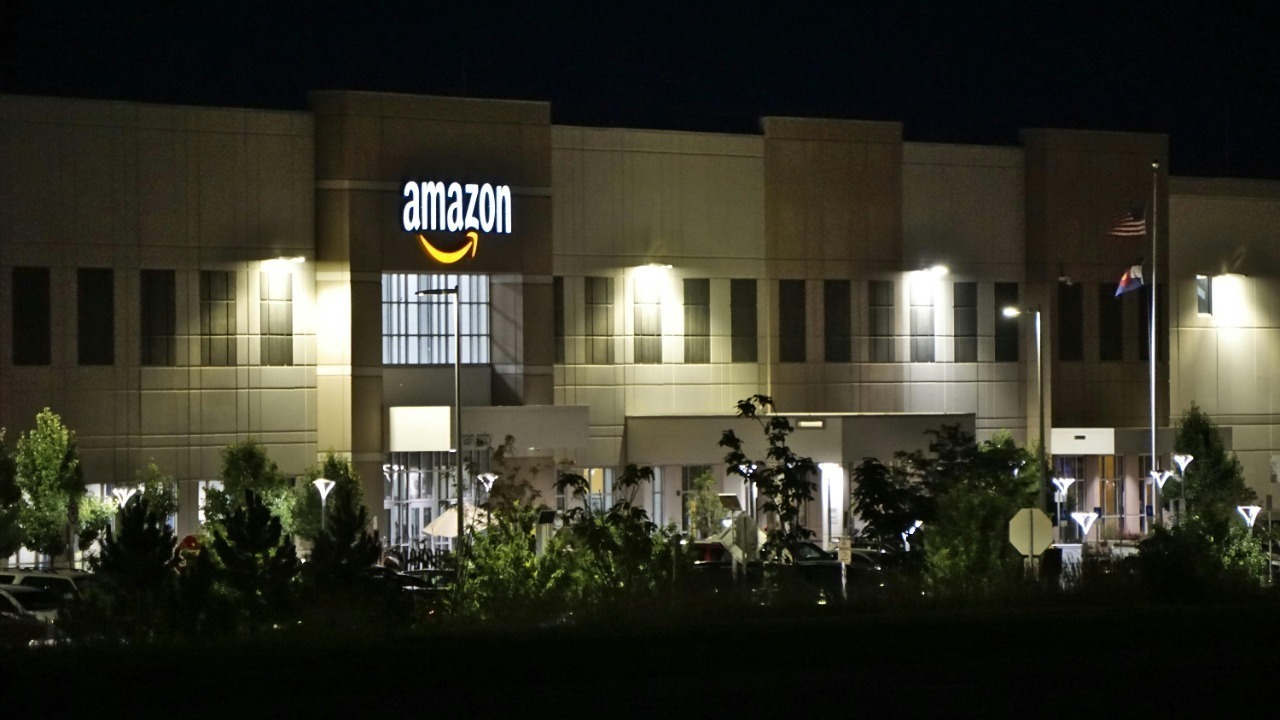
Amazon has crossed a line that once looked out of reach for an online bookstore. In its latest annual filing, the company reported full-year 2025 net sales of $716.924 billion, a figure rounded in its earnings release to $716.9 billion, topping Walmart’s estimated $648 billion haul and making Amazon the world’s largest company by revenue. The shift ends more than two decades in which only one firm held the top spot and signals how thoroughly e-commerce, cloud computing and digital advertising now define global retail power.
Breaking Down the Revenue Milestone
Amazon’s audited Form 10-K lays out the scale of the year. For the year ended Dec. 31, 2025, the company reported consolidated net sales of $716.924 billion, with the filing specifying that North America generated $388 billion, International contributed $142 billion and Amazon Web Services, or AWS, added $107 billion. The same document shows how those audited net sales flowed through to the consolidated statement of operations, giving investors line-by-line visibility into how the business converted that revenue into profit.
Those numbers translate into a clear lead over Walmart on a full-year basis. According to CNBC’s analysis, Walmart’s fiscal 2024 revenue came in around $648 billion, leaving Amazon ahead by nearly $70 billion. CNBC also highlighted that Amazon had already edged past Walmart in quarterly revenue earlier, with Amazon’s fourth-quarter haul topping its rival’s comparable period for the first time since Walmart became the dominant quarterly revenue generator in 2012, setting up the full-year handoff that has now arrived.
Historical Context Since 2001
The handover carries symbolic weight because of who held the crown before. As a Washington Post archive recounts, Walmart passed Exxon to top the Fortune 500 list ranked by annual revenue in the early 2000s, becoming number 1 on the Fortune 500 after years of trading places with the oil giant. That story captured a turning point in the U.S. economy, with a discount retailer overtaking a major energy company on the flagship ranking of the 500 largest American corporations by sales.
From that moment on, Walmart effectively locked down the top revenue slot. The company remained the largest name on the Fortune 500 through 2024, even as technology firms surged in market value. That history is what makes Amazon’s $716.9 billion year so unusual: since Walmart first overtook Exxon, no other company had displaced it as the world’s top revenue generator until Amazon’s audited 2025 results.
What Fueled Amazon’s Surge
Amazon’s climb to $716.924 billion in net sales is not simply a story of more packages on more doorsteps. The 10-K shows that AWS delivered $107 billion in revenue on its own, and CNBC reported that AWS revenue was up 13 percent year over year, giving Amazon a high-margin engine that Walmart does not have. That cloud segment, categorized alongside North America and International in the filing, has turned Amazon into a central infrastructure provider for other companies’ digital operations.
The company’s official earnings release for the year framed the performance as the result of disciplined execution. In that statement, Amazon highlighted full-year net sales of $716.9 billion, operating income of $80.0 billion and net income of $77.7 billion, and quoted its finance leadership crediting “strong execution” across businesses for the jump in profitability. The same release pointed to growth in its e-commerce operations and a rapidly expanding advertising business that rides on the traffic flowing through Amazon’s retail sites and apps, all of which helped push the company past Walmart on total revenue.
Walmart’s Response and Retail Landscape
Walmart has not stood still as Amazon has grown. The company’s public filings, cited in CNBC’s comparison, show fiscal 2024 revenue of roughly $648 billion, still an enormous base that keeps Walmart among the world’s largest companies by sales. CNBC also noted that Walmart’s e-commerce business grew 21 percent, evidence that the retailer is leaning into online ordering, curbside pickup and delivery to defend its position.
That e-commerce push matters because it narrows one of Amazon’s historical advantages. Reporting from AOL on Amazon’s milestone stressed that the competition is now as much about digital services and logistics networks as it is about store count. Walmart’s scale in groceries and physical locations still gives it leverage with suppliers and shoppers, while Amazon’s strength in AWS and ads gives it revenue streams that do not depend on selling goods at thin margins, setting up a more diversified contest between two very different models of “retail.”
Broader Implications for Investors and Economy
For investors, Amazon’s revenue feat arrives on top of a separate valuation milestone. In 2024, CNBC reported that Amazon’s market capitalization reached $2 trillion for the first time, placing the company in a small club of U.S. firms with valuations above that threshold. That development followed earlier coverage from the Washington Post describing Amazon as the country’s second trillion-dollar company, underscoring how quickly markets have bid up the stock in anticipation of sustained growth in both retail and cloud computing.
Amazon’s trajectory also invites comparison with Apple, which The Guardian chronicled as the first public company on Wall Street to hit a $2 trillion market cap. That earlier milestone established Apple as the template for a tech giant that could convert product and services ecosystems into unprecedented equity value. With Amazon now both a $2 trillion company and the world’s largest business by revenue, analysts cited by CNBC have started to question how sustainable such rapid expansion can be in a slowing global economy, even as they acknowledge that Amazon’s multiple engines of growth give it more ways to adapt than a traditional retailer.
Uncertainties Ahead
For all the superlatives around $716.9 billion in net sales and a $2 trillion valuation, there is little hard evidence yet on how long Amazon can hold the number 1 revenue spot. The 10-K and the company’s earnings release focus on audited figures for 2025 rather than long-term forecasts, and coverage from CNBC and AOL stresses the rarity of the moment rather than assuming a permanent change. History offers a cautionary parallel: Apple’s first $2 trillion peak did not guarantee a straight line upward, and market caps for both Apple and Amazon have fluctuated with shifts in interest rates, regulation and consumer demand.
Policy and macroeconomic risks add more uncertainty. Analysts quoted by CNBC pointed to factors such as potential tariffs, broader economic slowdowns and regulatory scrutiny of big tech platforms as variables that could weigh on Amazon’s growth or margins. For now, the audited $716.924 billion figure and the company’s entry into the $2 trillion market-cap club stand as facts. Whether Amazon can stay ahead of Walmart on revenue, and whether that lead continues to coincide with premium market valuations, will depend on how those unresolved risks play out over the coming years.
More From The Daily Overview
*This article was researched with the help of AI, with human editors creating the final content.

Grant Mercer covers market dynamics, business trends, and the economic forces driving growth across industries. His analysis connects macro movements with real-world implications for investors, entrepreneurs, and professionals. Through his work at The Daily Overview, Grant helps readers understand how markets function and where opportunities may emerge.

