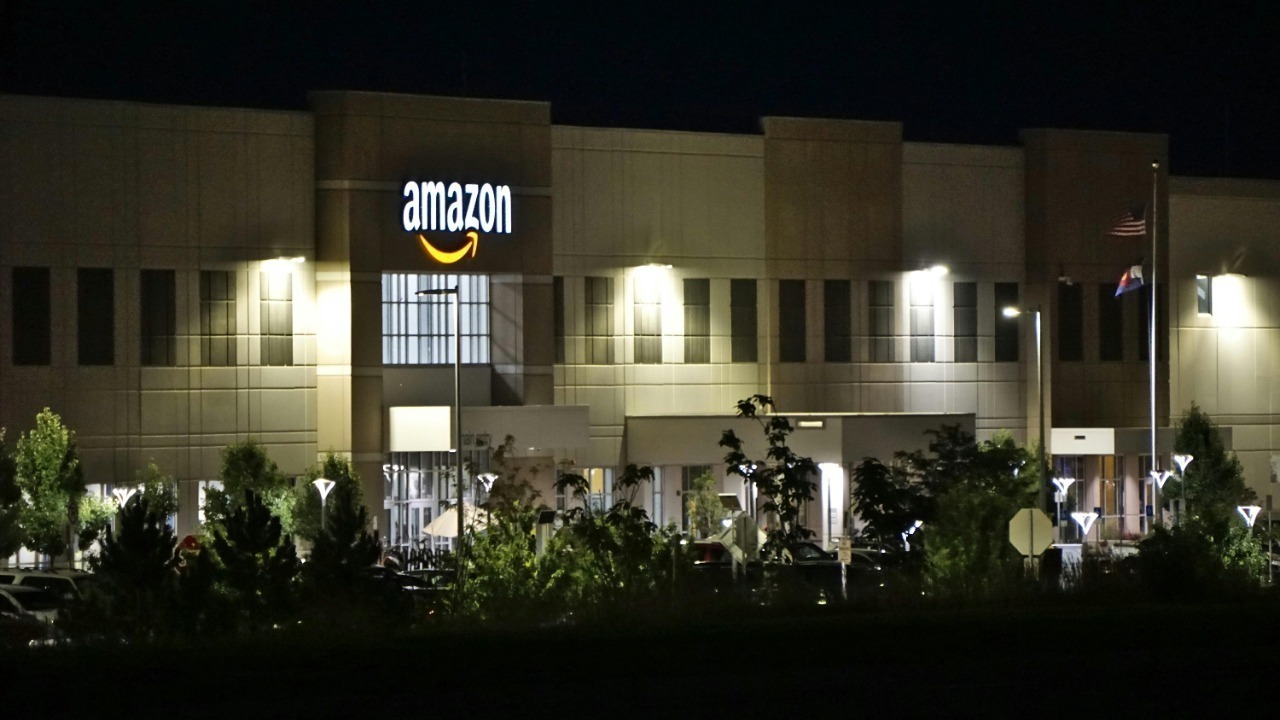
Amazon has overtaken Walmart as the world’s largest company by annual sales, ending a reign that the Arkansas-based retailer held for more than two decades. The shift became clear after both companies reported their full-year results, with Amazon’s consolidated net sales for 2025 reaching $716,924 million and Walmart posting record but slightly lower revenue. The gap between the two is razor-thin, and the reversal says as much about how consumer spending habits have changed as it does about either company’s individual strategy.
Amazon’s $716.9 Billion Year in the Books
Amazon’s latest annual report, filed on Form 10-K with the U.S. Securities and Exchange Commission for the fiscal year ended December 31, 2025, shows consolidated net sales of $716,924 million. That figure, confirmed separately in the company’s earnings release for the fourth quarter, represents the full scope of Amazon’s business: online retail from its own inventory, fees collected from third-party marketplace sellers, Amazon Web Services cloud computing, advertising, subscription services such as Prime, and physical stores including Whole Foods Market and Amazon Fresh.
The $716.9 billion top line did not come from any single product category or geography. According to reporting cited by Yahoo Finance, the majority of Amazon’s retail revenue, roughly $464 billion, came from its North American segment, which includes both direct sales and fees earned from third-party sellers who use Amazon’s fulfillment network. AWS, while a smaller share of total revenue, remains a key profit engine that allows Amazon to price aggressively on the retail side, a dynamic that has frustrated competitors for years. Advertising, meanwhile, has become a multibillion-dollar pillar in its own right, as brands pay to stand out in Amazon’s increasingly crowded digital storefront.
Walmart’s Record Year Still Fell Short
Walmart did not stumble. The company posted what the Financial Times described as record revenues, driven in large part by grocery sales that have made Walmart the go-to destination for price-conscious American families. The Wall Street Journal noted that strong grocery performance buoyed Walmart’s overall sales growth, reflecting the retailer’s ability to pull in traffic even as discretionary spending tightened for many households facing higher housing, energy, and borrowing costs.
According to Investor’s Business Daily, Walmart’s annual revenue came in at $713.2 billion, just $3.7 billion behind Amazon. Walmart’s own SEC filing, a 10-K covering its fiscal year ended January 31, 2025, creates a slight calendar mismatch with Amazon’s December 31 fiscal year-end; any head-to-head comparison therefore involves overlapping but not identical twelve-month windows. Even so, the consensus across financial data providers and major outlets is that Amazon has edged ahead on an annual-sales basis, a conclusion echoed in market dashboards such as the Financial Times data service, which track both groups’ revenue trajectories over time.
Why This Took So Long and Why It Happened Now
Walmart first claimed the title of world’s largest company by revenue in the early 2000s and held it with few interruptions. Its network of more than 10,000 stores worldwide, massive grocery operation, and relentless cost discipline made it nearly impossible to surpass on sheer sales volume. Amazon, by contrast, spent most of its first two decades prioritizing growth over profitability, reinvesting cash flow into warehouses, delivery infrastructure, and AWS data centers rather than maximizing reported earnings. That playbook, familiar to analysts who follow broader macro trends through services like the FT’s policy radar, relied on patient capital and a willingness to tolerate thin margins in exchange for scale.
The crossover happened because Amazon’s revenue base now stretches well beyond selling books and electronics online. Third-party seller services, advertising, and cloud computing each contribute tens of billions of dollars annually, creating multiple engines of growth that compound on one another. Bloomberg coverage of the milestone highlighted Amazon’s fulfillment infrastructure, including a major center in Robbinsville, New Jersey, as part of the physical backbone that supports the company’s digital-first model. That blend of digital services and physical logistics gave Amazon a revenue trajectory that Walmart’s store-based model, even with strong e-commerce investments, could not match in pace once consumer habits tipped decisively toward online shopping and home delivery.
What the Numbers Do and Do Not Tell Us
Revenue is a blunt instrument for measuring corporate power. Walmart’s $713.2 billion in annual sales, per Investor’s Business Daily, comes overwhelmingly from selling physical goods at thin margins in stores and via its website. Amazon’s $716.9 billion includes high-margin businesses like AWS and advertising that generate far more profit per dollar of revenue. Comparing the two on top-line sales alone obscures the fact that Amazon’s operating income mix is structurally different from Walmart’s, which is one reason Amazon’s market capitalization has exceeded Walmart’s for years even when Walmart led on revenue. For investors and business-school case studies compiled in resources such as the FT’s education rankings, that divergence between sales and valuation has become a textbook example of how markets reward diversified technology-driven models.
There is also a question about what counts as “sales” in Amazon’s model. A significant portion of goods sold on Amazon.com come from independent merchants who pay Amazon fees for marketplace access, fulfillment, and advertising. Amazon records the full transaction value for items it sells directly but only the service fees for third-party sales. If the gross merchandise value of all goods flowing through Amazon’s platform were counted, the gap with Walmart would be even wider. The reported $716.9 billion figure, drawn from Amazon’s investor relations disclosure, reflects net sales under standard accounting rules, not total platform throughput, underscoring how different business models can compress very different economic realities into superficially similar revenue lines.
A Challenge to the Conventional Retail Playbook
Most coverage of this milestone has focused on the symbolic passing of the torch, but the more consequential story is structural. Amazon built its revenue lead without operating anywhere close to the number of physical locations Walmart runs. Its capital expenditure goes toward fulfillment centers, delivery vans, server farms, and AI research rather than store leases and checkout lanes. That model lets Amazon add revenue capacity without the geographic constraints that limit how fast a brick-and-mortar chain can grow, a contrast that mirrors how digital-first companies highlighted in European accelerator rankings can sometimes outscale incumbents with heavy fixed assets.
Walmart is not standing still. Its e-commerce business has grown rapidly, its curbside pickup and delivery services have expanded, and its Walmart+ membership program directly targets Amazon Prime subscribers with free shipping and fuel discounts. Grocery remains Walmart’s strongest competitive advantage: it is the largest food retailer in the United States, and food purchases drive repeat store visits that Amazon’s online model has struggled to replicate at the same scale. The question going forward is whether Walmart’s grocery dominance and physical-store network can generate enough incremental revenue to reclaim the top spot, or whether Amazon’s diversified revenue streams will continue to widen the gap as more categories (from pharmacy to home improvement) migrate online.
What Changes for Consumers and Investors
For everyday shoppers, the ranking swap does not change prices at checkout or delivery speeds overnight. But it reflects a broader shift in where consumer dollars flow. More household spending now moves through digital channels, and Amazon’s ability to bundle shopping with video streaming, music, pharmacy services, and same-day delivery creates a stickiness that traditional retailers find difficult to replicate. Walmart, for its part, is leaning on its physical footprint to offer hybrid experiences—order online, pick up in store—that appeal to customers who want both convenience and immediacy. As Amazon captures a larger share of total consumer spending, its pricing power and ability to shape product discovery grow in tandem, raising familiar questions for regulators and subscribers to in-depth coverage via services such as the FT’s subscription platform about competition and consumer choice.
For investors, the milestone reinforces a tension that has defined retail stocks for years. Walmart trades at a valuation that reflects steady, predictable cash flows from a mature store base and a reputation as a defensive holding in economic downturns. Amazon trades at a premium because the market prices in growth from AWS, advertising, and international expansion on top of its retail operations. The revenue crossover does not change those dynamics overnight, but it does validate the thesis that Amazon’s multi-segment model can generate more total sales than the world’s largest physical retailer, a proposition that would have seemed far-fetched a decade ago. It also underlines how investor sentiment can hinge as much on perceived future optionality—new services, new geographies, new technologies—as on the headline numbers in a single year’s income statement.
The Thin Margin Between First and Second
The $3.7 billion gap between Amazon and Walmart, per Investor’s Business Daily’s figures, amounts to roughly half a percent of either company’s total revenue. A strong holiday quarter, a currency swing, or a single large acquisition could flip the ranking back, particularly given the fiscal-year mismatch between Amazon’s December year-end and Walmart’s January close. Both companies operate on such vast scale that relatively modest percentage changes can move tens of billions of dollars in either direction. Analysts will therefore be cautious about declaring a permanent changing of the guard based on one year’s data, even as they acknowledge the symbolic weight of Amazon finally pulling ahead.
Still, symbolism matters. Walmart’s long run as the world’s largest company by sales embodied the dominance of big-box retailing and car-centric suburban shopping patterns. Amazon’s new position at the top reflects an era in which logistics networks, cloud infrastructure, and digital ecosystems define scale as much as store counts and parking lots once did. Whether Walmart can adapt quickly enough to narrow the gap, or whether Amazon’s lead will expand as more commerce shifts online, will shape not only the rivalry between two corporate giants but also the everyday experience of billions of consumers whose purchases, consciously or not, are casting votes for which model wins.
More From The Daily Overview
*This article was researched with the help of AI, with human editors creating the final content.

Grant Mercer covers market dynamics, business trends, and the economic forces driving growth across industries. His analysis connects macro movements with real-world implications for investors, entrepreneurs, and professionals. Through his work at The Daily Overview, Grant helps readers understand how markets function and where opportunities may emerge.

