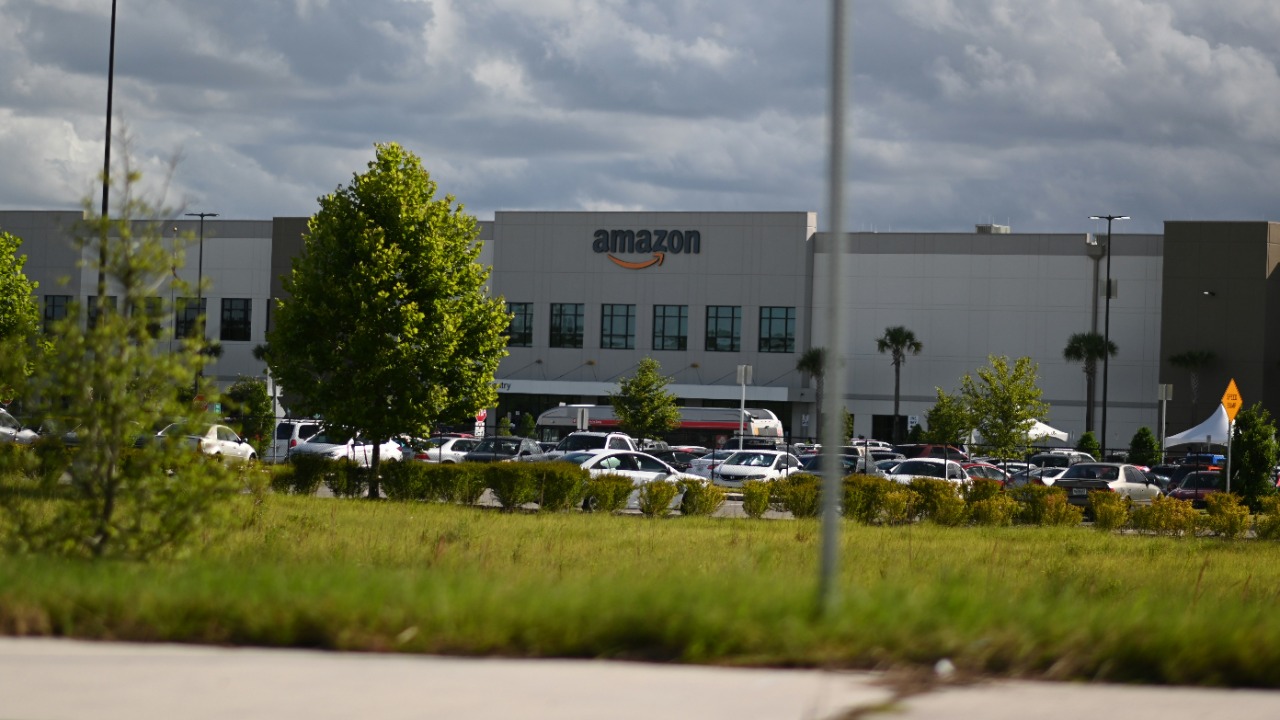
Amazon’s decision to walk away from a $400 million logistics hub in Arkansas has abruptly erased 4,100 promised and existing jobs, turning what was billed as a marquee investment into a cautionary tale about flawed design and fragile growth. The company is not just closing a warehouse, it is unwinding a regional strategy that had been sold to workers, local officials, and small businesses as a long term anchor for the state’s role in the modern supply chain. The fallout now stretches from the Little Rock suburbs to online sellers across the country who depended on the facility’s capacity.
The reversal exposes how quickly a high tech fulfillment center can shift from economic engine to stranded asset when engineering mistakes collide with corporate risk tolerance. Instead of ramping up operations in a state of the art complex, Amazon is shuttering its largest Arkansas site indefinitely and, according to multiple accounts, concluding that “unfixable flaws” make a full scale rescue too costly to justify. For Arkansas communities that had banked on the project, the pivot is a stark reminder that megaprojects can be as brittle as the concrete and steel that hold them up.
The promise of a $400 million Arkansas hub
When Amazon first committed to a major logistics footprint in Arkansas, the project was framed as a transformative bet on the state’s role in e commerce. The company’s expansion into Little Rock was pitched as a way to knit Arkansas into a national network of fulfillment centers that power the fast delivery promises on the main Amazon website, with local officials touting the investment as proof the region could compete with larger metro areas. The headline figure, a $400 million hub, signaled that this was not a marginal outpost but a core node in the company’s distribution strategy.
State leaders leaned into that narrative earlier this year when Amazon Breaks Ground on what was described as a State of the Art Logistics Facility in Little Rock, with the announcement highlighting how the LITTLE Rock site would help the State deliver great service to customers while creating thousands of jobs. That optimism now sits in sharp contrast to the reality of a project that has been effectively abandoned, leaving Arkansas with the shell of a facility that never reached its full potential and a workforce suddenly cut adrift.
How structural flaws unraveled the project
The collapse of the Arkansas hub plan did not stem from a demand slump or a strategic retreat from the region, but from the building itself. According to multiple accounts, Amazon’s largest fulfillment facility in Arkansas was found to have serious structural issues that raised questions about its ability to operate safely at full capacity. What began as a plan to shutter one of its Little Rock facilities for major repairs quickly evolved into a broader reckoning over whether the site could ever meet the company’s standards for long term use.
Reporting on the closure describes how Key Takeaways from internal reviews pointed to an earthquake related design flaw, with the Little Rock building, known as LIT1, allegedly not meeting regulations for withstanding seismic activity. Another account notes that Amazon’s Arkansas fulfillment center closure stems from engineering flaws requiring major repairs, a problem detailed in coverage of the Arkansas Amazon Fulfillment Center Closure in 2025. Faced with the prospect of extensive remediation, the company appears to have concluded that the flaws were effectively unfixable within a reasonable budget or timeline.
From temporary shutdown to permanent closure
Initially, the company framed the disruption as a temporary measure, signaling that the Little Rock facility would be shuttered for major repairs rather than scrapped outright. That framing gave workers and local leaders some hope that the disruption would be painful but finite, with the expectation that operations would resume once engineers addressed the most pressing issues. The language around an indefinite closure, however, hinted at deeper uncertainty about whether the building could ever be brought up to standard.
As the situation evolved, the tone shifted from repair to retreat. Coverage of the decision notes that Amazon planned to shutter one of its Little Rock facilities in Arkansas for major repairs, affecting thousands of full and part time workers who had been enrolled in the program through 2026. That narrative was overtaken when reports emerged that Amazon has permanently closed its Arkansas fulfillment center, with one account specifying that the site was closed on November 20, 2025 and that 4,100 jobs were lost due to structural flaws. What began as a repair project had, by late fall, become a full scale shutdown.
The 4,100 jobs behind the headline number
Job loss figures in corporate announcements often read like abstractions, but in Arkansas the number attached to this closure is both precise and personal. The decision to abandon the $400 million hub has eliminated 4,100 positions that were either already filled or slated to be part of the facility’s ramp up, cutting across warehouse associates, supervisors, maintenance staff, and support roles. For a state that had marketed the project as a cornerstone of its logistics economy, the scale of the reversal is hard to overstate.
One detailed account of the fallout notes that Amazon has permanently closed its Arkansas fulfillment center and that $400 million in investment and 4,100 jobs were effectively wiped out over what were described as unfixable flaws. Another report on the closure of the Arkansas fulfillment center underscores that 4,100 jobs were lost due to structural flaws, reinforcing that this was not a marginal adjustment but a wholesale withdrawal of a major employer. For the workers affected, the distinction between promised and existing roles matters less than the sudden disappearance of a paycheck and a career path they had been told would stretch years into the future.
What Amazon says went wrong
Amazon has framed the decision as a safety first response to engineering problems that were not apparent when the facility was conceived. In public statements, the company has emphasized that errors in the initial design of the building and failures to meet certain standards left it with little choice but to halt operations. That explanation aligns with the broader narrative of a project undermined by structural flaws rather than shifting corporate priorities or a lack of demand for fast shipping in the region.
One local report quotes Amazon spokesperson Sam Stephenson explaining that errors in the initial design of the building and failures to meet certain standards forced the company to act, with the closure impacting thousands of workers who had been counting on the facility through the holidays. Another account of the Arkansas Amazon fulfillment center closure notes that the decision stems from engineering flaws requiring major repairs, and that affected employees were offered several months of existing medical benefits as part of the transition. Together, these details paint a picture of a company trying to contain the damage from a flawed asset while signaling that worker safety and regulatory compliance trump the sunk costs of a marquee project.
How the closure ripples through Little Rock and beyond
The immediate impact of the shutdown is most visible in Little Rock, where the facility’s closure has left thousands of workers scrambling to find new jobs in a labor market that had been reshaped by Amazon’s arrival. Many employees had structured their lives around the company’s schedules, benefits, and pay scales, making the sudden loss of work particularly destabilizing. Local businesses that had grown up around the facility, from food trucks to childcare providers, now face a sharp drop in demand.
Coverage of the closure notes that Amazon’s largest fulfillment facility in Arkansas, located in Little Rock, was shuttered indefinitely, affecting thousands of full and part time workers and raising questions about the city’s broader economic strategy. One report on the Little Rock facility highlights how the design flaw not only violated seismic regulations but also disrupted regional freight flows that had been calibrated around the hub. Another account on thousands of workers impacted by the closure of the Amazon facility in Little Rock describes how employees were urged to plan for the holidays without the income they had expected, underscoring the human cost behind the technical language of engineering defects.
Arkansas’s economic bet and political stakes
For Arkansas policymakers, the unraveling of the Amazon hub is more than a corporate setback, it is a political and economic embarrassment. The state had invested significant political capital in attracting the project, touting it as proof that Arkansas could compete for high profile investments in the logistics and technology sectors. Incentive packages, infrastructure planning, and workforce training programs were all aligned around the assumption that Amazon would be a long term anchor in the region.
The earlier fanfare around the State of the Art Logistics Facility in Little Rock, where officials celebrated Amazon Breaks Ground on a project meant to deliver great service to customers and jobs to residents, now reads like a snapshot from a different era. The subsequent reports that Amazon’s largest fulfillment facility in Arkansas would be shuttered indefinitely, and that thousands of workers in the program through 2026 would be affected, have forced state leaders to explain how a flagship project could collapse so quickly. The episode is likely to shape future debates over how aggressively Arkansas should court megaprojects and what safeguards should be in place when a single employer wields such outsized influence over local labor markets.
What the debacle means for Amazon’s logistics strategy
From Amazon’s perspective, the Arkansas hub debacle is a costly reminder that its logistics empire rests on physical infrastructure that must meet exacting standards in every market. The company has spent years building a dense network of fulfillment centers, sortation hubs, and last mile delivery stations to support services like Prime one day shipping, and each node is expected to operate at high volume with minimal downtime. A structural failure in one facility can ripple through that network, forcing rerouting of inventory and longer delivery times for customers who had grown accustomed to near instant gratification.
The decision to abandon a $400 million hub in Arkansas rather than attempt a full scale rebuild suggests that Amazon is willing to absorb significant write downs to avoid long term operational risk. Reports that the facility’s flaws were tied to seismic design issues and other engineering problems indicate that the company is tightening its tolerance for any site that cannot meet its safety and reliability benchmarks. At the same time, the closure underscores how central Arkansas had become to Amazon’s regional strategy, with the Little Rock facility serving as a key link in the chain before it was taken offline. How the company reallocates that capacity, whether by expanding nearby centers or leaning more heavily on other states, will be a test of its ability to adapt its logistics map without eroding the customer experience that underpins its business model.
Workers, sellers, and the road ahead
For the workers who lost their jobs, the road ahead is uncertain, even with transition support. Some accounts note that affected employees were offered several months of existing medical benefits and assistance in finding roles at other Amazon sites, but relocation is not a realistic option for everyone. Many had chosen the Little Rock facility precisely because it allowed them to stay rooted in their communities while accessing a stable wage and benefits package, and the sudden need to look elsewhere will strain family budgets and local support systems.
The closure also reverberates through the ecosystem of third party sellers who relied on the Arkansas facility to store and ship their products. Coverage of the Arkansas Amazon Fulfillment Center Closure in 2025 notes that sellers need to shift inventory to other locations, a process that can introduce delays, increase shipping costs, and disrupt carefully tuned sales strategies. For small businesses that built their operations around Fulfillment by Amazon, the loss of a nearby hub can mean longer delivery times and lower visibility in search rankings, since the platform often favors items that can be shipped quickly. As Amazon recalibrates its network and Arkansas reassesses its economic development playbook, the people and companies caught in the middle are left to navigate the fallout of a project that promised stability but delivered a stark lesson in the risks of concentrated bets.
More From TheDailyOverview

Grant Mercer covers market dynamics, business trends, and the economic forces driving growth across industries. His analysis connects macro movements with real-world implications for investors, entrepreneurs, and professionals. Through his work at The Daily Overview, Grant helps readers understand how markets function and where opportunities may emerge.