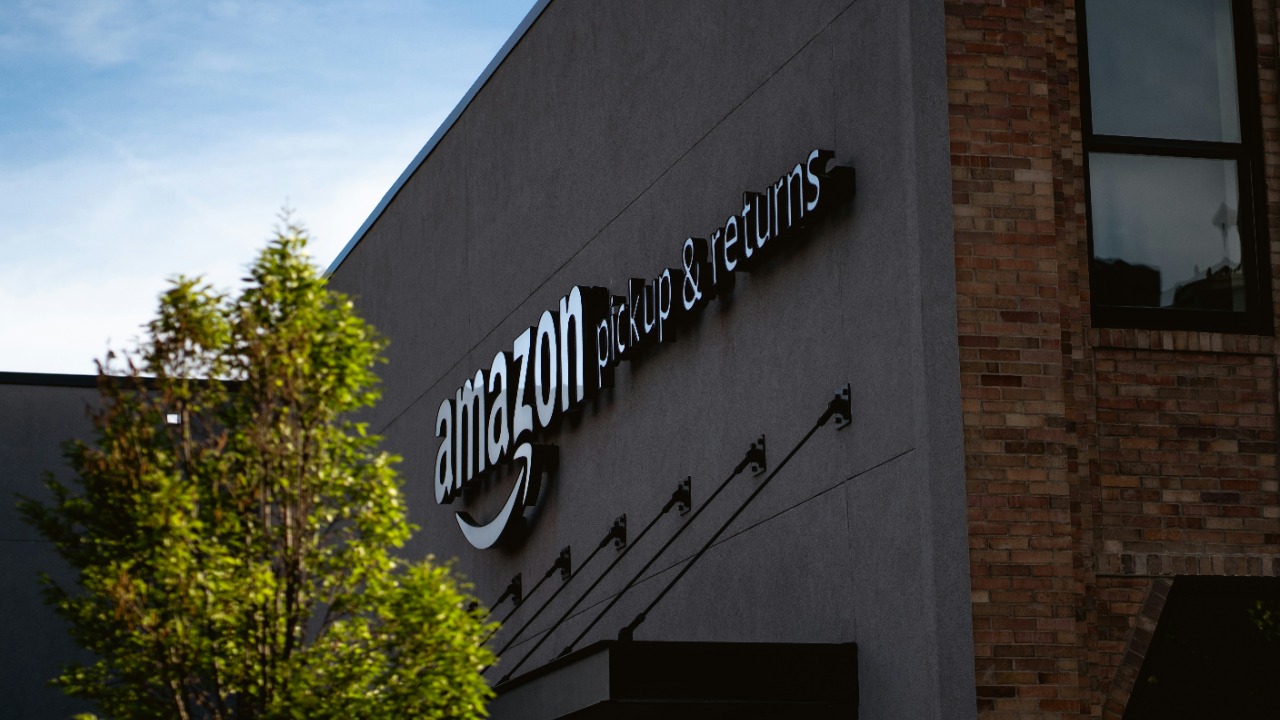
Amazon’s decision to walk away from a $400 million logistics hub in Arkansas has abruptly erased 4,100 promised and existing jobs, turning what was billed as a long term anchor for Little Rock’s economy into a cautionary tale about industrial design and risk. Instead of ramping up operations, the company is now unwinding them, citing structural flaws that outside engineers have warned cannot be safely fixed while the building remains in use. The reversal has left workers, local officials, and nearby businesses scrambling to understand how a marquee project unraveled so quickly and what comes next for a region that had banked on Amazon’s presence.
I see the collapse of this project as more than a corporate setback. It is a stress test of how modern logistics giants balance speed, safety, and community promises when something goes fundamentally wrong with the infrastructure that underpins their growth. The fallout in Arkansas will shape how other cities negotiate with large employers, how engineers flag risk in seismic zones, and how workers judge the stability of jobs that once looked like a sure bet.
From flagship promise to abandoned $400 million hub
When Amazon committed roughly $400 million to build a massive fulfillment hub in Arkansas, local leaders treated it as a generational win, the kind of project that could anchor warehouse, trucking, and service jobs for years. The facility in Little Rock was designed as the company’s largest distribution center in the state, a sprawling complex meant to knit Arkansas more tightly into Amazon’s national delivery network and to showcase the company’s latest automation and logistics systems. For a region that had spent years courting high profile employers, the project signaled that Arkansas had finally secured a central role in the e commerce supply chain.
That narrative has now flipped. Reporting shows that Amazon has abandoned the $400 million Arkansas hub after discovering what internal and external engineers described as “unfixable flaws” in the building’s structure, a failure so serious that the company is eliminating $400 million worth of investment and 4,100 jobs rather than attempt a full scale retrofit. The facility that was supposed to symbolize Arkansas’s logistics future is instead being written off as a structural loss, a rare but stark example of a Fortune 500 company deciding that the safest option is to walk away from a brand new asset.
How 4,100 jobs vanished almost overnight
The most immediate impact of the closure is on the workforce that had been recruited, trained, and scheduled around the hub’s operations. Amazon’s own figures show that 4,100 roles tied to the Arkansas complex are being wiped out, a mix of full time and part time positions that had drawn workers from Little Rock and surrounding communities. Many of those employees had reorganized their lives around the promise of steady shifts, health benefits, and the chance to move up inside one of the world’s most powerful companies, only to be told that the building they worked in is no longer considered safe for long term use.
Company statements and local coverage confirm that Amazon has permanently closed its Arkansas fulfillment center, with 4,100 jobs lost due to structural flaws that outside engineers deemed too serious to ignore. For workers, the distinction between a temporary shutdown and a permanent closure is not academic. It determines whether they can expect to return to the same building or must instead navigate transfers, relocations, or unemployment in a labor market that had already adjusted to Amazon’s presence.
Structural flaws and the earthquake design problem
The core reason Amazon is giving for the shutdown is not demand, automation, or a shift in corporate strategy, but the physical integrity of the building itself. According to engineering assessments cited in multiple reports, the Little Rock facility suffers from major structural design flaws tied to how the building would perform in an earthquake scenario. In practical terms, that means the steel, concrete, and load bearing systems that were supposed to keep workers safe in a seismic event may not behave as modeled, a risk that becomes unacceptable once tens of thousands of packages and thousands of people are moving through the space every day.
One detailed account notes that Amazon indefinitely closed its Little Rock fulfillment center, known internally as LIT1, after external engineers concluded that the structure did not meet the company’s safety standards for earthquake related loads, prompting a sweeping review of earthquake-related design flaw risks across similar facilities. Another report underscores that the flaws were considered “unfixable” in a cost effective way, which helps explain why Amazon is choosing to shutter the building rather than attempt a retrofit that might still leave lingering doubts about safety.
Inside Amazon’s decision to shutter Little Rock
From a corporate perspective, closing a flagship facility is a drastic step, and it reflects how Amazon weighs safety, liability, and long term brand risk against sunk construction costs. The company has framed the move as a necessary response to engineering data, arguing that once the structural problems were fully understood, keeping the building open would have been inconsistent with its internal safety standards. That logic aligns with how large industrial operators typically respond when confronted with systemic design issues, especially in regions where seismic risk, however modest, cannot be fully discounted.
Local business reporting shows that Amazon’s largest fulfillment facility in Arkansas will be shuttered indefinitely for major repairs, with the company telling community leaders that the future of the site is uncertain while engineers and executives evaluate options for demolition, reconstruction, or sale of the land. The decision to shutter one of its Little Rock facilities has also triggered questions about how the original design was approved, who signed off on the structural calculations, and whether similar vulnerabilities exist in other Amazon buildings that share the same engineering template.
What the closure means for Arkansas workers
For the people who staffed the Arkansas hub, the closure is not an abstract engineering story but a sudden shock to their household budgets and career plans. Many of the 4,100 affected workers had joined Amazon precisely because it offered predictable paychecks, health coverage, and a clear path to overtime or advancement, especially in a state where comparable large scale employers are limited. Losing that stability because of a structural flaw, rather than a performance issue or economic downturn, adds a layer of frustration that is hard to quantify but easy to hear in conversations with employees and local advocates.
Some guidance has emerged on what support those workers can expect. One detailed breakdown of the Arkansas Amazon fulfillment center closure notes that employees are being offered a mix of transfer opportunities, severance, and continued medical benefits, including several months of existing coverage to help bridge the gap while they search for new roles or relocate. The same report on the Arkansas Amazon closure emphasizes that the company is trying to move as many people as possible into other facilities, but that option is limited by geography, transportation, and family obligations that make long distance commutes or moves unrealistic for many.
Amazon’s support package and relocation push
Amazon is keenly aware that how it treats displaced workers in Arkansas will shape its reputation with employees and local governments far beyond the state’s borders. In response, the company has rolled out a support package that combines internal job placement, relocation assistance, and short term financial cushions. The goal is to show that even when a facility fails for reasons outside day to day operations, the people who kept it running are not simply cut loose without options.
According to company facing guidance shared with sellers and staff, Amazon has outlined support measures for affected employees that include transfer options to other warehouses, relocation stipends for those willing to move, extended health coverage, and access to employment support programs that help workers update resumes, apply for internal roles, or transition to new industries. The description of these support measures for affected staff underscores that Amazon is trying to balance cost control with a visible commitment to worker welfare, though the effectiveness of that package will ultimately be judged by how many people land in comparable or better roles.
Shockwaves through Little Rock’s local economy
The closure’s impact radiates far beyond Amazon’s payroll. Little Rock’s local economy had already begun to reorganize around the distribution center, with small businesses, landlords, and service providers tailoring their offerings to a workforce that clocked in at all hours. Restaurants extended late night hours to catch shift changes, apartment complexes marketed proximity to the warehouse, and trucking firms invested in new equipment to handle the steady flow of inbound and outbound freight. Pulling that activity out of the region in one stroke leaves a hole that will not be easy to fill.
Local coverage captured the sense of uncertainty as the story broke, noting that the future of Amazon’s largest distribution center in Arkansas was suddenly “up in the air” after the company announced the shutdown. Video from the scene shows the sprawling complex on the outskirts of Little Rock, a reminder of how much physical and economic space the facility occupies in the community. For nearby neighborhoods, the huge Little Rock distribution hub had become a defining landmark and employer; now it risks becoming a symbol of overpromised development if no replacement tenant or project emerges.
Safety, liability, and Amazon’s risk calculus
Stepping back from Arkansas, the episode highlights how Amazon manages risk in a logistics network that spans hundreds of buildings and hundreds of thousands of workers. The company’s public messaging stresses that it is “always evaluating” its facilities for safety and performance, and that when engineers flag a serious issue, the default is to protect employees even at significant financial cost. That stance is not purely altruistic. In an era of heightened scrutiny over warehouse working conditions, a catastrophic structural failure would be devastating for Amazon’s brand and could trigger regulatory and legal consequences that dwarf the cost of closing a single hub.
Detailed reporting on the Arkansas warehouse closure notes that Amazon’s internal review was triggered by concerns over how the building would behave in an earthquake, leading to a decision to close the site indefinitely while the company assessed its options. One account by Eric Kulisch underscores that Amazon framed the move as a proactive step to protect team members, not a reaction to an accident or regulatory order. That distinction matters, because it signals to investors and regulators that the company is willing to sacrifice short term capacity to avoid the far greater risk of a structural disaster.
What Arkansas’s experience signals for other logistics hubs
The Arkansas hub’s failure is already prompting other communities to revisit their own assumptions about large scale warehouse projects. City councils and economic development agencies that once focused almost exclusively on tax incentives and job counts are now asking harder questions about building design, seismic standards, and the long term maintenance of the facilities they help bring in. If a $400 million project backed by one of the world’s most sophisticated logistics operators can be undone by structural flaws, smaller municipalities will want stronger assurances that their own deals are not built on shaky foundations.
In Little Rock, the site itself remains a massive piece of industrial real estate, and local leaders are already weighing how to reposition it if Amazon ultimately decides not to rebuild. The complex sits near major transportation corridors and within reach of regional labor pools, factors that could still make it attractive to other logistics or manufacturing tenants if the structural issues can be addressed through demolition and reconstruction. The property’s profile, captured in public listings and mapping tools that highlight its footprint and access routes, shows just how central it had become to the region’s development plans, with one Little Rock facility effectively anchoring a broader industrial corridor. Whether that corridor can thrive without Amazon will depend on how quickly state and local officials can pivot from damage control to a new vision for the site.
More From TheDailyOverview

Grant Mercer covers market dynamics, business trends, and the economic forces driving growth across industries. His analysis connects macro movements with real-world implications for investors, entrepreneurs, and professionals. Through his work at The Daily Overview, Grant helps readers understand how markets function and where opportunities may emerge.