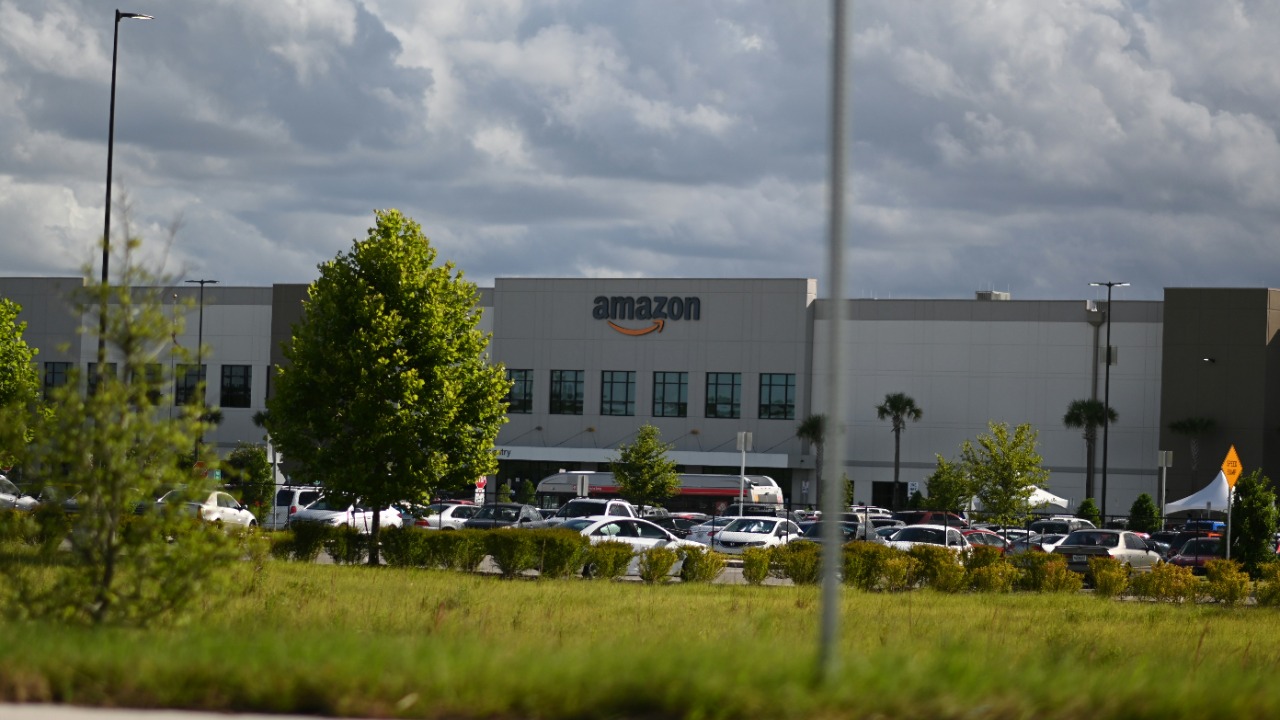
Amazon’s decision to cut roughly 15 percent of its human resources staff is not an isolated belt-tightening move, it is part of a sweeping bet that artificial intelligence can run large chunks of a modern corporation. For American workers, the question is not only how many jobs vanish in Seattle, but whether this model of AI-driven restructuring becomes the template for white-collar work across the economy. I see the current wave of layoffs as an early test of how far employers will push automation into the office and how much pushback workers and regulators are prepared to mount.
The scale of Amazon’s HR cuts and corporate shake-up
Amazon is preparing to eliminate up to 15 percent of its human resources ranks, a move that directly targets the teams responsible for hiring, performance management, and employee support. Internal discussions describe a plan for Amazon To Lay Off a significant share of HR employees after chief executive Andy Jassy signaled that AI tools would Reduce Our Total Corporate Workforce, a shift that explicitly links software investments to headcount reductions in back-office roles. I read that as a clear statement of intent: HR is no longer seen as a fixed cost of doing business, but as a function that can be aggressively “optimized” by algorithms.
The HR cuts sit on top of a much larger corporate retrenchment. Over the past year, Amazon has already laid off about 14,000 corporate workers as it pours money into AI systems that promise long term efficiency gains. Reporting on the latest restructuring suggests that total white collar layoffs could reach 30,000 by the middle of 2026, a figure that would reshape the company’s professional workforce. When a single employer of Amazon’s size makes cuts on that order, it sends a signal to other large firms that deep white collar reductions are not only acceptable to Wall Street, but perhaps expected.
Inside the PXT overhaul and the rise of AI in HR
The most dramatic changes are hitting Amazon’s People Experience and Technology organization, known internally as PXT, which effectively serves as its HR and employee services arm. Reports describe how the People Experience and Technology, PXT unit is being gutted as leadership leans on automation to handle tasks that once required large teams of recruiters, HR business partners, and support staff, shifting from attrition to formal, involuntary layoffs in the process. I see that as a pivot from quiet trimming to an explicit restructuring of how the company believes people operations should work in an AI heavy era.
Behind the scenes, executives have been telegraphing this shift for months. In internal conversations highlighted by Jason Del Rey, a Former Tech Correspondent, Andy Jassy has framed AI as a foundational technology that will reshape everything from customer service to internal workflows. External commentary has echoed that logic, with one industry observer on LinkedIn noting that Amazon is preparing to cut up to 15 percent of HR staff as part of a broader effort to rebuild operations around AI, a view shared in a post where the author wrote As CEO of BoostMyAI and argued that When a CEO tells investors AI will transform the business, the organization eventually follows. That perspective captures the core dynamic: once leadership bakes AI driven savings into its story for shareholders, HR becomes one of the first places to prove those savings.
From “staying nimble” to mass layoffs: how Amazon frames the cuts
Publicly, Amazon has tried to cast the layoffs as a painful but necessary step to stay competitive. In a company wide memo titled Staying nimble and continuing to strengthen our organizations, executives told employees that Amazon needed to streamline overlapping roles and refocus on high impact projects, while thanking teams for the work you’ve done even as they prepared to eliminate thousands of positions. I read that language as an attempt to balance reassurance with a clear message that the old staffing model is over, especially in support functions that leadership believes AI can handle more cheaply.
At the same time, the company has been careful to present the cuts as part of a long term strategy rather than a short term crisis. Coverage of the internal message stressed that Amazon is laying off thousands of corporate workers as it spends heavily on AI, with one analysis estimating that the reductions amount to about 4 percent of its workforce and are concentrated in corporate and tech roles rather than warehouse jobs. Another report noted that Amazon is laying off thousands of corporate workers as it spends on AI and framed the move as a rebalancing toward growth areas like cloud and machine learning, a narrative that fits with Jassy’s repeated claim that What we need to remember is that the world is changing quickly and that this generation of AI is the most transformative technology we have seen. When I connect those dots, I see a company arguing that short term job losses are the price of staying ahead in a race to automate.
AI spending, investor pressure, and the $100 billion question
None of this is happening in a vacuum, it is unfolding as Amazon commits staggering sums to artificial intelligence. One detailed breakdown of its strategy described how Amazon Layoffs May Reach 30,000 by 2026 Despite a $100 AI Investment, spelling out a plan to spend roughly $100 billion on AI infrastructure, tools, and products while simultaneously shrinking its white collar ranks. The same analysis argued that when Amazon’s Ambition Meets Reality, the company is betting that AI can automate many business processes that once required large teams of salaried employees, from customer support to internal analytics. In my view, that combination of huge capital spending and aggressive headcount cuts is exactly what shareholders have been rewarding across the tech sector.
Investors have already been reacting to each new wave of job cuts. After the initial 14,000 corporate layoffs, Jan reports noted that Amazon shares dipped as markets digested the news, even as analysts suggested that the long term effect could be higher margins if automation delivers as promised. A separate Jan update on Stocks tied to Amazon Layoffs May Reach 30,000 by 2026 Despite a $100 AI Investment pointed out that the company sees AI as a way to reduce costs across the board, not just in HR, and that many routine corporate tasks could be replaced by automation by 2033. When I look at those numbers, I see a clear message to American workers: the more a task can be codified into rules and data, the more likely it is to be targeted for AI driven restructuring.
What this means for American workers and the broader labor market
For employees inside Amazon, the immediate impact is brutal. One analysis warned that Amazon employees will soon suffer from alarming workplace disruption as the company plans to pink slip a major group of staff, noting that so far this year Amazon has conducted layoffs in several departments and is now turning to HR workers at his company as the next target. Another social media breakdown put a finer point on the scale, stating that They are rebuilding their entire operation around AI and citing figures like 14,000 m managers eliminated and $3.6 billion in cost savings as evidence that the age of AI is here. I see those details as a reminder that the people being cut are not just entry level staff, but mid level managers and specialists who once seemed insulated from automation.
More From The Daily Overview

Grant Mercer covers market dynamics, business trends, and the economic forces driving growth across industries. His analysis connects macro movements with real-world implications for investors, entrepreneurs, and professionals. Through his work at The Daily Overview, Grant helps readers understand how markets function and where opportunities may emerge.