Across much of the planet, people say the cost of living and shaky economies are the defining emergencies of their time. In the United States, a different answer keeps rising to the top: the political system itself. That split is more than a polling curiosity, it is a window into how Americans and the rest of the world are living through the same era of instability but telling very different stories about what is breaking.
Global surveys show a shared backdrop of economic strain, yet Americans are unusually likely to say that democracy, institutions, and partisan warfare are the country’s biggest crisis. I see that divergence shaping how voters interpret everything from inflation to foreign policy, and it helps explain why debates over the rules of the game feel as urgent in Washington as debates over jobs and prices.
What the world says its biggest problem really is
When researchers asked people in more than 100 countries to name the most important problem facing their nation, the dominant answer was not war or immigration but money. Across regions and income levels, respondents pointed first to inflation, low wages, and a sense that basic necessities are slipping out of reach, a pattern captured in a global economic anxiety survey. That finding held even in places that, on paper, are relatively prosperous, suggesting that the psychological shock of recent price spikes has cut across traditional development lines.
In that same research, New Gallup analysts Jon Clifton and Benedict Vigers reported that When Gallup asked people to list their top concerns, economic issues clustered far ahead of most other topics. The New Gallup work, based on a large-scale survey, found that worries about jobs and affordability were the next-most-cited topics after inflation, reinforcing the idea that daily financial stress, not abstract geopolitical fears, is what keeps most households up at night. In other words, for much of the world, the crisis is not the system itself but whether that system can still deliver a decent standard of living.
Americans name a different crisis at the top
Americans, facing the same inflationary aftershocks, are not immune to those pressures, yet they are more likely than most of their global peers to say that politics is the country’s biggest problem. In a recent international poll, Americans stood out for naming their own government, polarization, and the health of democracy as the top challenge, a pattern highlighted in coverage that noted how Americans break from the global consensus. That divergence is not just semantic, it reflects a belief that the machinery meant to solve problems has itself become the problem.
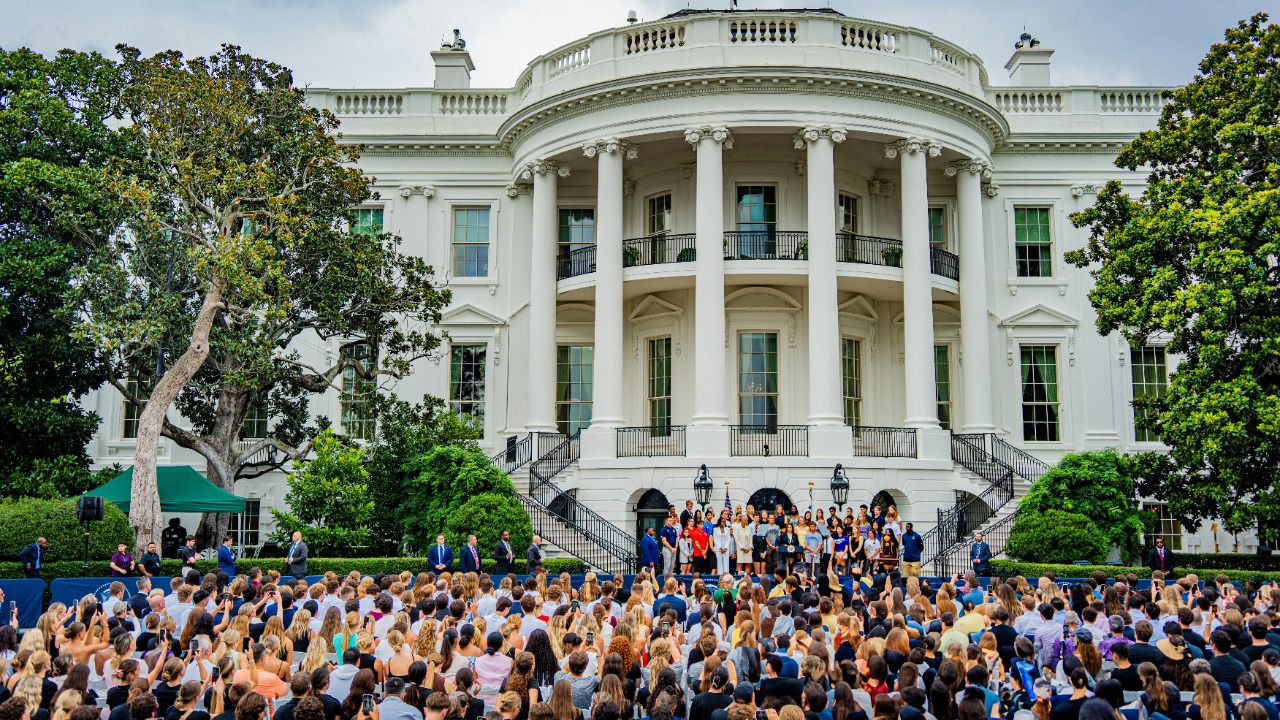
One report, citing the same cross-country data, underscored how stark this difference is by noting that 58 percent of respondents in the United States identified political dysfunction as their leading concern, a figure highlighted by Martha McHardy, who wrote about the survey alongside an image credited to Al Drago and Getty Images. That specific number, 58, captures the scale of the unease: a majority of Americans are effectively saying that the nation’s core crisis is not inflation or crime but the way power is contested and exercised.
Inside America’s anxiety about democracy and institutions
To understand why Americans answer so differently, it helps to look at how they describe their own political system. Recent polling shows that Americans are exceptionally anxious about whether their democracy is functioning, with large shares expressing distrust in Congress, the presidency, and the courts. One analysis of the data noted that The United States has among the widest splits between people who trust many of its institutions and those who trust almost none, a gap that tracks closely with party identity and views of the other side. That institutional chasm is documented in a report on how The United States compares with other nations.
Another breakdown of the same survey found that Americans are not just worried about institutions in the abstract, they are nervous about what happens if the other party wins. Analysts described a climate in which people fear the consequences of the other party being in power, and where trust in the system’s ability to manage peaceful transfers of authority has eroded. A separate write-up of the polling emphasized that Americans are exceptionally anxious about their political system and that Younger Americans, in particular, combine that democratic worry with fears about the country’s economic future, a dynamic explored in detail in coverage of new polling.
Why the global focus stays on the economy
Outside the United States, the same survey work paints a different hierarchy of fears. When Gallup researchers asked people around the world to name their top issue, economic anxiety dominated, with inflation and unemployment cited far more often than political breakdown. The New Gallup team, led by Jon Clifton and Benedict Vigers in WASHINGTON, described how the survey showed that even in wealthier countries, worries about affordability and economic issues appear at similar rates to those in poorer nations, a finding detailed in a focused survey summary.
Another account of the same global polling, based in WASHINGTON, D.C., reported that People who expressed little confidence in institutions were roughly twice as likely to say politics itself is their nation’s biggest problem, but that group remained a minority in most countries. For the rest, the immediate pain of rising prices, stagnant wages, and precarious work overshadowed concerns about constitutional design or party competition. That pattern, described in detail in a piece on what the world sees as its biggest problem, suggests that while democratic frustration is spreading, it has not yet displaced bread-and-butter issues as the primary crisis in many societies.
How dueling priorities shape politics at home and abroad
The gap between American and global priorities is not just academic, it shapes how leaders frame their agendas. In the United States, candidates and activists increasingly talk about threats to democracy, election rules, and institutional reform as existential questions, because a large share of voters say those are the country’s defining problems. That focus can crowd out detailed debates over housing, childcare, or wage policy, even though Younger Americans also voice intense concern about affordability and the economic future, as highlighted in coverage of their responses to the latest survey.
Globally, by contrast, leaders who ignore inflation or unemployment do so at their peril, because voters are telling pollsters that those are the emergencies they feel most directly. A detailed write-up from WASHINGTON, D.C., noted that frustration with how economies work is a growing force, and that People who lack confidence in institutions are more likely to see politics as the main problem, but they still tend to experience that through the lens of jobs and prices. That nuance, explored in another analysis of global polling, suggests that if American politics is consumed by arguments over the system itself while much of the world is fixated on economic survival, the two conversations may keep talking past each other even as they share the same underlying sense that something fundamental is off.
More From The Daily Overview
*This article was researched with the help of AI, with human editors creating the final content.

Grant Mercer covers market dynamics, business trends, and the economic forces driving growth across industries. His analysis connects macro movements with real-world implications for investors, entrepreneurs, and professionals. Through his work at The Daily Overview, Grant helps readers understand how markets function and where opportunities may emerge.

