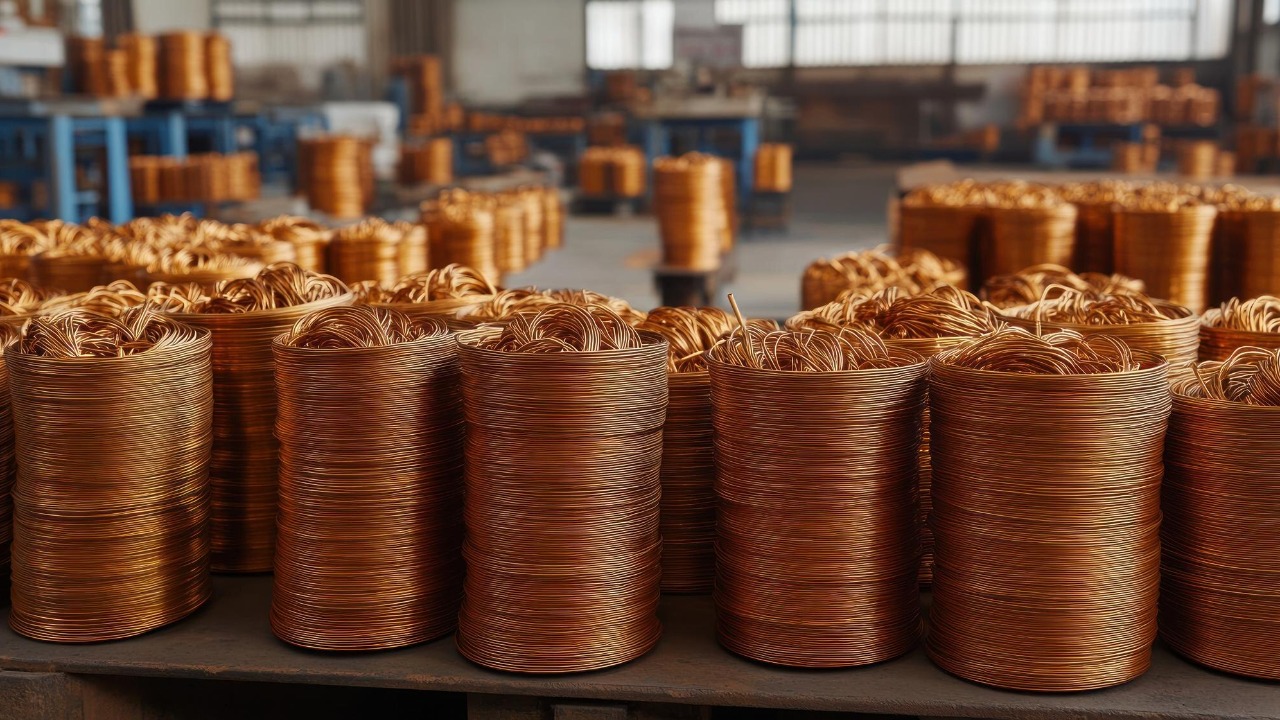
America’s race to lock down copper has turned a once-sleepy industrial metal into a frontline asset of economic and geopolitical strategy. Prices are surging, domestic premiums are distorting global benchmarks, and a metal best known for wiring and plumbing is suddenly a proxy for how the United States plans to build, electrify, and defend its economy.
What looks like a simple price spike is really a collision of forces: aggressive U.S. stockpiling, a clean energy buildout that runs on copper, fragile global supply chains, and new tariff threats from Washington. I see a market that is no longer just reacting to mines and smelters, but to policy choices and national security fears that are reshaping who pays how much for the red metal.
The new copper reality: from boring metal to macro barometer
Copper has shifted from a cyclical industrial input to a macro barometer for how fast the energy transition and reindustrialization can move. Analysts now warn that prices could keep climbing as the market tightens, with Copper prices could soar further amid a tightening market even after a barrage of severe supply disruptions. That shift reflects a deeper recognition that the metal sits at the intersection of construction, electrification, and digital infrastructure, so its price now carries information about everything from housing starts to grid upgrades.
At the same time, the rally has already pushed Copper prices to record territory, with Copper prices have surged to levels that imply a looming deficit measured in hundreds of thousand metric tons in 2026. I read that as a warning that the market is no longer pricing just today’s demand, but a structural shortfall as grids, data centers, and electric vehicles compete for the same finite supply. In that context, America’s copper obsession is not a curiosity, it is a signal that policymakers and traders are treating this metal as a strategic resource rather than a commodity that can always be sourced cheaply from somewhere else.
America’s copper grab and the premium problem
The clearest sign of that strategic turn is the way the United States has started to pay up for physical metal. Earlier this year, the U.S. copper price premium over the global benchmark soared 138% on a single Tuesday, a move that underscored how domestic buyers are willing to detach from international pricing to secure supply. That kind of spike, measured against the benchmark, is not just a trading anomaly, it is a sign that U.S. demand is outpacing available local metal and that buyers are effectively bidding against the rest of the world.
Behind that premium is a broader pattern of U.S. stockpiling and aggressive purchasing that has turned America into a price maker rather than a passive taker. Reports describe how America’s copper grab is powering a record surge in prices even though the world has plenty of it, as traders rushed to pull metal into U.S. warehouses. I see that as a deliberate choice to prioritize security of supply over price, but it also means American manufacturers, from appliance makers to data center builders, are now competing in a market skewed by their own country’s hoarding behavior.
Record prices and the Wall Street copper trade
Wall Street has taken notice of this new copper regime and is leaning into it. Copper prices hit record levels as investors piled into the metal on the back of supply risks, interest rate cuts, a weaker dollar, and tariff fears, turning the red metal into a favored macro trade. That surge has helped a cluster of miners and producers, with four stocks riding copper’s record run as investors look for ways to capitalize on the rally.
Yet the speculative enthusiasm sits on top of very real expectations for stronger long term demand. Analysts now argue that demand for copper is expected to keep rising as electrification, infrastructure, and technology needs for the critical material grow. In my view, that combination of structural demand and financial momentum is what makes this price spike so hard to ignore: it is not just a cyclical upswing, it is a bet that copper will remain scarce relative to the ambitions governments have set for their economies.
Where all that copper actually goes in the U.S.
Behind the trading screens, copper’s importance in the United States is grounded in very physical uses. Use of copper and copper alloys products in the U.S. by purpose shows that Around 42 percent of all copper and copper alloys in the country goes into building construction, with total use estimated at 1.9 million metric tons. That means every move in the copper market flows directly into the cost of wiring new homes, upgrading office towers, and retrofitting older buildings to meet modern codes.
Beyond construction, the same data show that Use of copper and copper alloys products in the U.S. by purpose 2024 spans power utilities, industrial machinery, transportation equipment, and consumer products. I read that breakdown as a reminder that copper is not a niche input for a single sector, it is a shared backbone for the physical economy. When prices spike, the pain is spread across electric utilities planning grid upgrades, automakers adding more wiring to vehicles, and manufacturers that rely on copper-heavy motors and electronics, all of which helps explain why the U.S. is so determined to secure supply even at a premium.
Clean energy, EVs, and the electrification squeeze
The clean energy transition is turning copper from an industrial staple into a climate-critical material. Key Takeaways from recent analysis highlight Copper’s Role in Clean Energy, stressing that Copper plays a central Role in Clean Energy technologies and has a key role in supporting sustainable growth. Solar farms, wind turbines, and battery storage all require far more copper per unit of energy than fossil fuel plants, while electric vehicles use significantly more copper wiring than internal combustion models like a 2025 Ford F-150 or a Tesla Model Y.
As I see it, that means every national pledge to expand renewables or accelerate EV adoption is also a pledge to consume more copper. The same analysis notes that Copper is wired for the future, with demand in clean energy and EVs set to climb as grids are reinforced and charging networks expand. That electrification squeeze is a big part of why the U.S. is so intent on locking in supply now, before the full weight of global climate policy lands on the copper market and makes today’s price spike look modest by comparison.
Tariffs, President Trump, and the politics of copper
On top of market forces, U.S. copper pricing is now being shaped directly by policy. President Trump has moved to put tariffs at the center of his industrial strategy, and copper is no exception. Recent reporting notes that President Trump announced a 50% copper tariff that could disrupt the Construction sector and is framed as a way to support domestic copper growth. I interpret that as a clear signal that the White House is willing to use trade tools to tilt the market toward U.S. miners and smelters, even if it raises costs for builders and manufacturers.
The politics here are blunt. A 50% tariff on imported copper would likely push domestic prices even higher in the short term, especially for construction firms that cannot easily substitute materials. Yet the administration’s bet appears to be that higher prices will attract investment into U.S. production capacity, eventually easing dependence on foreign supply. In my view, that is a risky trade off: it might strengthen domestic mining over time, but it also amplifies the immediate pain of the copper obsession for sectors that are already grappling with elevated materials costs and tight labor markets.
Global supply, Europe’s tightness, and the surplus paradox
One of the strangest features of the current copper story is that tightness is not uniform across the globe. In Europe, market watchers warn that supply conditions are set to remain fragile, with a recent Viewpoint arguing that Copper supply tightness beckons in Europe, where bank forecasts point to a global surplus but conditions that can still be intermittently tight in Europe. That regional squeeze reflects refinery outages, logistics bottlenecks, and the continent’s own push to electrify, all of which leave European buyers vulnerable when global flows are redirected.
At the same time, some analysts expect the world as a whole to move into modest surplus even as prices stay elevated. One forecast notes that Copper Prices Are Forecast to Decline Somewhat from Record Highs in 2026, with Goldman Sachs highlighting how Supply disruptions and policy shifts could still boost copper prices next year. I see that as a paradox: even with a projected surplus, localized tightness in places like Europe and aggressive buying in the U.S. can keep the market feeling scarce, which helps explain why prices are not reacting the way a simple global balance sheet might suggest.
America’s stockpiling vs the global surplus narrative
Nowhere is that paradox more visible than in the clash between America’s stockpiling and forecasts of a global surplus. Detailed reporting on U.S. buying patterns notes that Follow Huileng Tan for analysis that highlights how Copper prices have surged even as some forecasts point to a 300,000-ton surplus next year. Every time Huileng publishes a story, readers are reminded that the U.S. is acting as if copper is scarce, even when spreadsheets suggest there should be enough metal to go around.
That tension is reinforced by coverage that emphasizes how America is driving a copper grab that is powering a record surge in prices. In my view, the message is clear: the U.S. is not waiting for the market to balance itself, it is preemptively pulling metal off the table to insure against future shortages, AI driven data center demand, and geopolitical shocks. The result is a world where copper can be simultaneously abundant on paper and expensive in practice, because one dominant buyer is willing to pay up to keep it close.
What the copper obsession means for the broader economy
All of this has real consequences beyond the trading pits. When the U.S. copper price premium over the benchmark jumps 138% and tariffs of 50% are floated, the costs ripple through construction budgets, utility rate cases, and manufacturing margins. I see copper becoming a quiet transmission belt for inflation, as higher input prices for wiring, motors, and transformers filter into the final cost of homes, cars, and consumer electronics, even if headline inflation is easing elsewhere.
At the same time, the obsession reflects a deeper anxiety about whether the physical economy can keep up with digital and climate ambitions. Copper’s central Role in Clean Energy, its heavy use in building construction at Around 42 percent of U.S. consumption, and the prospect that Copper prices could soar further amid a tightening market all point in the same direction. The United States is trying to buy its way out of a future bottleneck, but in doing so it is helping to create the very price spike that now threatens to slow the projects, from grid upgrades to EV rollouts, that copper is supposed to enable. I do not see that tension easing soon, which is why the copper market has become a story the broader economy can no longer afford to ignore.
More From TheDailyOverview

Grant Mercer covers market dynamics, business trends, and the economic forces driving growth across industries. His analysis connects macro movements with real-world implications for investors, entrepreneurs, and professionals. Through his work at The Daily Overview, Grant helps readers understand how markets function and where opportunities may emerge.

